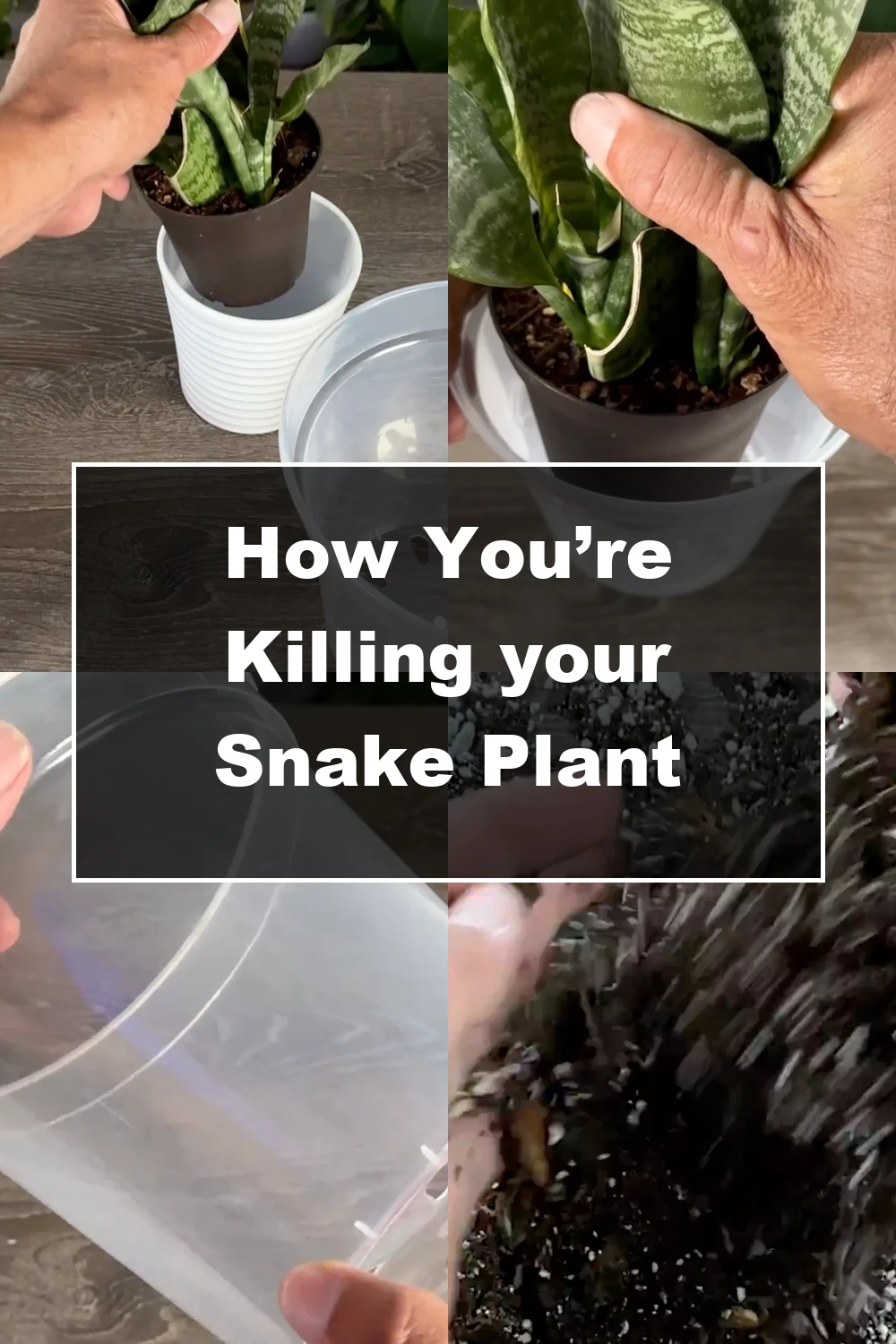
If there’s one thing that’s probably slowly killing your snake plant, it’s overwatering. I want to help you stop and prevent this from happening, and I’ll share a simple method of how I water my snake plants so you can keep them growing for years.
There are two types of snake plant owners. There are those who just bought from the store with all the best intentions.
They’re excited to get them home and start taking care of them, but they haven’t done the proper research, and because of this they slowly drown their plant.
Do your research and make sure your snake plant has the proper lighting, proper nutrition, proper temperature, and all that good stuff. Once you know exactly what environment your snake plant needs to keep it happy, you start to water – and that’s when the problems start. You want to care for it so much that you start to overwater it.
What I mean by overwatering is that you water too often and don’t give the soil enough time to dry out between waterings. Don’t get this confused with watering too much. That’s okay. It’s okay to give them a good soaking when the time is right, but not before they need it.
1. Proper Snake Plant Watering: Pot Size and Step-Up Mistakes
There’s a second point where people run into trouble. Once you’ve grown out a full plant and it’s gotten to a size where it’s too big for the pot it’s in – keeping in mind that they like to be snug in the pot – you want to step it up.
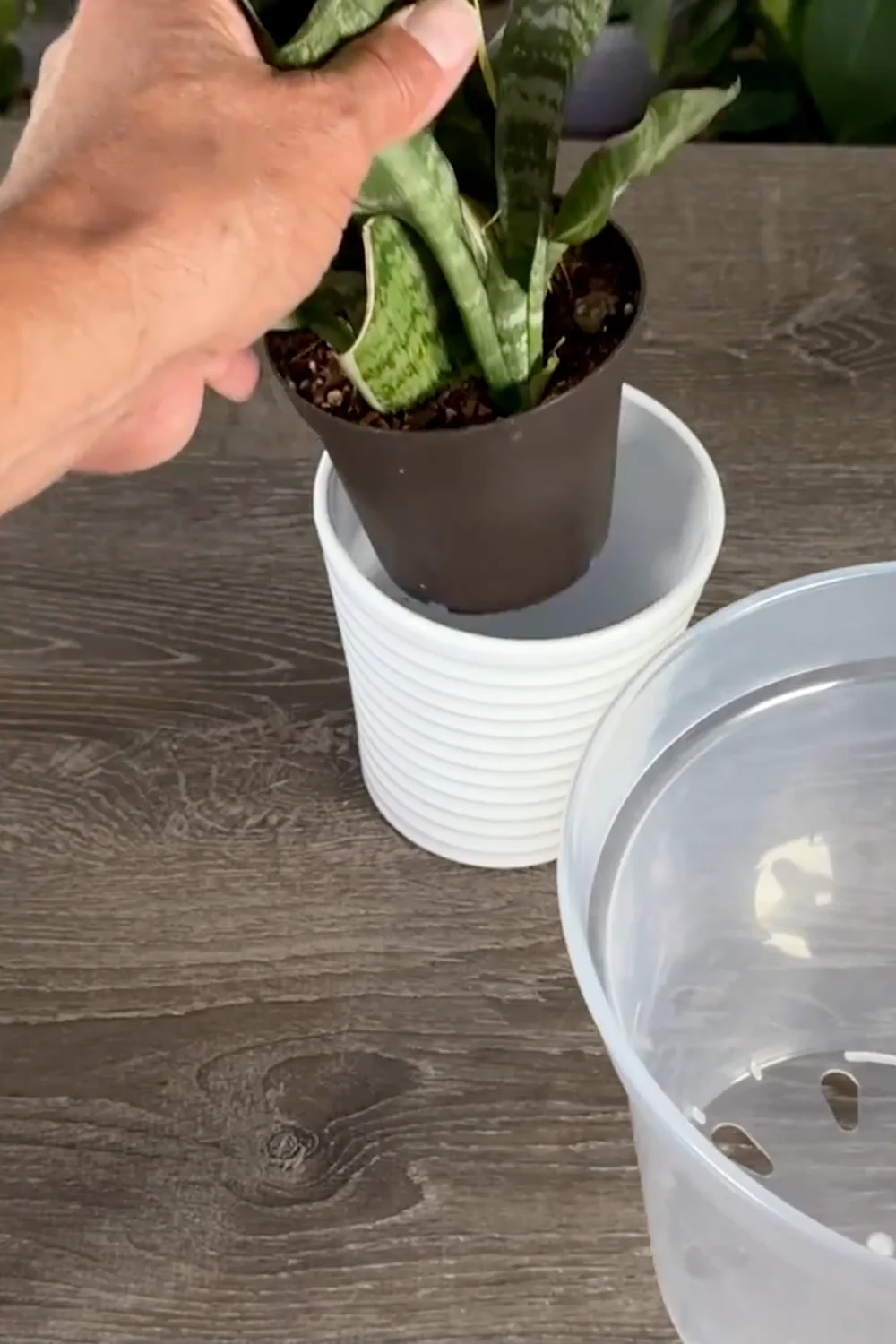
One of the main reasons new plant parents do more harm than good during the step up is because they step it up into a container that’s just too large.
If you add soil to a pot that’s a lot larger than the root ball of the existing plant, the root system won’t be large enough to take up and remove the water from the soil quickly enough. The end result is that the plant ends up sitting in the soil and possibly getting root rot.
Choose the right next-size pot
Solve this by stepping up your plant to a pot that’s just 1 to 2 inches bigger in diameter than the existing pot.
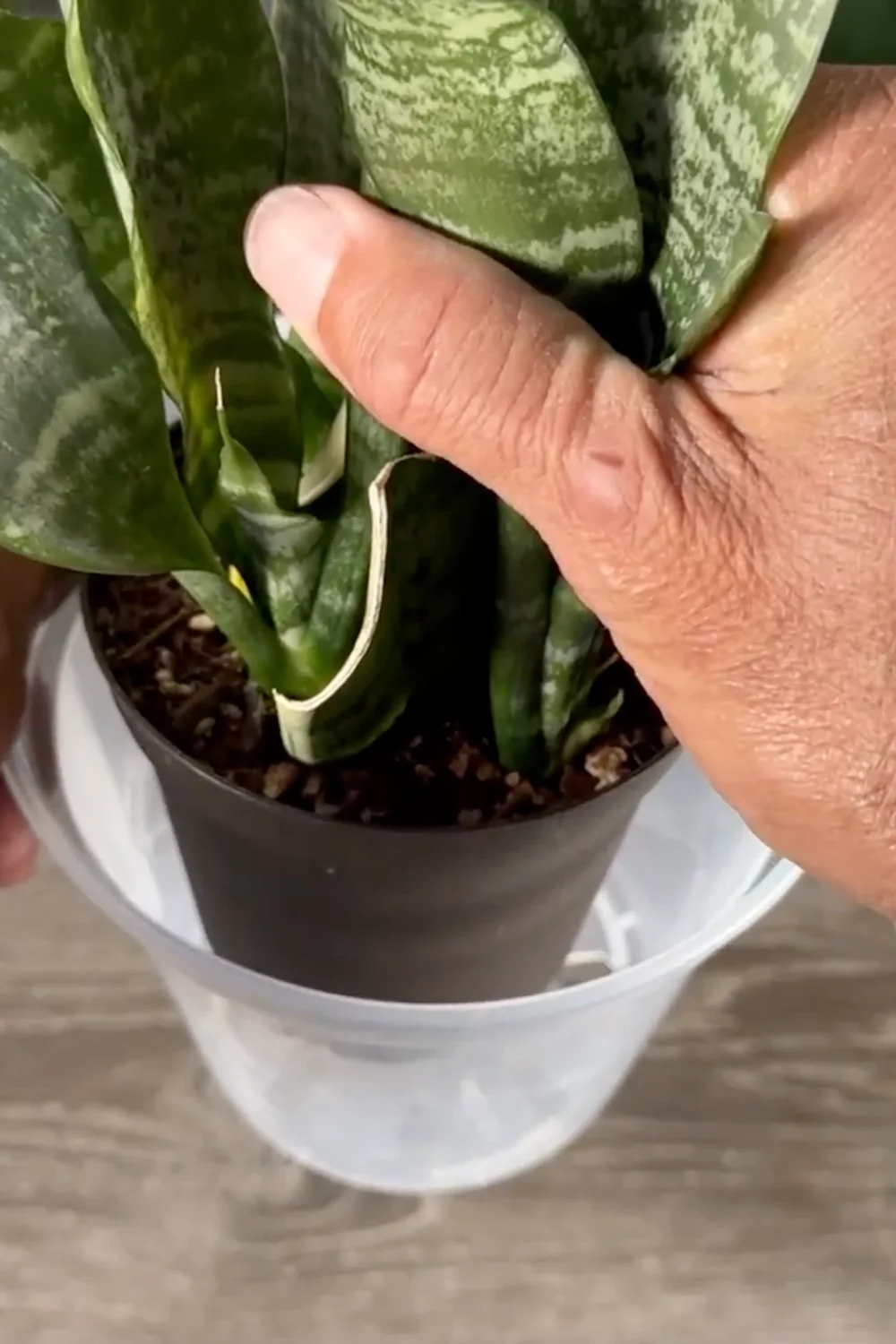
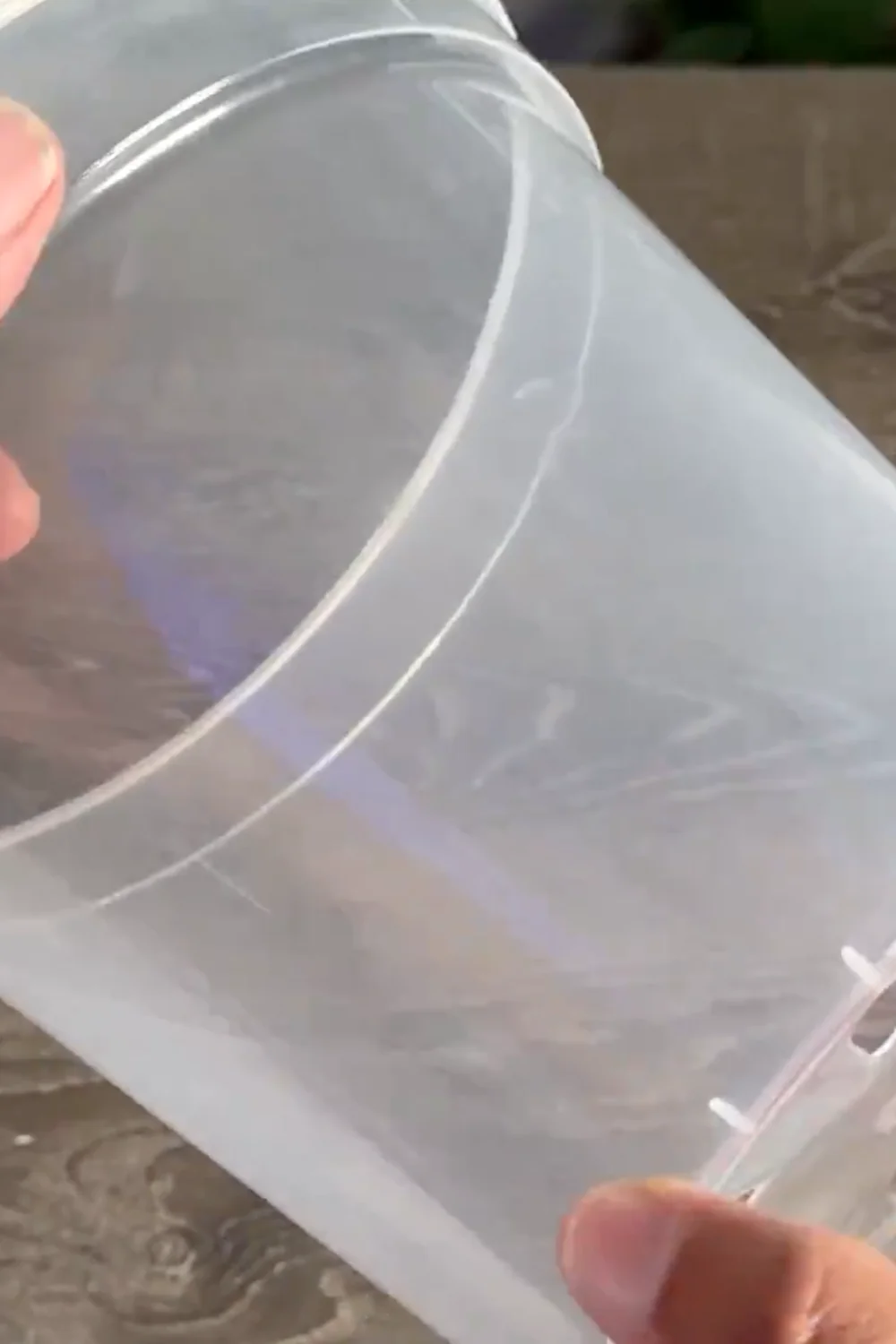
With this one here, I’m going from a 6 inch to an 8 inch clear pot. I love these clear pots not only because I can see the roots as they grow – which is half the fun – but also because I can look to see how wet or dry the soil is.
Use a well-draining mix
With this process, use a soil that’s very well draining. Remember, with snake plants we want the soil to be on the dry side.
It’s always easier to rewet the soil when it dries out than it is to remove the water when the water sits in the soil too long.
Step-by-step: Potting up correctly
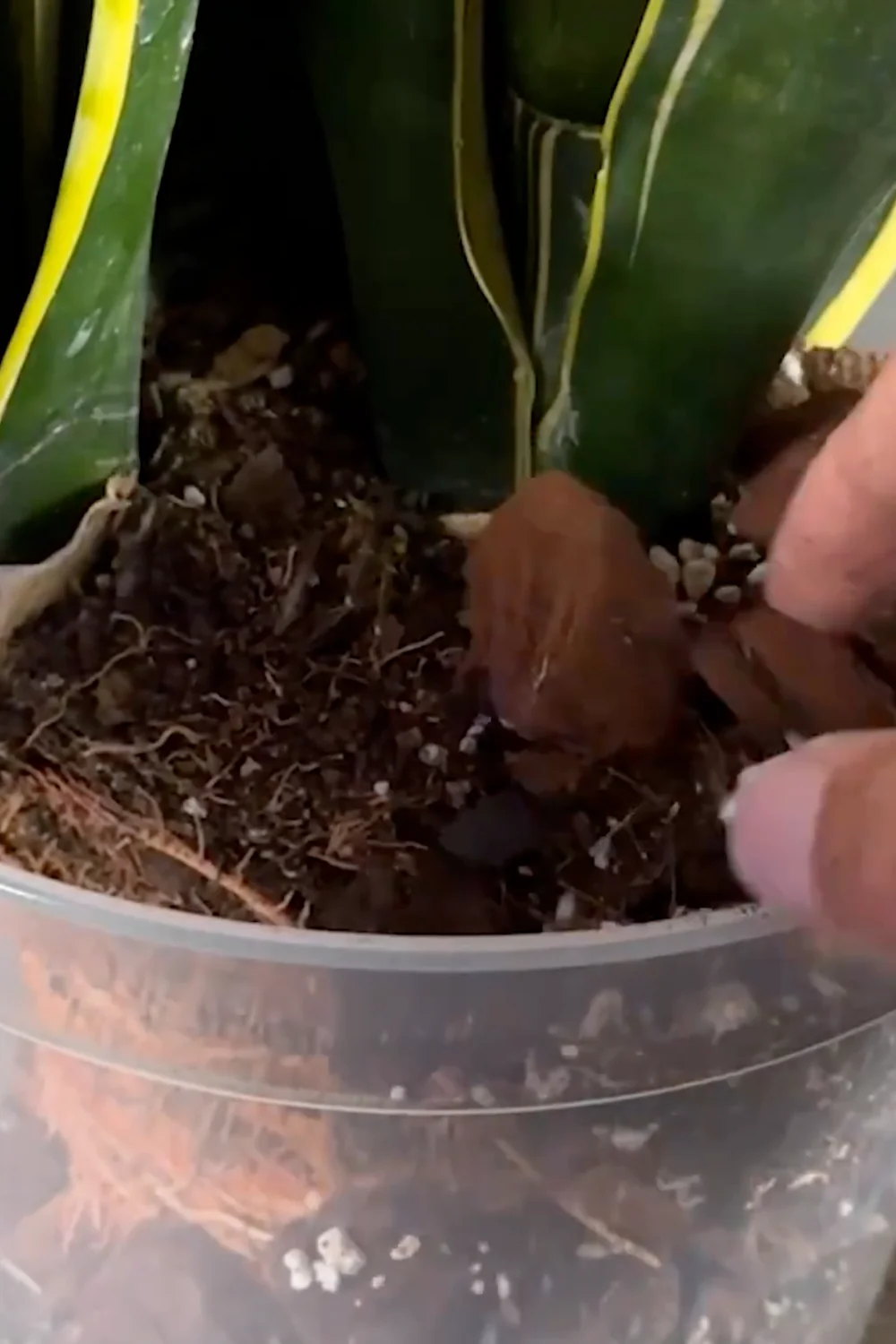
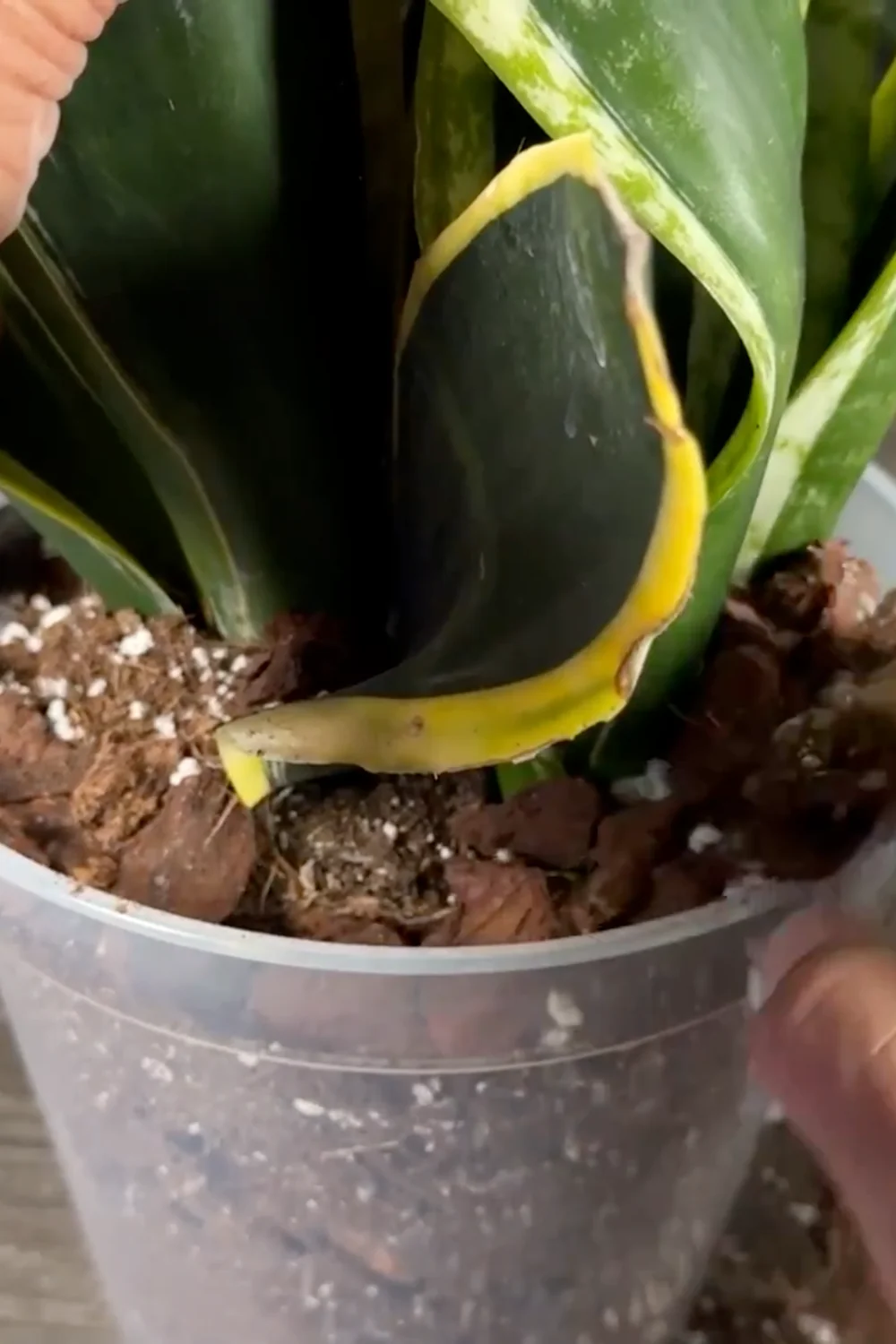
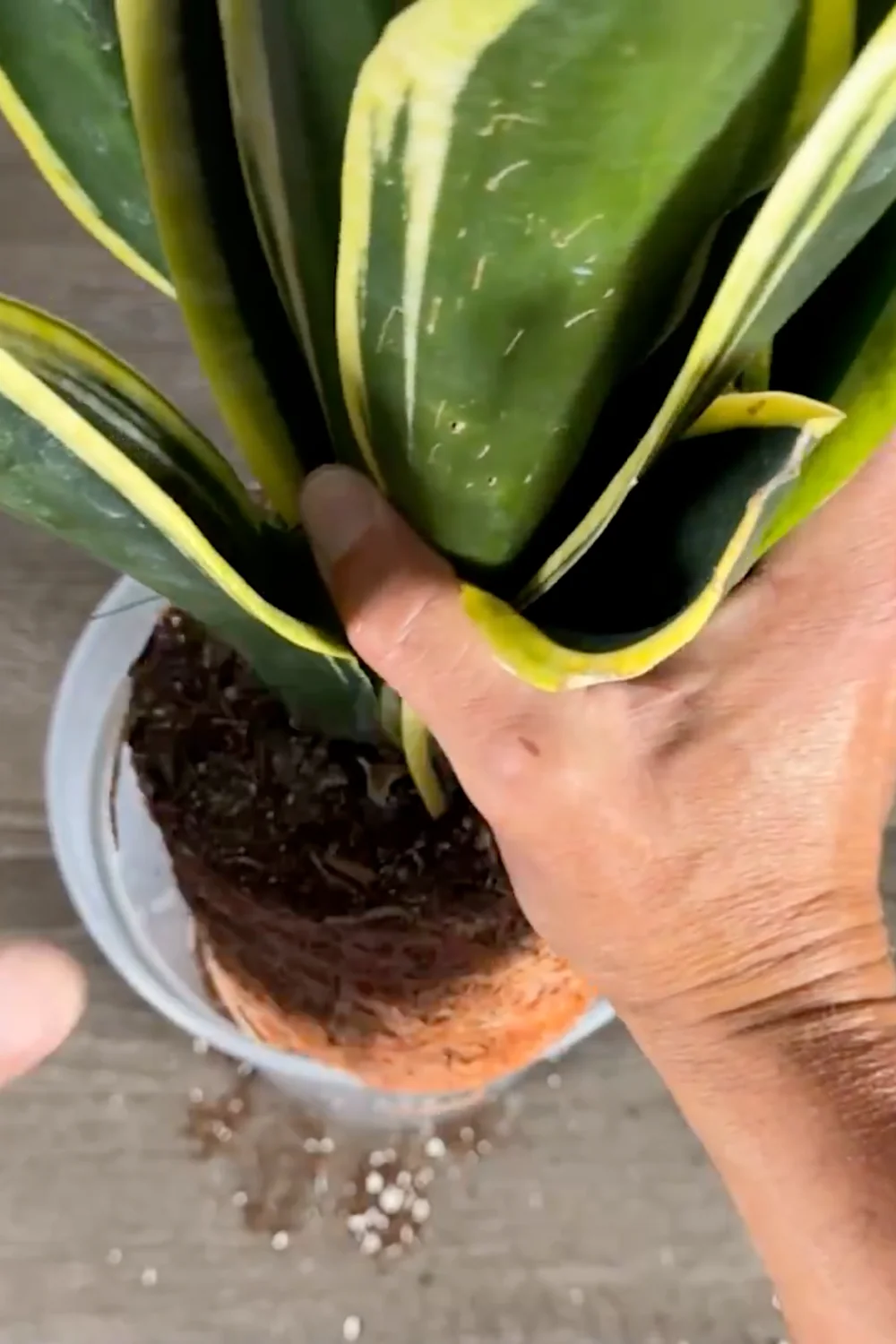
2. Proper Snake Plant Watering Method: Totum
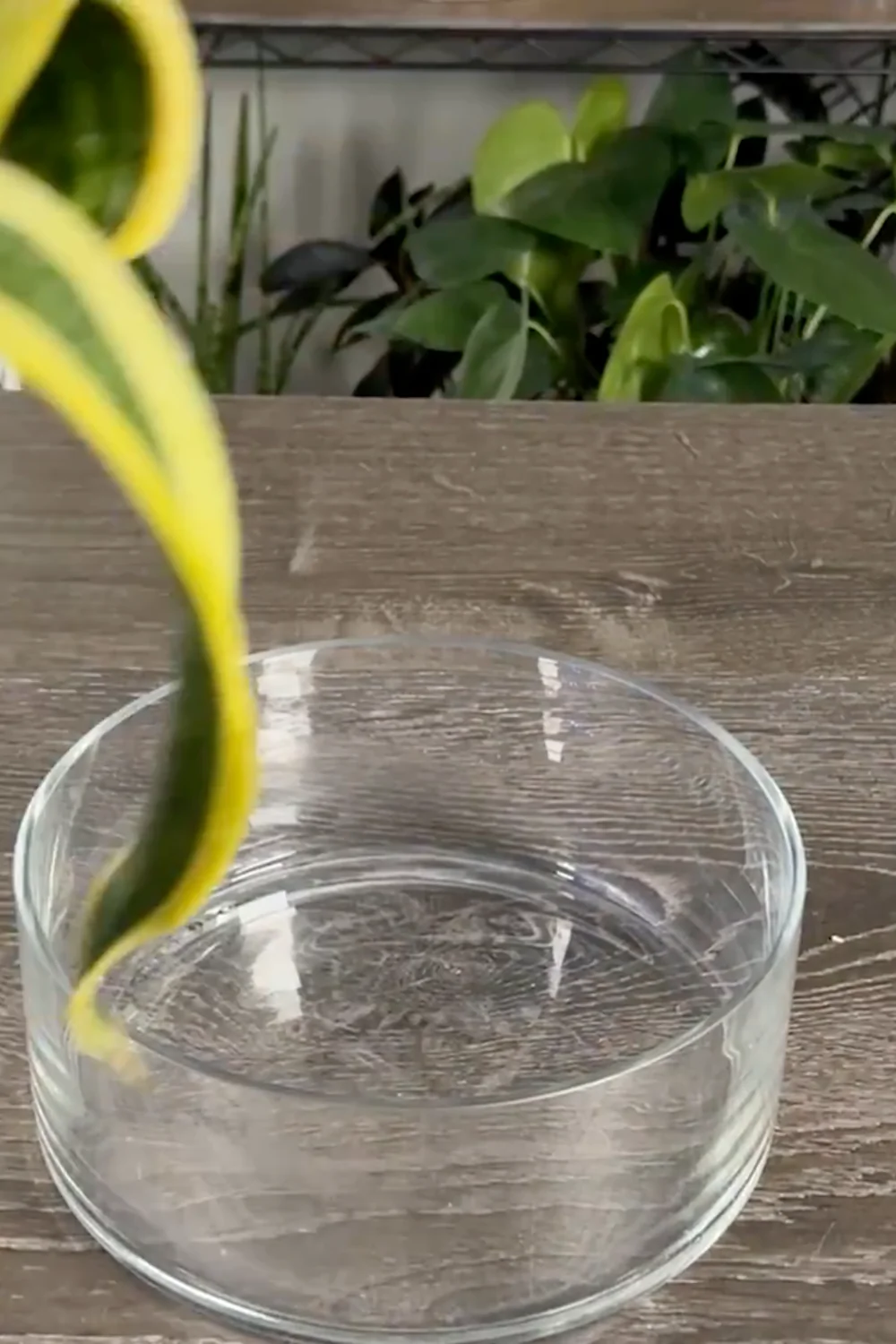
Here’s the snake plant watering tip I want to share with you. The best I’ve found to water snake plants is what I call Totum – my method of top watering and bottom watering. You get the best of both worlds.
You saturate the soil from the top and get the benefits of bottom watering from the bottom.
Why Totum works for snake plants
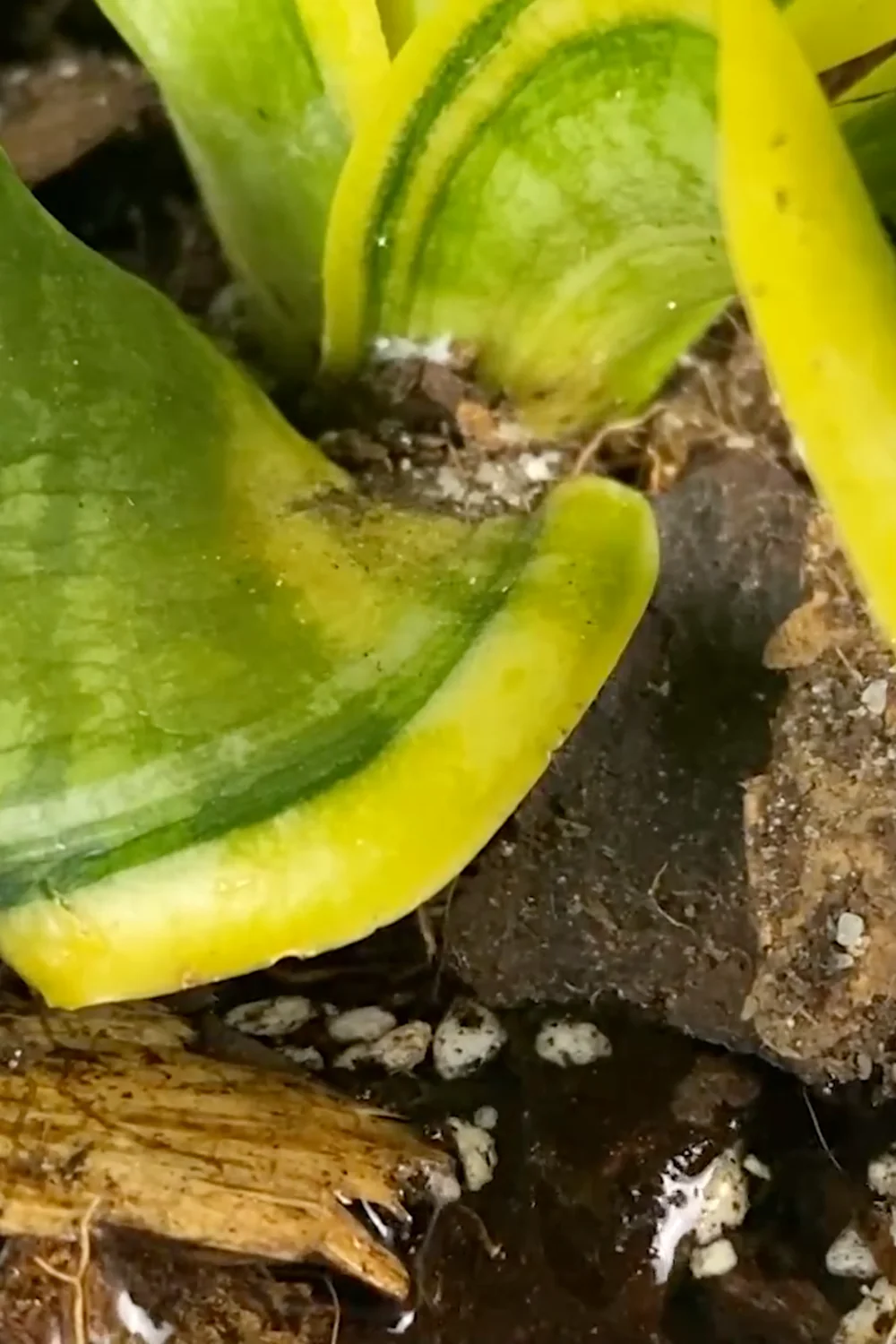
This is especially important for snake plants because the soil mix for snake plants usually does not have a lot of water holding capacity. It’s difficult to water them from the top because the water runs freely and quickly out of the bottom of the pot.
If we bottom water, because the soil again usually doesn’t have a lot of water holding capacity, there can be little to no capillary action, which is what helps the water move up in the soil when we bottom water.
Step-by-step: How to Totum
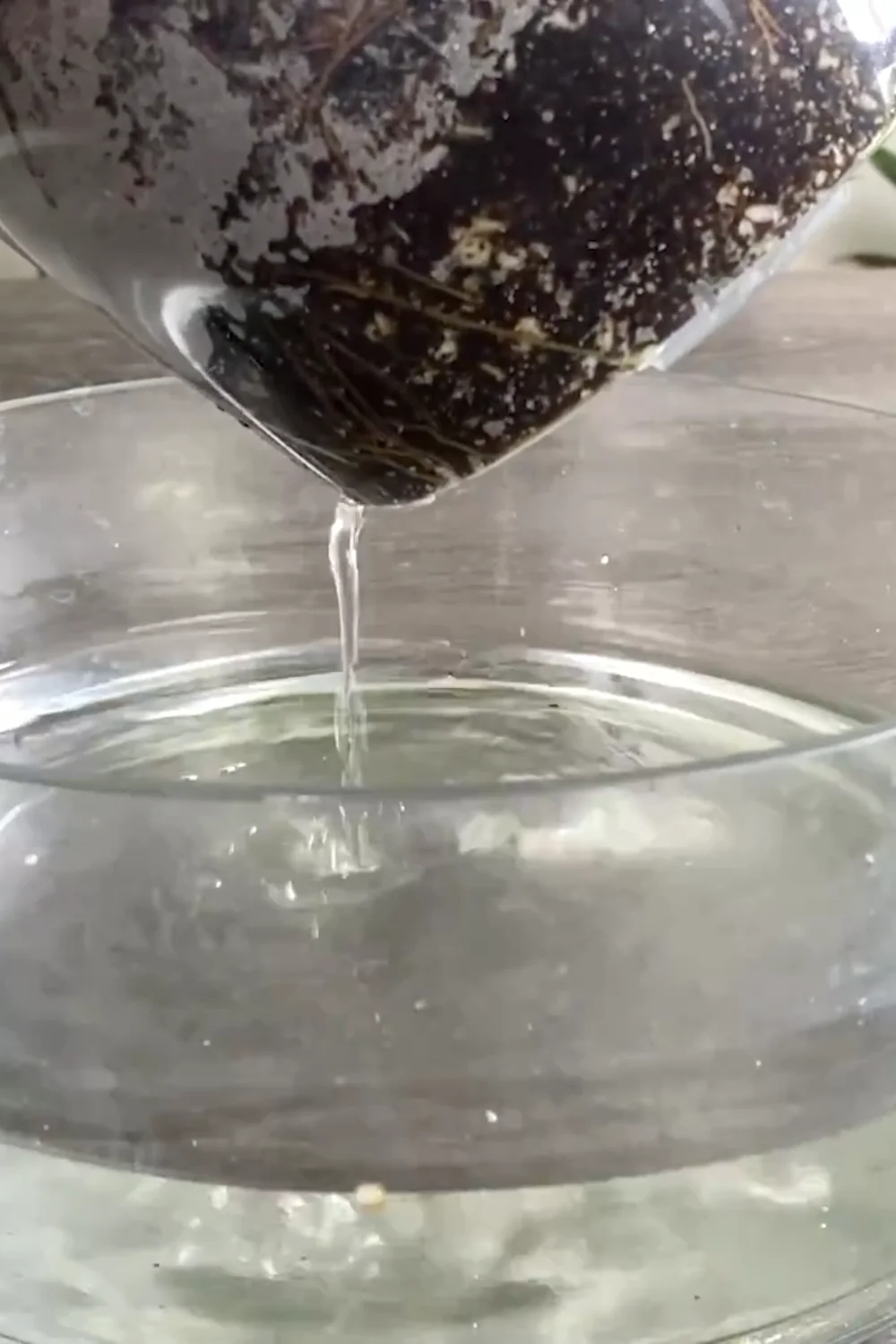
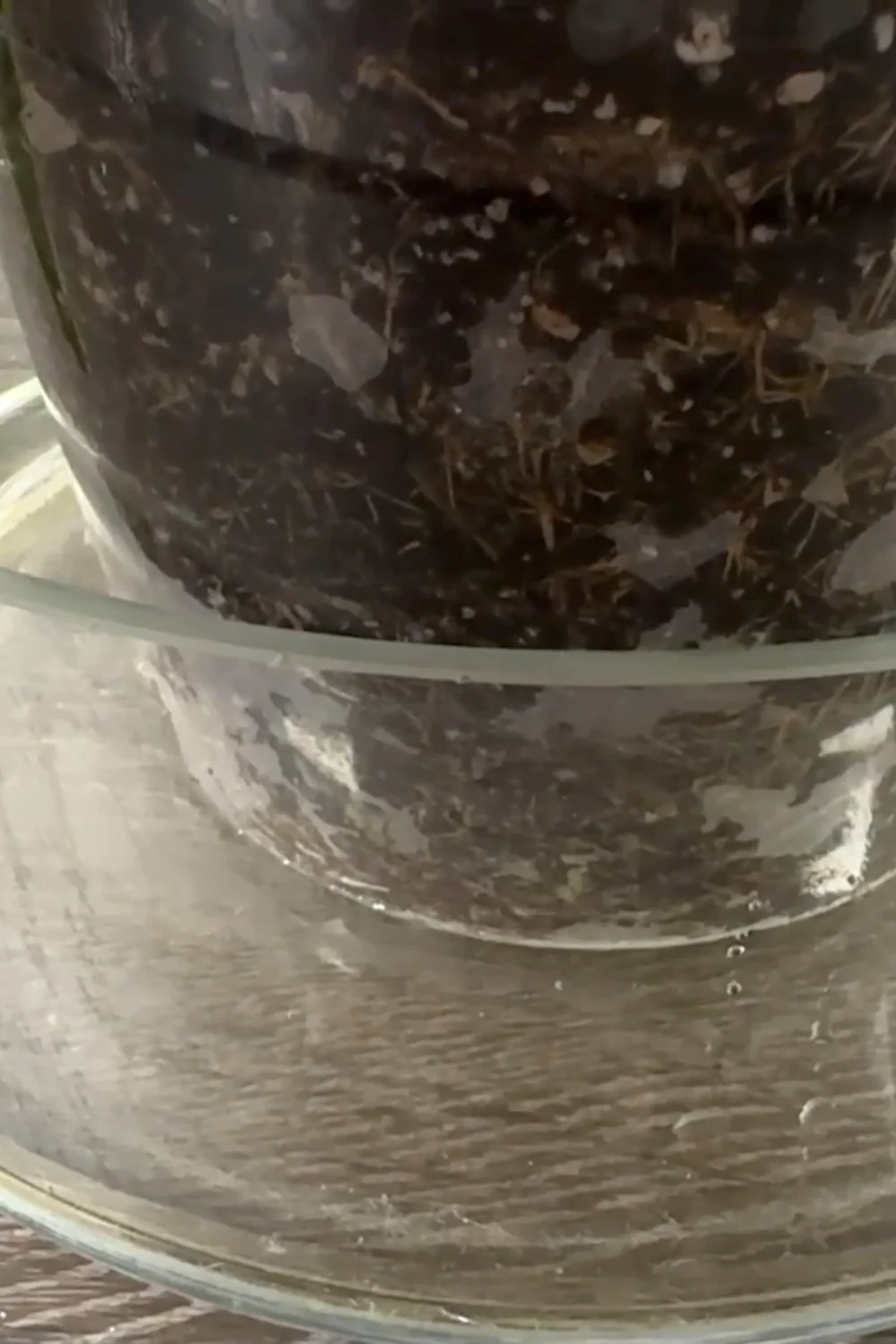
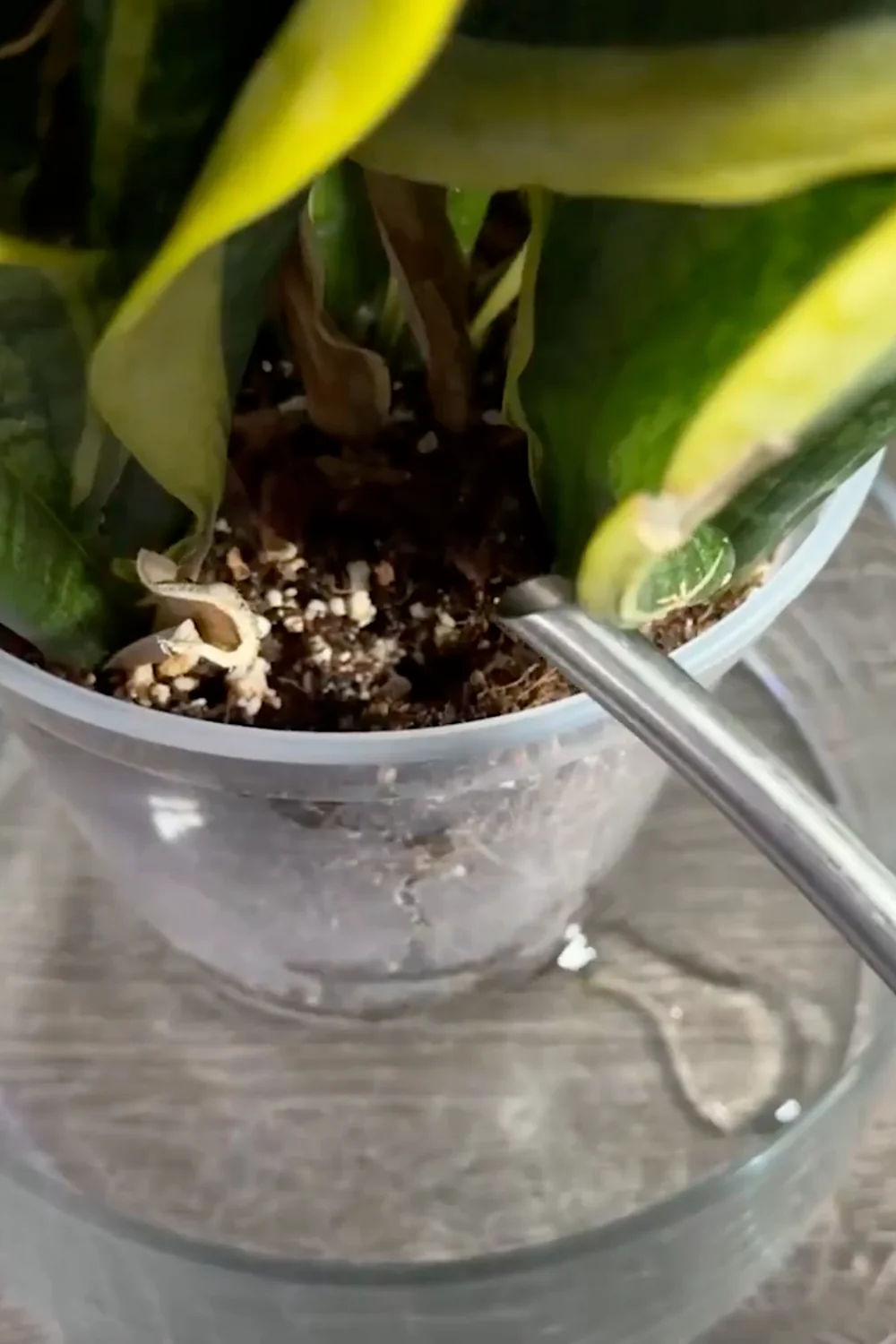
Timing: Only water when it’s truly time
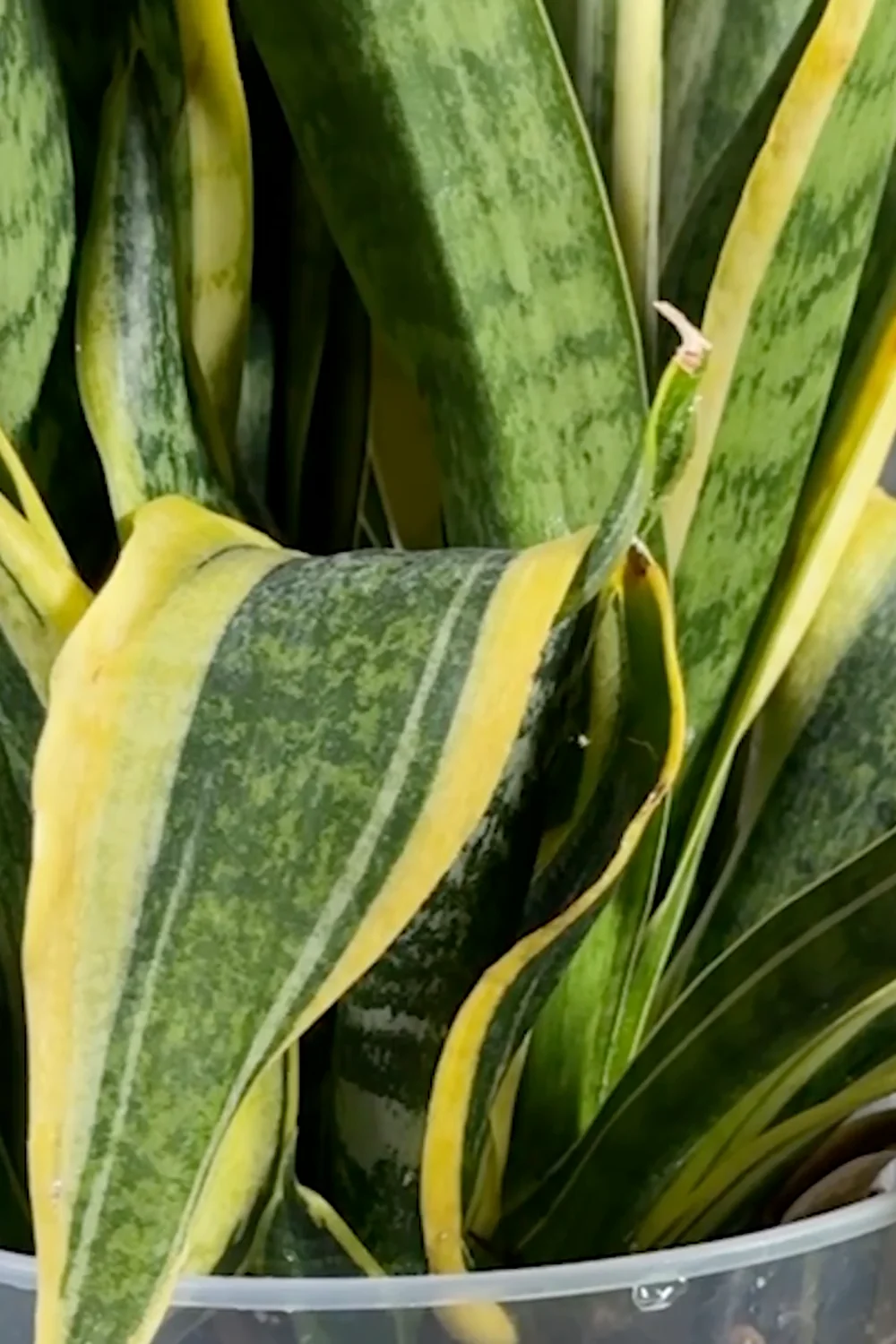
Always remember that the key to watering them is timing – and that is when the soil is 100% dry. Dry.
Final Thoughts on Proper Snake Plant Watering
Overwatering is watering too often, not giving the soil time to dry. Choose the right next-size pot, keep a well-draining mix, and remember that snake plants prefer to be on the dry side. Use the Totum method to thoroughly hydrate without leaving the roots sitting in water, and only water again when the soil is completely dry. Keep these simple rules, and you’ll keep your snake plants thriving for years.