
I am facing two major problems with my Anthurium crystallinum. The leaves are browning and yellowing, and I noticed some water-soaked leaf edges. I also saw pale green discolored holes on the leaves.
These are common problems you may face with your Anthurium plant. I will share how I fix these problems step by step. This is how I recover the plant and promote new growth.
1. Anthurium Brown Tips and Mites: Why This Happened
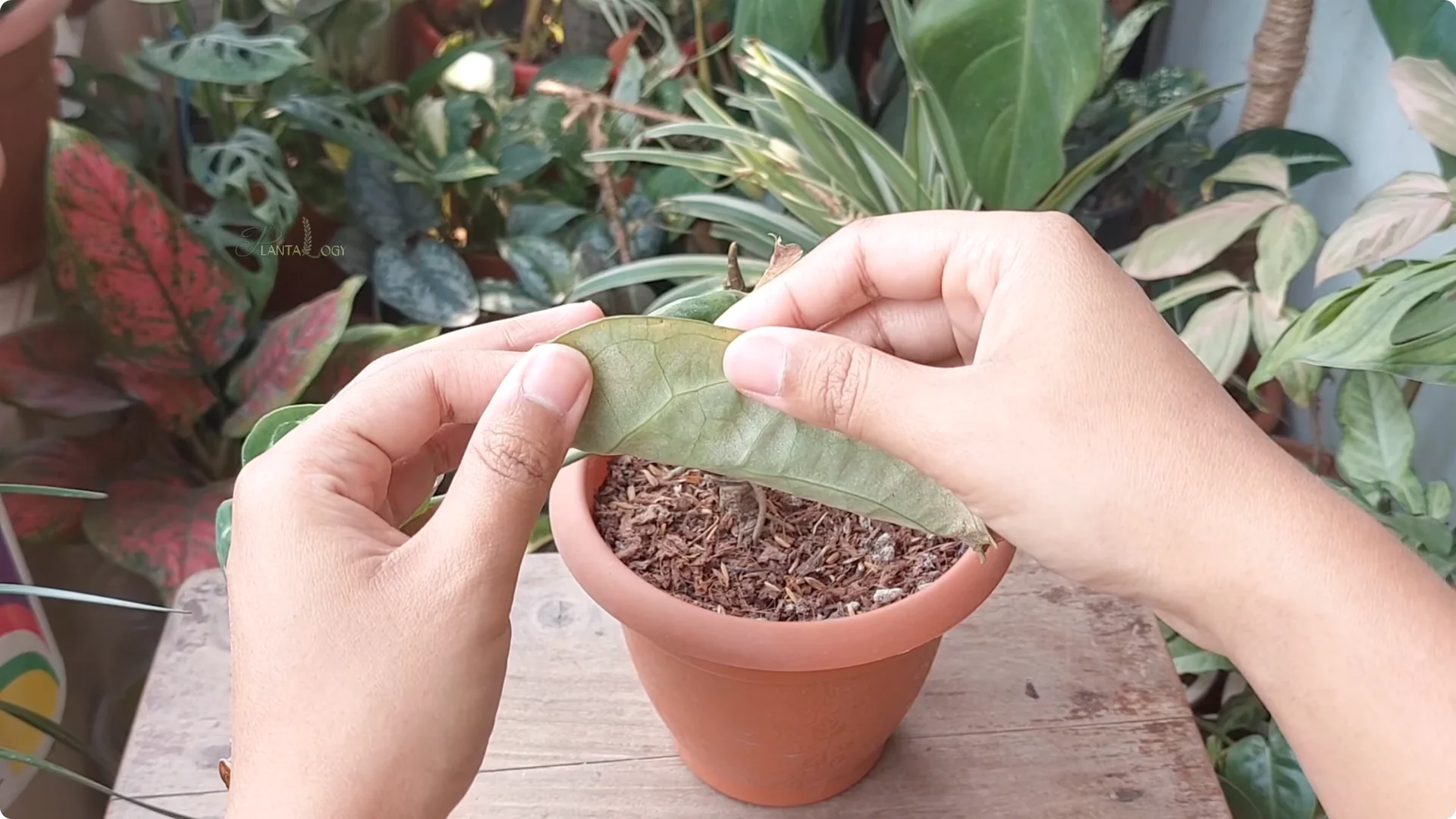
Anthurium is a tropical plant and it requires around 60 to 80 percent humidity in the air to thrive. It is not drought tolerant, so humidity below 50 percent can result in brown, crispy, and corny leaf edges. My plant just passed through winter, the dormancy period for most tropical plants, and the browning mainly happened due to the low humidity of winter.
The second problem is discoloration, which is a sign of red spider mite infestation. Dry weather attracts spider mites and they create their colonies on the backside of the leaves. Until you flip the leaf, it is quite difficult to notice their infestation.
For broader care basics that prevent brown tips in the first place, see easy tips to grow and care for anthurium.
2. Anthurium Brown Tips and Mites: Immediate Recovery Plan
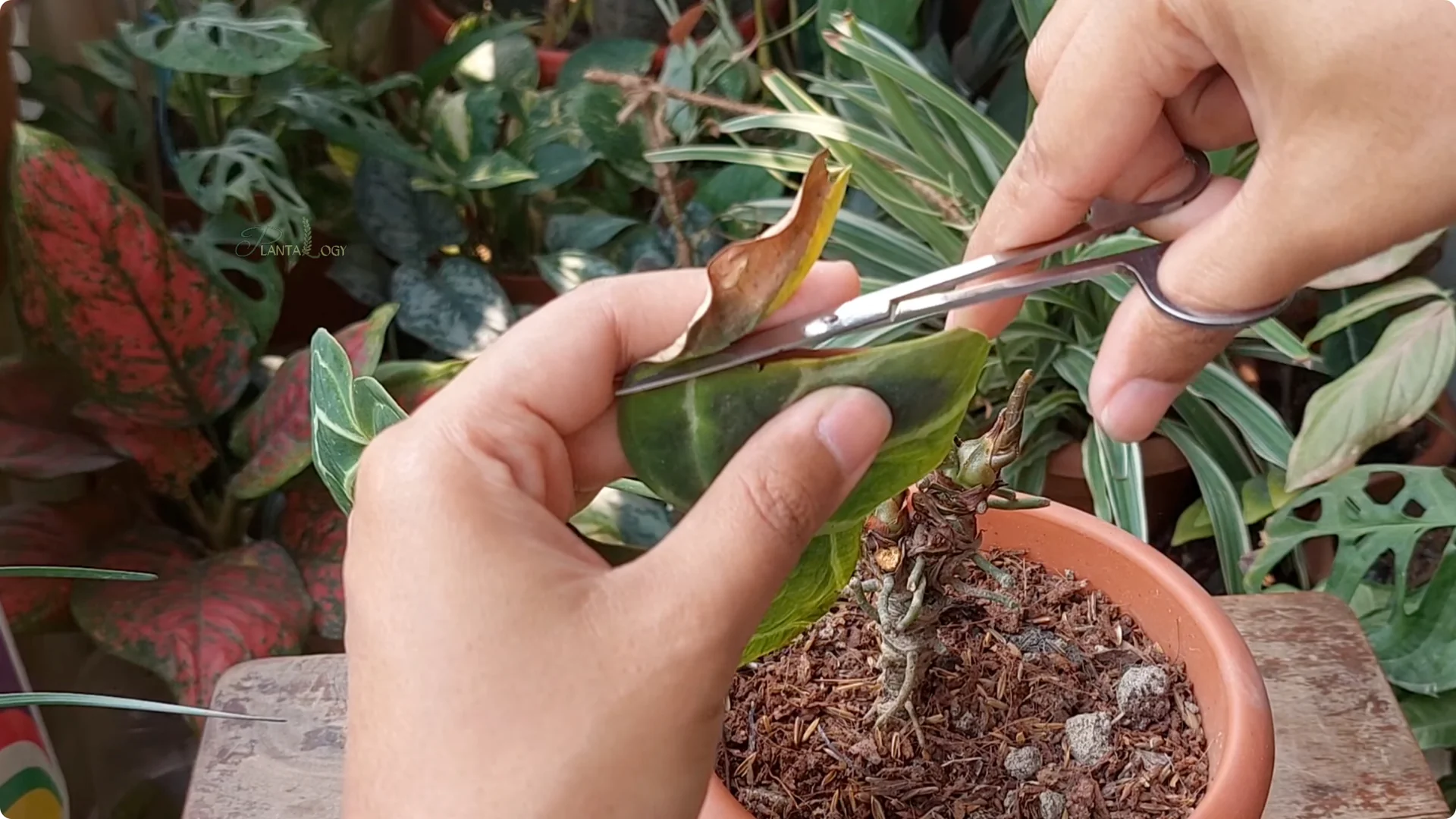
First, I remove the dry and brown portions from the leaves. Since the plant is infested by spider mites, it would be better to remove the entire leaf. But I noticed the plant is forming new shoots and it will require more food and energy to establish these shoots.
If I remove entire leaves, it may slow down the growth of these new shoots. The remaining green portions are still viable for photosynthesis. So I only cut down the damaged portions.
Treat Red Spider Mites
As an organic pesticide, I can use neem solution, but organic pesticides work slowly. It may take three to four weeks to completely remove the infestation. My plant is not in a good situation and it needs an instant recovery solution.
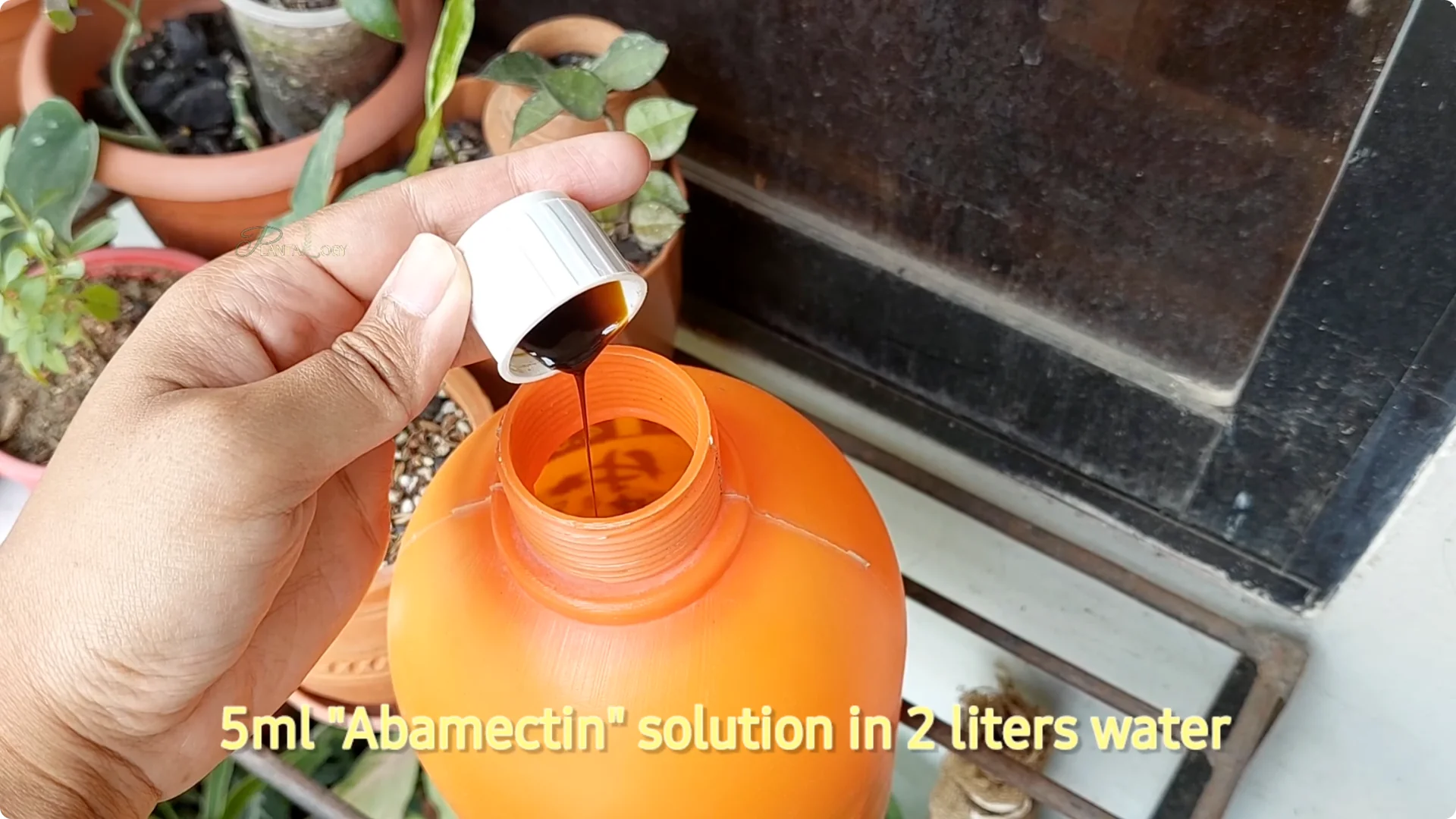
I use abamectin-formulated synthetic pesticide. Add 5 ml of abamectin solution to 2 liters of water. Spray on both sides of the leaves.
I spray the solution three times a day for the next four to five days. This clears the infestation fully. Keep the plant away from other plants during this period.
3. Anthurium Brown Tips and Mites: Aftercare
Sunlight and Placement
I keep the plant in a bright place but separate from other plants to control the infestation. As soon as the plant recovers, I put it back where it was with other plants. I also make sure it is receiving bright indirect light.
For bloom-focused indoor care that supports recovery, see tips for indoor anthurium blooms.
Watering and Moisture
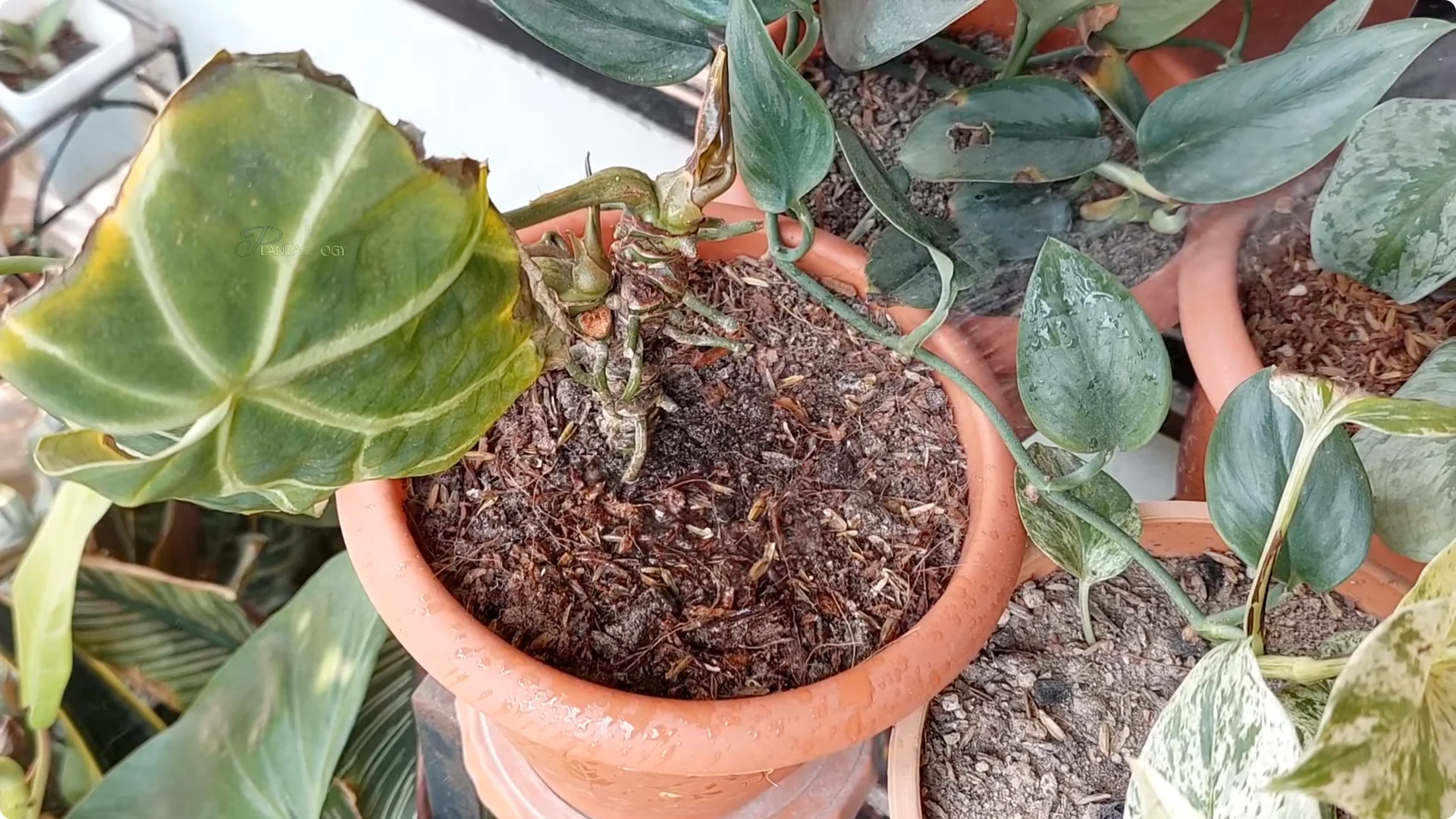
I maintain an even moisture level in the soil. Anthurium is a water-loving plant, so I water when the surface soil feels dry. When a plant pushes new shoots, it requires constant moisture and may prefer more frequent watering.
Fertilization
As soon as the infestation is under control, I provide a nitrogen-rich fertilizer to improve overall growth. I like to use vermicompost, but you can use cow manure or horse manure. Feed lightly at first and observe new growth.
Read More: Aloe Vera Care Tips Indoor Plant
Final Thoughts on Anthurium Brown Tips and Mites
Low humidity and winter dormancy can cause brown, crispy tips, and dry weather can trigger red spider mites. Trim only the damaged portions if the plant needs green tissue for new shoots. Treat mites promptly, then support recovery with bright indirect light, steady moisture, and a gentle nitrogen feed.