
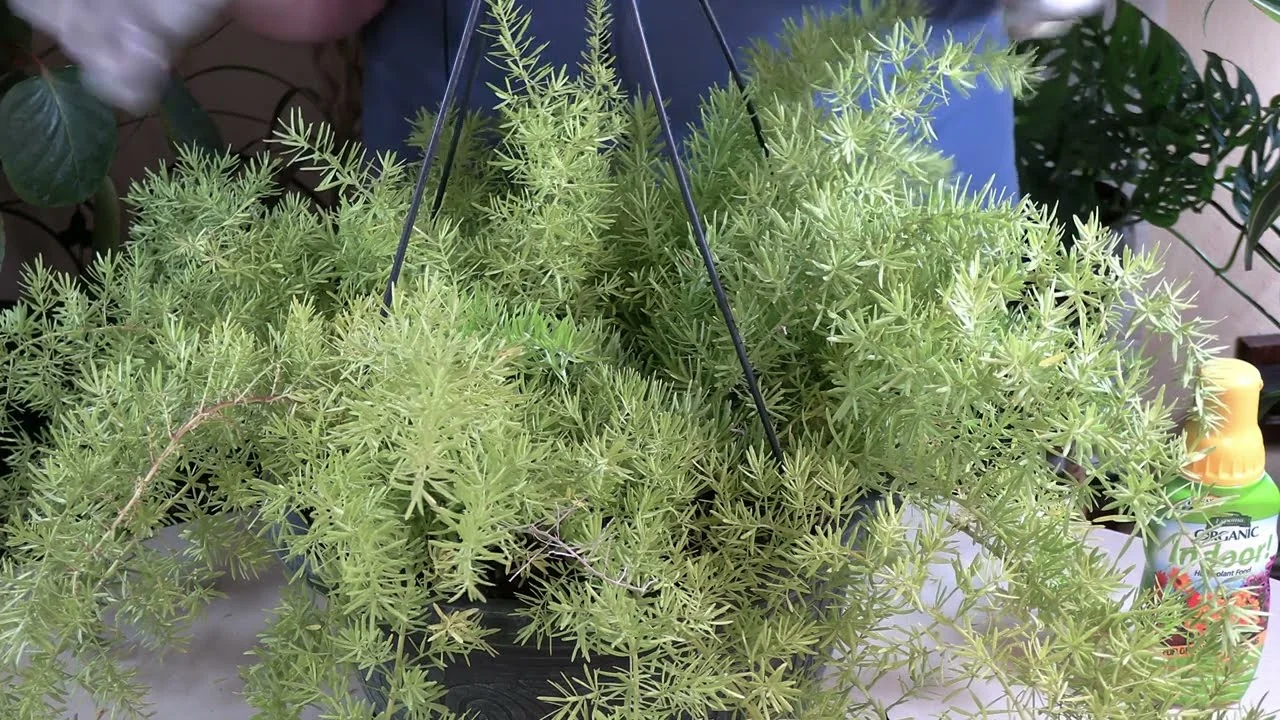
The lovely asparagus fern (Asparagus aethiopicus) is originally from South Africa. There are various forms, many a bright limey green, and they share a similar airy look. Though called a fern, it is not a true fern.
The plant looks fluffy and delicate, but I recommend wearing gloves when you work with it. It can be a little on the spiny side, so appearances can be deceiving. It makes a beautiful hanging plant, spills nicely over the edge of containers, and looks great centered on a large table.
1. Light – Asparagus Fern Care
Correct lighting is crucial, because incorrect light leads to foliage problems. Too much light results in yellowing fronds, especially near bright southern or hot western windows. A little yellowing can also mean it needs feeding.
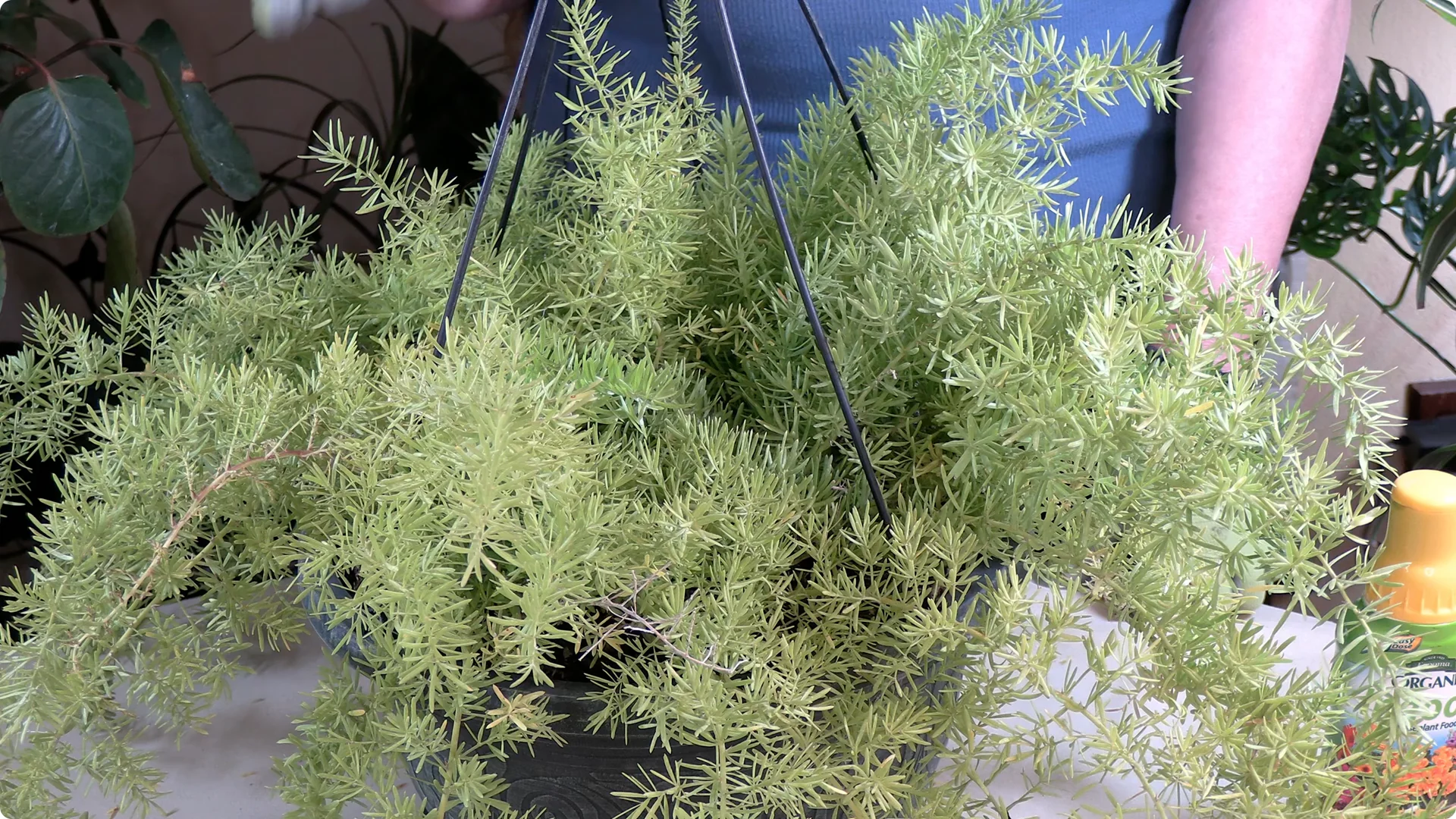
Aim for bright, indirect light. Keep the plant near a bright window, but not with the sun directly on the foliage. In nature, these plants grow on the ground under dappled light, and they respond well to full spectrum lighting indoors if your natural light is low.
If fronds are yellowing, first review the lighting and adjust. Then confirm your watering is on track. Both can cause color changes.
For another plant that thrives in bright, indirect light and appreciates consistent humidity, see these orchid care tips.
2. Watering – Asparagus Fern Care
An asparagus fern is a thirsty plant, so you may water it more often than other houseplants. Water when the top 2 inches of soil have dried. A moisture meter reading around 4 is a good cue to water.
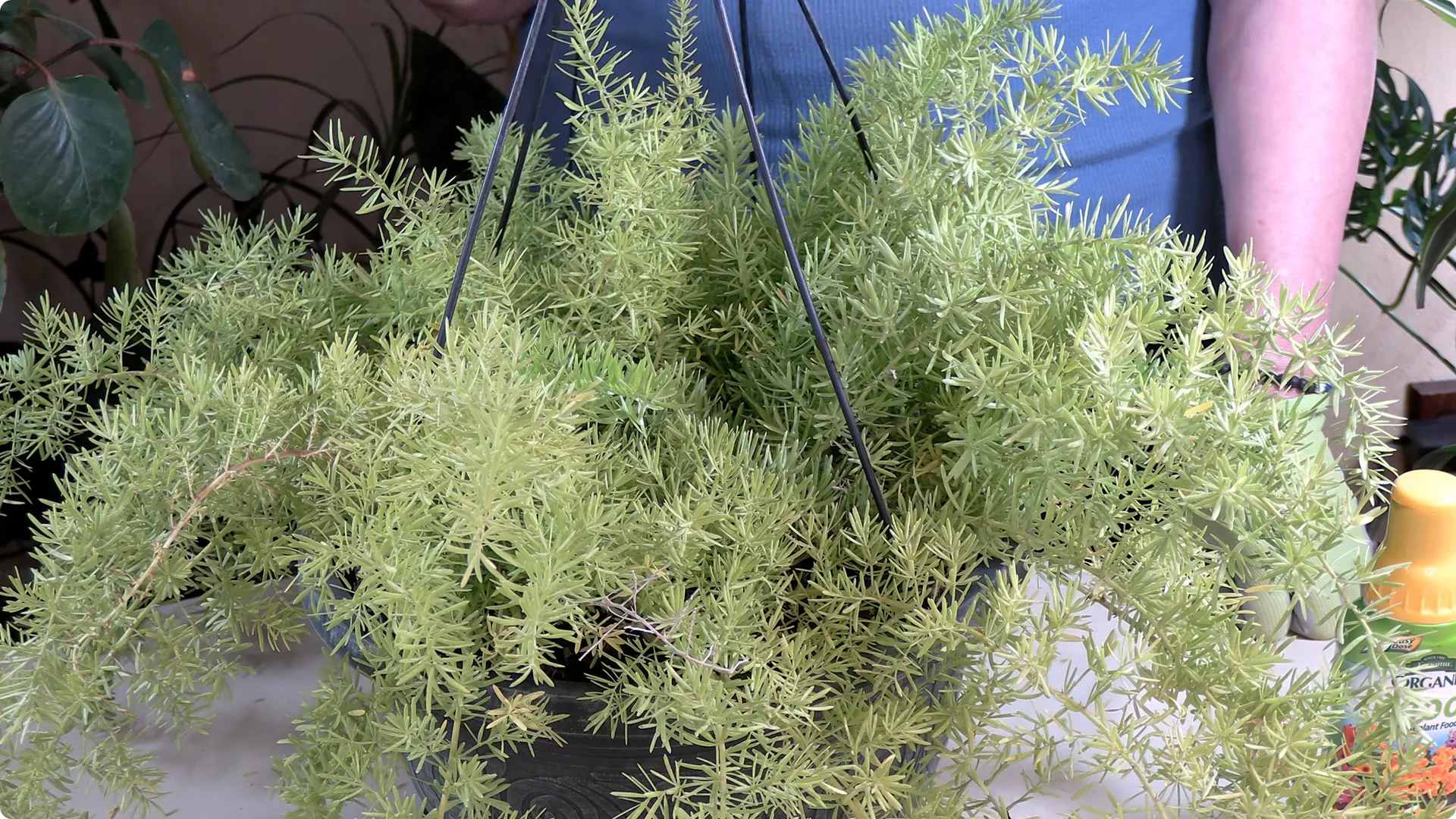
Water thoroughly until the soil is fully moist and water drains from the drainage hole. Always use a pot with drainage holes, because sitting in water causes root rot quickly. Brown fronds often indicate too little water, so check your schedule if you see browning.
Expect to check this plant more often in spring and summer as it drinks more. Weekly watering can be common, but do not rely on a calendar alone. In cooler months it needs less, and room warmth and placement also affect how fast it dries.
If you want a contrast in watering rhythm and light needs for a popular seasonal houseplant, explore these care tips for holiday cactus.
Simple watering check – Asparagus Fern Care
Step 1: Press a finger into the top 2 inches of soil or read a moisture meter.
Step 2: If it is dry and the meter is near 4, water thoroughly.
Step 3: Let excess water drain and never leave the pot in standing water.
3. Humidity – Asparagus Fern Care
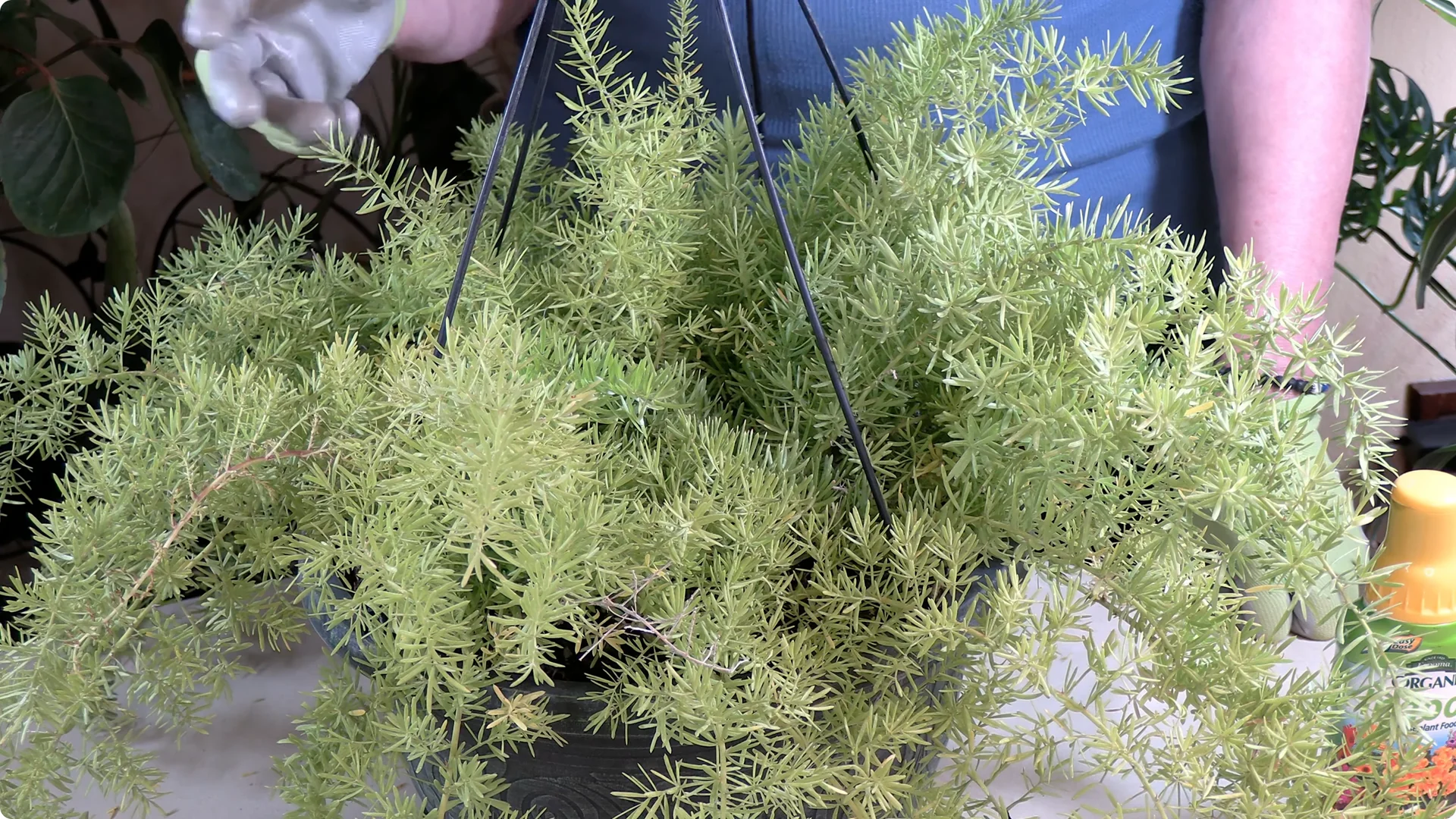
If you can provide a more humid environment than your home’s baseline, the plant will do better. Very dry air around 40 to 45 percent is not ideal, while 50 to 60 percent is much better. Misting a few times a day helps if you pass by often, and a humidity tray under a non-hanging pot also helps.
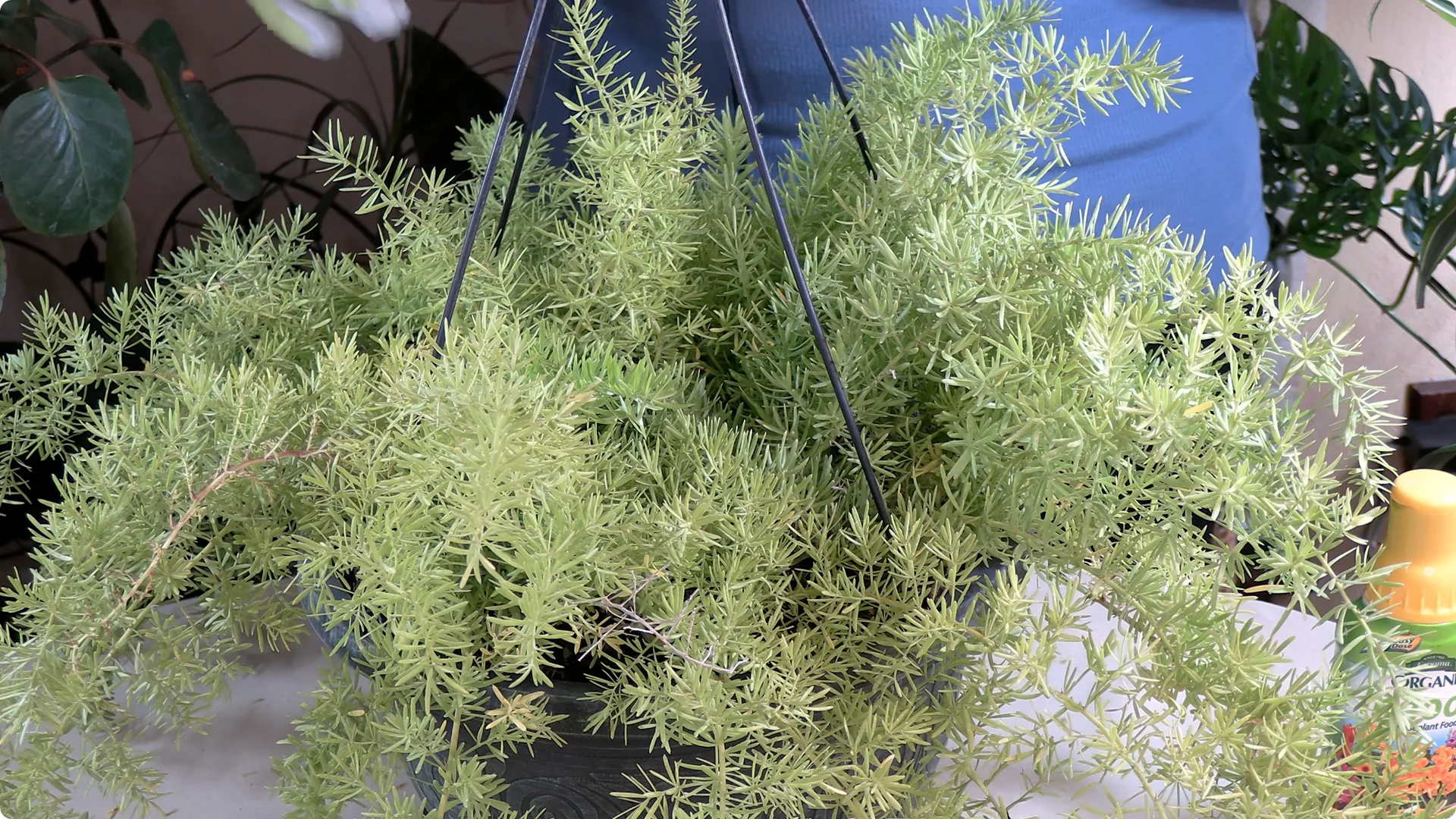
Grouping plants increases humidity through transpiration. Plants release moisture that benefits their neighbors. If humidity is too low, the fine needle-like leaves will drop.
Monitoring humidity – Asparagus Fern Care
Use a hygrometer to know the actual humidity near the plant. Hold it close to the foliage for a couple of minutes to register the level. Keep in mind the time of year and rainy periods raise humidity.
Hanging placement – Asparagus Fern Care
In very dry climates, avoid hanging placement if possible. Heat rises, and air higher up is warmer and drier, while a hanging pot also dries faster because air reaches the sides and bottom of the pot. A tabletop location near other plants makes it easier for the plant to benefit from shared humidity.
4. Soil – Asparagus Fern Care
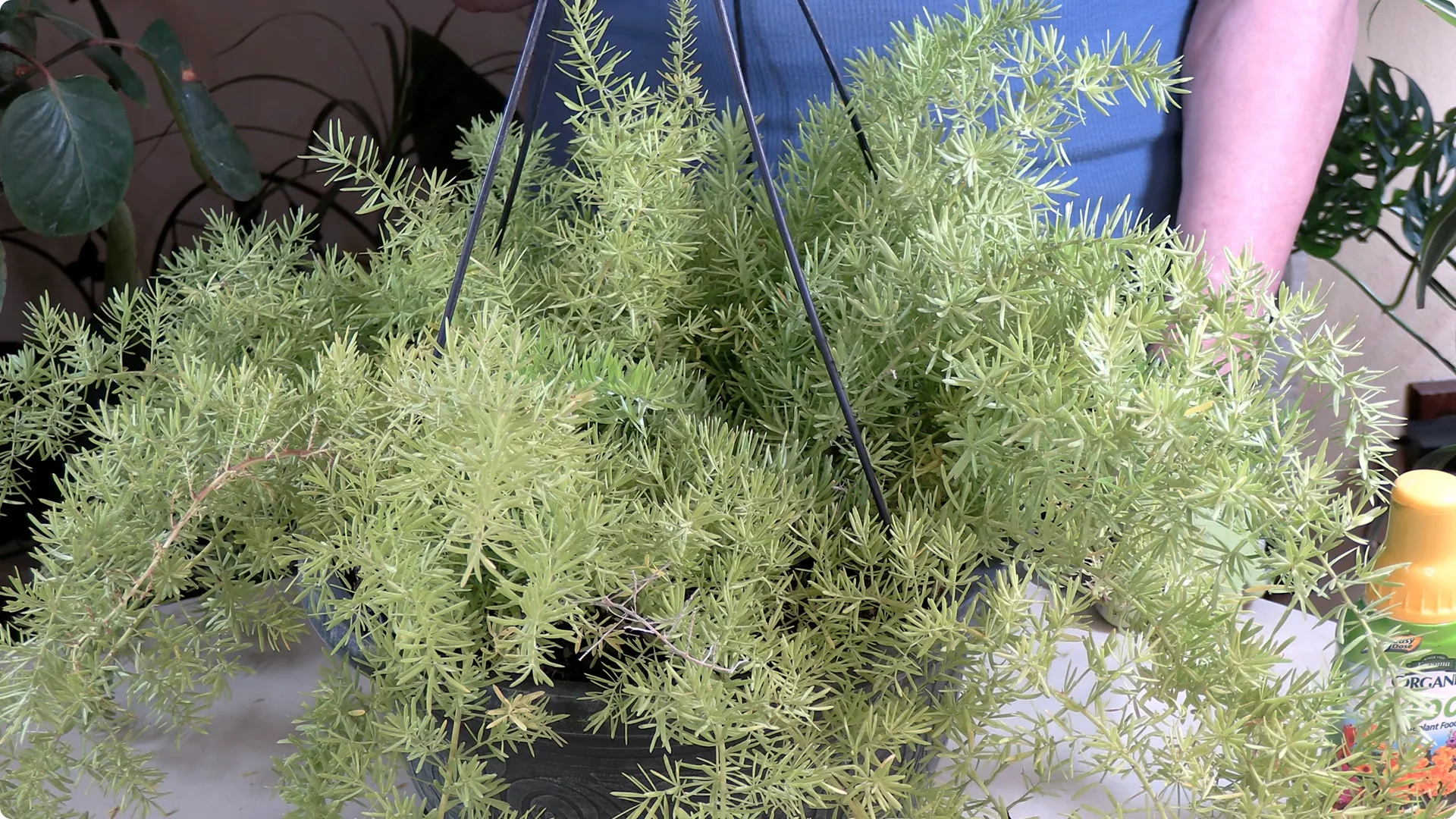
Use a light, well-draining soil that is also moisture retentive. If your mix feels heavy, add pumice for better drainage. A mix with peat moss or coir helps hold moisture and nutrients while still draining well.
If you are refining soil and feeding routines across your collection, these spring hydrangea tips offer helpful pointers on moisture management and nutrition timing.
5. Fertilizing and foliar feeding – Asparagus Fern Care
A general purpose indoor plant fertilizer works well, and liquids are convenient for this prickly plant. Granular products require working them into the soil, which is harder here, and you should wear gloves if you choose that route. Increase feeding during the growing season to support greener growth.
Yellowing foliage often points to a nitrogen deficiency, though other micronutrient issues can occur. Foliar feeding with a liquid fertilizer is a fast way to correct deficiencies. Spray the leaves so the foliage can take up nutrients more quickly than through the roots.
Quick foliar feed – Asparagus Fern Care
Step 1: Mix a balanced liquid fertilizer as directed.
Step 2: Spray the foliage until evenly coated, avoiding runoff.
Step 3: Repeat as needed if yellowing persists, while also reviewing light and watering.
Final thoughts – Asparagus Fern Care
This plant’s look is delicate, but it is tougher than it appears. Give it bright, indirect light, steady moisture with good drainage, and moderate humidity, and it will reward you with lush, limey growth. Keep gloves handy for maintenance, and use foliar feeding to green it up quickly if fronds start to yellow.