

Here are nine tips that will help you set up this beautiful leafy green giant for success.
I’m going to be showing you the best lighting, soil, temperature, watering, and everything else you need to get your fiddle leaf fig to not just grow but thrive.
The last two tips will help keep you from burning your fiddle leaf fig and also help you transform it altogether into a beautiful specimen for any room.
1. Lighting
Providing the proper lighting to your fiddle leaf fig, also known as Ficus lyrata, is probably one of the most important things you can do for it.
These tropical beauties thrive in bright indirect light, and mirroring their natural habitat in the rainforest of Western Africa will help keep them happy.
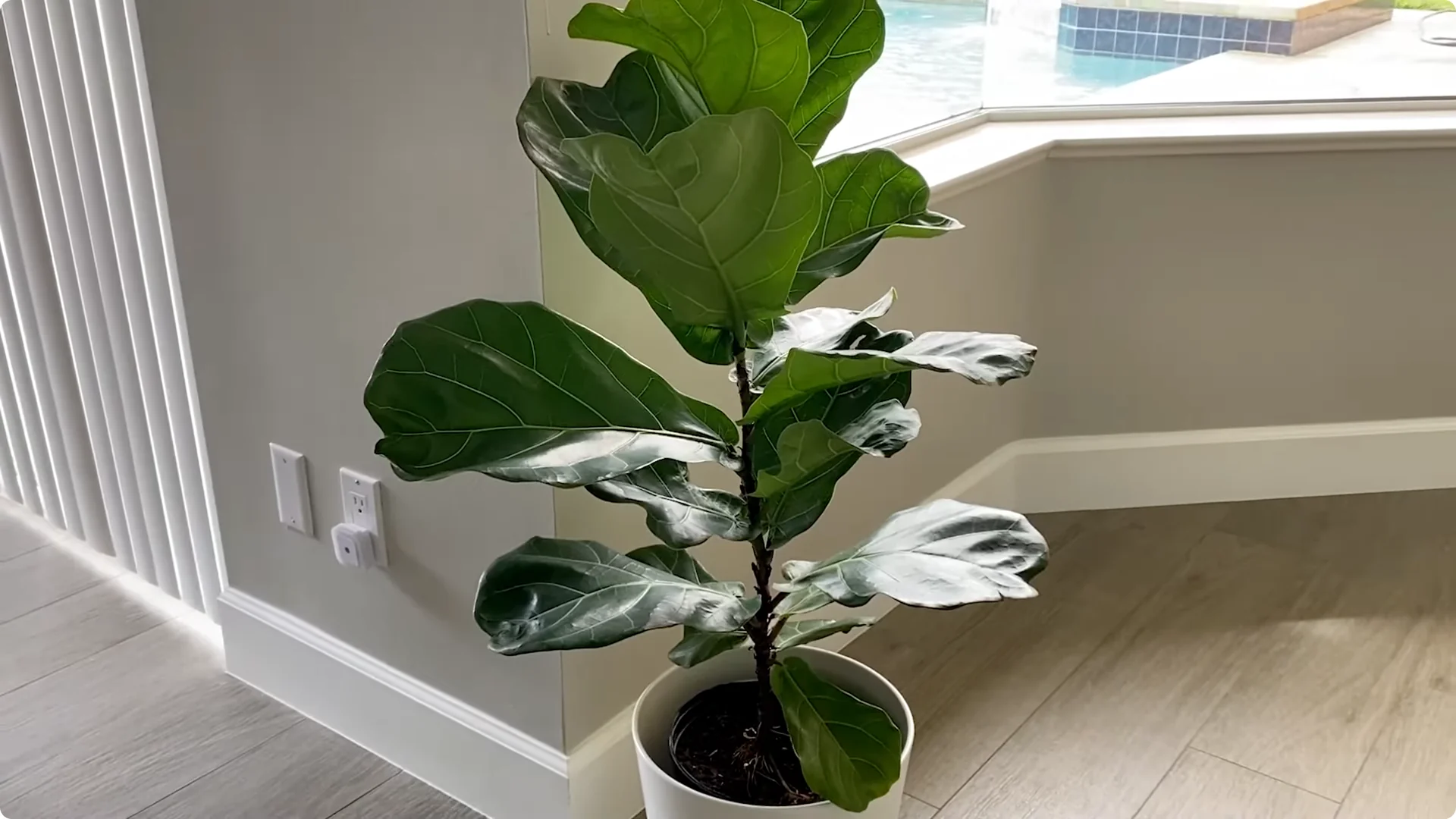
To keep your fiddle leaf fig healthy and encourage its iconic large glossy leaves, pay close attention to its lighting needs.
Ideally place your fiddle leaf fig near a window in your home or office that will provide it with the perfect balance of bright, indirect light for 6 to 8 hours a day without subjecting it to harsh direct sunlight, which can scorch its leaves.
Rotating the plant every few weeks ensures even growth on all sides and prevents the plant from leaning towards the light source. If you don’t have that window, you can also use grow lights. Position these lights a few feet above the plant and maintain a 10 to 12 hour daily light schedule.
Always monitor your plant’s response to its current lighting conditions, and if you see brown leaves, excessive leaf drop, or leggy growth, it’s likely a sign that the lighting needs adjustment.
2. Watering
Fiddle leaf figs are originally from the rainforest where they see consistent rainfall, so getting the watering routine right is important to their health. They prefer to be kept consistently moist but not waterlogged, and the key is to allow the top inch or two of soil to dry out between waterings.
An easy way to check is to just stick your finger in that top layer of soil, and if it’s dry, then it’s time to water.
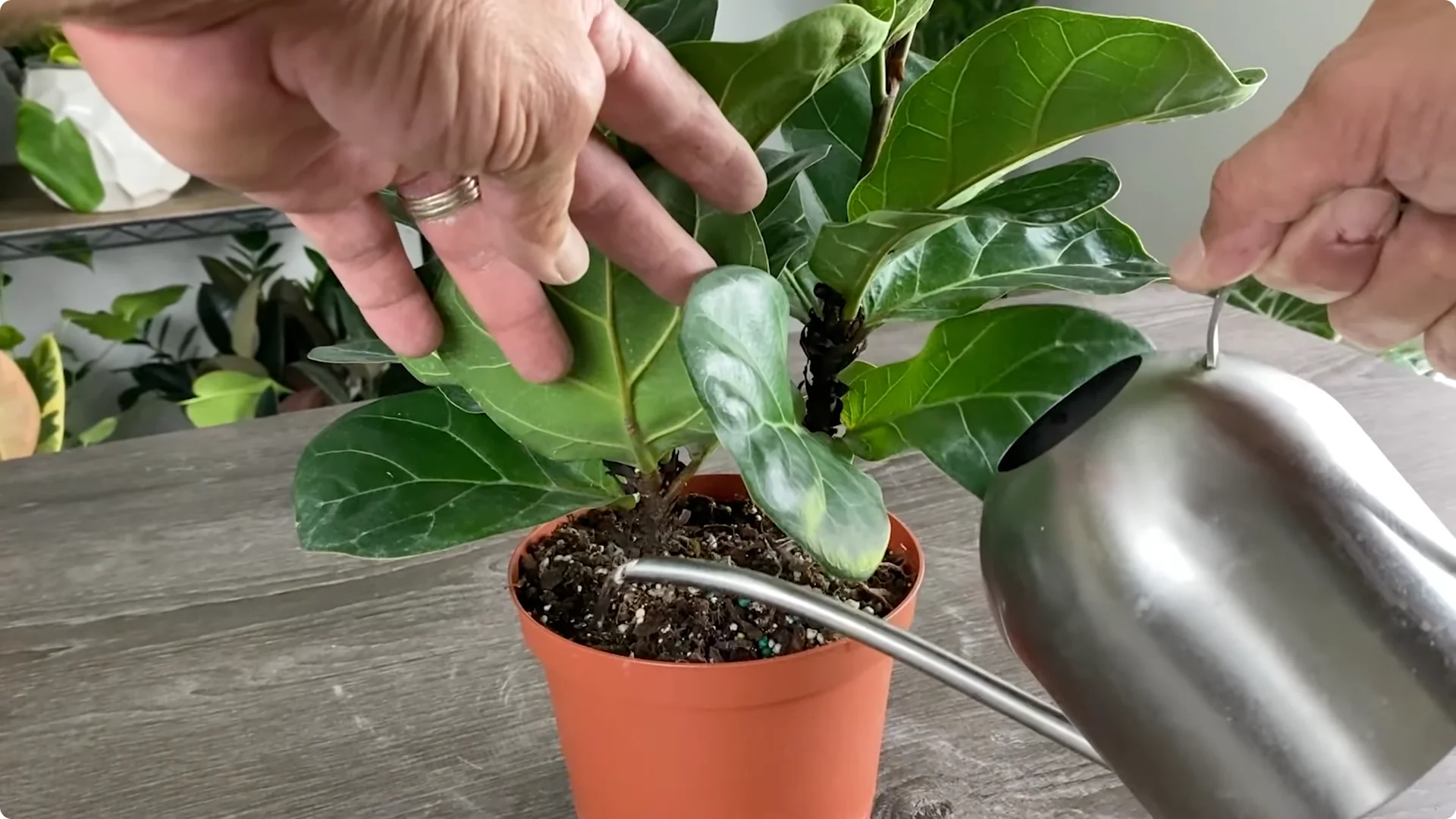
When you do water, water it thoroughly, allowing the excess water to drain from the pot’s drainage holes to prevent water from accumulating in the soil, which can lead to root rot.
Remember this – it’s often better to underwater than overwater your fiddle leaf fig, as they’re more tolerant of slight drought than soggy soil. Keep an eye on your plant leaves, and if they start drooping or developing brown spots, it may be a sign that your fiddle leaf fig needs more water.
On the other hand, if you start to see these small red dots on the leaves, which start as small blister-like bumps or swellings on the undersides of the leaves, no need to panic.
It’s called edema, and it’s a result of overwatering and occurs when a plant takes up water faster than it can release it through transpiration.
As a result, the plant cells become engorged with excess water and we start to see these symptoms. When you see these, it’s a sign to back off some on the frequency of your watering.
3. Temperature
If you want them to thrive, keep them in consistent temperatures like we normally have in our homes, which is between 65 to 75 F or 18 to 24 C.
It’s important to avoid exposing them to cold drafts, sudden temperature drops, or long periods of extreme heat.

Keeping them outside on your porch or patio during the warmer months will do them a lot of good as long as they don’t receive direct sunlight and you slowly acclimate them to the different lighting conditions they’ll be going into.
4. Humidity
Keep an eye on the humidity. Fiddle leaf figs love it, so aim for humidity levels between 40 to 60 percent to keep them happy.
In homes with dry indoor air, especially during the winter months, consider using a humidifier to maintain the proper levels of humidity.

5. Soil
Soil is a big deal for your fiddle leaf fig, and the secret to the best soil is a mix that can hold on to the water a little bit but still allow excess water to drain.
Fiddle leaf figs hate sitting in waterlogged soil, which can lead to root rot.
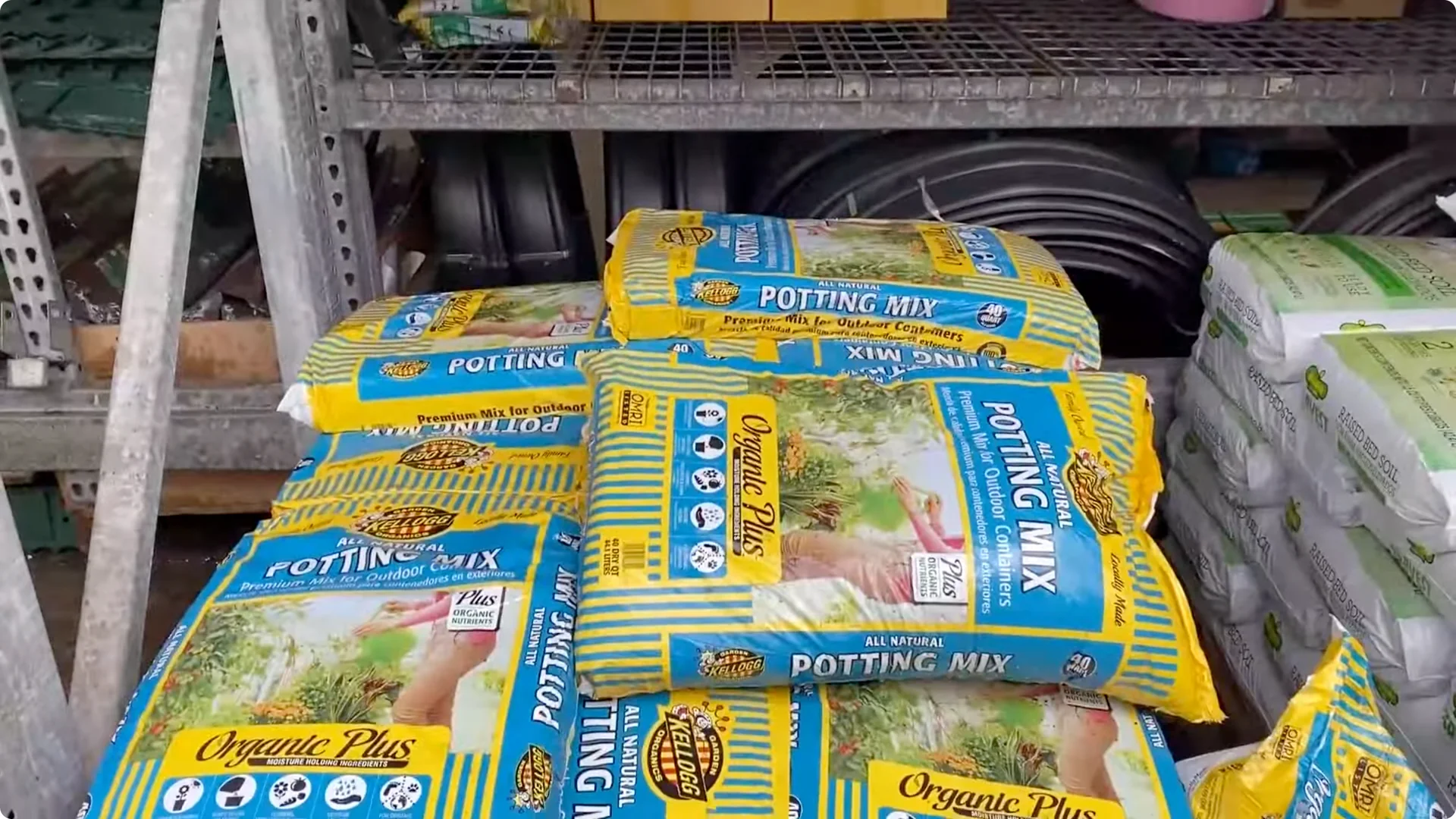
If you want to create a simple mix that you can find the ingredients for relatively easily at your local big box store or garden center, then I recommend you mix 50 percent potting soil to 25 percent perlite and 25 percent pine bark.
If you want to go through a little more work and create the best custom mix your fiddle leaf fig will ever set roots in, then create a mix that contains 50 percent peat or coir, 5 percent compost, 20 percent pine bark, 20 percent pumice or perlite, and 5 percent horticultural charcoal.
These components will be a little more difficult to find, but you can probably find them at your local garden center and online. The extra effort to create this mix will be well worth it.
6. Repotting
Fiddle leaf figs generally benefit from repotting every 1 to 2 years, and it’s best to do when they’re actively growing.
Something to look for which tells us we should step them up is roots circling around the top or the bottom of the soil or even poking out of the drainage holes, slowed growth, or when the plant starts to push itself out of the pot.
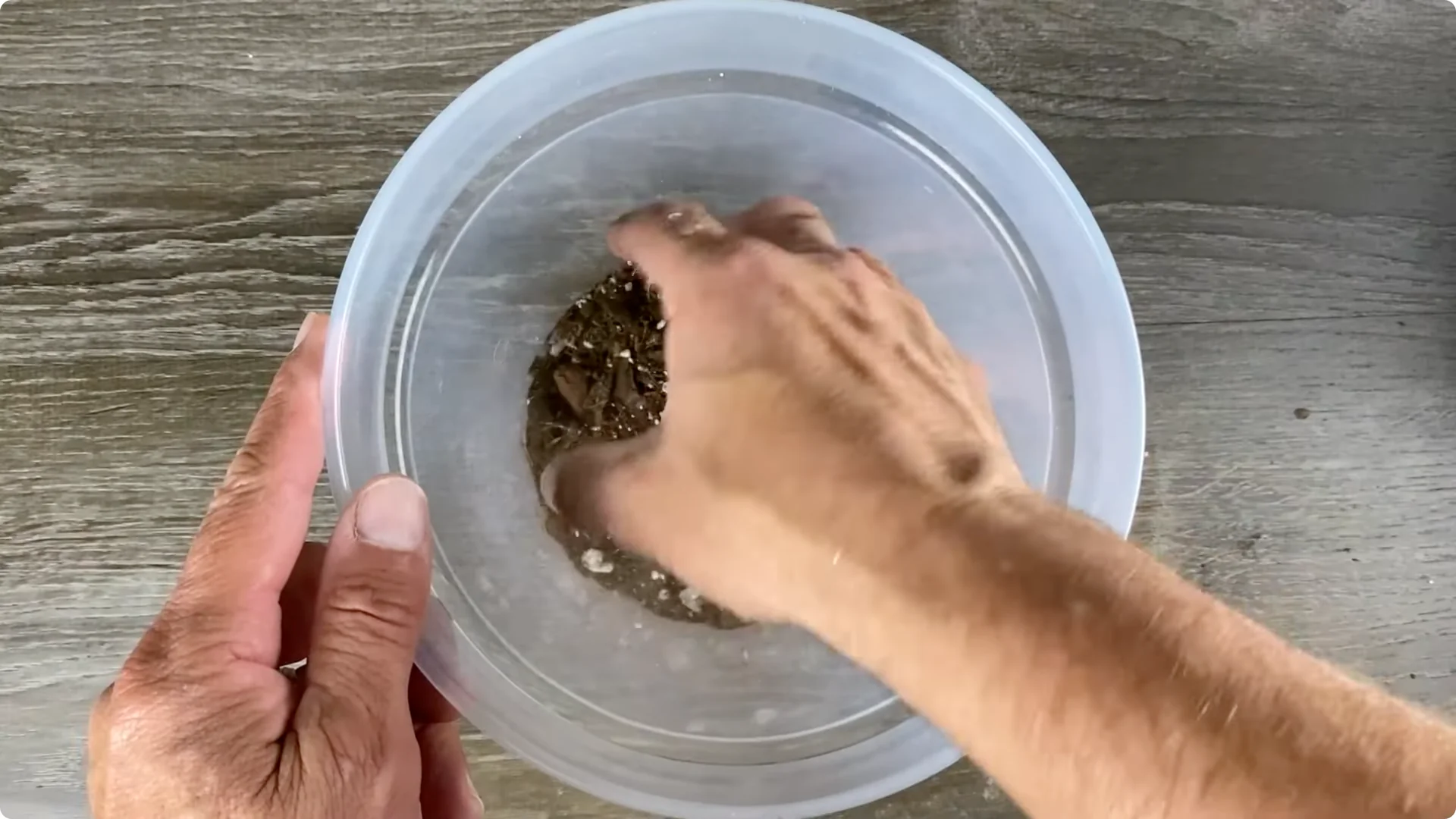
When the time is right to step up your plant, choose a pot that’s 2 inches larger in diameter than the current one.
Before repotting, gently remove the fiddle leaf fig from its current pot, and if it’s root bound, carefully loosen the roots to encourage outward growth.
Place some soil mix at the bottom of the new pot, position the plant, and fill it with additional soil.
After repotting, water your fiddle leaf fig thoroughly and place it in a spot with the same lighting conditions it’s accustomed to.
7. Cleaning
One thing’s for sure, these plants have large glossy leaves that can accumulate a lot of dust over time, which prevents them from photosynthesizing.
To keep your fiddle leaf fig thriving, routinely dust the leaves with a soft damp cloth or a microfiber duster to avoid damaging the leaves’ delicate surface while cleaning.
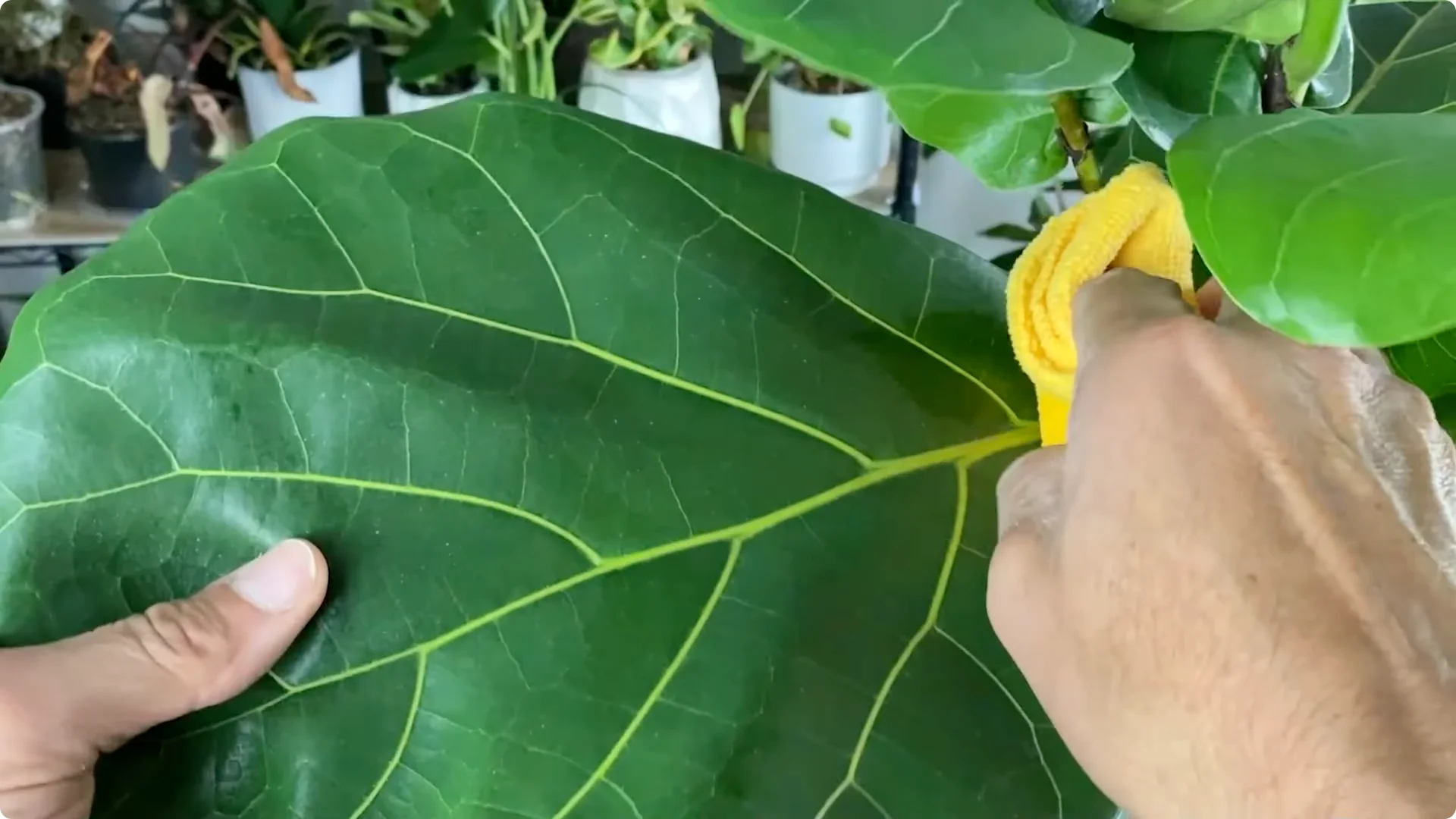
Also take the opportunity to inspect the leaves for any signs of pests like spider mites or mealybugs, and treat the plant quickly if you do spot any.
If your fiddle leaf fig is small enough for you to carry, you can also give it a shower under a gentle stream of room temperature water in the shower or use a hose outdoors.
This not only cleans the leaves but also helps knock down pests if there are any.
8. Fertilizer
During the growing season, typically spring and summer, your fiddle leaf fig will benefit from regular feeding.
I recommend you use a general houseplant fertilizer that’s suitable for tropical plants and contains the macronutrients nitrogen, phosphorus, and potassium and all the micronutrients.
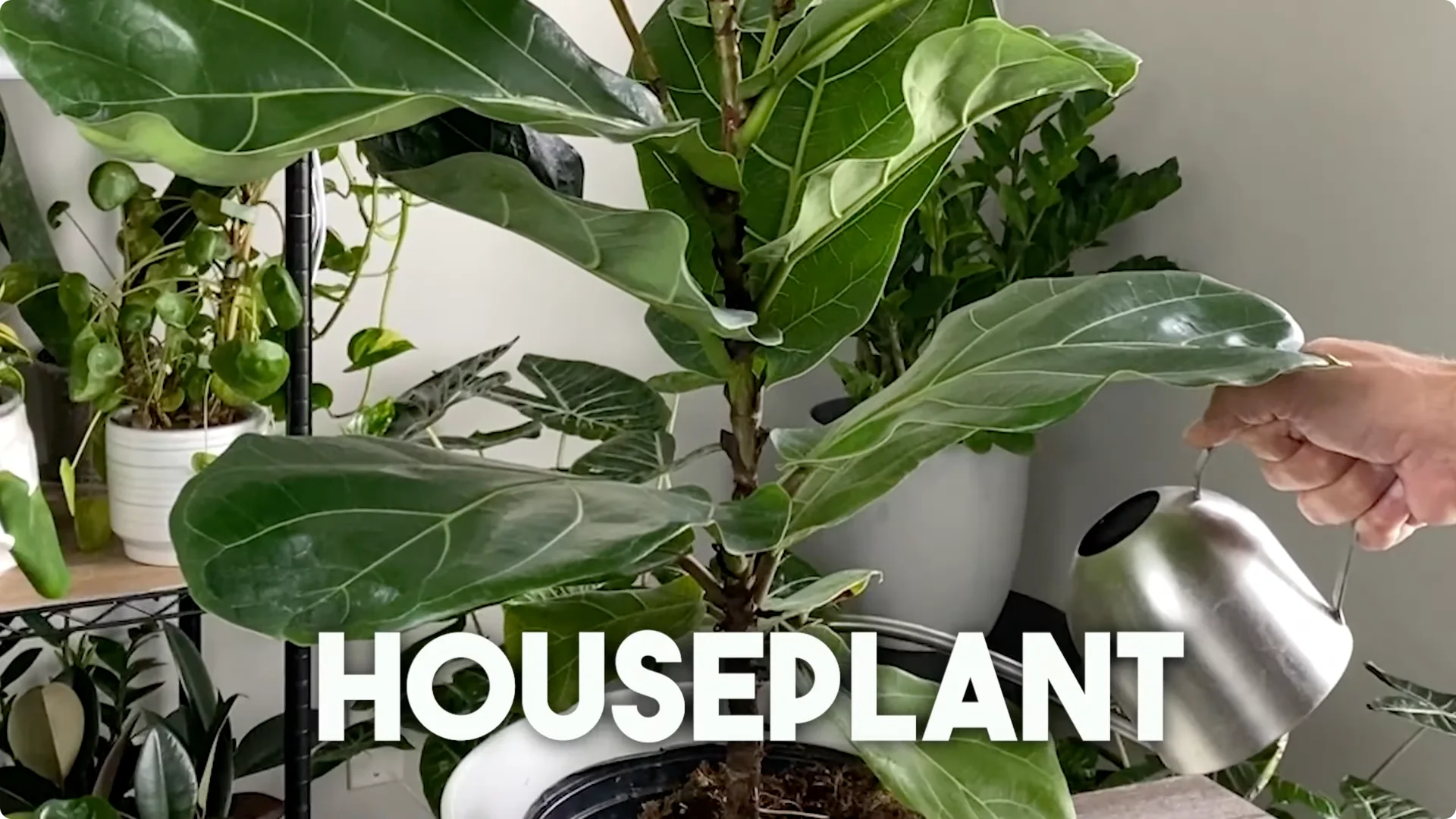
Follow the instructions and rates on the fertilizer package, and be careful not to over fertilize them, which can lead to salt buildup in the soil and can harm the plant. Generally a diluted solution applied every 4 to 6 weeks is enough to keep them growing.
During the dormant season, as your fiddle leaf fig’s growth slows down, stop fertilizing them altogether until the climate changes.
Routinely assess your plant’s condition to determine if it needs more or less fertilizer. Yellowing leaves or slow growth can be a sign of nutrient deficiency, letting you know it’s time to adjust your fertilization schedule.
9. Pruning
These beautiful plants have big glossy leaves, and strategic pruning helps them to maintain their shape, encourages new growth, and prevents leggy or overcrowded growth patterns.
Pruning can be done throughout the year, but it’s often best to do major pruning in the spring or early summer when the plant’s actively growing.
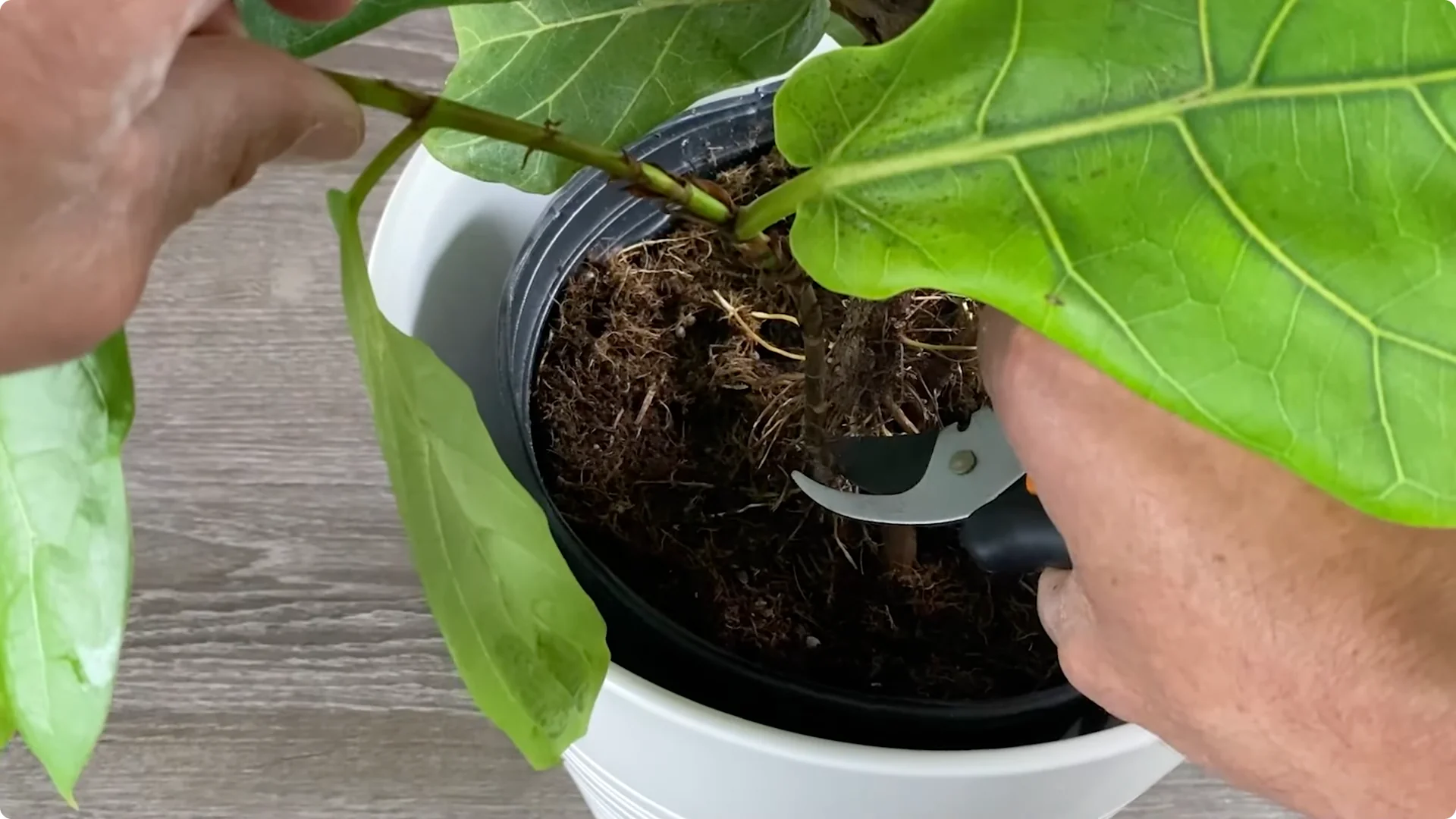
To prune them, start by inspecting your fiddle leaf fig for any damaged, yellowing, or dead leaves and stems, and remove them using clean sharp pruning shears to promote the plant’s energy allocation towards healthy foliage. You can prune for height control or shape maintenance.
This particular plant here I’ve been growing to get it to grow into a tree form, or what the professional industry calls a standard. I want it to get a little taller before I make the cut so that it can start to form the head.
To prepare it, I’ll start by removing some of the stems that are trying to make a run for it and stealing energy from getting it to grow straight up.
When it hits the height I’m looking for, I’ll make the cut in the branch growing straight up, and slowly new growth will emerge from here to form a full head for this plant.