
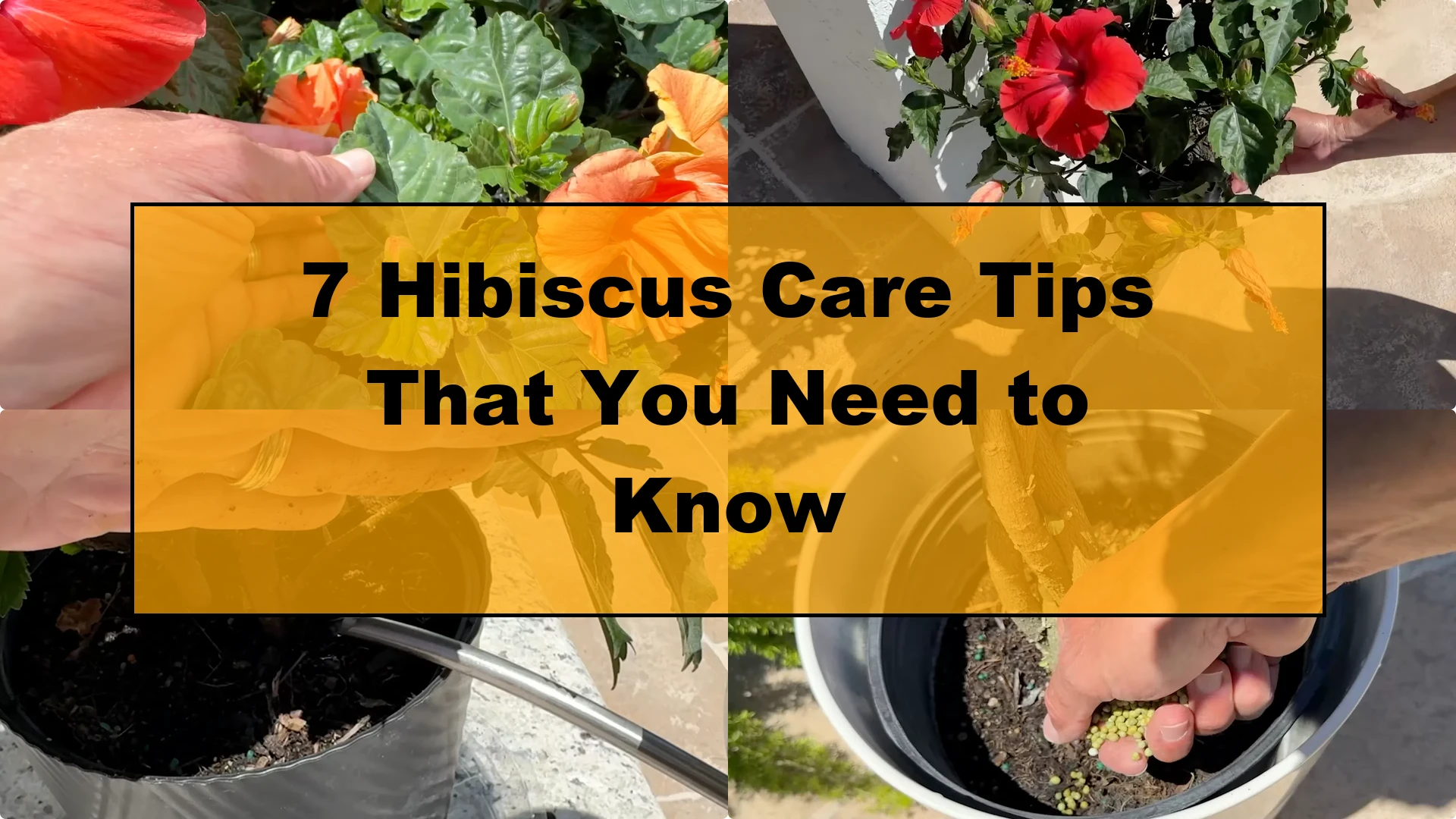
Hibiscus is one of the most stunning flowering plants you can grow. I’m showing you how to care for it the right way. No gimmicks, no myths, no over complicated routines. Just seven essential tips that are proven to keep your plant healthy and blooming.
These techniques are based off of principles that I’ve used over the past 30 years as a professional grower and consultant to some of the top growers in the world. They work and they’ll help you grow a hibiscus that actually thrives.
1. Pick Out a Healthy Hibiscus at the Garden Center
This is where your tropical hibiscus journey kicks off and where you might accidentally fall in love with three more plants than you planned for. But hey, that’s future you’s problem. Not today? No way. Today, we’re here to pick out a healthy hibiscus, and I’ll walk you through exactly what to look for.
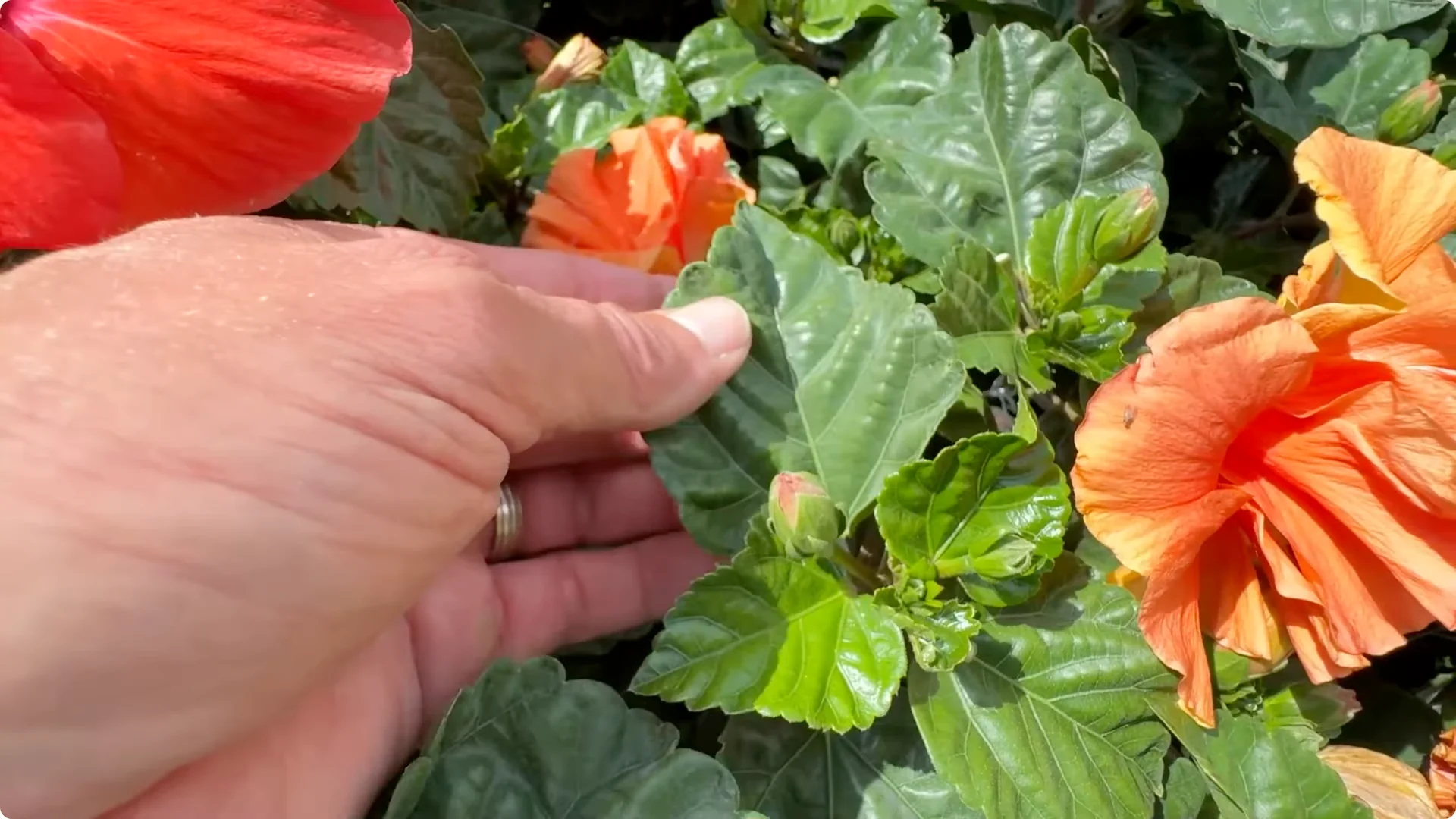
First, start by checking the overall health of the plant. You want vibrant, rich green leaves with no signs of yellowing, browning, or wilting.
Tropical hibiscus are big on visual cues. If they’re stressed, their leaves will let you know. Look out for black spots, sticky residue, or leaf distortion. These could point to pests, disease, or even nutritional deficiencies.
Next, take a look at the buds and blooms. It’s okay if a few flowers are fading, but ideally, you want a plant with several healthy buds that haven’t opened yet. This gives you a better chance of seeing flowers at home in the coming weeks and confirms that the plant is still actively growing.
Gently shake or move the plant. If you see leaves drop right away or notice tiny insects flying out of the pot, say hello to fungus gnats. That’s a sign to keep looking. A little shedding is normal, but excessive leaf drop is a big red flag.
Check the stems. Hibiscus should have firm, sturdy stems. Avoid plants with thin, leggy growth, which usually means they’ve been grown in low light and might take longer to bounce back once you bring them home. Also, take time to look for small black or yellowish bumps on the stems. Those could be scale, a pest you don’t want to mess with, not that you want to mess with any pest.
Get your hands dirty. Gently press the soil. If it feels soggy or smells musty, walk away. Hibiscus don’t like wet feet, and overwatering at the nursery could mean root issues down the road. If you can, carefully lift the plant from the pot to peek at the roots. Healthy roots should be light, tan, and evenly distributed throughout the pot, not dark or mushy. If they’re wrapped tightly around the pot, that means the plant is rootbound and might be stressed or getting there.
Bottom line, take a few minutes to inspect your plant now, and you’ll save yourself weeks of troubleshooting later. Trust me.
2. Give Them the Right Light, Temperature, and Humidity
To keep them blooming and happy, tropical hibiscus need at least 6 hours of bright direct sunlight each day. A sunny patio, south or west facing window, or sun room is their dream come true.
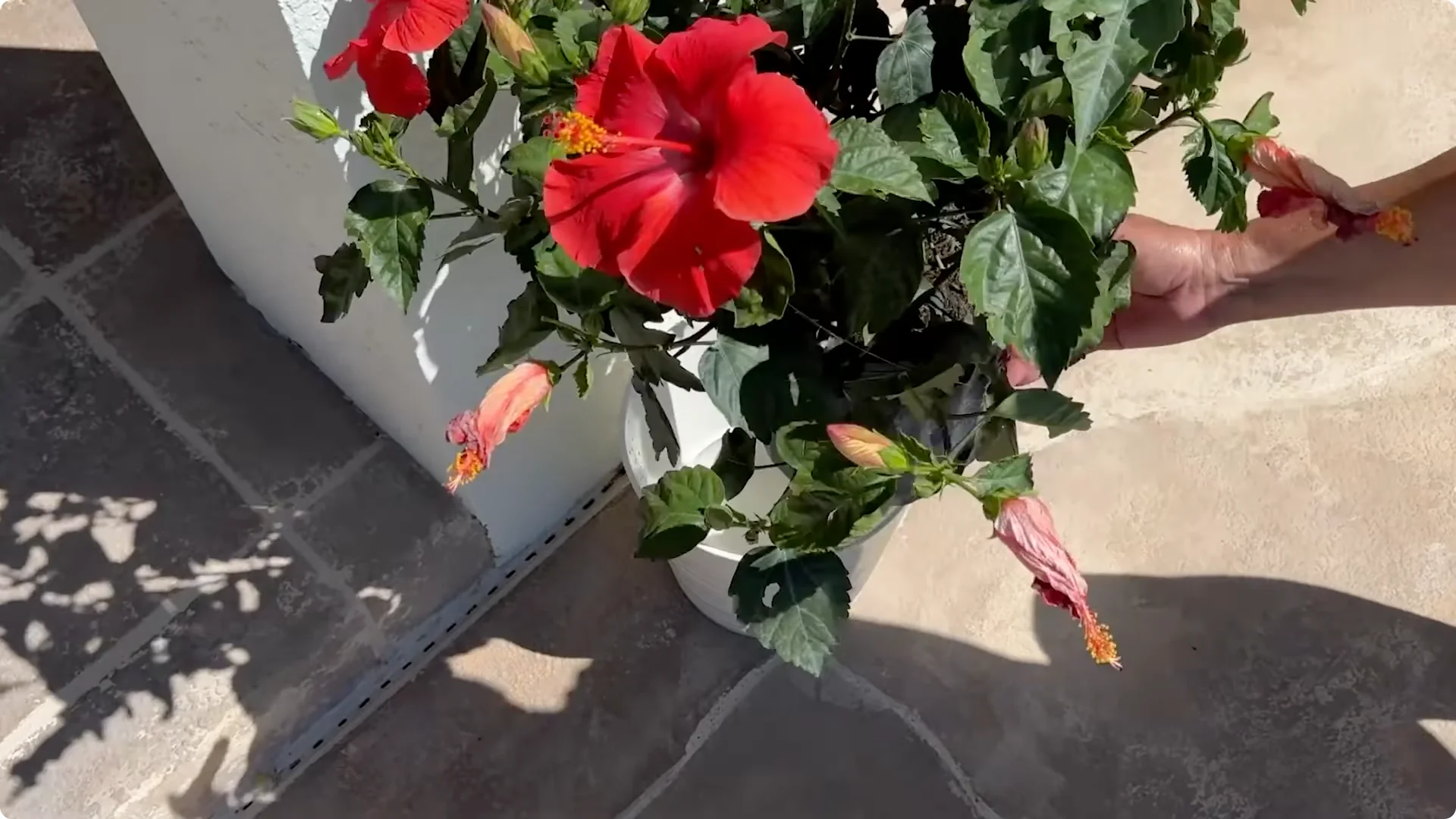
If you notice your hibiscus growing fewer flowers, stretching out, or dropping buds before they even bloom, that’s a clear sign of insufficient light. Give them the sunshine they crave, and you’ll be rewarded with those tropical showstopping flowers.
In regards to temperature, they thrive in temps between 65 and 85° F or 18 to 29° C. Once it dips below 55° F or 13° C, you’ll start seeing yellow leaves, slowed growth, and possibly a dramatic leaf drop.
If you’re growing them in containers outdoors, be ready to bring them inside when things cool down if you want to keep them from one year to the next.
As for humidity, they prefer it on the higher side. Remember, these plants that you purchased online or in a garden center for the most part are grown in South Florida where the humidity can sometimes be unbearable for us, but they love it.
3. Water the Right Way
Hibiscus like their soil to be consistently moist, but not soggy. That’s where the wheels fall off the wagon for a lot of folks. If the soil stays bone dry for too long, your hibiscus will start dropping buds, leaves, and eventually your hopes and dreams for blooms. On the flip side, if the soil is always wet or drains poorly, the roots can suffocate and rot, leading to yellowing leaves at first and eventually a very unhappy plant.
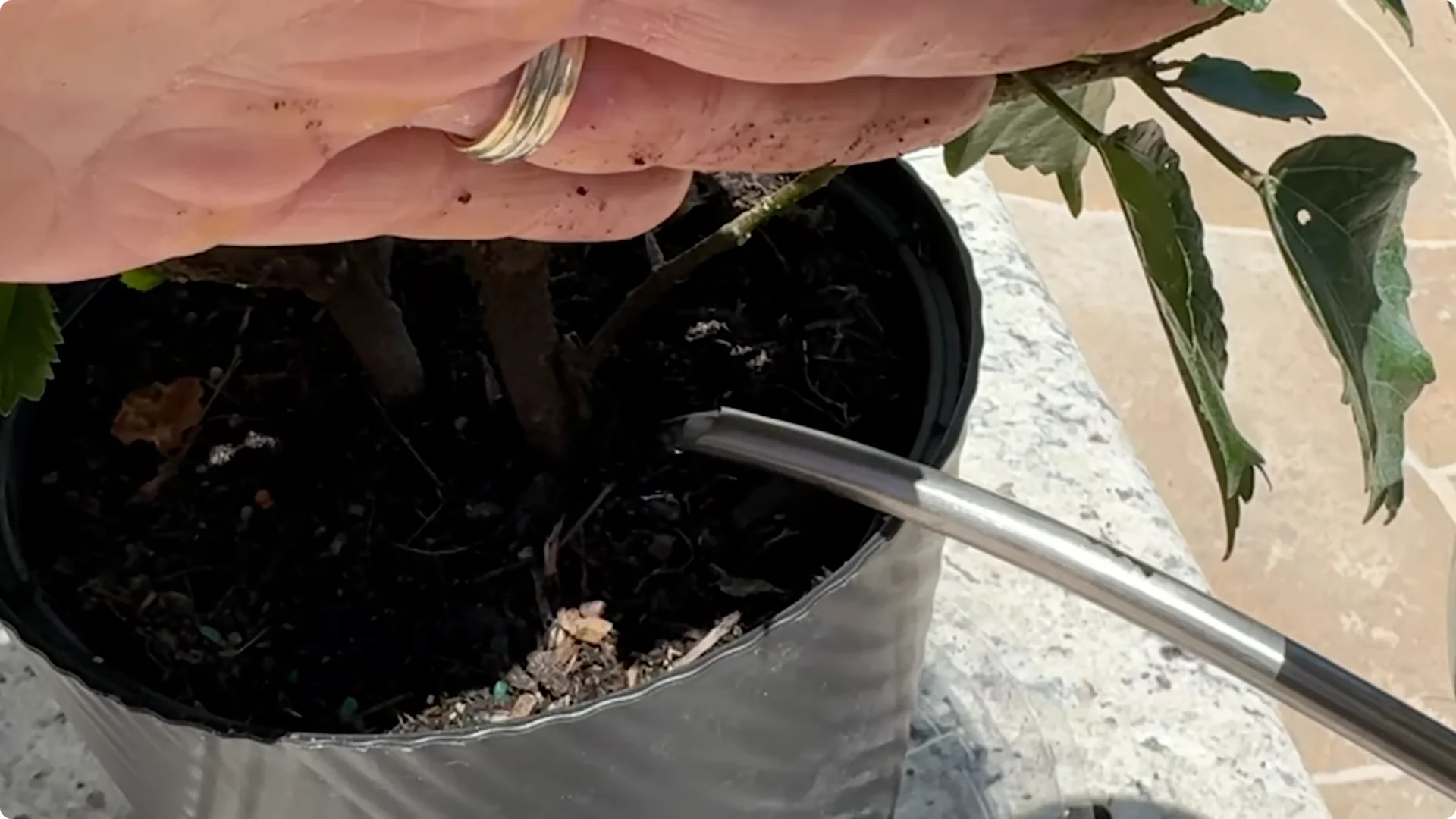
Start by checking the top inch of soil. If it feels dry to the touch, it’s time to water. And when you do water, go all in. Thoroughly saturate the soil until water drains out of the bottom of the pot. I actually water them heavy until water comes out into the catch tray and let them sit in that water for about 15 minutes, and then I come back and toss the excess water.
4. Feed for Big, Bold Blooms
Fertilizing your hibiscus is key to getting those big bold blooms and healthy green leaves they’re known for. These tropical plants are heavy feeders, especially during their active growing season which is spring through early fall. Regular feeding is essential to keep them thriving.
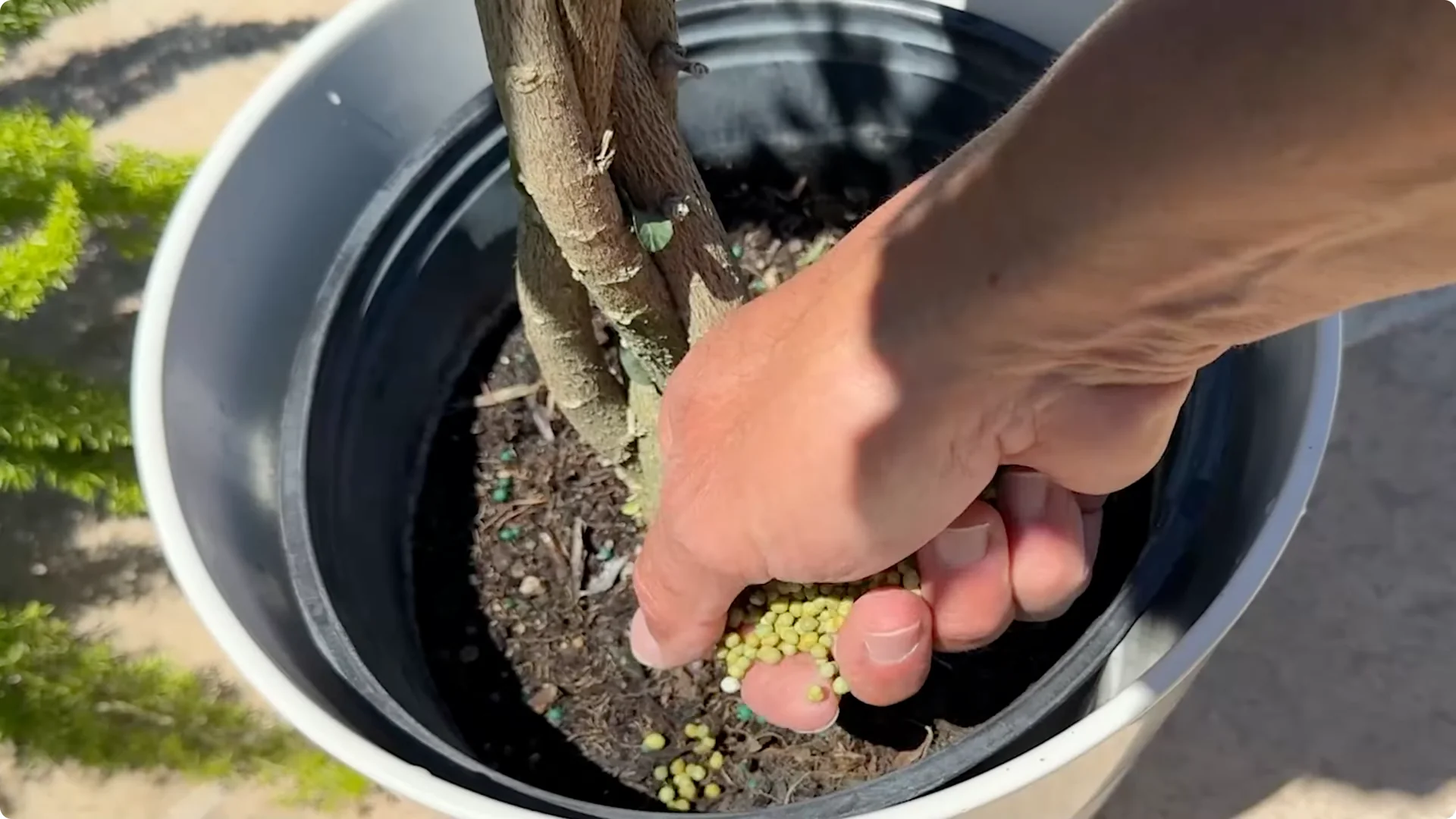
I recommend you use a balanced liquid or water soluble fertilizer. An analysis of 10-10-10 or triple 20 will do the trick. I’ve also had success with a bloom booster, something like a 10-30-20 that has a higher middle number, which is the phosphorus portion of the blend. I suggest feeding them every 2 to 4 weeks during the growing season, but always follow the instructions on the label. More isn’t always better and can actually harm the plant.
If you prefer a more hands-off approach, controlled release fertilizers can work great, too. Just sprinkle it around the base of the plant in the spring and it’ll feed your hibiscus gradually over time. Or better yet, open a small trench in the soil, pour the fertilizer in, and cover it back up. In the winter, cut back or stop fertilizing altogether, especially if you end up bringing your plant indoors.
5. Prune for Health, Shape, and More Flowers
Pruning a hibiscus isn’t just about keeping it tidy. It’s one of the best ways to encourage more blooms, healthier growth, and a fuller shape. Pruning can be done throughout the growing season to remove leggy branches or faded flowers. But for more structural pruning, late winter or early spring is the ideal time, just before new growth begins.
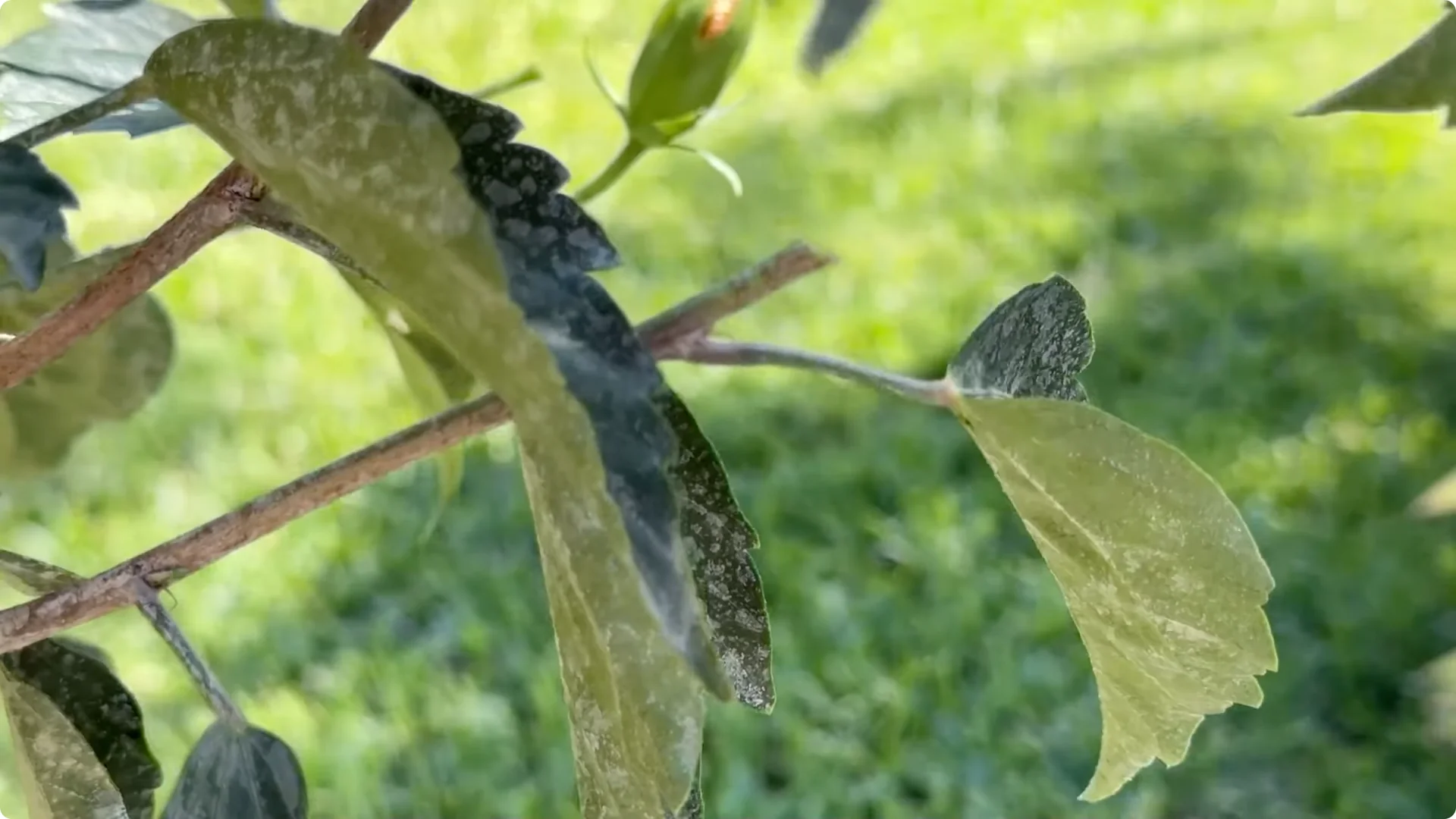
To prune them back, focus on the outer branches in which you’ll usually be cutting back about a third of the plant, unless it’s really overgrown. Hibiscus bloom on new wood, so pruning encourages them to push out fresh flower producing stems. Make your cuts just above a node where a leaf meets a stem, angling your cut slightly to allow water to run off.
If your plant is especially tall or leggy, don’t be afraid to cut it back more aggressively. It’ll bounce back stronger. After you’re done pruning, give your hibiscus a boost with water and a light dose of fertilizer. Within weeks, you’ll see lush new growth and soon after more vibrant blooms.
6. Spot Problems Early and Treat Pests Fast
It’s easy to look at a flawless hibiscus and think, “How hard can it be?” But even the healthiest looking plants can run into trouble. Knowing what to look out for can save you a lot of frustration.
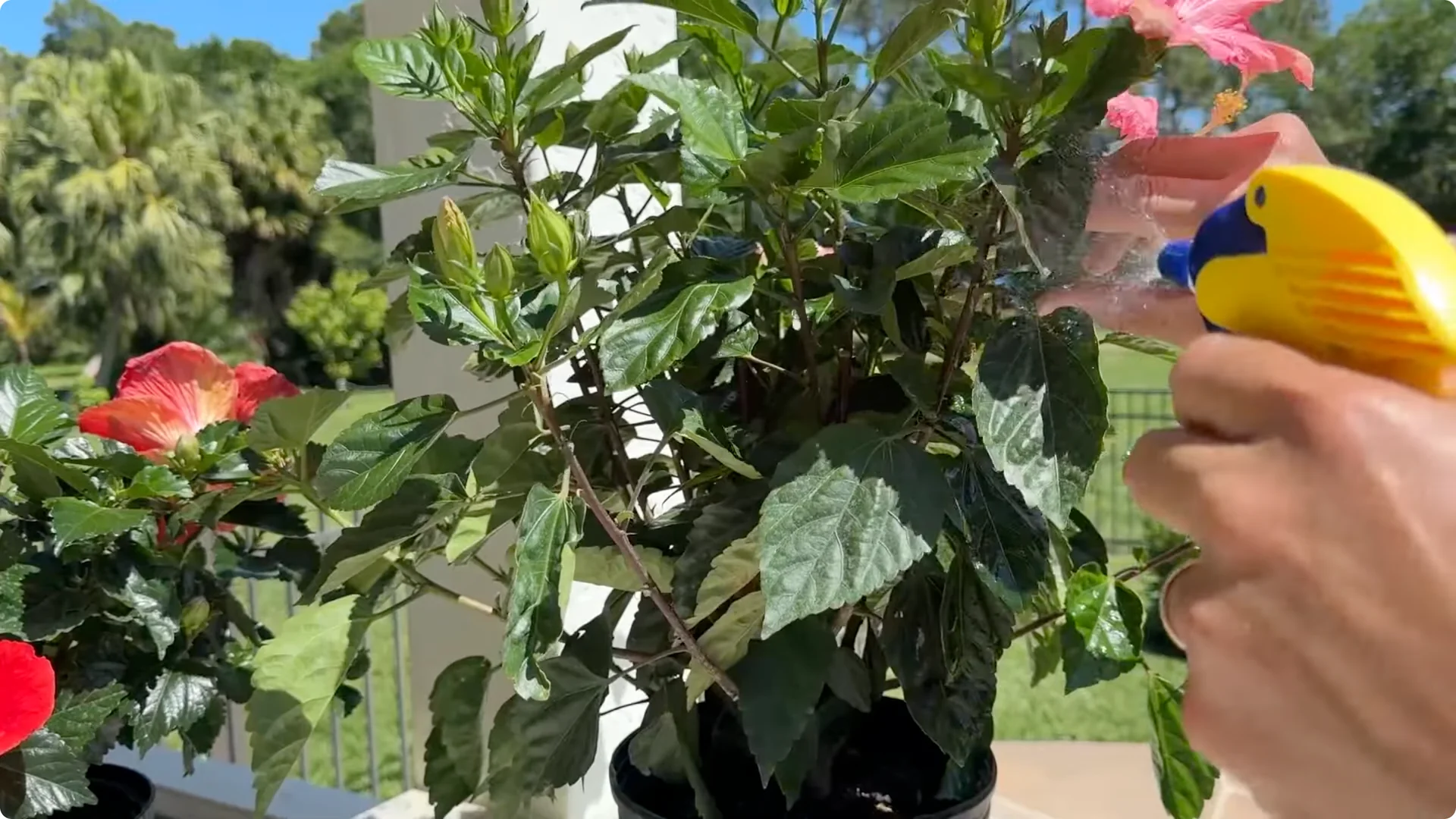
First are pests. Aphids, spider mites, and white flies love hibiscus. Aphids usually gather on new growth and leave behind sticky residue. Spider mites create tiny webs and cause stippling, those light colored specks on the leaves. White flies are tiny and flutter up like dust when you move the plant.
With mild infestations, spray the plant with a gentle mix of water and insecticidal soap, making sure you coat the undersides of the leaves. Repeat this every few days if the infestation is bad. For extra stubborn cases, you can spray neem oil, apply a systemic pesticide to the soil, and even spot spray the foliage with isopropyl alcohol.
If you see yellow leaves or notice leaves dropping, it’s usually one of three things: overwatering, underwatering, or a sudden change in light. Check the soil. If it’s soggy, ease up on the watering. If it’s bone dry, get some moisture back in there.
Bud drop is another common frustration. Your plant will form buds and then they fall off. This can be caused by fluctuating temperatures, low humidity, or too much fertilizer. Regularly checking on your hibiscus makes a huge difference, and catching problems early is always easier than fixing them later.
7. Overwinter Successfully Indoors
As the cooler months roll in, a lot of people treat tropical hibiscus like an annual and toss them out and get a new one next year. But if you’re looking to save yours from one year to the next, then unless you’re in a tropical climate and can keep them above 55° F, you may want to bring your potted hibiscus indoors for the winter and keep it healthy until spring.
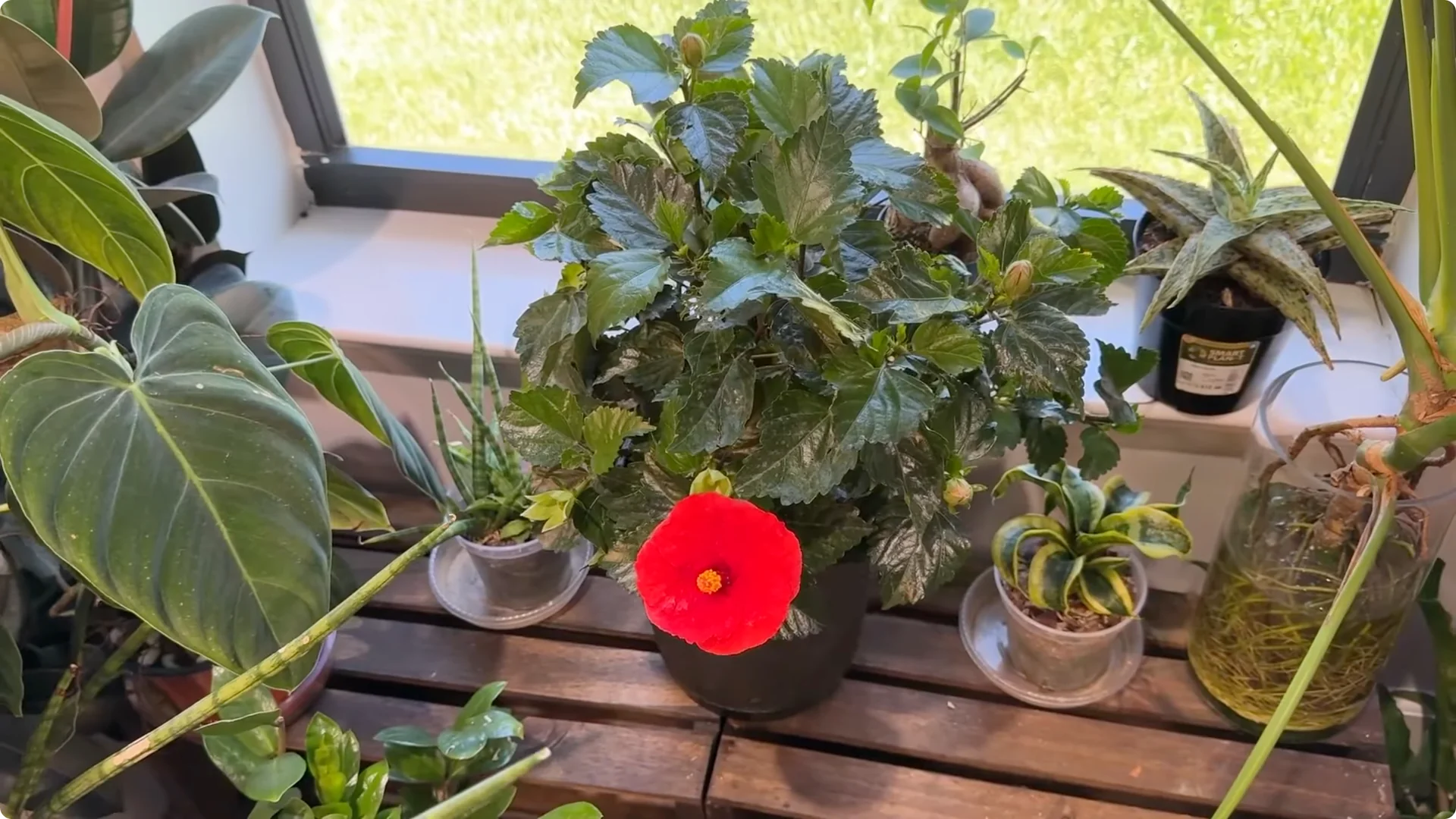
To be successful with this, first make sure it receives plenty of light. As I mentioned before, tropical hibiscus need bright sunlight, so place it in a south or west facing window where it can get as much light as possible. If this lighting is still not enough, then I suggest supplementing with grow lights to help the plant thrive.
When it comes to watering indoors, water when the top two to three inches of the media are dry. Since the growth of your hibiscus will slow down in the winter, it’ll need less water, so be mindful not to overwater.
Final Thoughts
Grow a hibiscus that actually thrives by starting with a healthy plant, giving it strong light and warm, humid conditions, watering deeply but not constantly, feeding on a schedule, pruning for new growth, staying ahead of pests, and overwintering it with care. Take a few minutes to observe and adjust, and your reward will be lush growth and those tropical showstopping flowers.