
Tearing your snake plant into pieces may be the best way for you to propagate your snake plant. At first, breaking it up and tearing into the roots can seem a little intimidating, but once you give it a try and follow the steps below, you’ll build the confidence and wonder why you didn’t do it sooner.
A little over 8 months ago that’s exactly the situation I was facing when I broke apart my Twisted Sister snake plant. I was growing this beautiful houseplant that I was lucky enough to pick up at a big box store, which by the way I haven’t been able to find another one again, and as it was growing I noticed a small pup growing from the side of the plant.
At this point I could have let it continue to grow, but with this variety letting it grow would mean that the pup and the mother plant would be fighting for the same spot in the pot. That would then grow into a cluster of several plants, and eventually that would have meant losing the look of a single plant, which is how I personally feel that the Twisted Sister looks best.
1. Why I Chose Snake Plant Division Propagation
With snake plants there’s basically two ways to propagate them. One is by leaf cutting in soil or water, and the second is by division.
In a nutshell with leaf propagation we basically cut up the leaf, put it in a medium, and it gives us a bunch of newly propagated plants.
The downside with this method is that when we’re done propagating the leaf cutting we start with a smaller plant, which is fine if you have the patience.
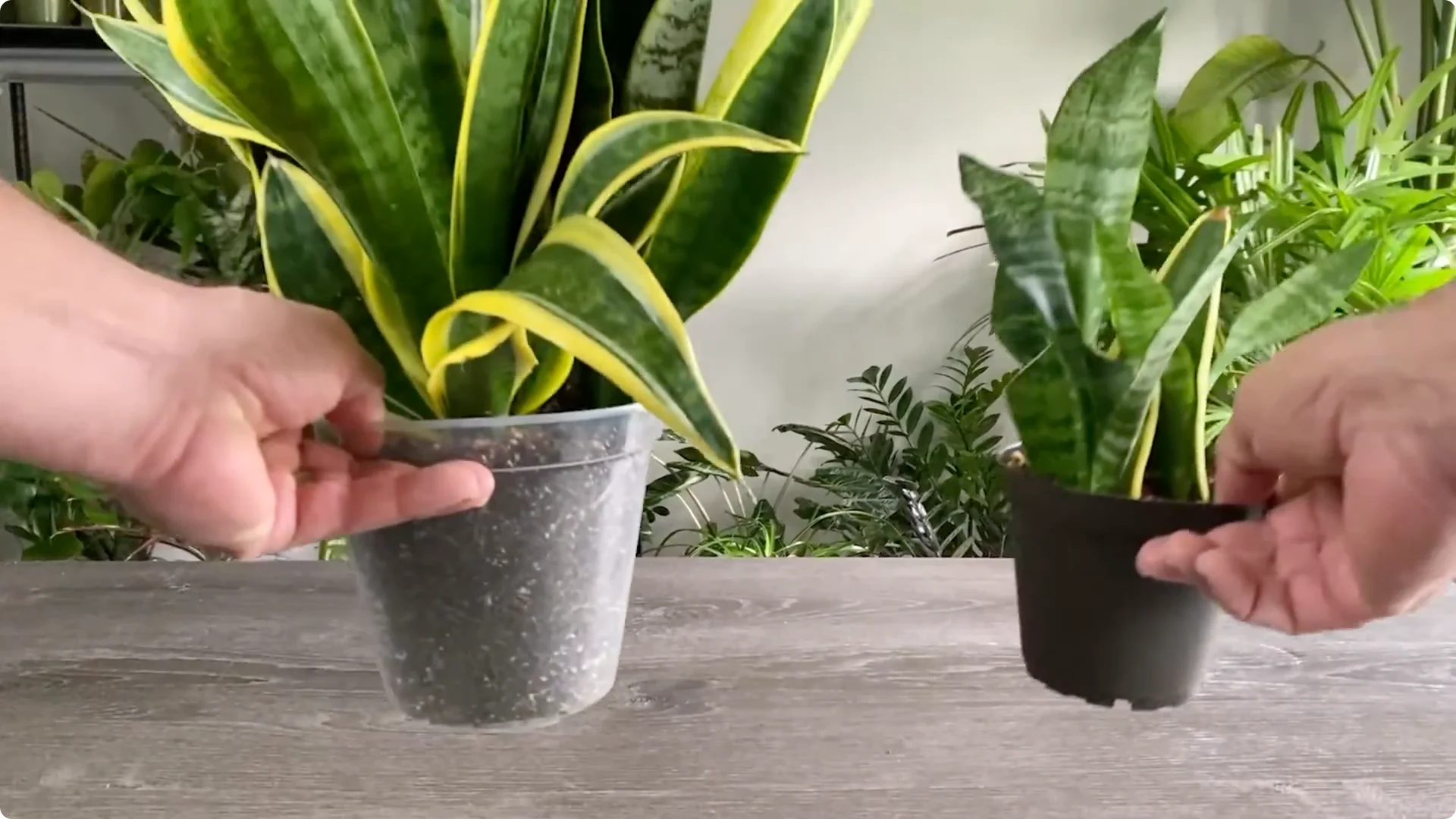
I think the most important drawback that we get by propagating snake plants from leaf cutting is that we lose the variegation on the leaf when the small plants start to grow.
I don’t always mind, but you might, and that’s when you want to propagate your snake plant by division.
2. Step-by-Step Snake Plant Division Propagation
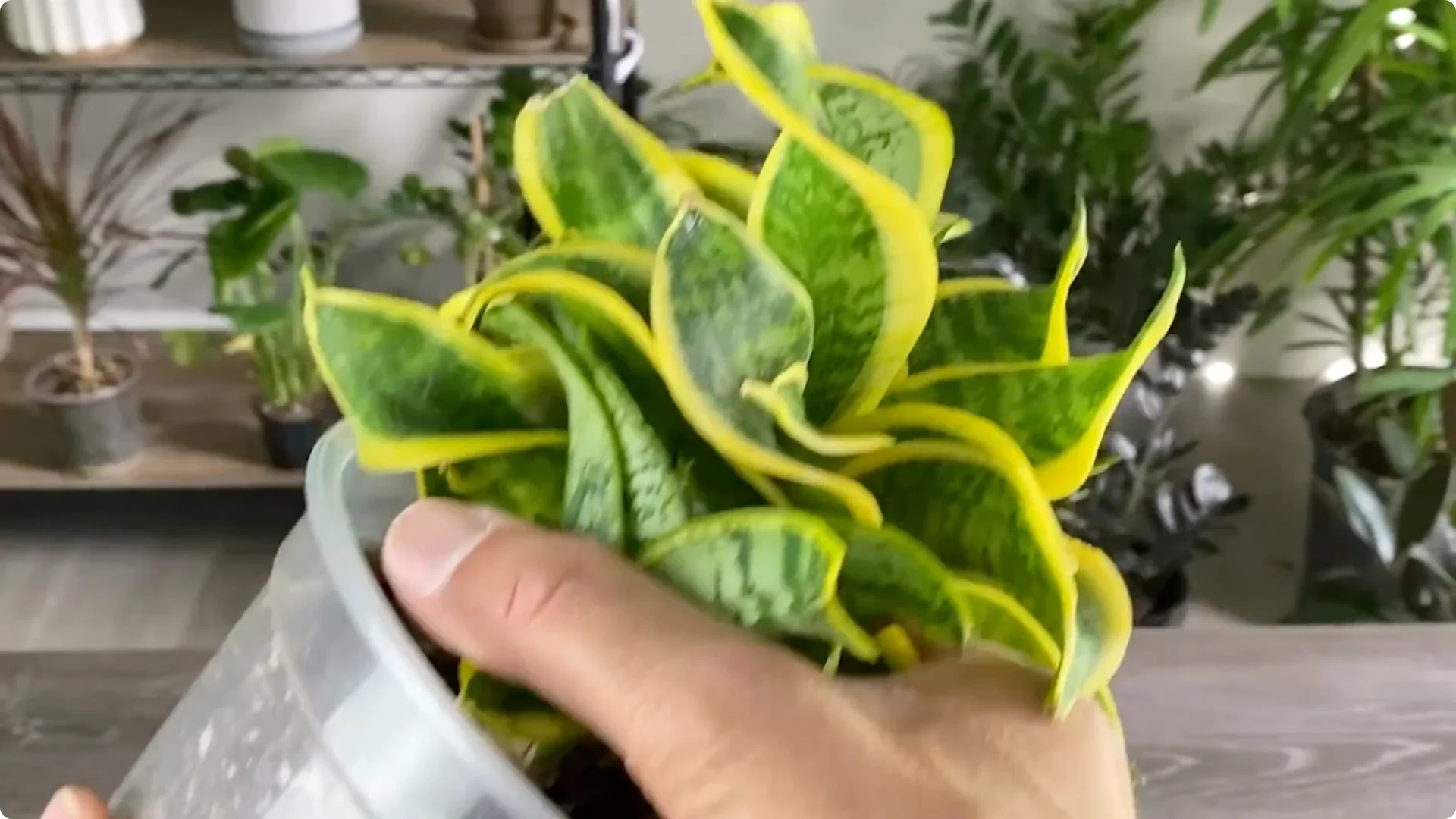
Prepare the plant and locate pups
To start the process of propagation by division I begin by removing the pot from my plant and then I look to see where the pups are. I can see we have one here and another over here, so I want to slowly start by removing the soil from areas that will ultimately help me to remove the pups, trying to not remove more soil than I have to.
It’s not that I’m afraid they’ll die, but the more soil I keep in place the less the plant will suffer and the quicker it’ll get back to growing once it’s settled in.
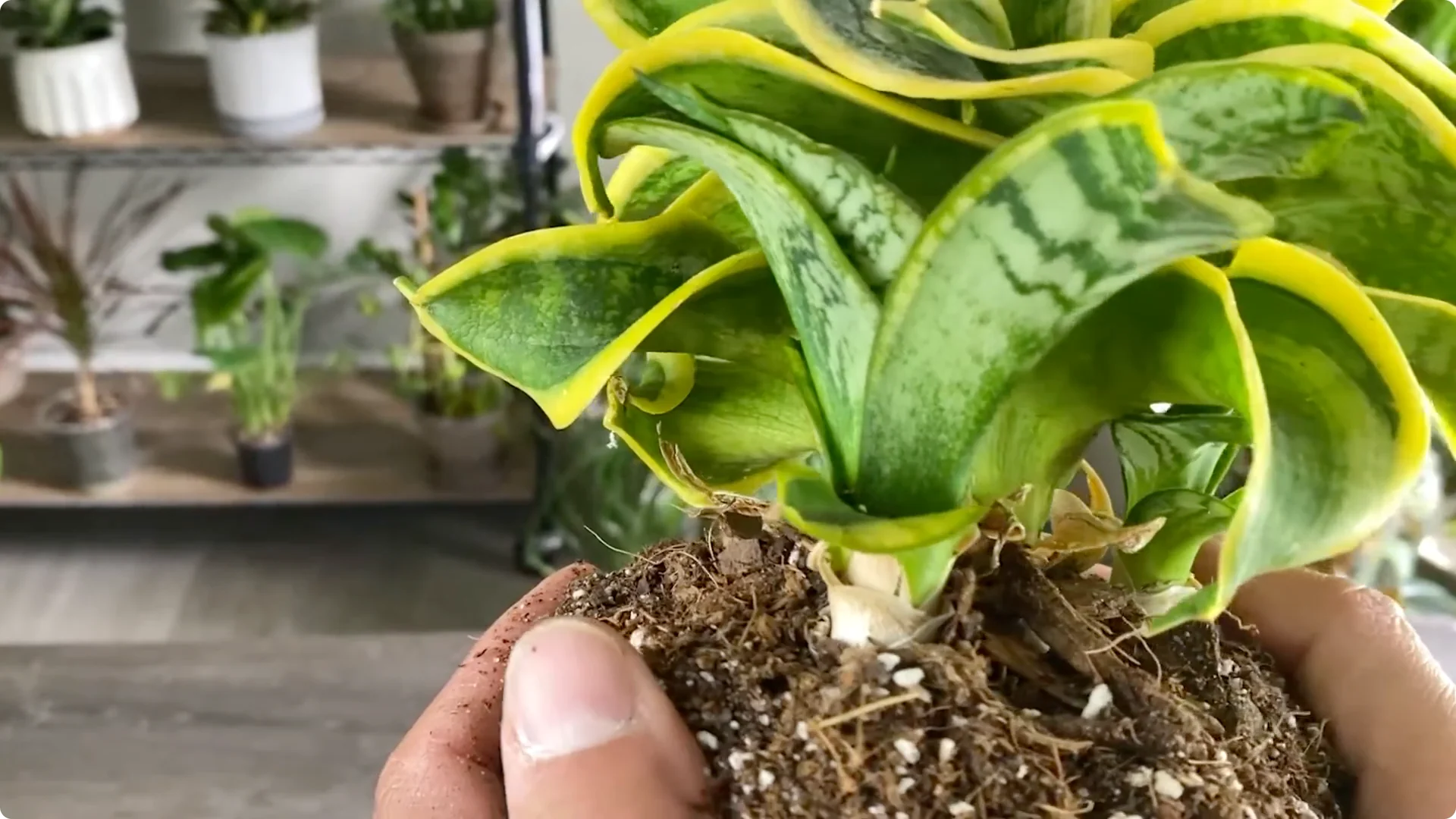
That being said you shouldn’t be afraid either. Snake plants are pretty resilient, and if it’s any consolation when the pros receive their cutting they usually have little to no roots on the cutting when they’re first planted after being plucked from a field, being in transit for several days, and then being planted.
I know what you’re thinking, they’re pros and that’s why they succeed, but you can too if you follow the simple steps and one very important one I’ll share with you below.
Separate and choose the right pots
Now I have the three individual plants and I need to find the right size pot for each one. For the mother plant which I just took the pups from, I’ll use the same pot it was in and just replant it with some older soil and fresh soil if I need to.
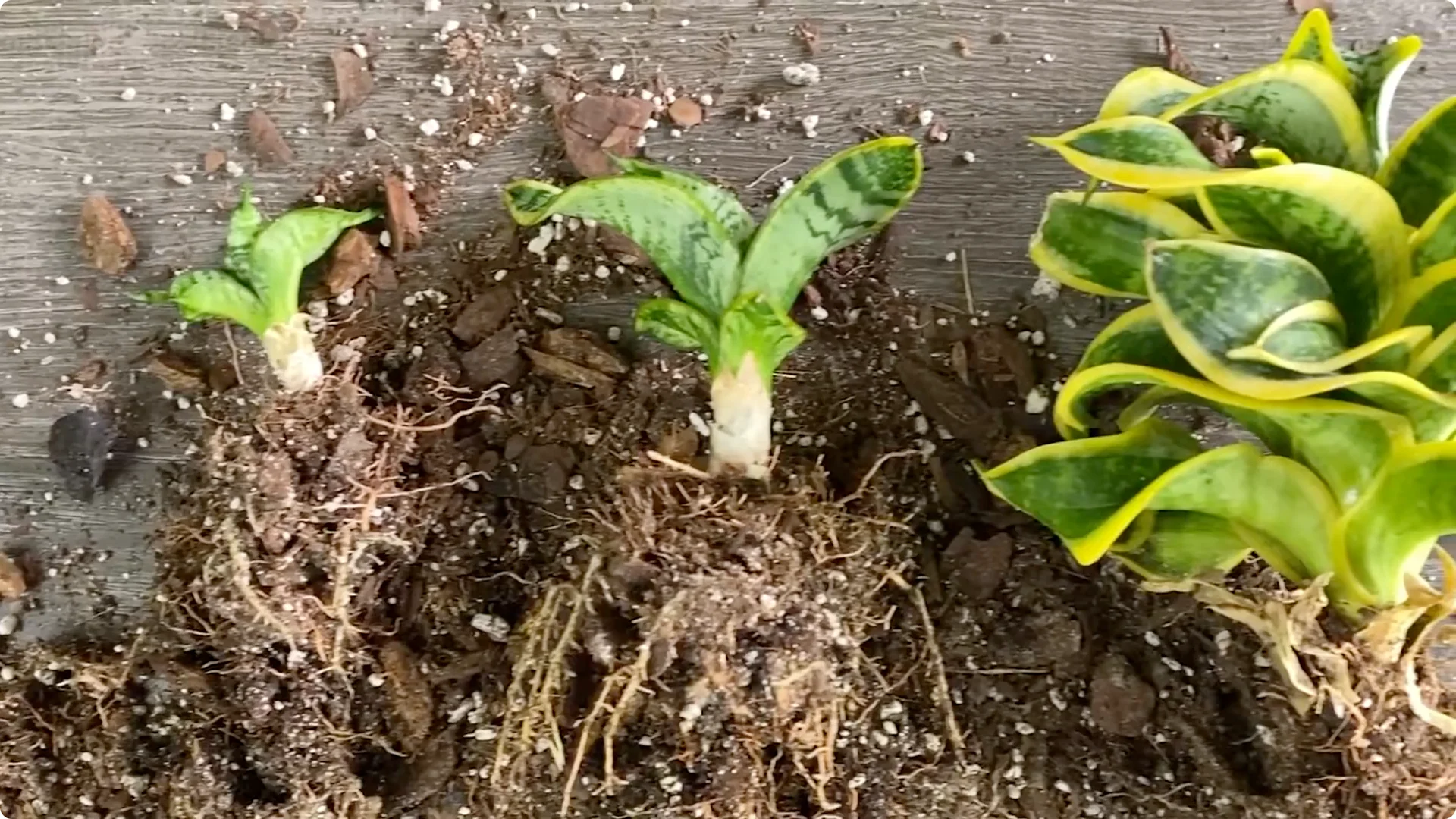
For the new pups I like to always go with the smallest pot possible, in this case a 4 inch pot, and I chose this size by looking at the size of the plant and most importantly the root ball.
A smaller size pot means less soil, which will help me to control the moisture in the soil by allowing the soil to dry out quickly, and then I can adjust the frequency of watering to increase the moisture if I see they need it.
Mix a well-draining soil
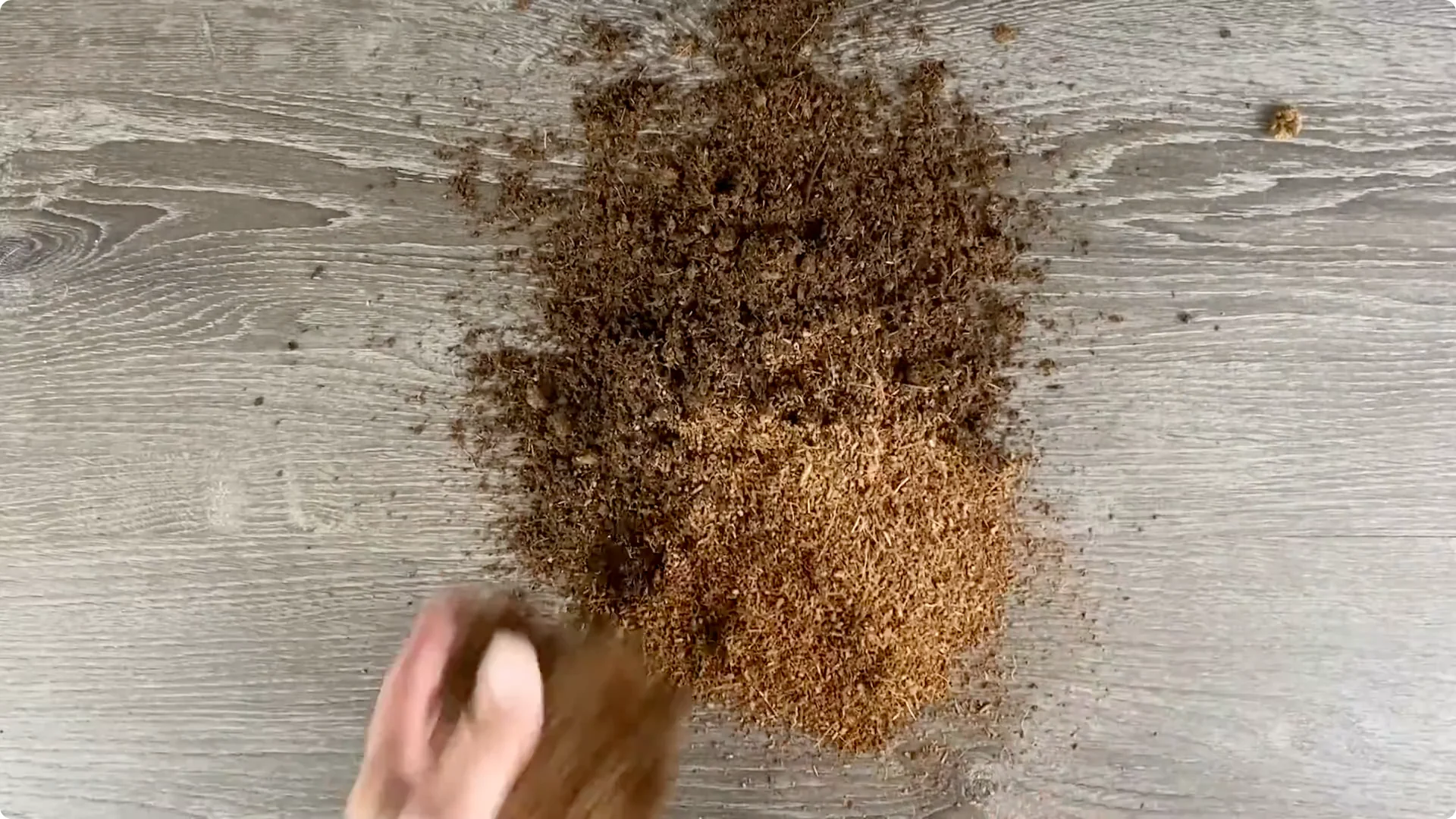
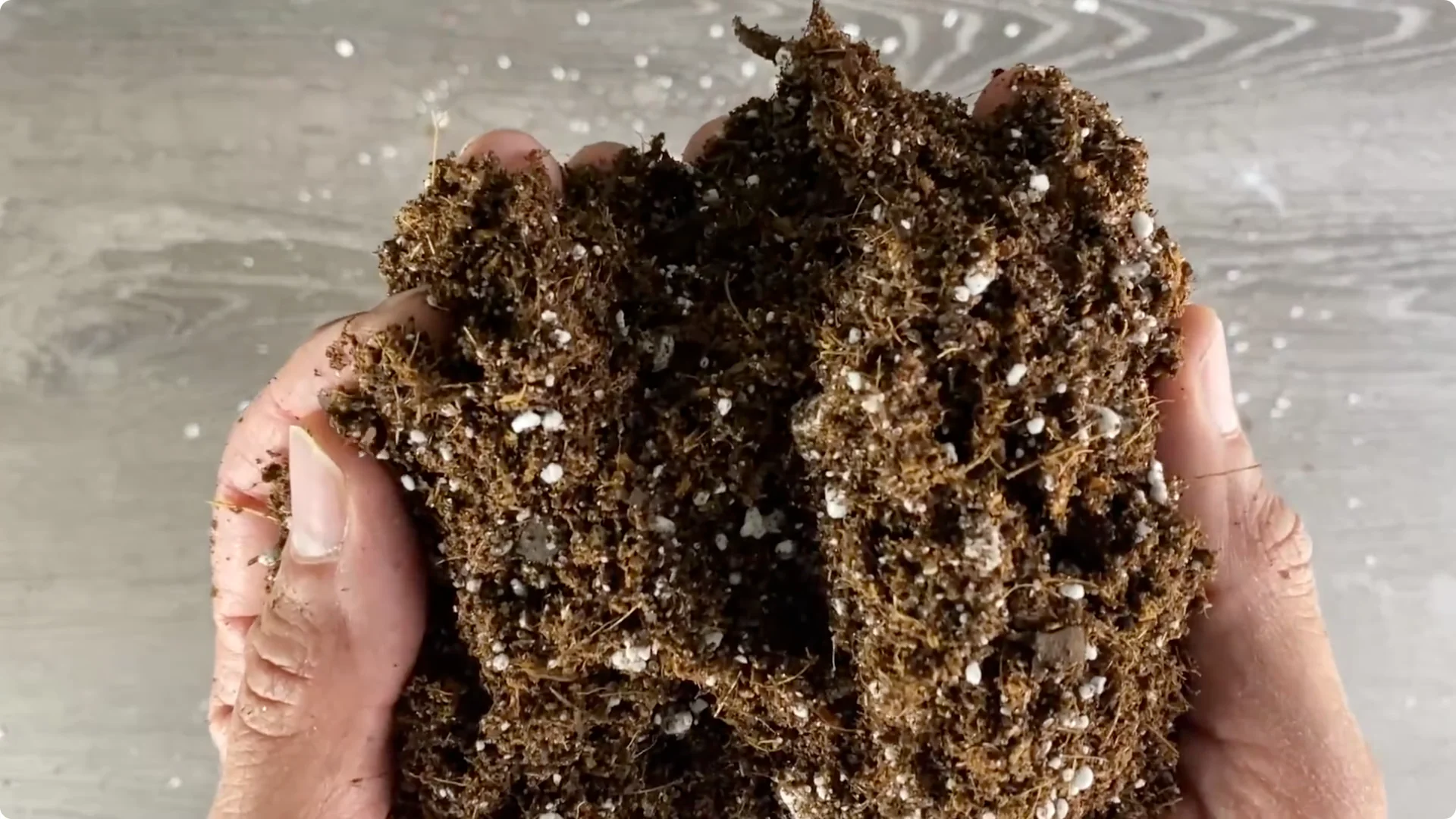
Next I’ll mix my soil, which for these snake plants I’ll create a mix that consists of 25% coir and 25% peat to provide some water holding capacity, along with 50% pine bark, 25% perlite, and 10% sand that all help with the drainage, which is really important for snake plants to thrive.
Pot the divisions
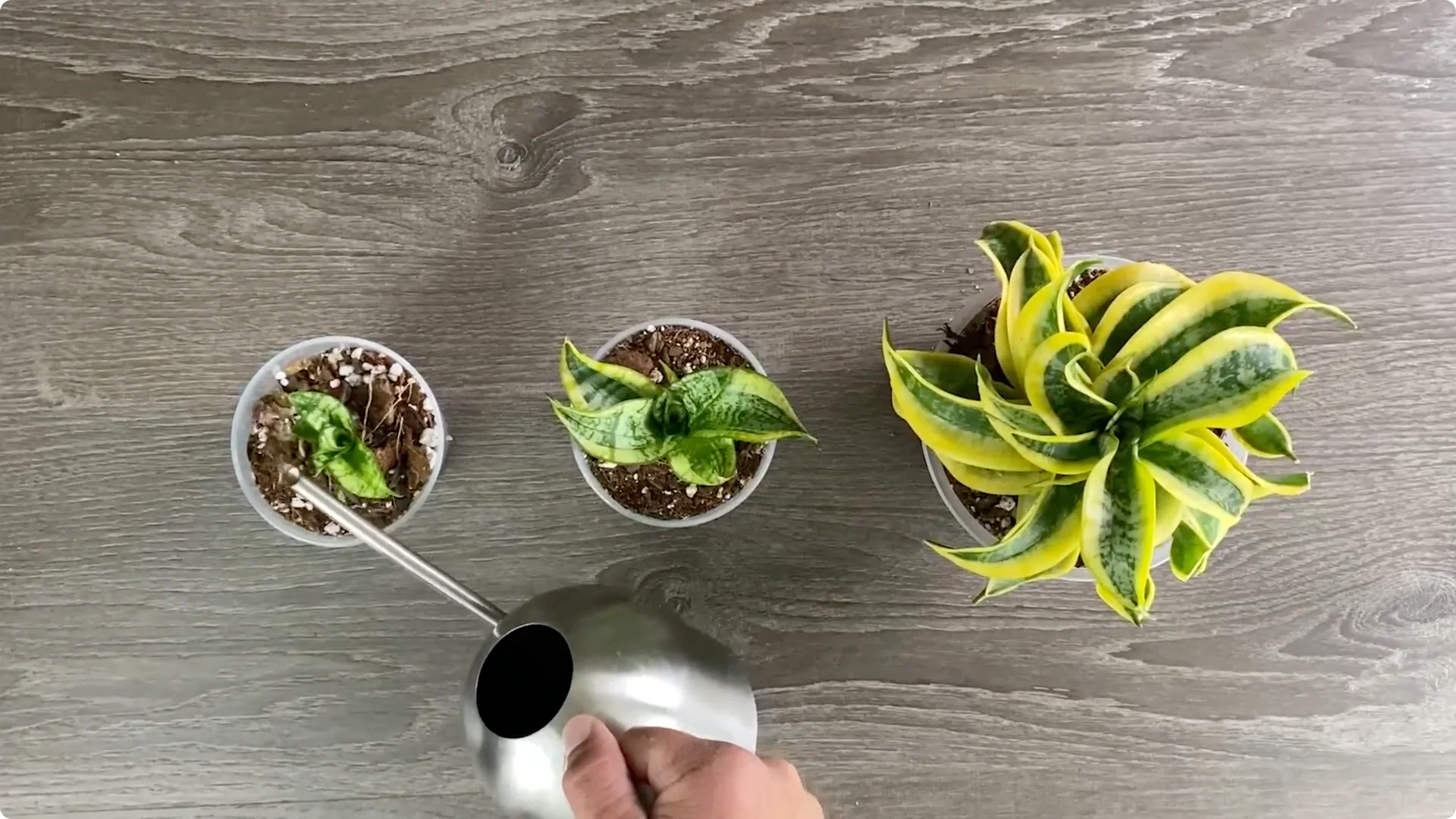
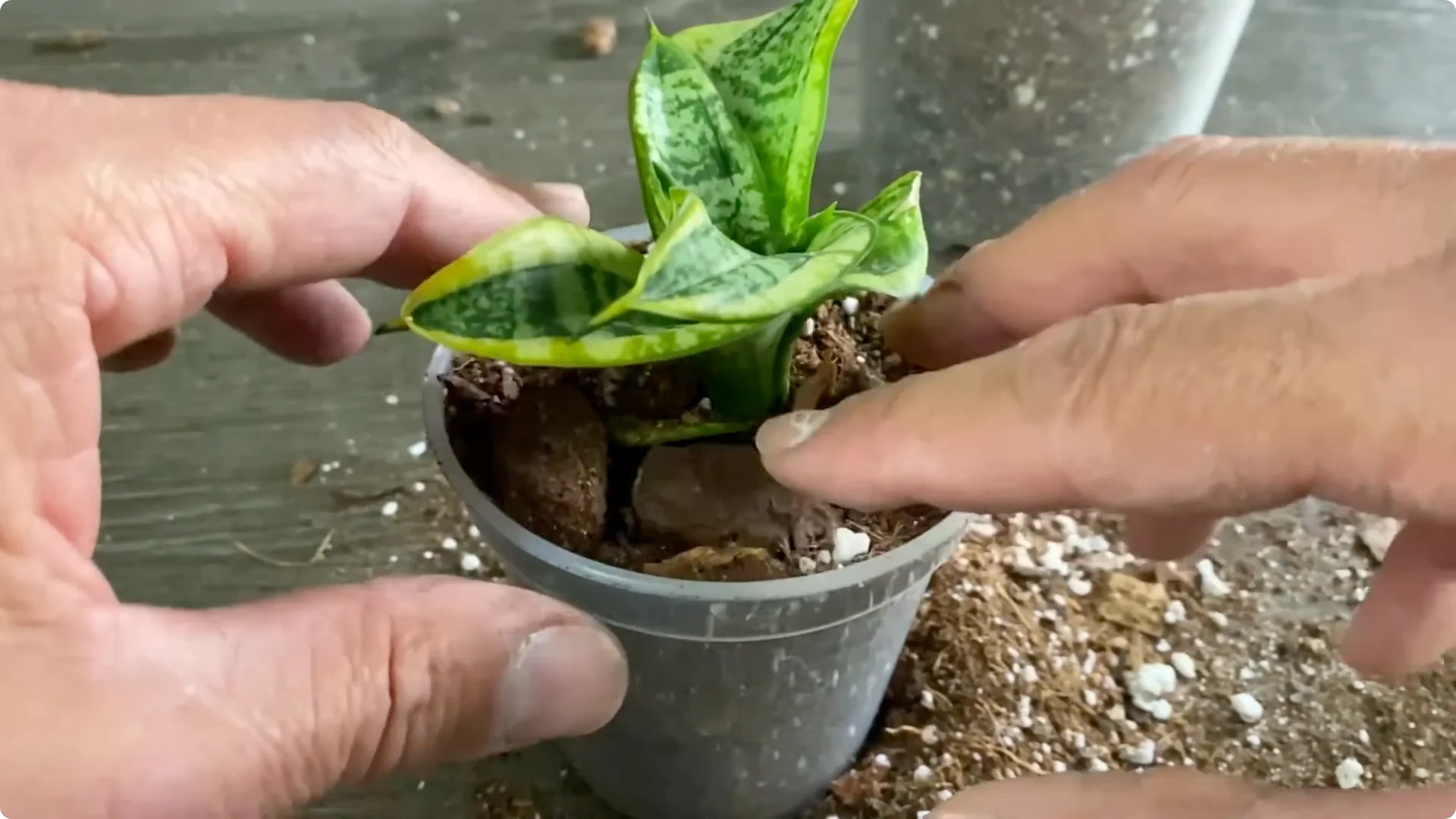
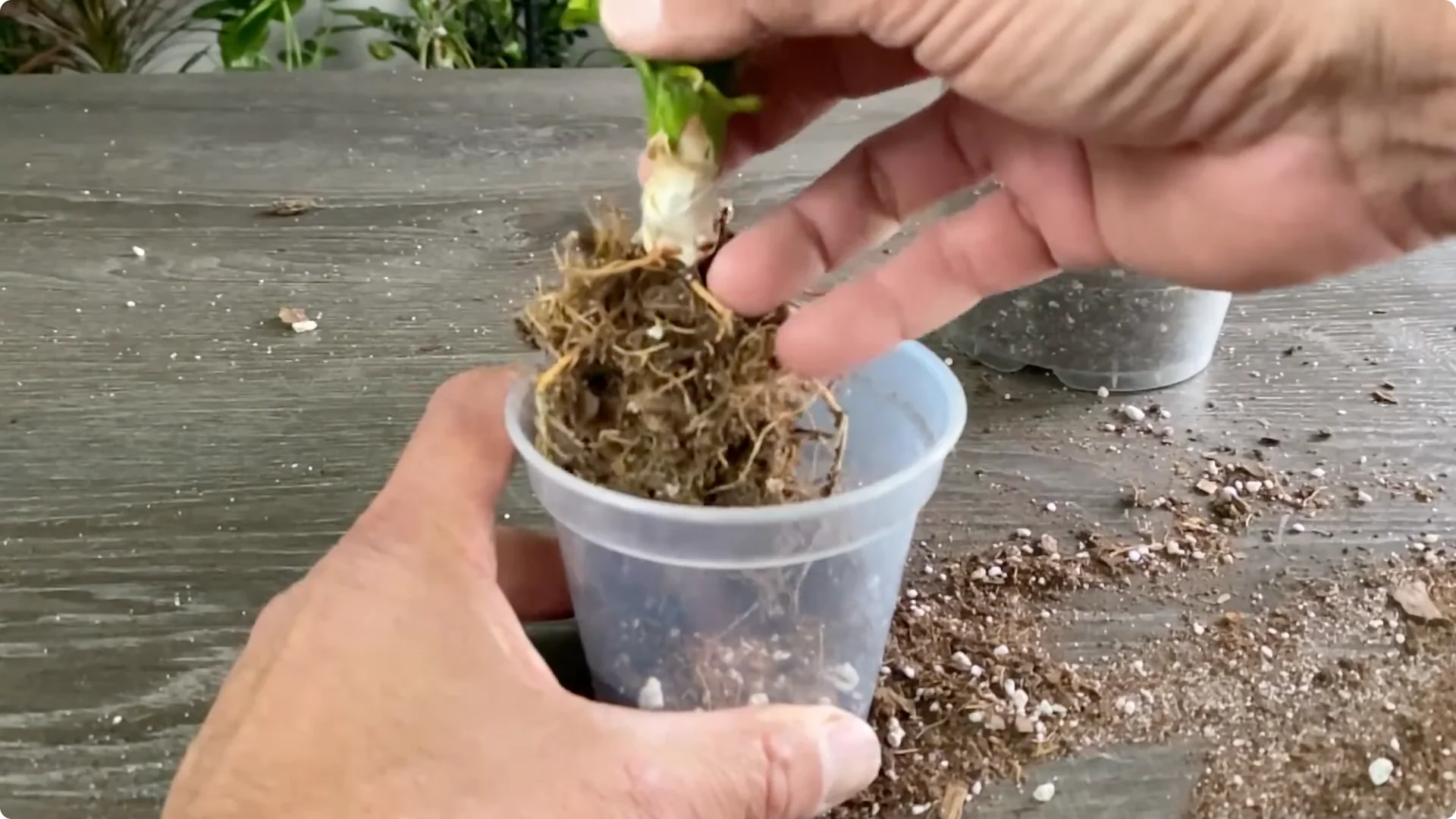
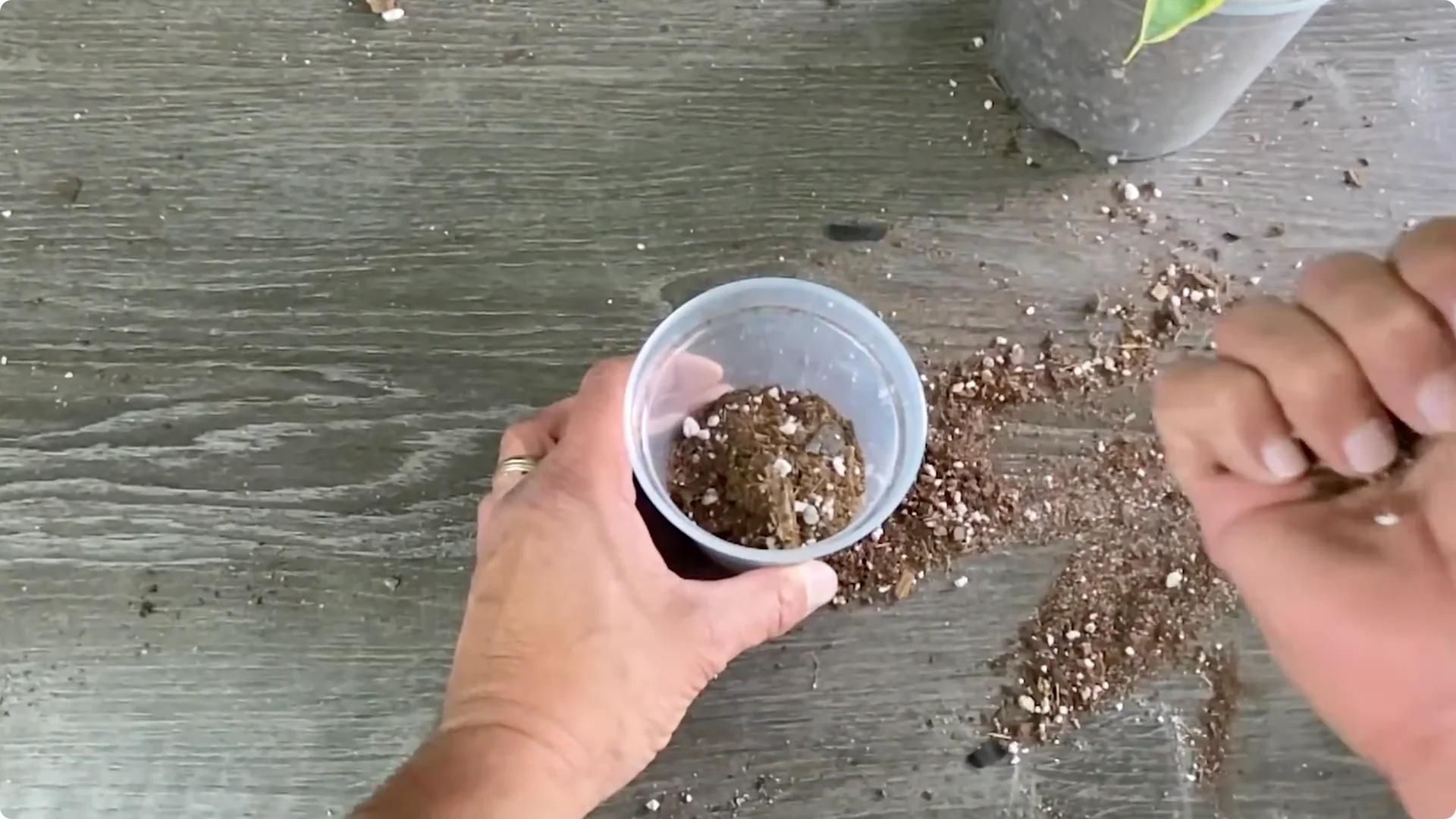
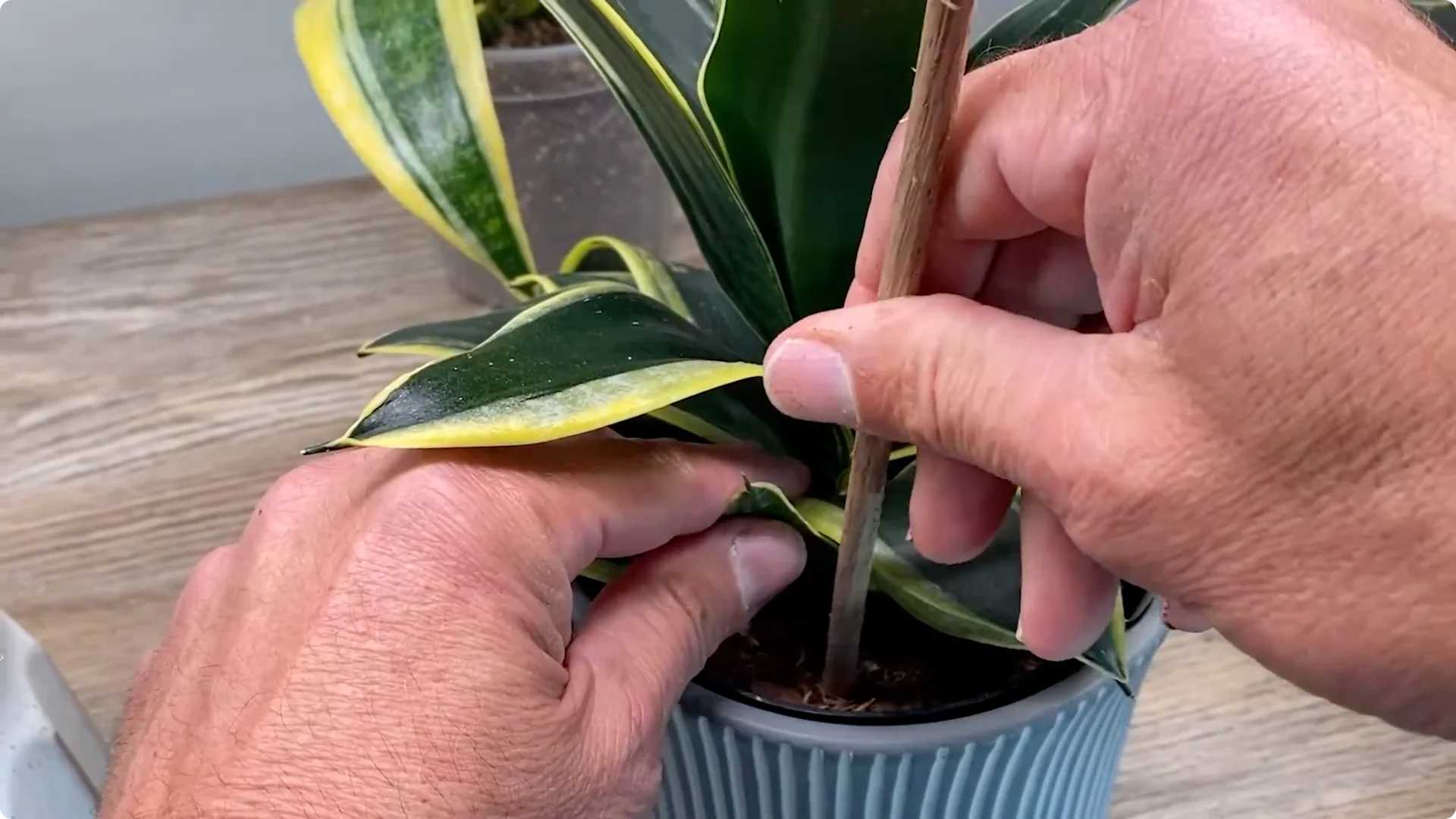
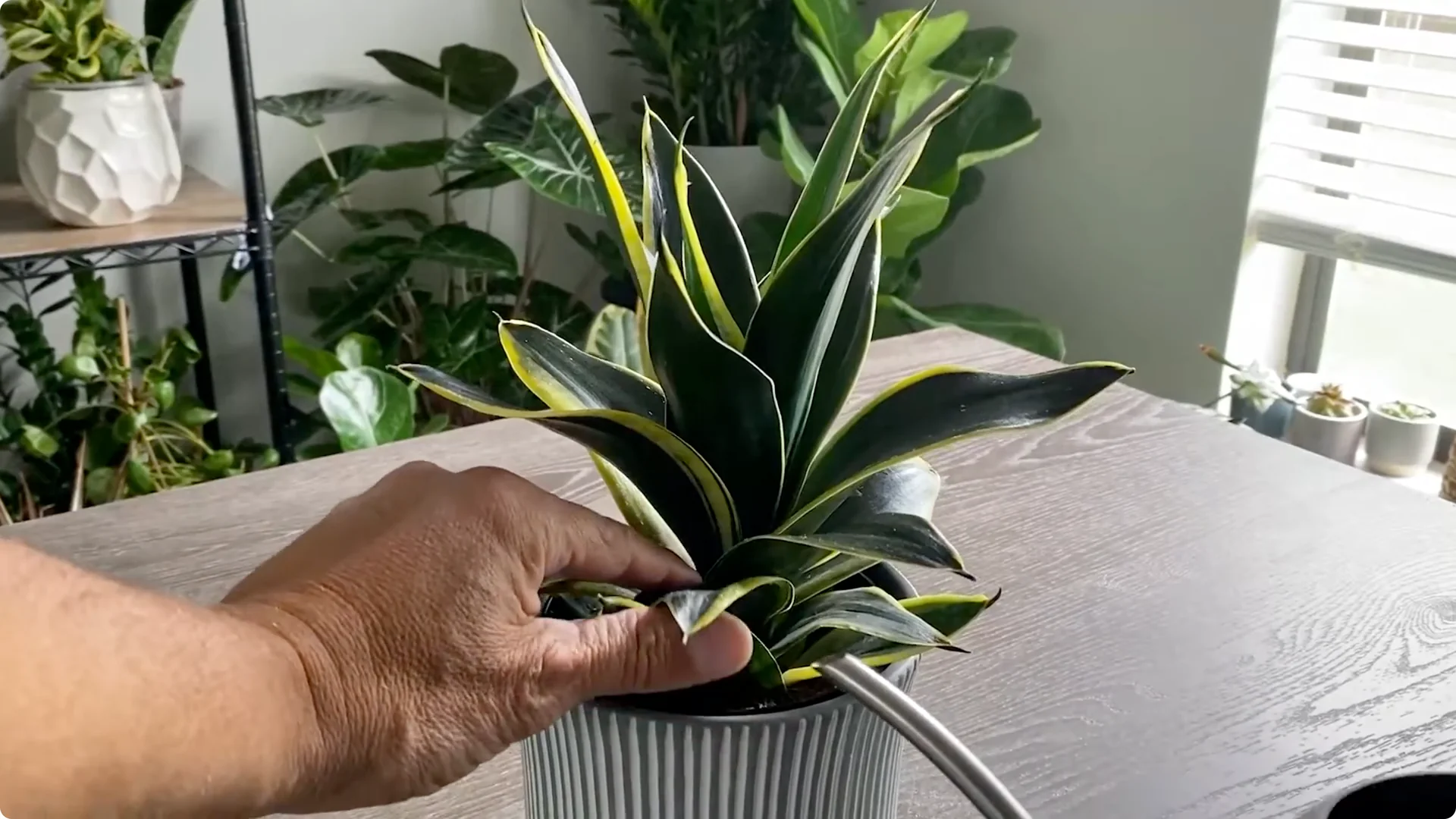
The watering method that prevents overwatering
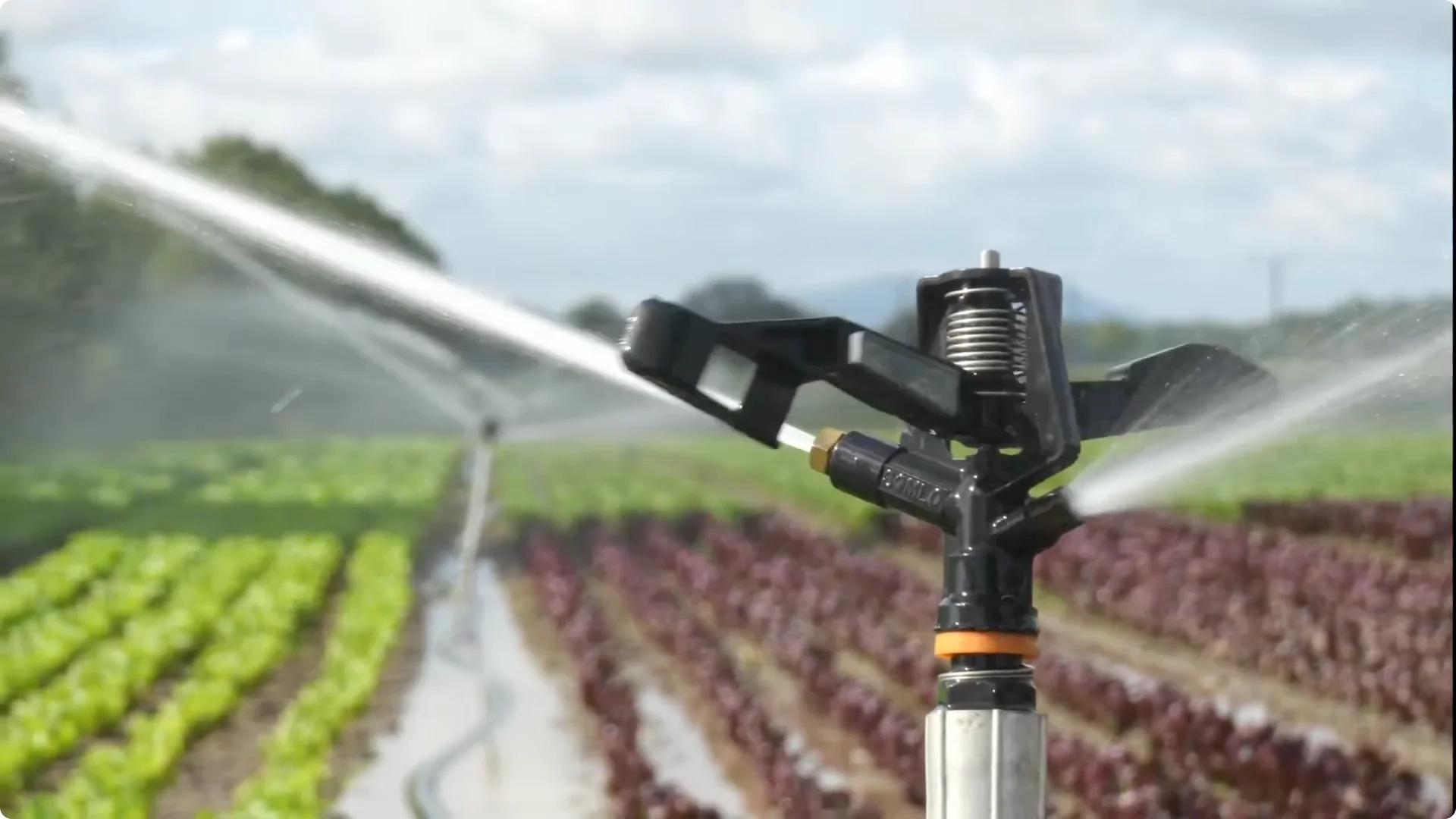
Here’s the secret to watering them during the transitional phase and moving forward that the pros use to water their snake plants and will reduce or almost eliminate the probability that you kill them because of overwatering.
Final Thoughts on Snake Plant Division Propagation
Division gives you a strong start with a plant that maintains its look, keeps prized variegation, and recovers quickly when you keep as much soil around the roots as you can. Choose small pots for pups, use a gritty, well-draining mix, and follow the month-long dry-down and skewer test so you only water when the soil is truly dry. Do that, and your snake plants will reward you with healthy new growth.