
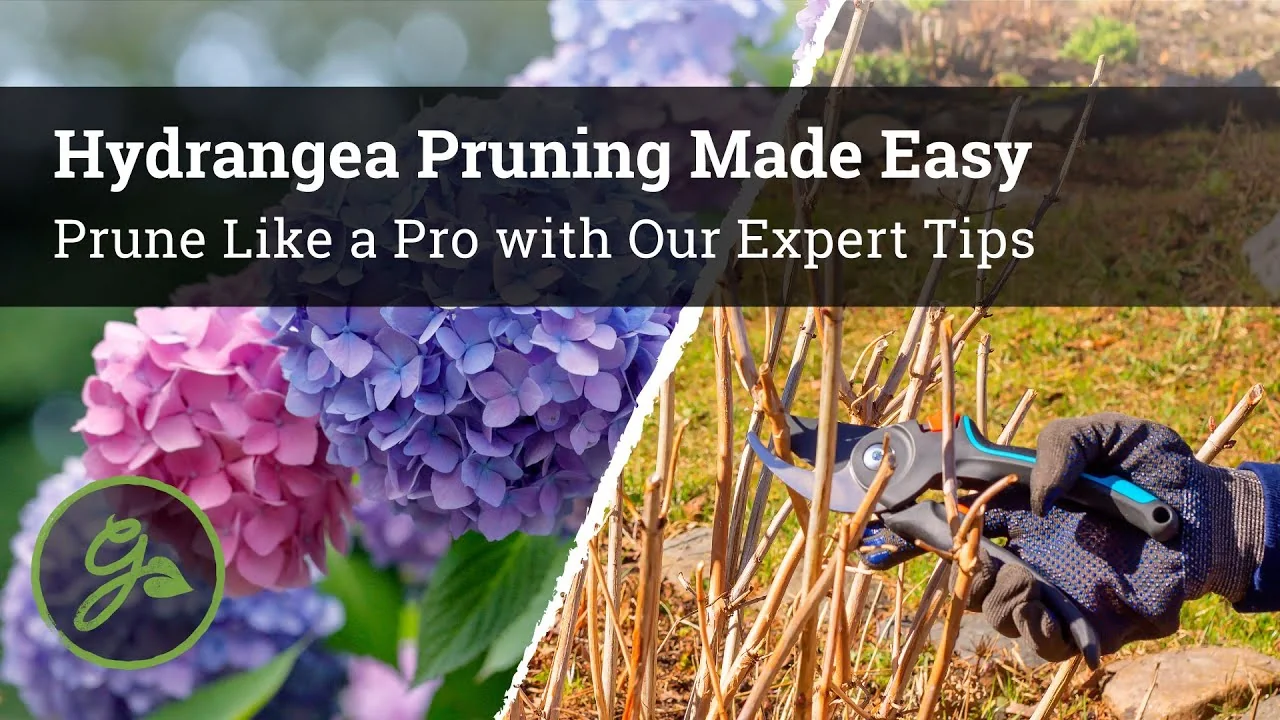
Are you tired of the guesswork when it comes to pruning your hydrangeas? Say goodbye to uncertainty and hello to confidence with expert advice. I am here to demystify hydrangea pruning and make it easier than ever.
Simple guidance will take the stress out of pruning and ensure your hydrangeas thrive and bloom beautifully each and every year. The first step is to identify the type of hydrangea you have. Different types of hydrangeas have different pruning requirements.
Hydrangea Pruning Guide
Luckily, each species can easily be identified based on the flower form, leaf shape, and stem thickness. As I share pruning recommendations for each type, I will also describe characteristics to assist in identifying the species you may have. Once you match your plant to a type, the right timing and technique become clear.
1. Mopheads, Lacecaps, and Mountain
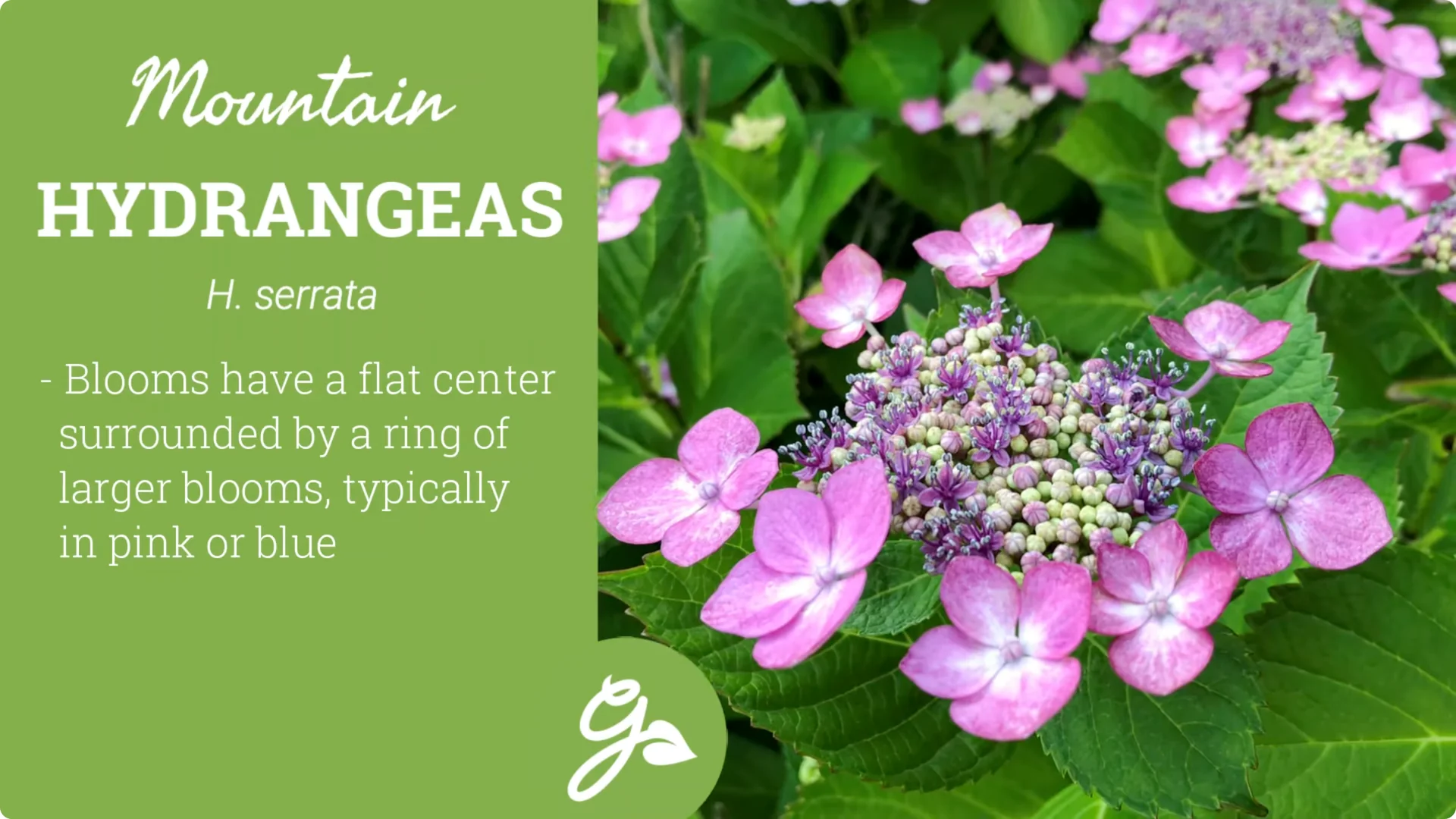
One of the most recognizable types, the mopheads, have large rounded flowers usually in shades of blue, pink, or purple atop thick stems. They bloom among large, ovate-shaped leaves that are glossy and deep green, arranged in alternate patterns along the stems. Lacecaps have a flat center surrounded by a ring of larger blooms, ranging from pink to blue, with serrated leaves that are medium to dark green with a glossy or matte texture.
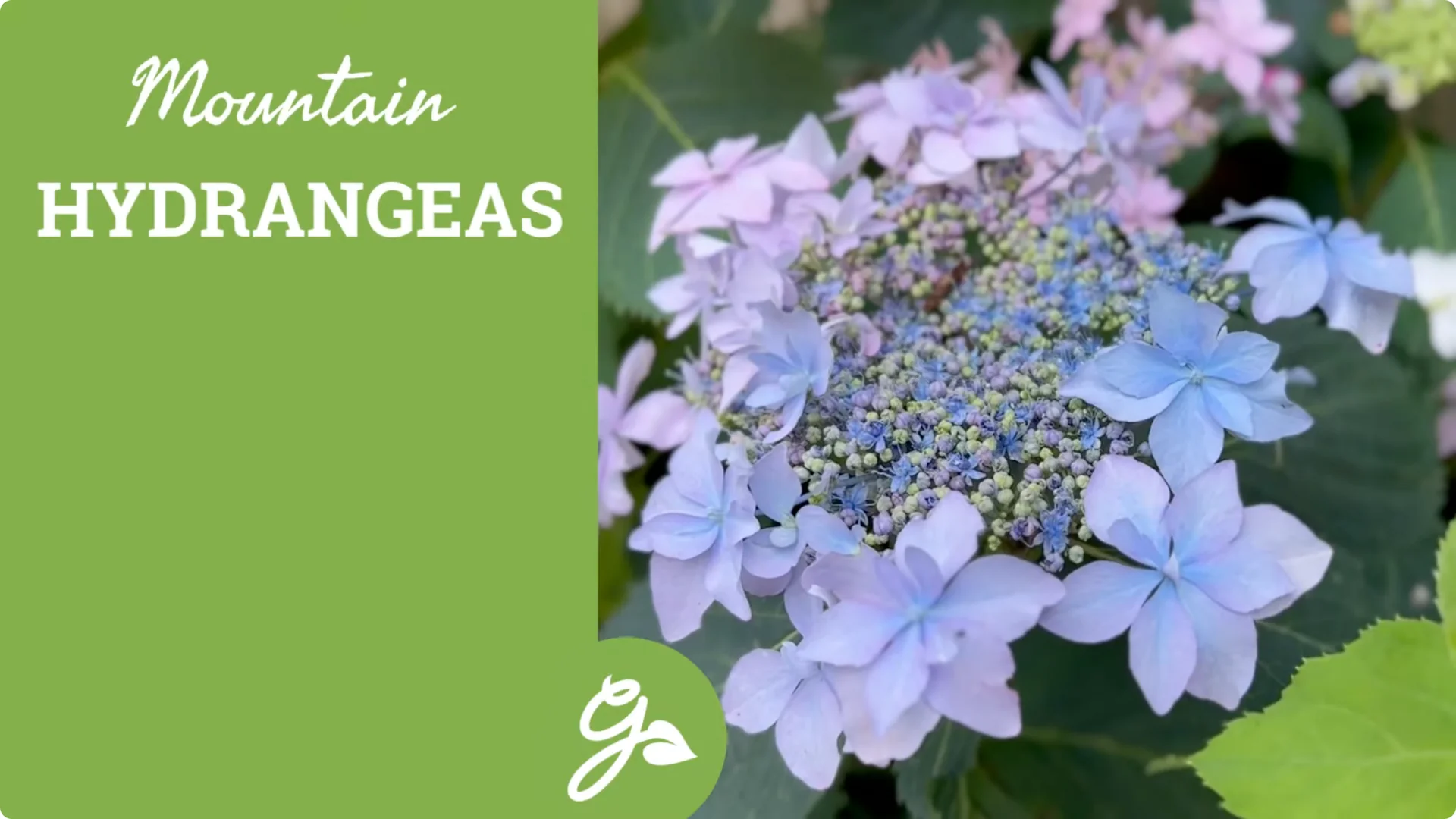
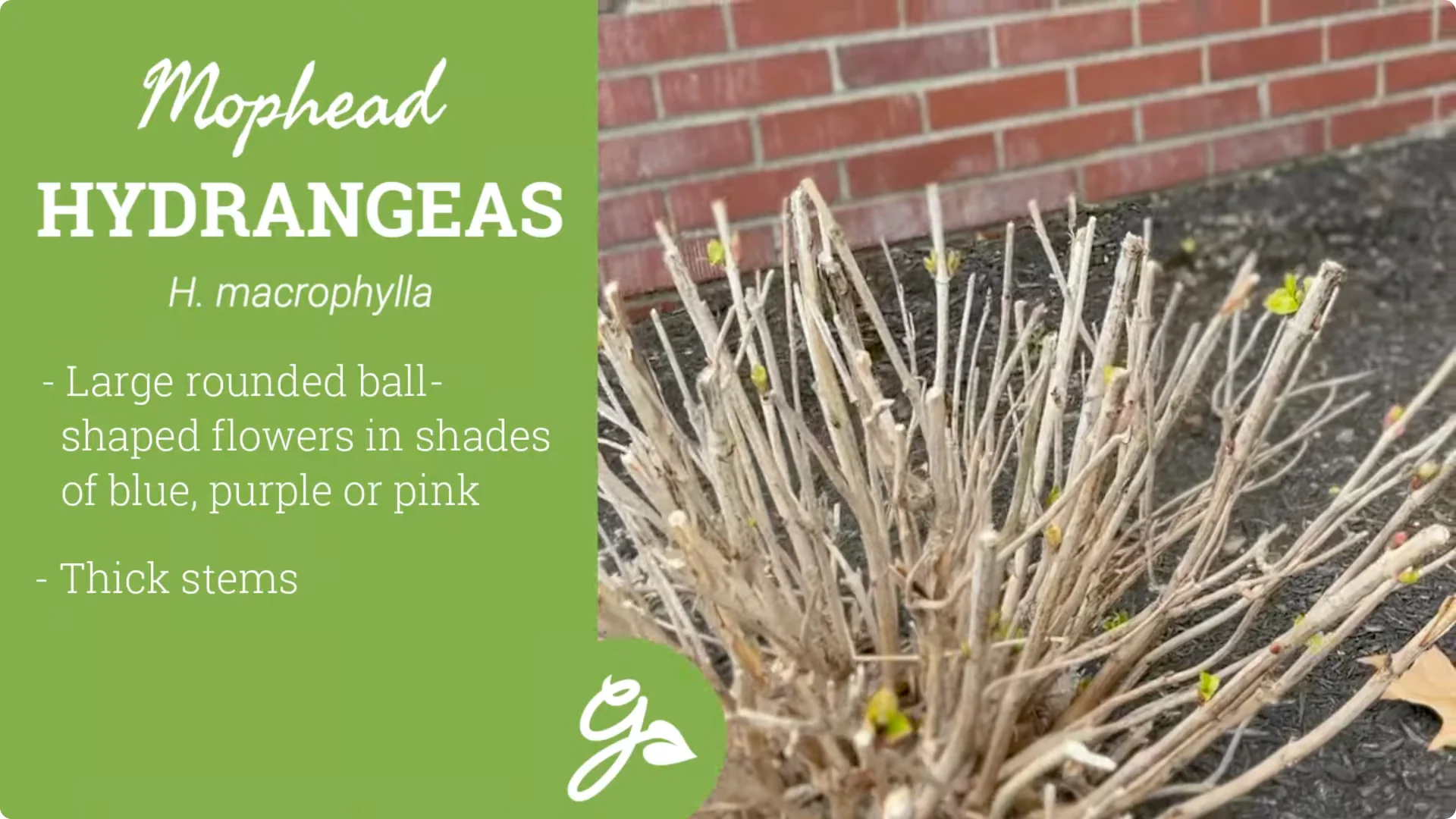
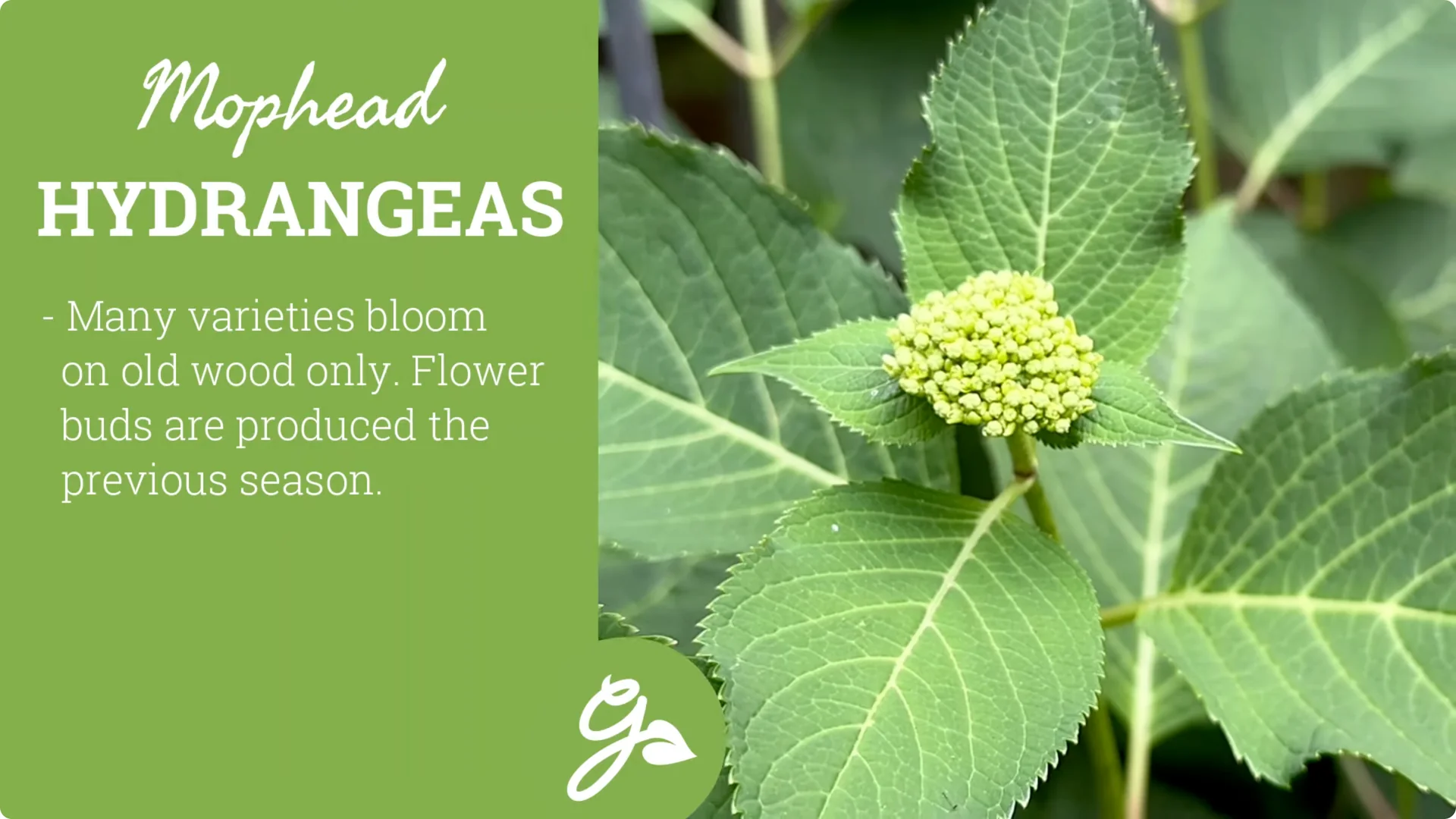
When it comes to pruning, this is the most challenging type to explain. Older varieties in this group bloom on old wood, meaning they set their buds the previous season, and if you remove a branch with buds, you are removing any hope for summer blooms. You may be familiar with common varieties such as Nikko Blue and Pink Beauty.
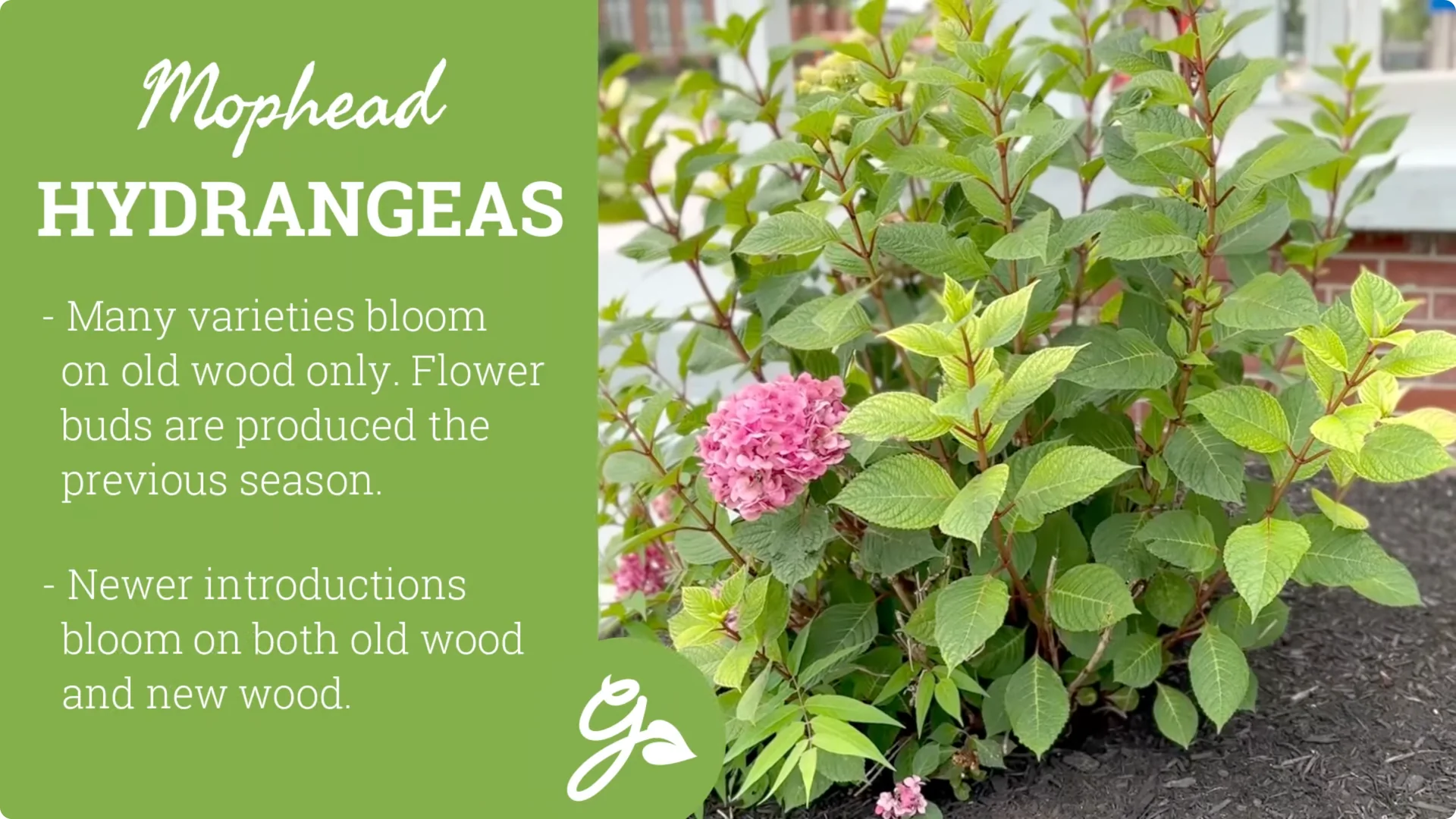
Many newer varieties within this group bloom on both old wood and new wood. They can bloom early using last season’s buds and still produce new flower buds during the growing season. Newer rebloomers include Endless Summer, Bloomstruck, and the Let’s Dance series, which are valuable for colder climates that frequently experience loss of overwintered buds due to late spring frosts or freezes.
Pruning steps
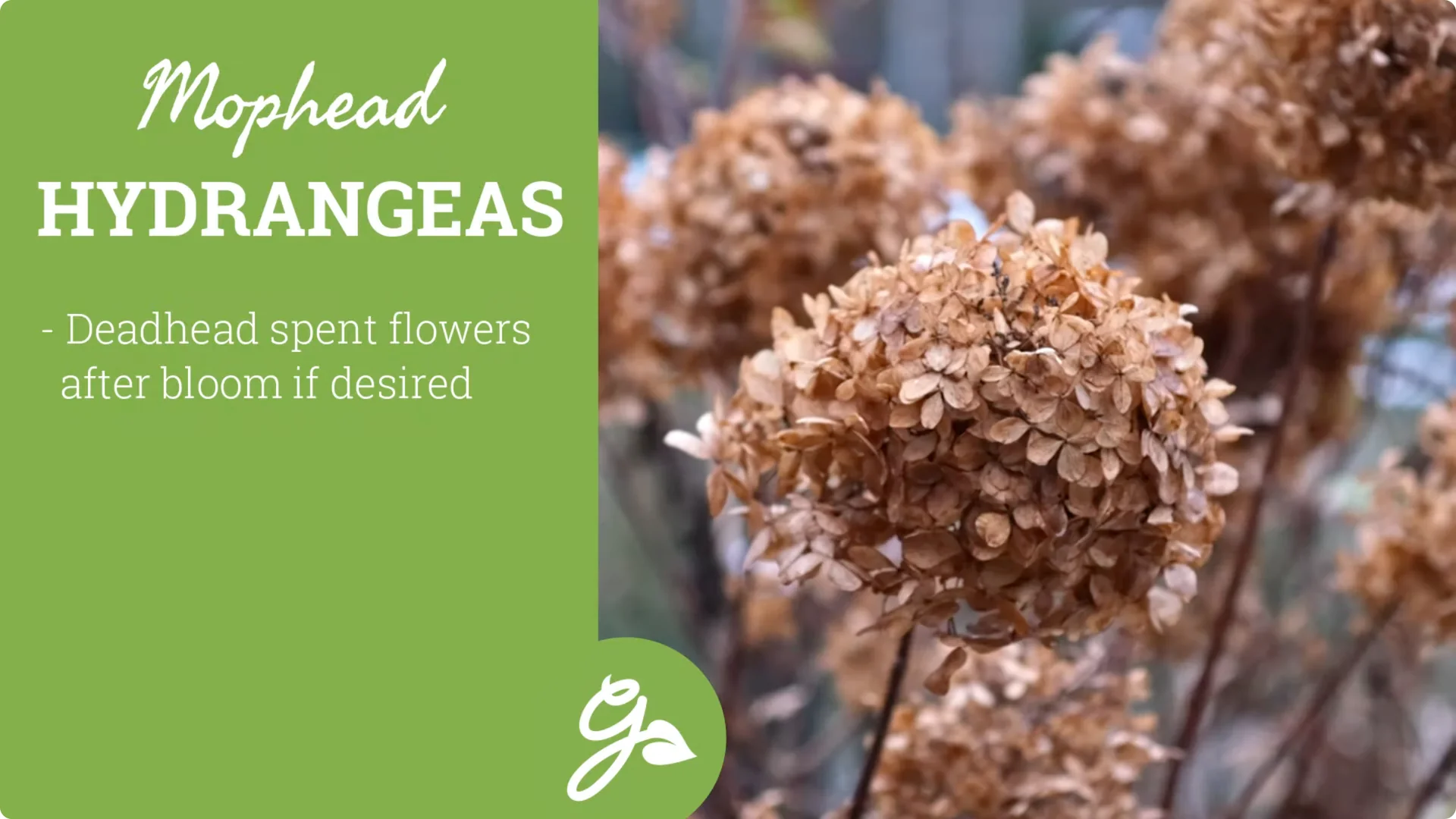
Deadhead spent flowers right after bloom up until early fall if you wish, though it is not necessary. Spent blooms can provide pretty winter interest in the garden. Spring pruning is not recommended for shaping.
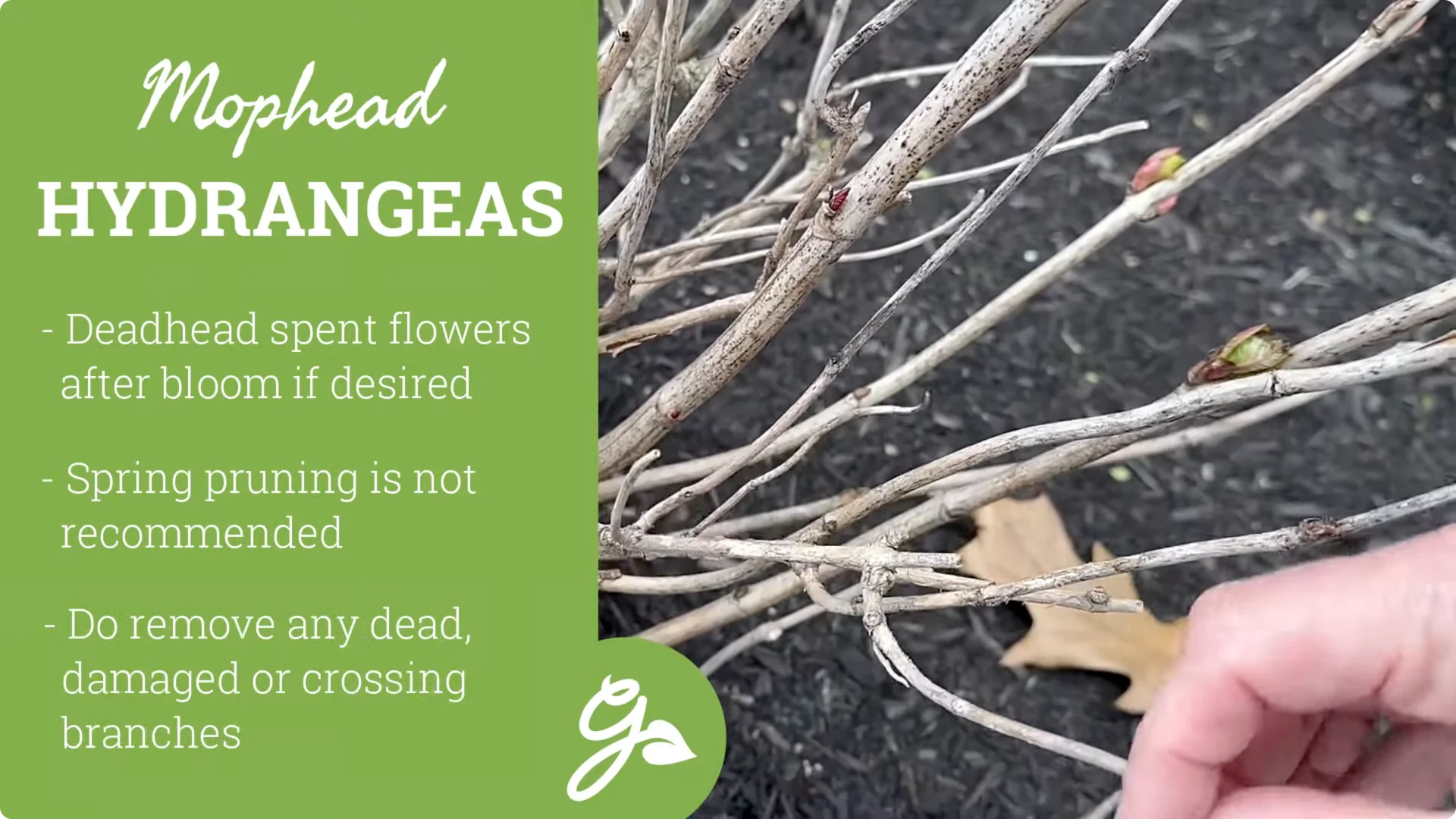
Thin plants in spring by removing any dead, damaged, or crossing branches. Remove any branches that are no longer viable to the plant. Branches that should be removed are very woody, possibly hollow stemmed, and lighter in color.
For seasonal care that pairs with pruning, see these spring hydrangea tips.
2. Smooth Hydrangeas
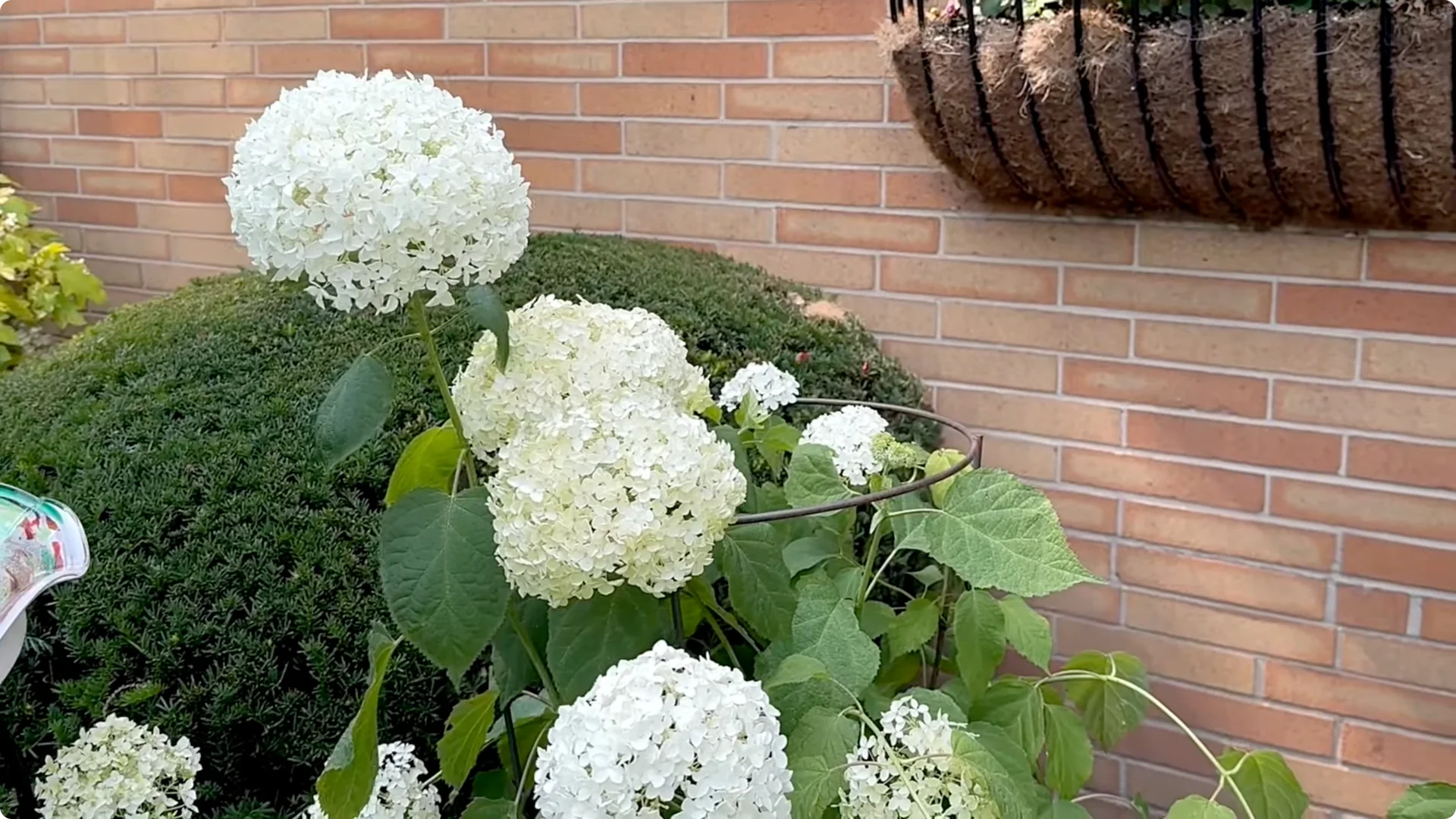
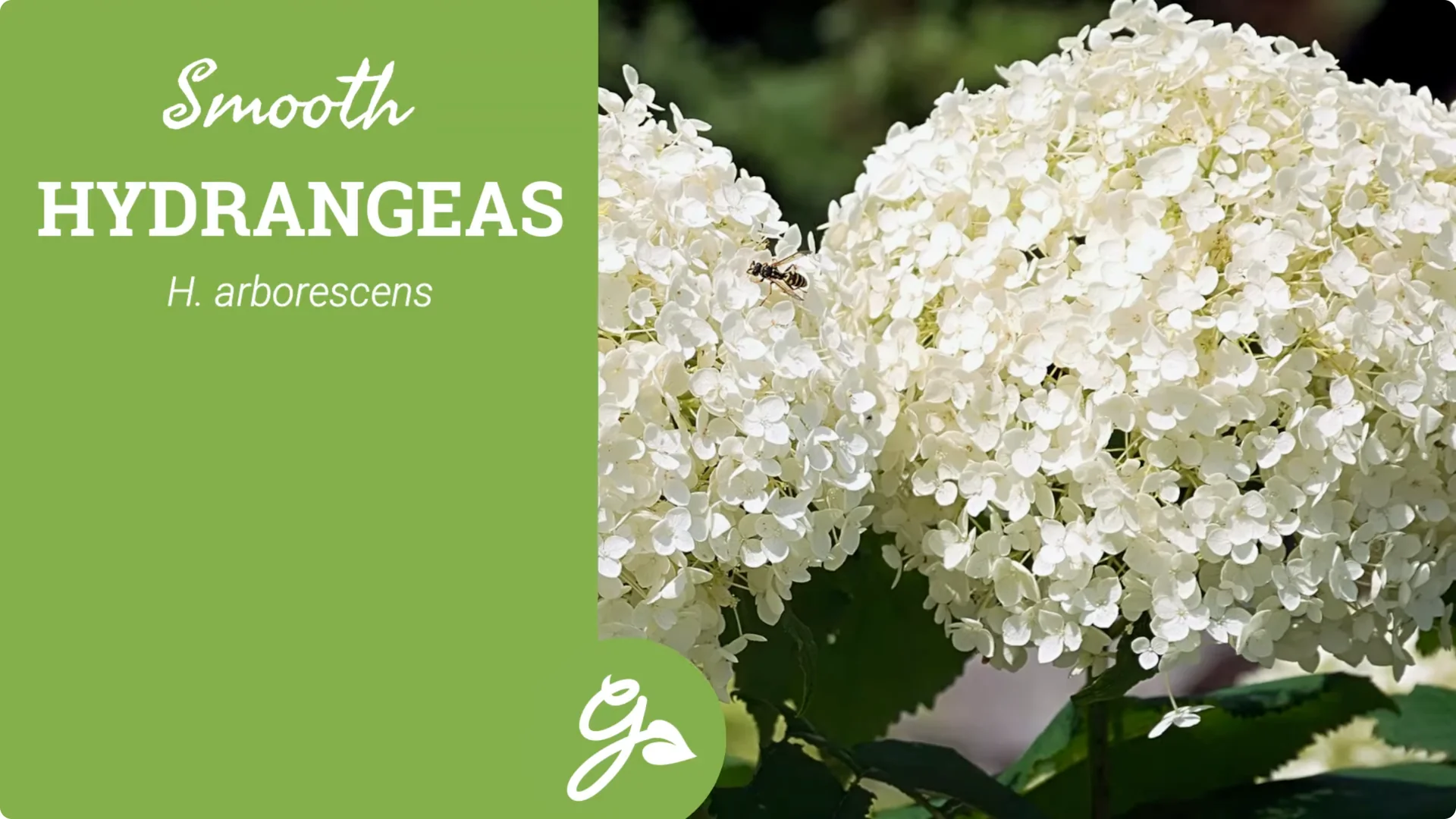
The flowers of a smooth hydrangea are round, from the size of baseballs to basketballs, and they bloom atop stems that are usually thinner than other species. Flower color can range from creamy white to light and dark shades of pink. The leaves are generally heart shaped, thin, and floppier than mopheads with a lighter green underside, and they normally bloom earlier than mophead types.
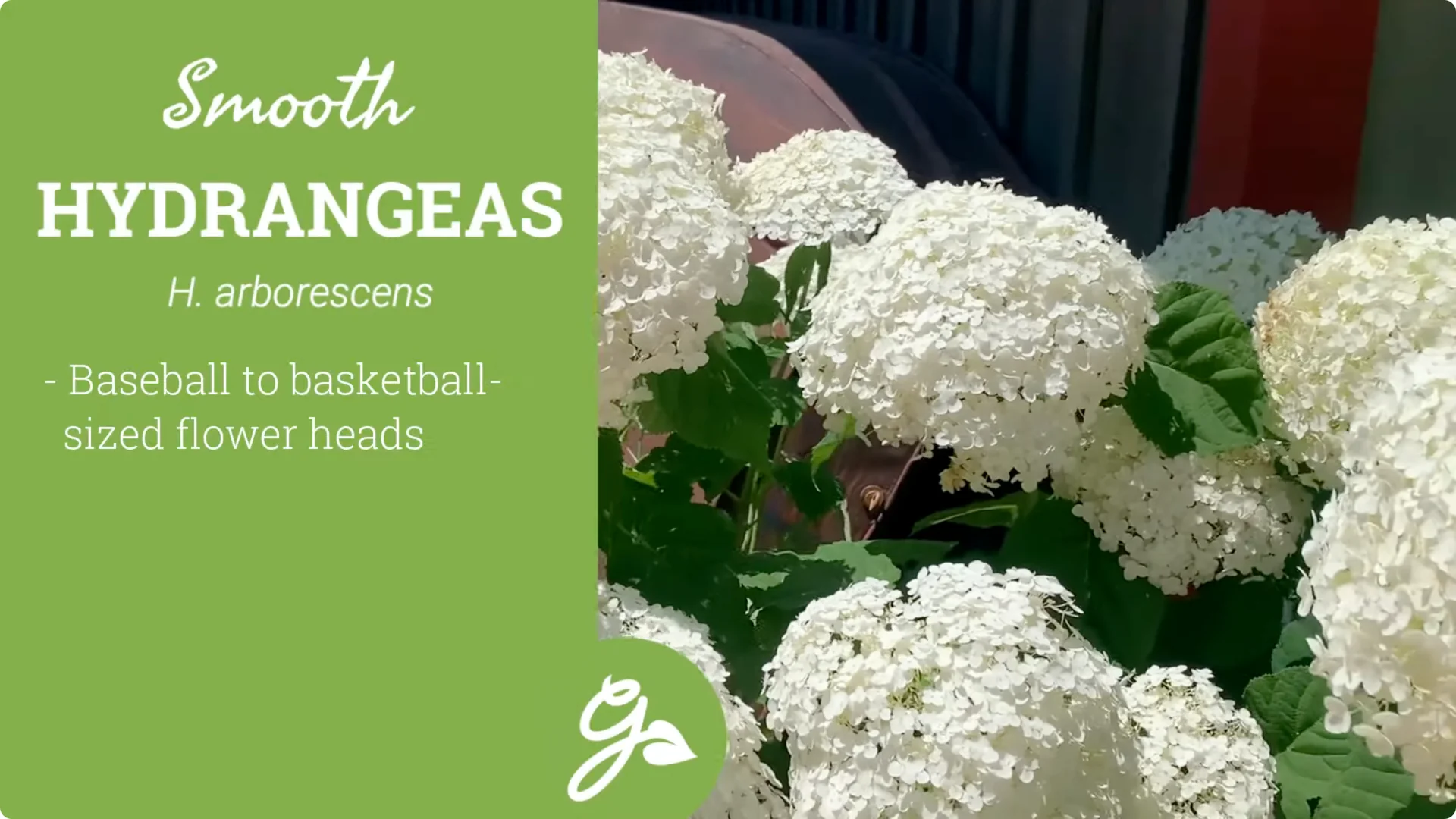
You may be most familiar with popular varieties such as Annabelle, Incrediball, or the Invincibelle series. Some of the older varieties tend to flop with the weight of the blooms, so staking may be required. Luckily, smooth hydrangeas are easy to prune, and even if you make a small mistake, they will still bounce back and reward you with season long bloom.
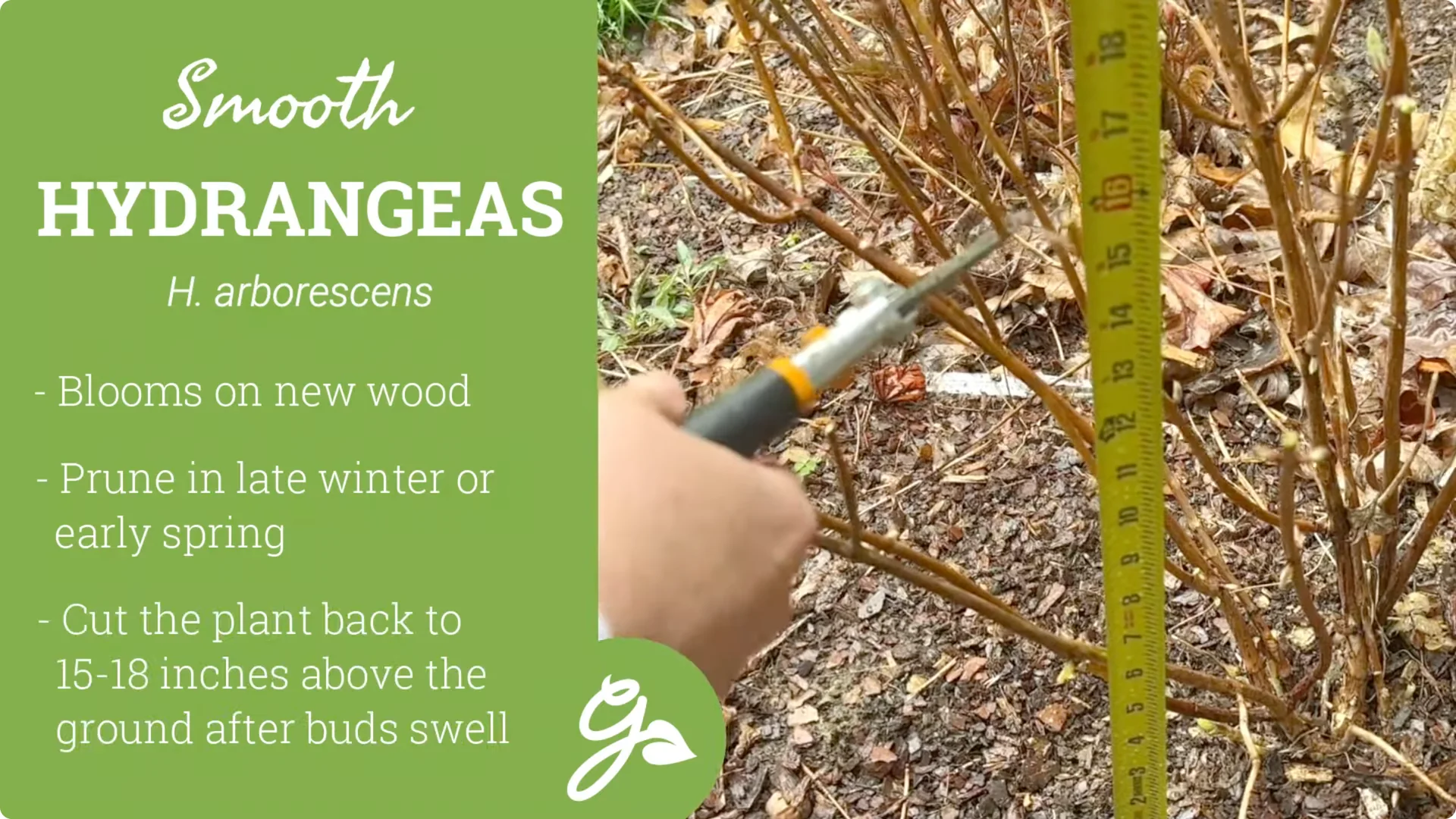
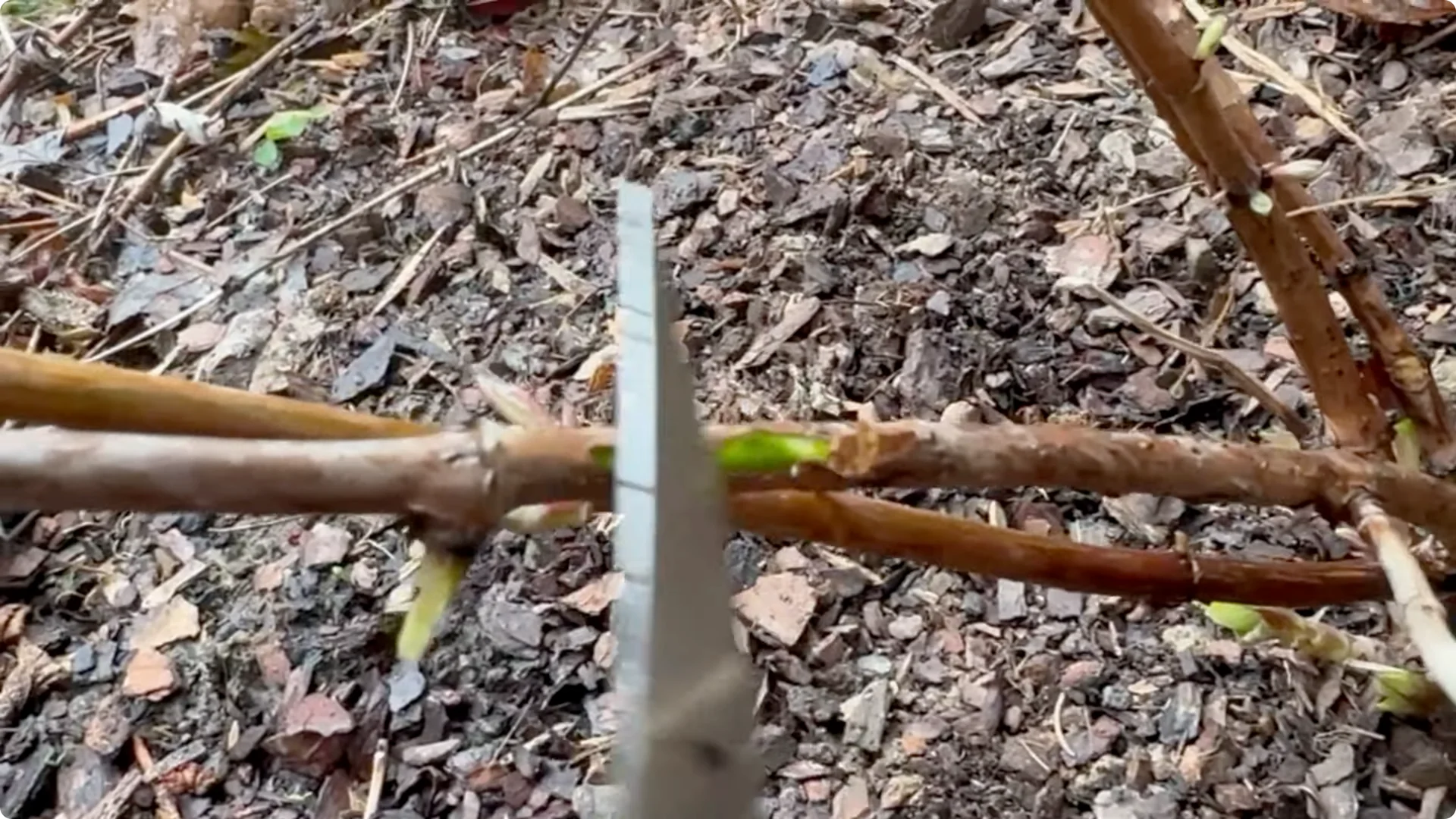
This type blooms on new wood, so it is best to prune in late winter or early spring before new growth begins. We recommend cutting the plant back to 15-18 inches from the ground after the buds begin to swell. Work carefully around the plant and remove weak growth as you go.
Pruning steps
Cut the plant back to 15-18 inches once buds swell and before new growth starts. Clip branches above visible buds. Work your way around the plant, pruning out any dead, damaged, or crossing branches.
If you are unsure of the health of a particular branch, use the scratch test. Lightly scratch the bark with your fingernail or a sharp object and look for green tissue. If the branch is brown and brittle, remove it.
If you enjoy pairing shrubs with climbers, explore these tips to grow clematis vines.
3. Panicle Hydrangeas
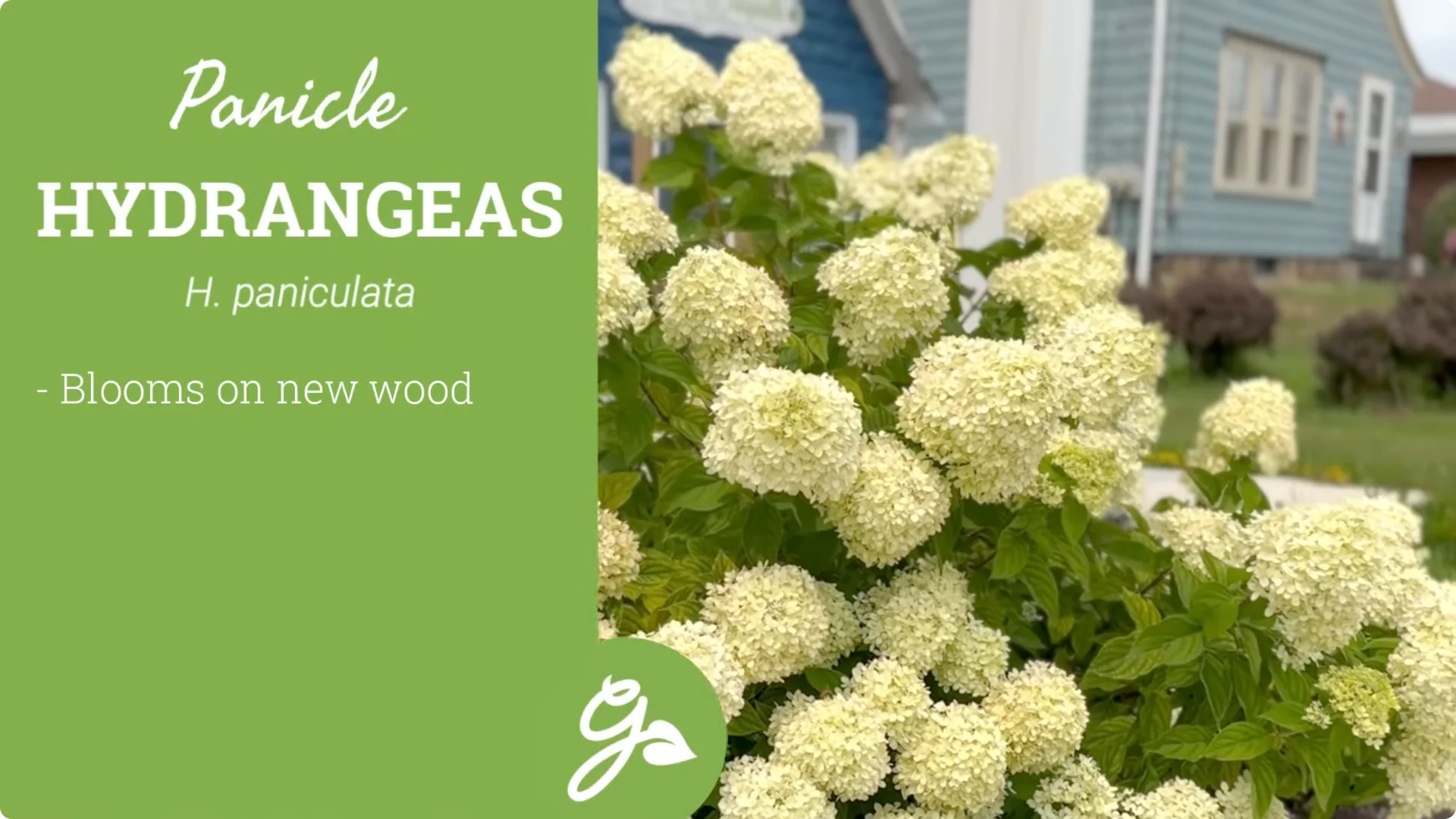
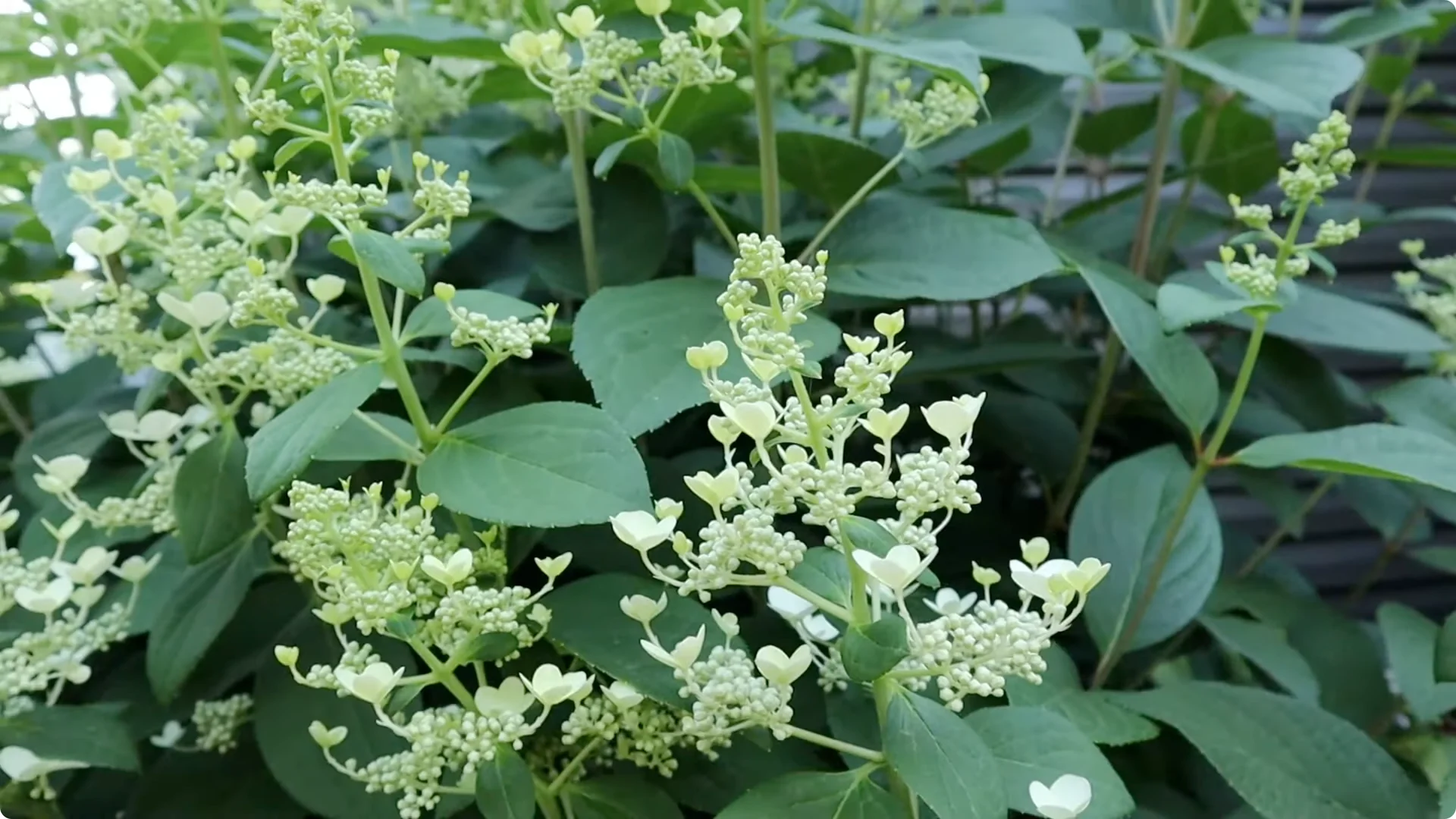
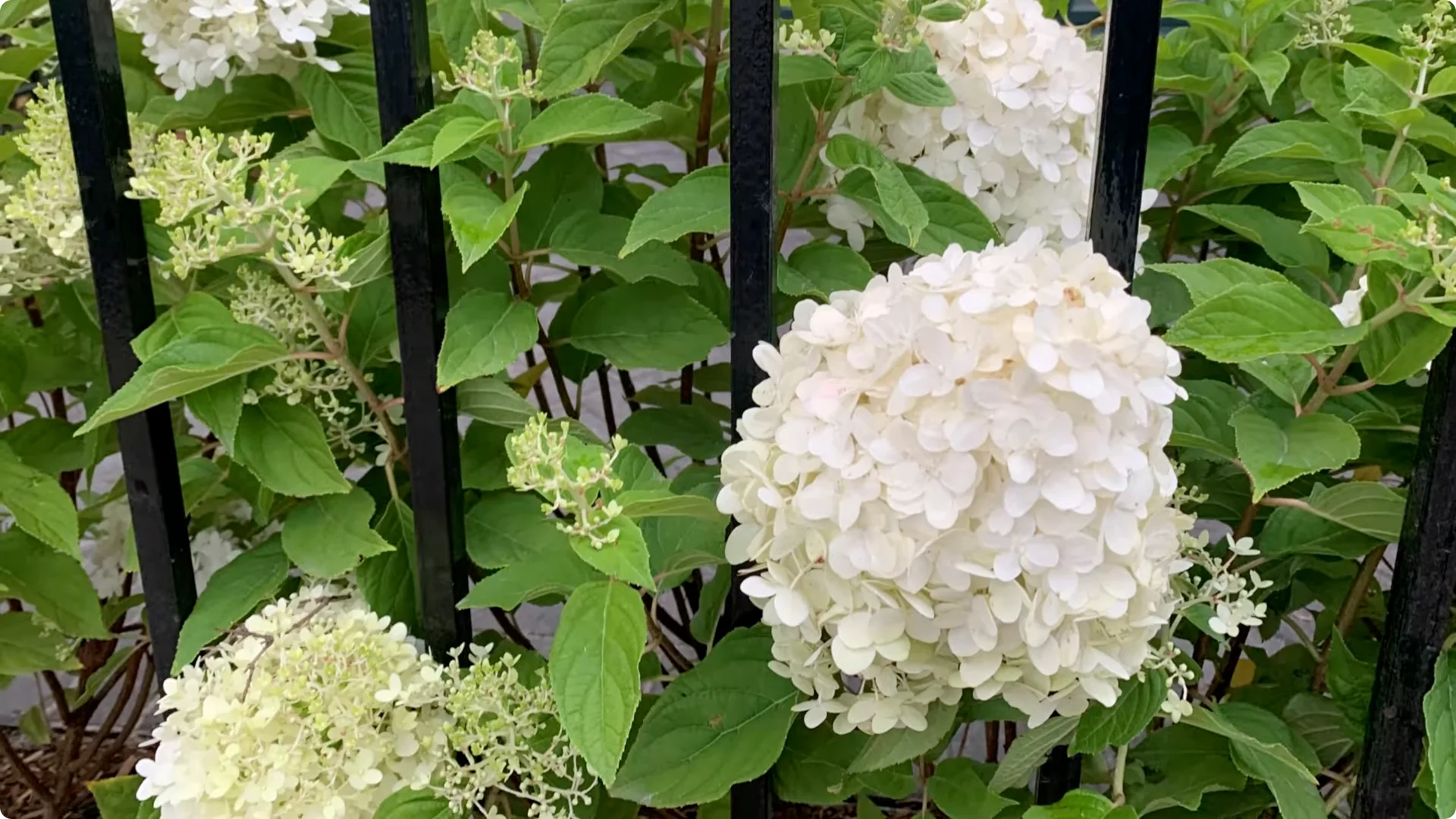
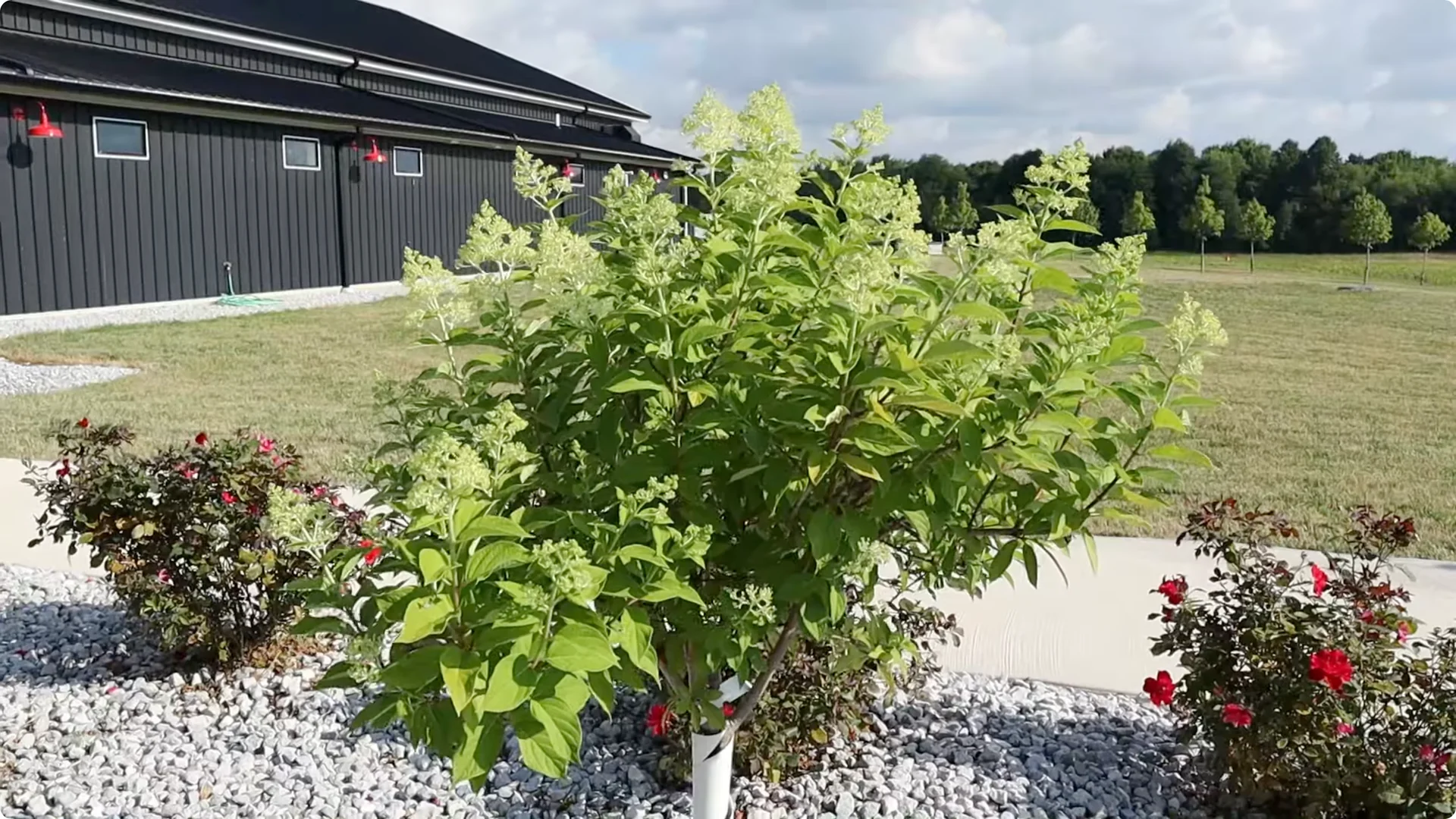
Also blooming on new wood, panicle hydrangeas offer large cone-shaped blooms that typically emerge creamy white atop very thick and strong stems. As the season progresses, the blooms may gradually shift to shades of green, pink, or red and hold their color for a long time. The leaves are more egg-shaped with slightly serrated margins, growing opposite on the stem, and turn a dull shade of yellow in fall.
The most popular panicle variety of all time is Limelight. These flowers open green, then change to white, and finally fade to shades of pink throughout the season, and it can grow upwards of 8′ tall. Other popular varieties include Quick Fire, which blooms very early, and Bobo, a very floriferous variety growing to just 3′ tall.
Pruning steps
Prune in late winter to early spring. Begin by cutting back no more than one third of the top growth per season to encourage strong stems that support large blooms. Cutting by half or more to control size is ineffective, as the plant will still reach its full potential.
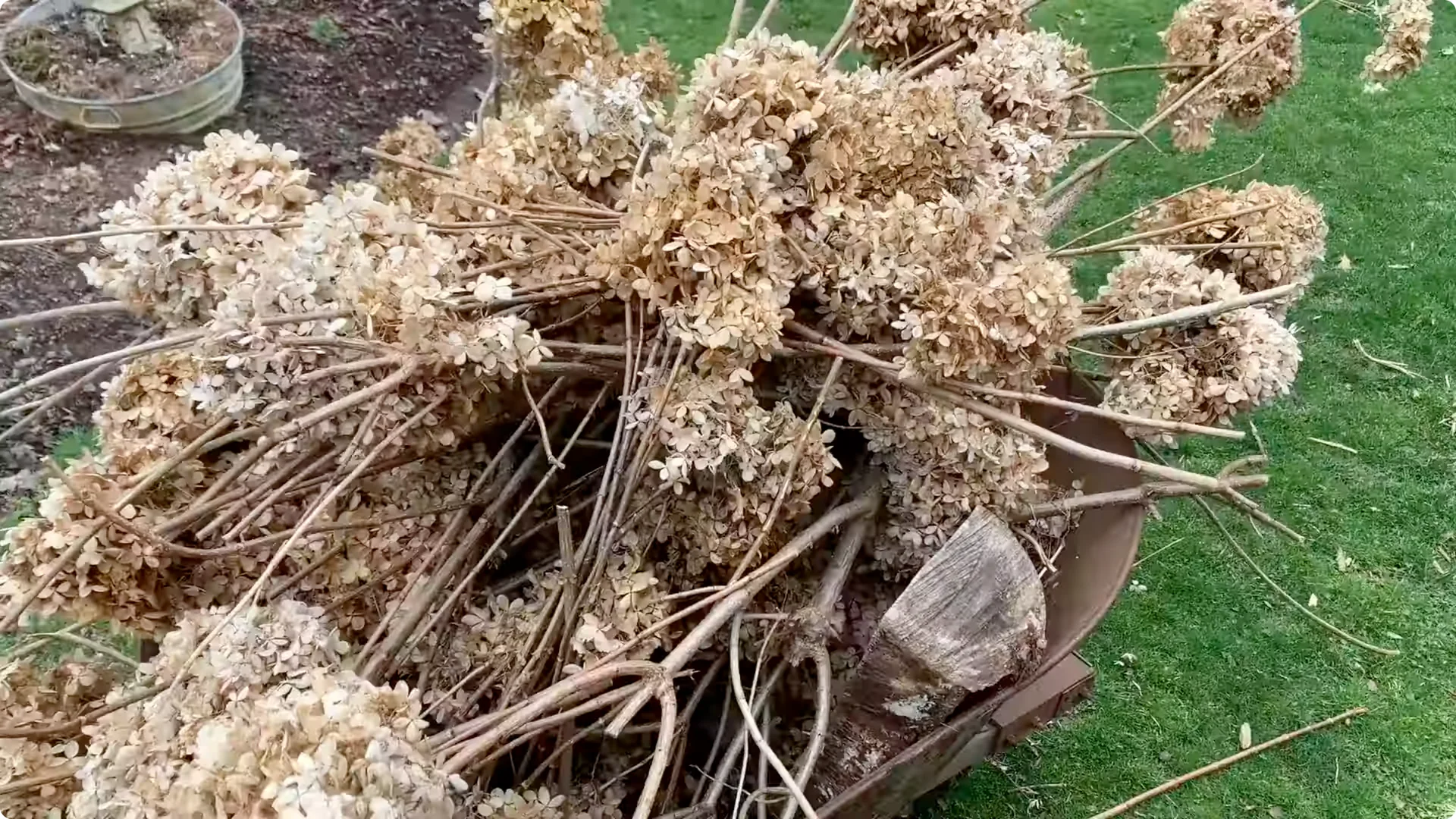
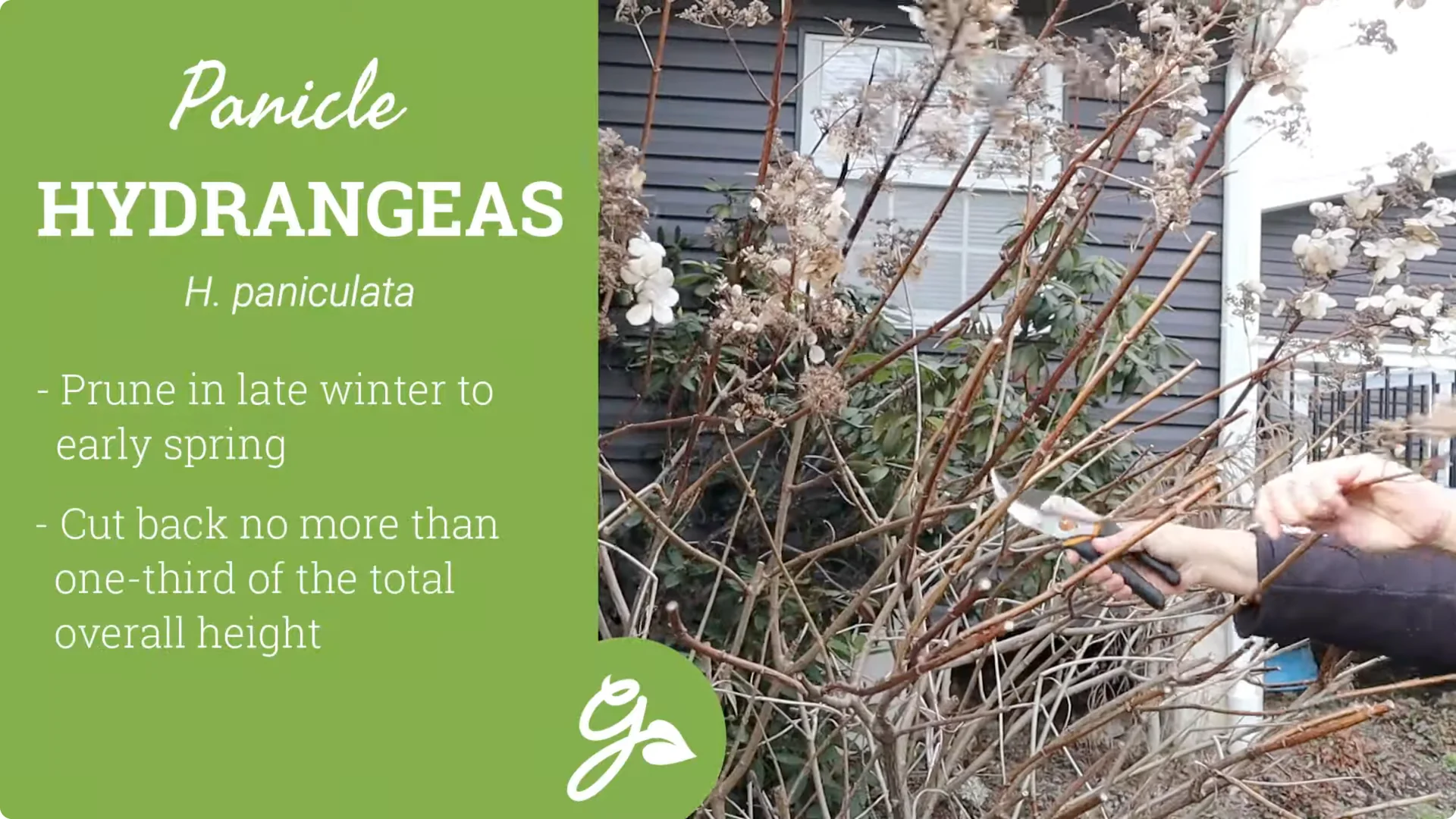
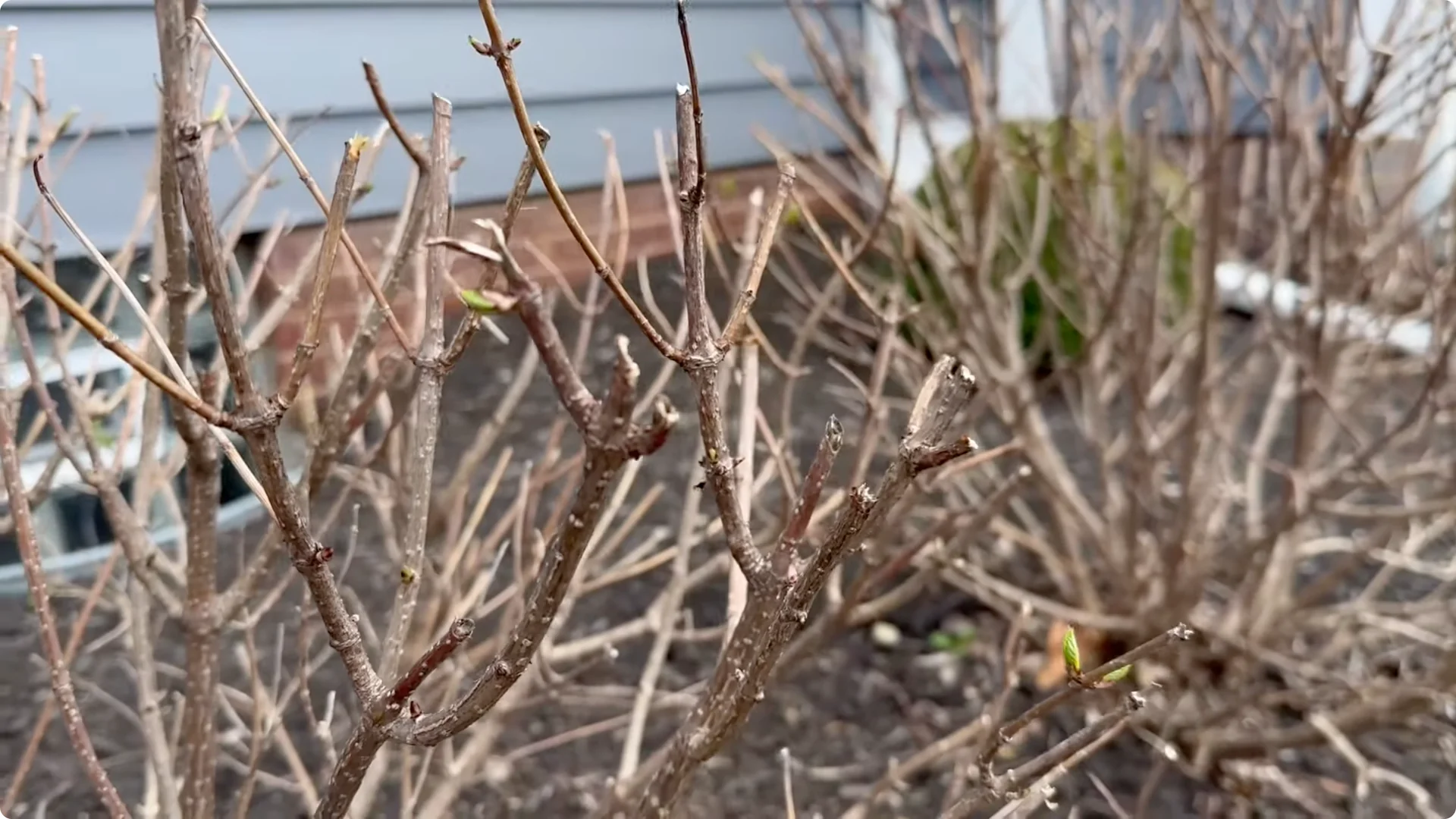
Always cut above a set of buds. Remove small spindly branches or anything smaller than the width of a pencil. Branches that are damaged or crossing other stems should also be removed.
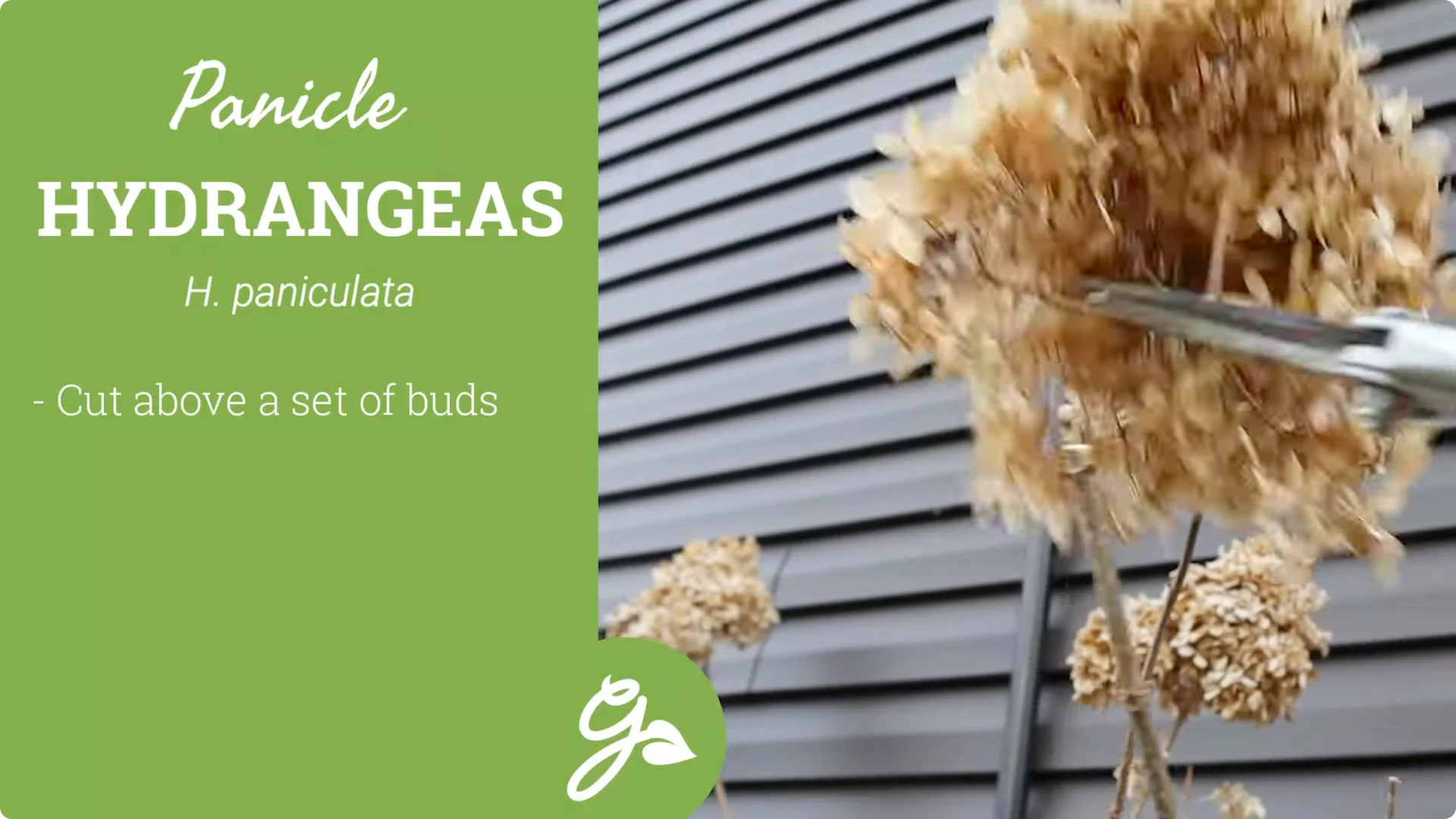
You can apply the same technique to prune a tree-form hydrangea as you would for a shrub-form panicle hydrangea. Work to preserve the ball-shaped tree silhouette. Keep cuts clean and consistent around the canopy.
4. Oakleaf Hydrangeas
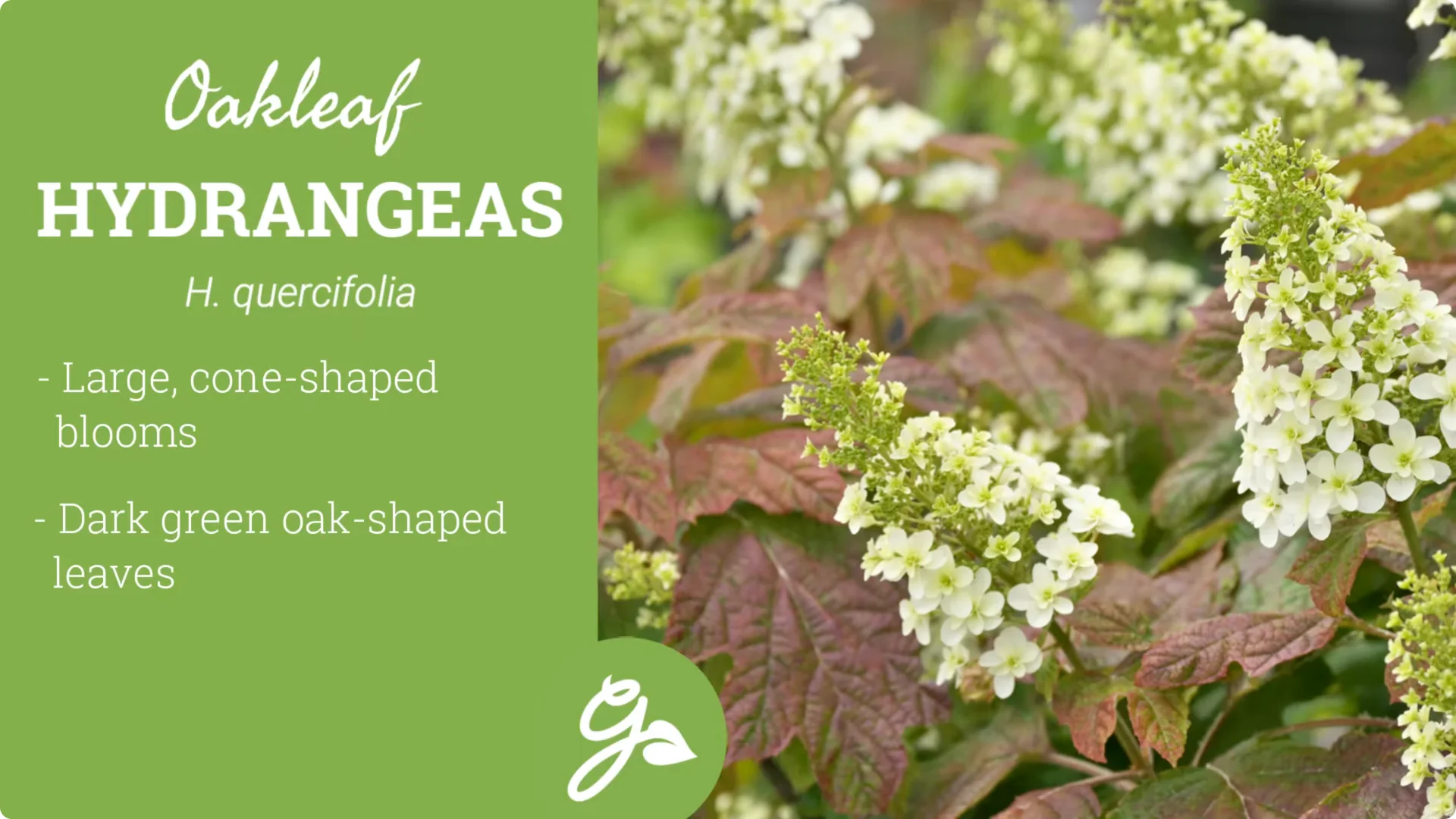
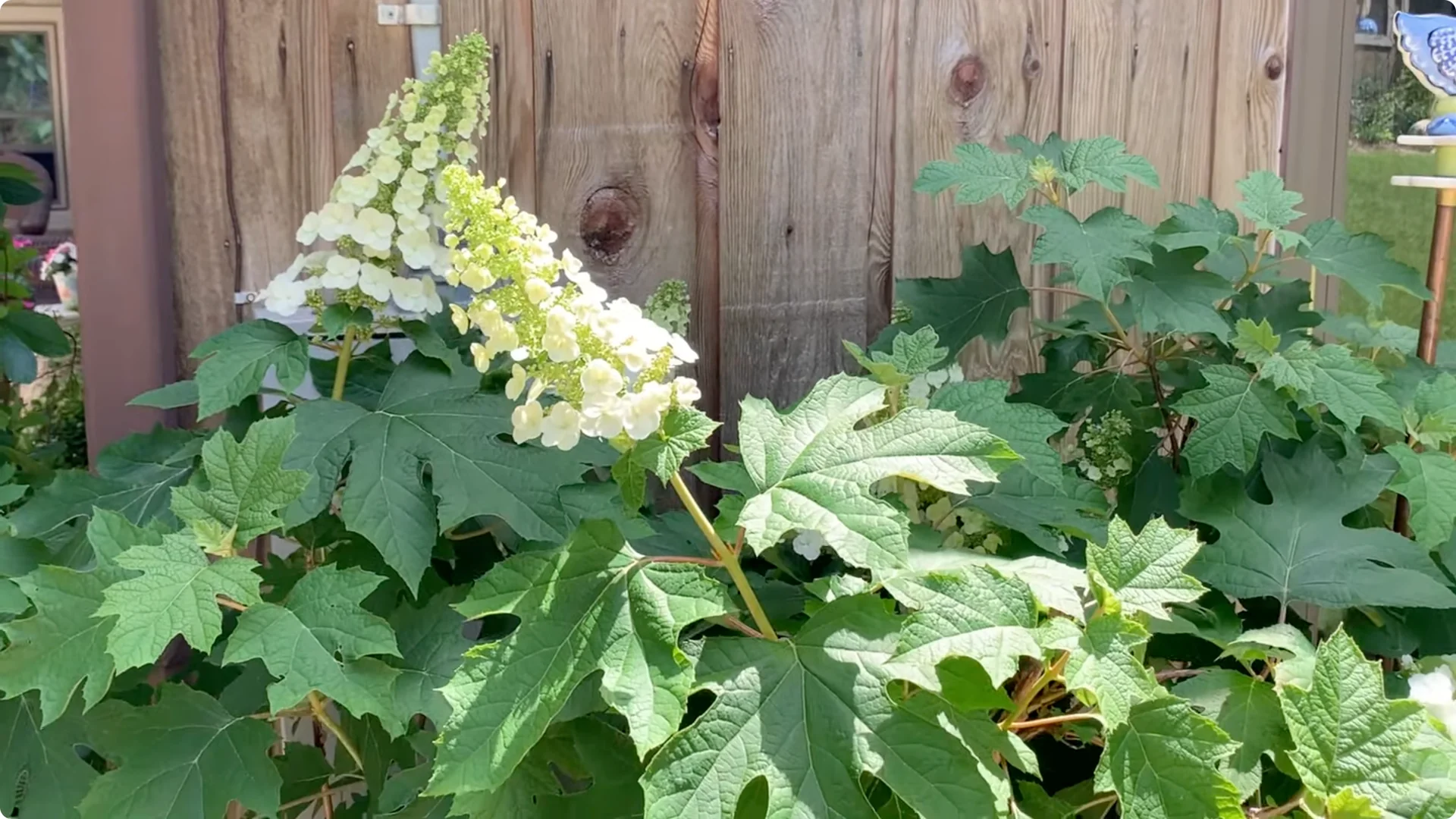
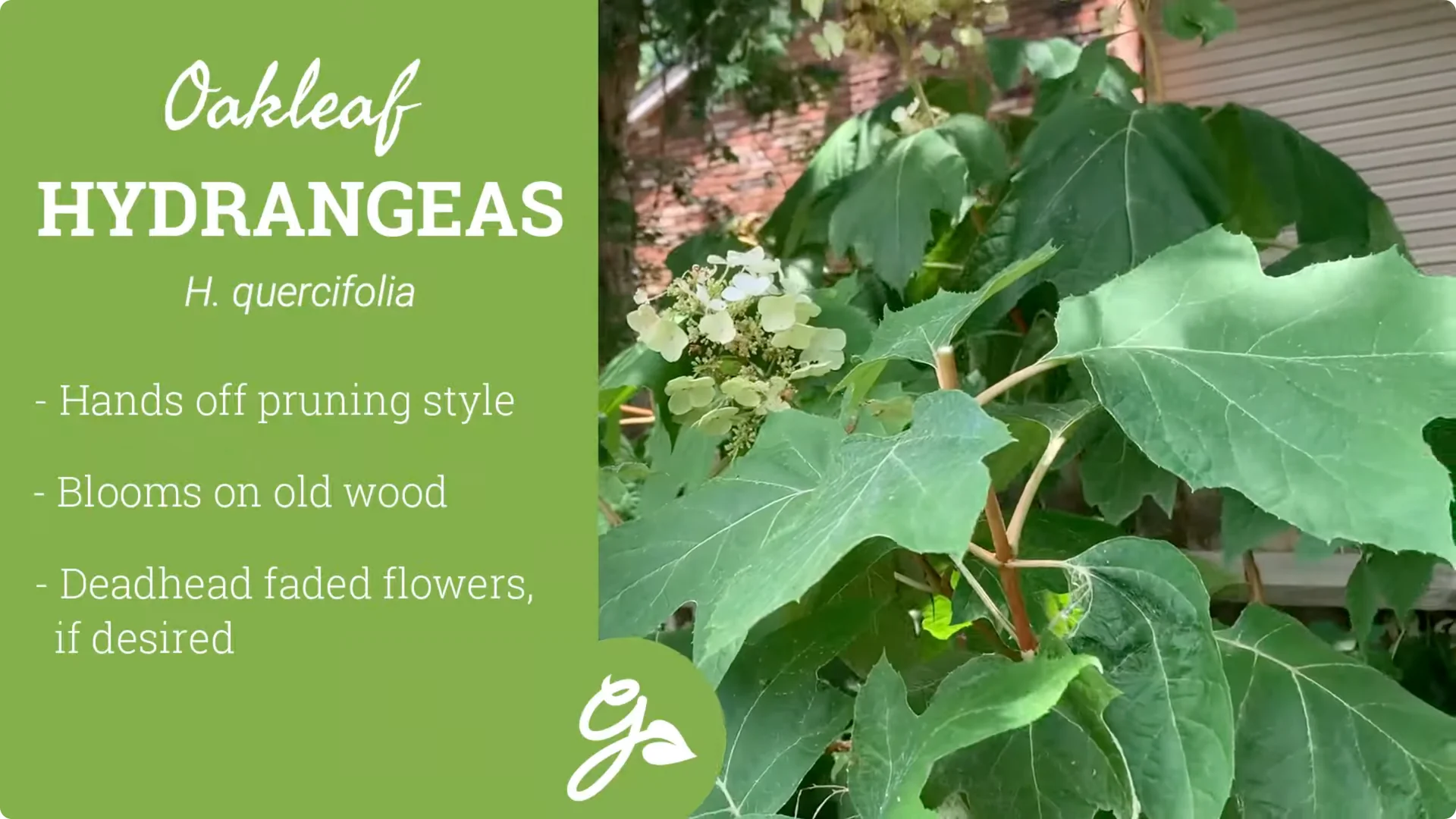
Oakleaf hydrangeas are easy to recognize by their large cone-shaped blooms and large oak-shaped leaves. Leaves are dark green during the season and transition to brilliant red or purple by fall. Thick stems with a bit of peeling bark provide additional winter interest.
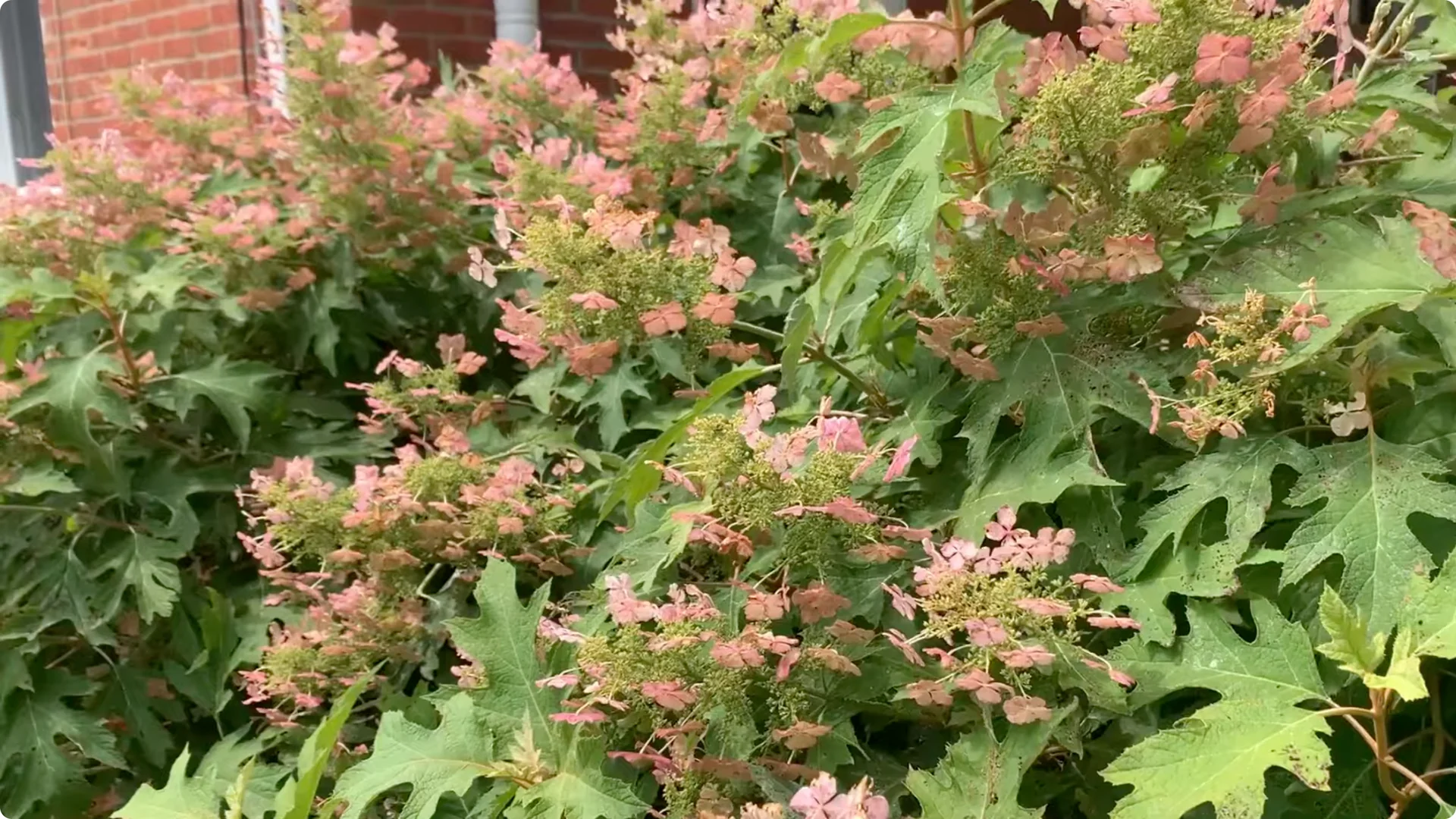
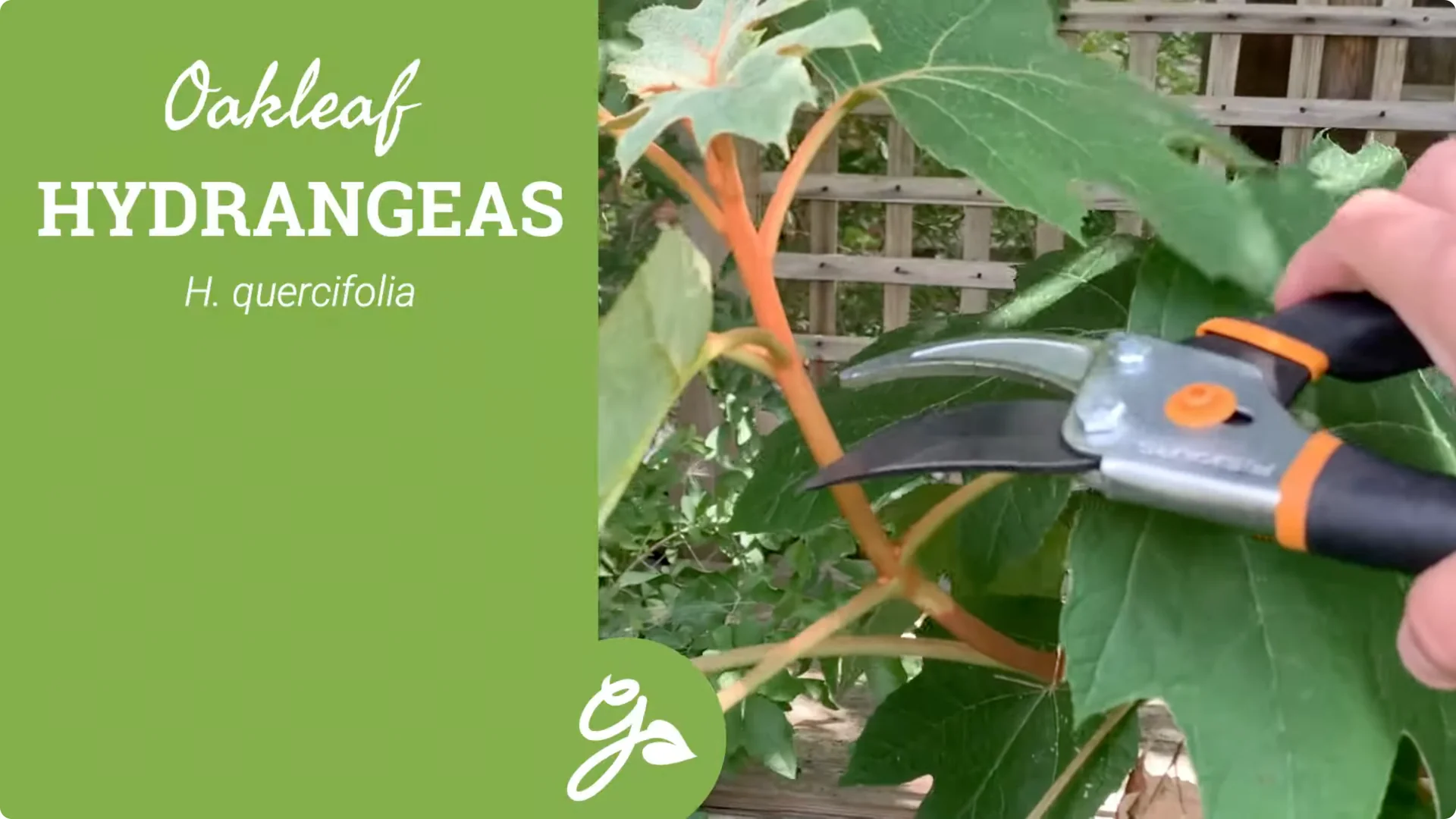
Most varieties bloom white, then transition to light or dark pink as the season progresses. This type typically blooms earlier than the other species mentioned. When it comes to pruning, this type is basically hands off.
They bloom on old wood, so they form their buds in late summer of the previous season. The only safe time to prune is as the flowers are beginning to fade, which occurs in mid-summer. Since some varieties can grow quite large, select a type that complements your garden space.
Hydrangea Pruning Guide – Final Thoughts
Understanding the specific needs of each hydrangea species will help you achieve beautiful blooms year after year. Identify your type, match the timing to old wood or new wood, and focus on removing dead, damaged, and crossing growth. Thoughtful cuts and the right season make all the difference.
If you also love caring for indoor blooms, here are practical orchid care tips to keep your plants happy. Keep notes on what works in your climate and with your varieties. With the right approach, pruning becomes simple and rewarding.