
Welcome to the magical world of unique roses. Here each flower tells a story written with care, nurtured with love, and rooted in patience. I am excited to share a super simple and natural way to propagate roses using organic materials.
1. Natural Rooting Solution for Roses
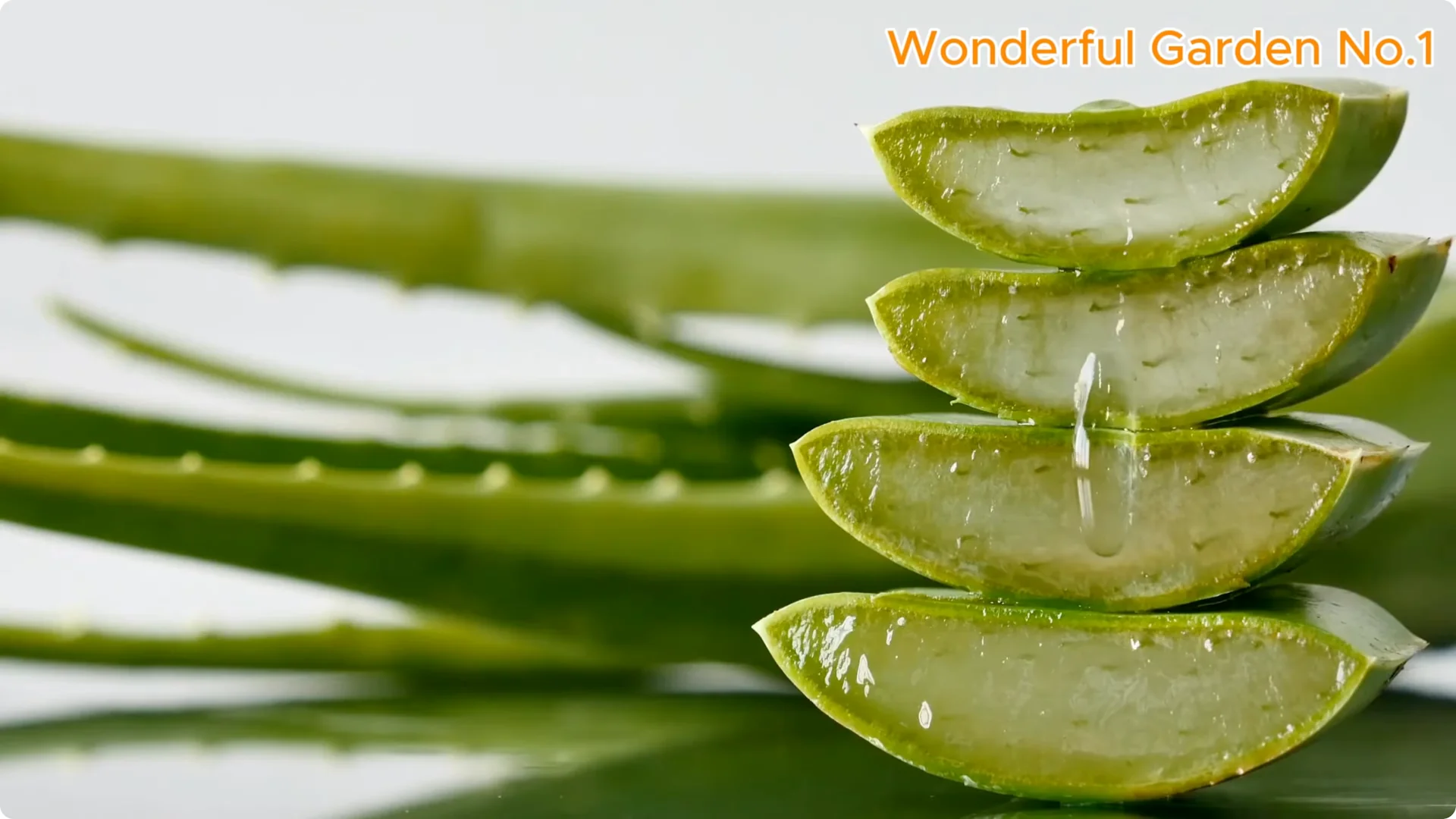
Aloe vera base
Forget chemical rooting stimulants. Create a natural rooting solution using organic ingredients. First up, aloe vera.
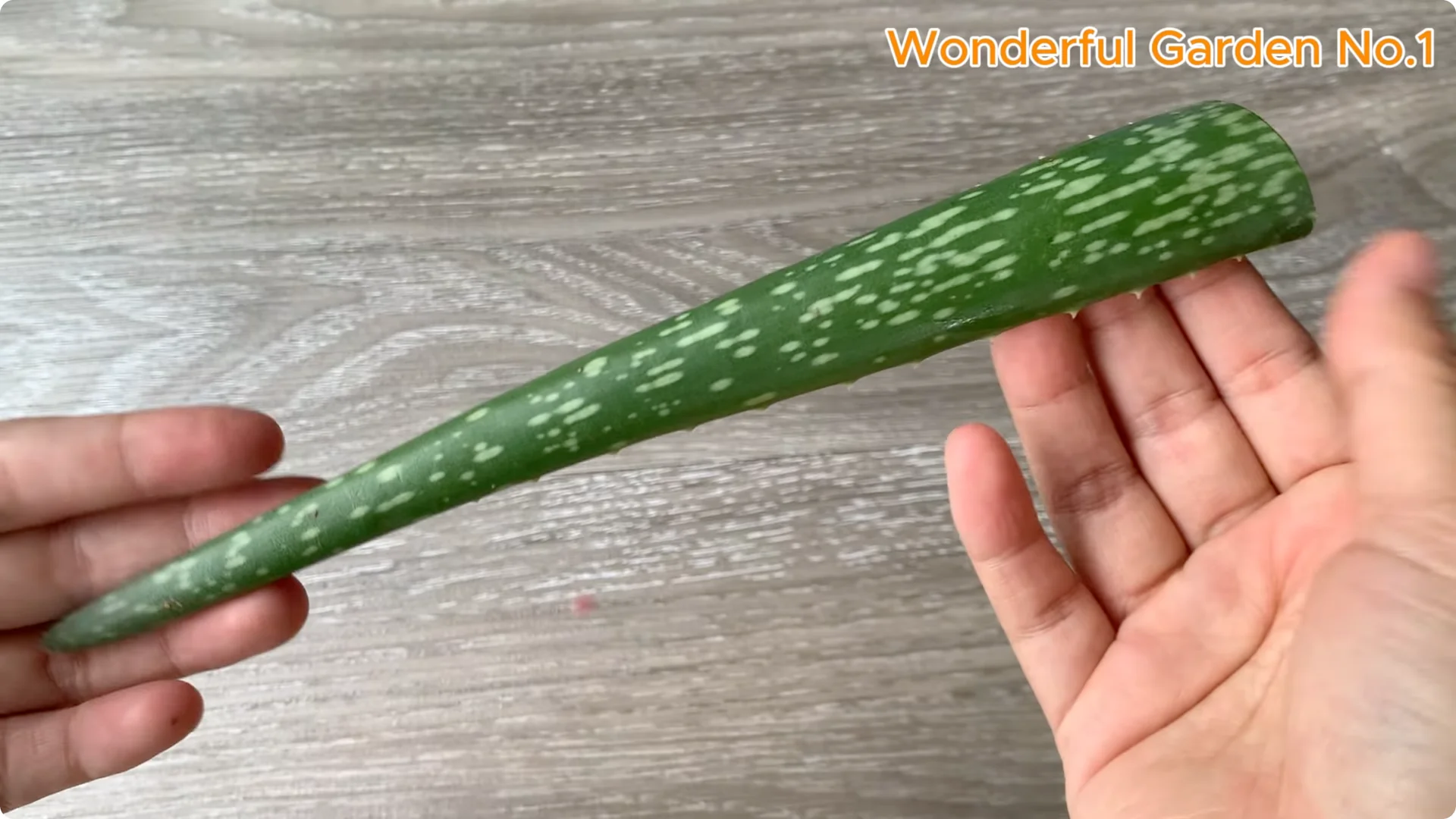
Take a fresh aloe vera leaf, cut it into small pieces, and put it in a blender. Aloe vera is loaded with natural nutrients, vitamins, minerals, enzymes, and amino acids, all of which stimulate root growth, boost immunity, and improve nutrient absorption.
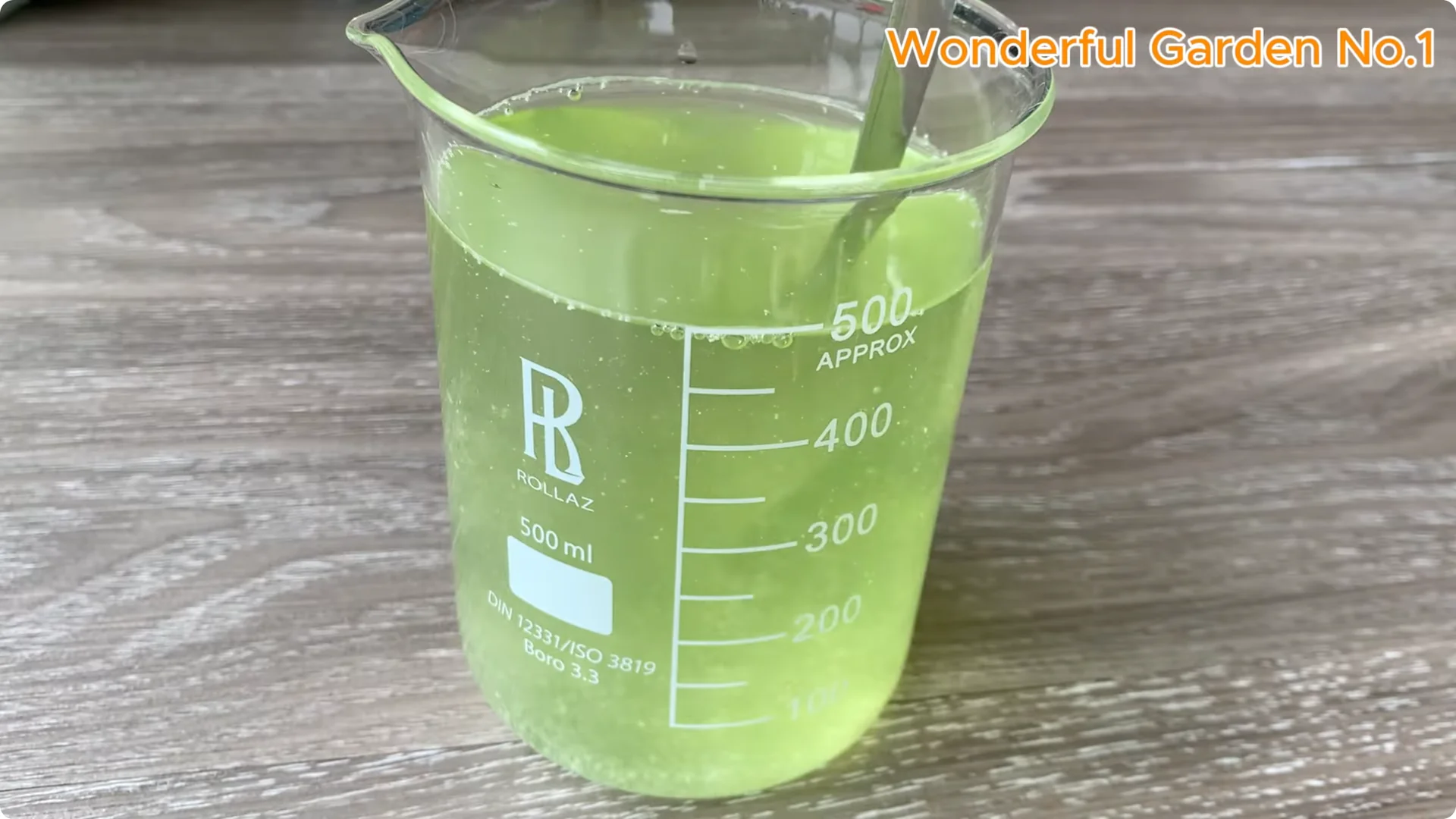
Add 250 milliliters clean water and blend until smooth. Once finely ground, strain the mixture to remove any pulp. This ensures a smooth, clean solution that won’t clog or hinder delicate plant roots as they begin to form.
Dilute and enrich
Add 300 milliliters of water to dilute the mixture. This creates a gentle, balanced solution perfect for promoting root growth. Next add three tablets of vitamin B1 (thiamine).
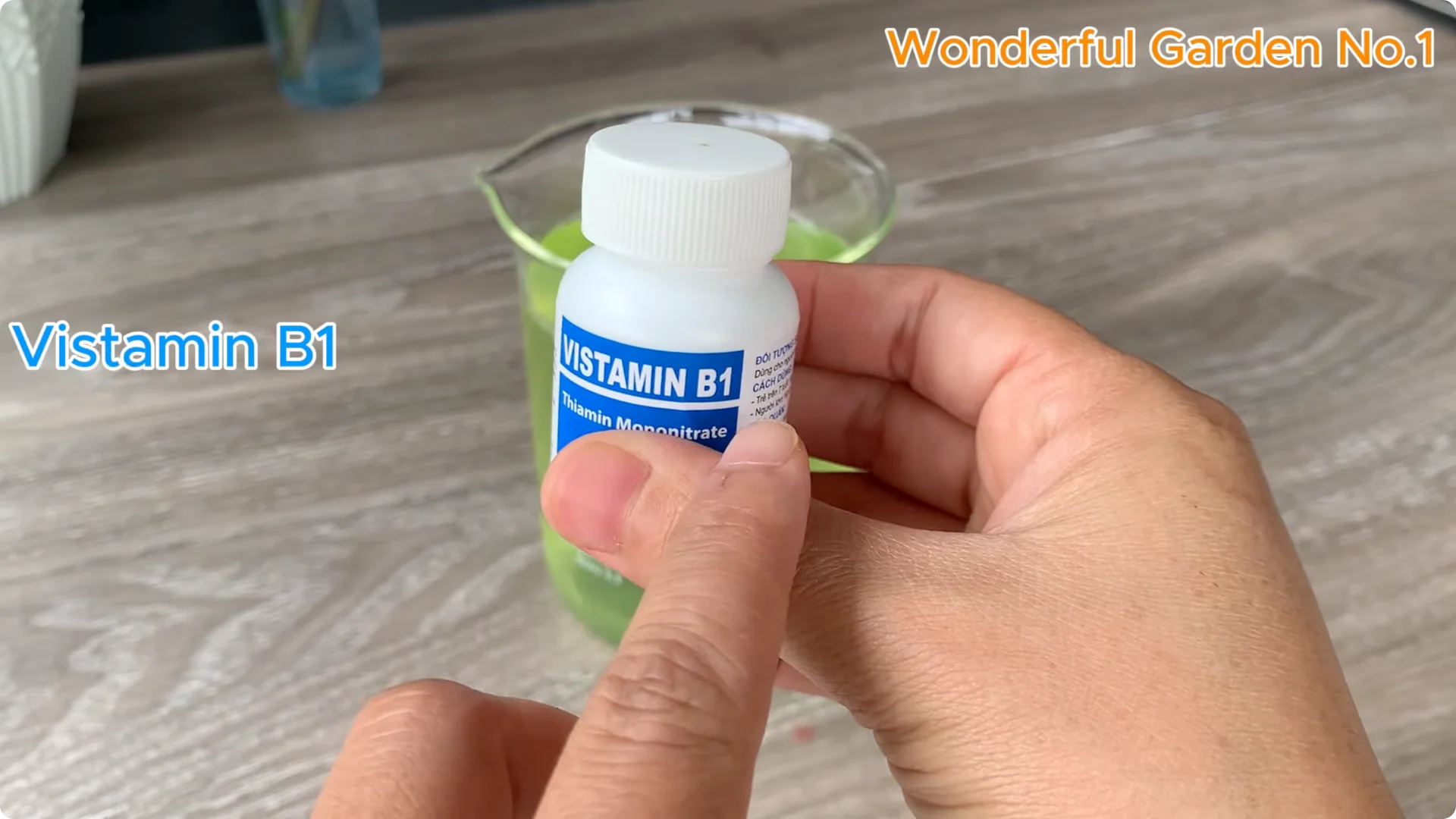
This vitamin works wonders for young plant roots, especially in the early stages of growth.
Activate
Mix well and let the solution sit for 1 to 2 hours to fully activate. Now that the organic rooting hormone solution is complete, pure, nutrient rich, and full of life, prepare your rose cuttings.
For more fast-rooting ideas, see 100 roots.
2. Prepare Cuttings – Natural Rooting Solution for Roses
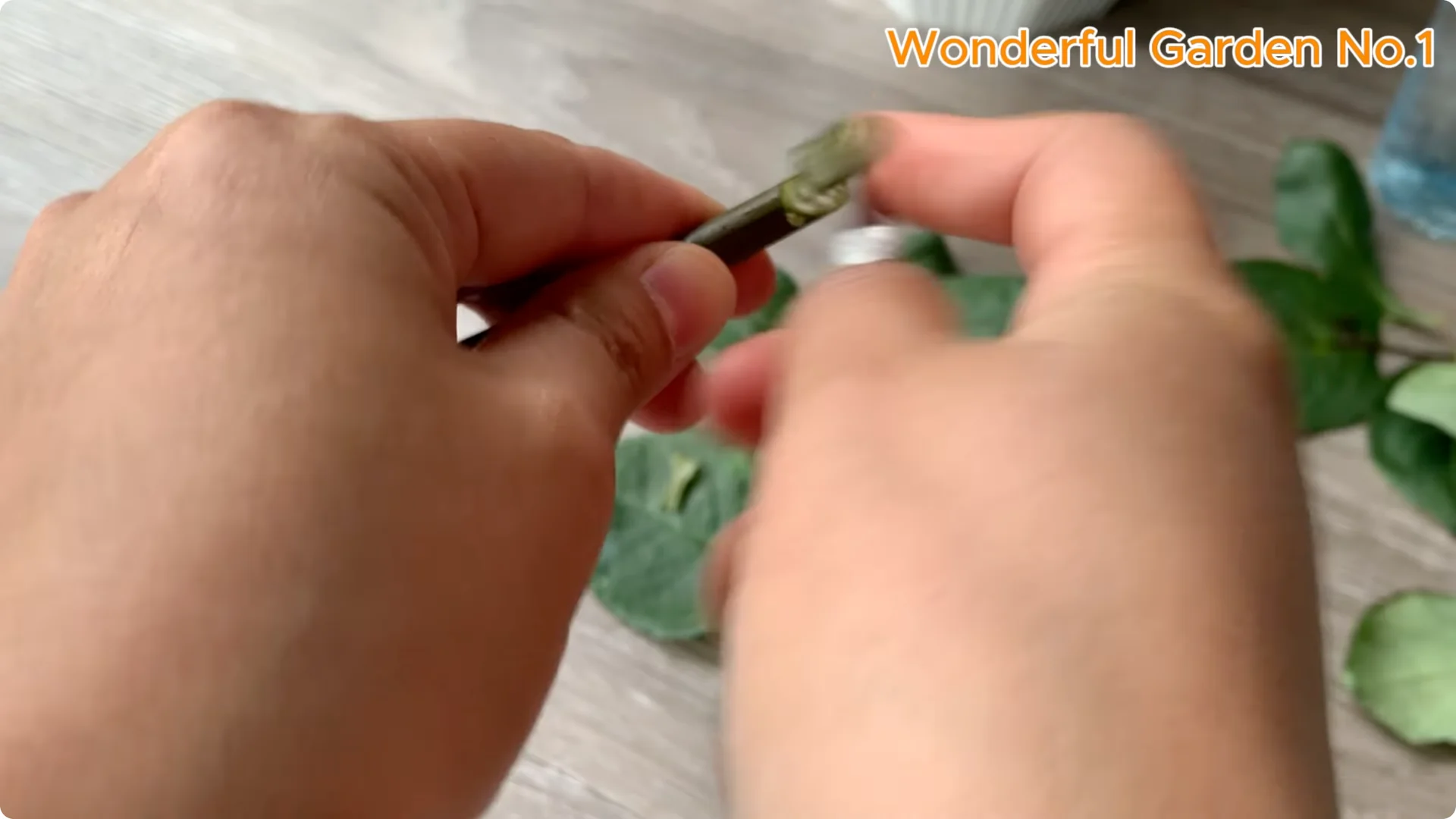
Choose a rose variety you love, as each new plant starts with a single meaningful cutting. Cut it to about 13 to 15 cm (5 to 6 in) just below a node. Remove most of the leaves to reduce water loss and redirect energy to root formation.
The stem is cut at a 45 degree angle to increase the surface area exposed to the rooting solution, promoting faster and healthier root growth. Use a fresh or dried garlic clove to gently rub the cut. This natural antiseptic will help protect the stem from infection and promote healthy roots.
3. Planting Medium and Setup – Natural Rooting Solution for Roses
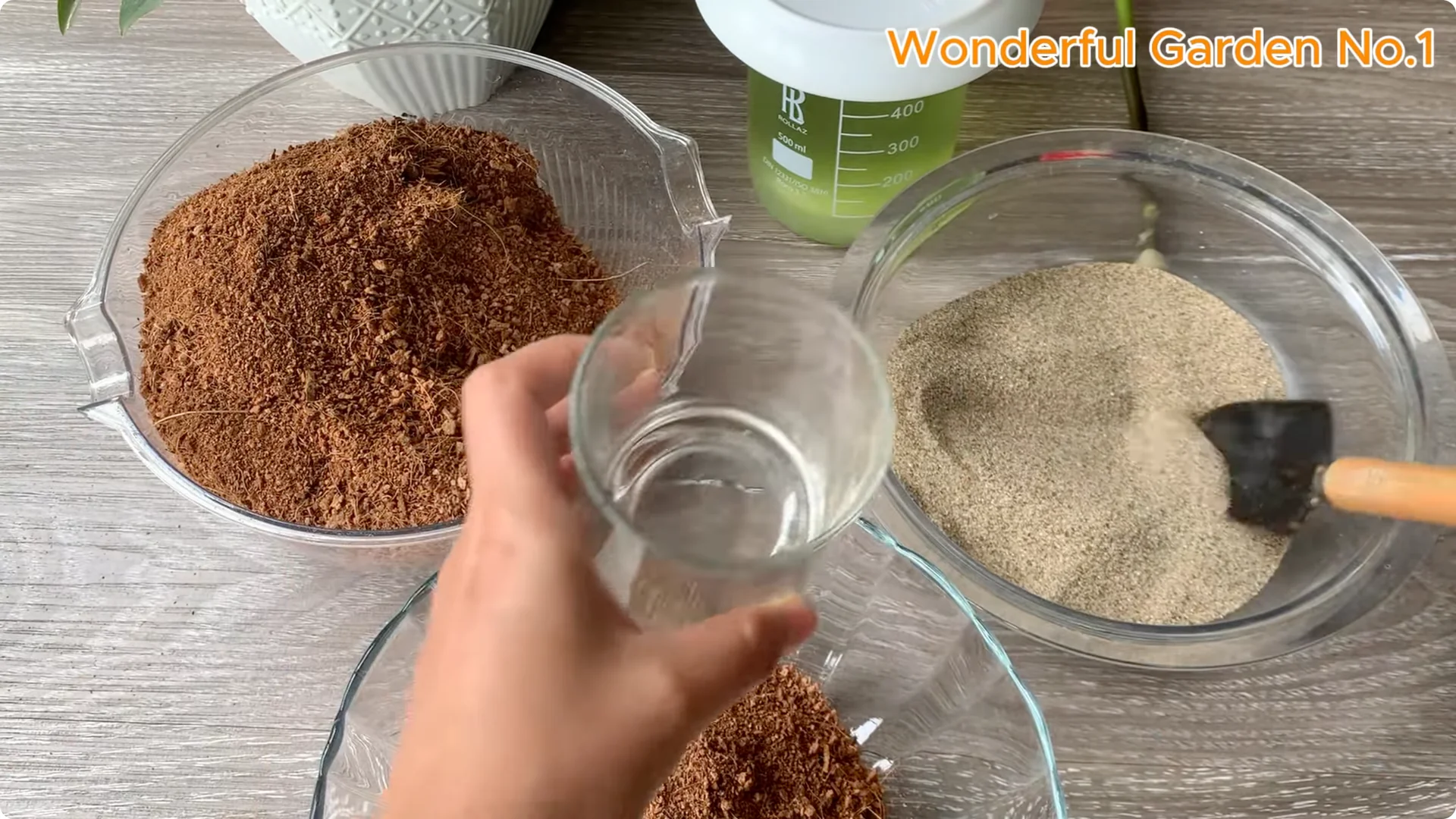
When planting rose cuttings, choose soil that is loose, well ventilated, moisture retaining but not waterlogged, resistant to fungal diseases, and has a pH of 6.0 to 6.5. In this method I use a mixture of clean sand and coconut coir in equal parts 1 to 1. This combination provides excellent moisture retention and aeration.
Important: make sure the coconut coir is properly treated to remove any residual salts before use. Use a freshly mixed solution to moisten the growing medium, ensuring it is evenly moist but not waterlogged. This creates the ideal environment for the cuttings to develop healthy roots.
Use a plastic cup to hold the growing medium. Gently make a hole with a stick before inserting the rose cutting to avoid damaging the stem.
For another simple idea, see potato method.
Carefully insert the rose stem into the small hole in the centre of the cup, positioning it so that the leaf nodes are facing outward. This is where new growth will emerge and grow. Cover the cup with a larger upside down cup to seal it in, creating a mini greenhouse effect that helps retain moisture and promotes root growth.
4. Placement and Care – Natural Rooting Solution for Roses
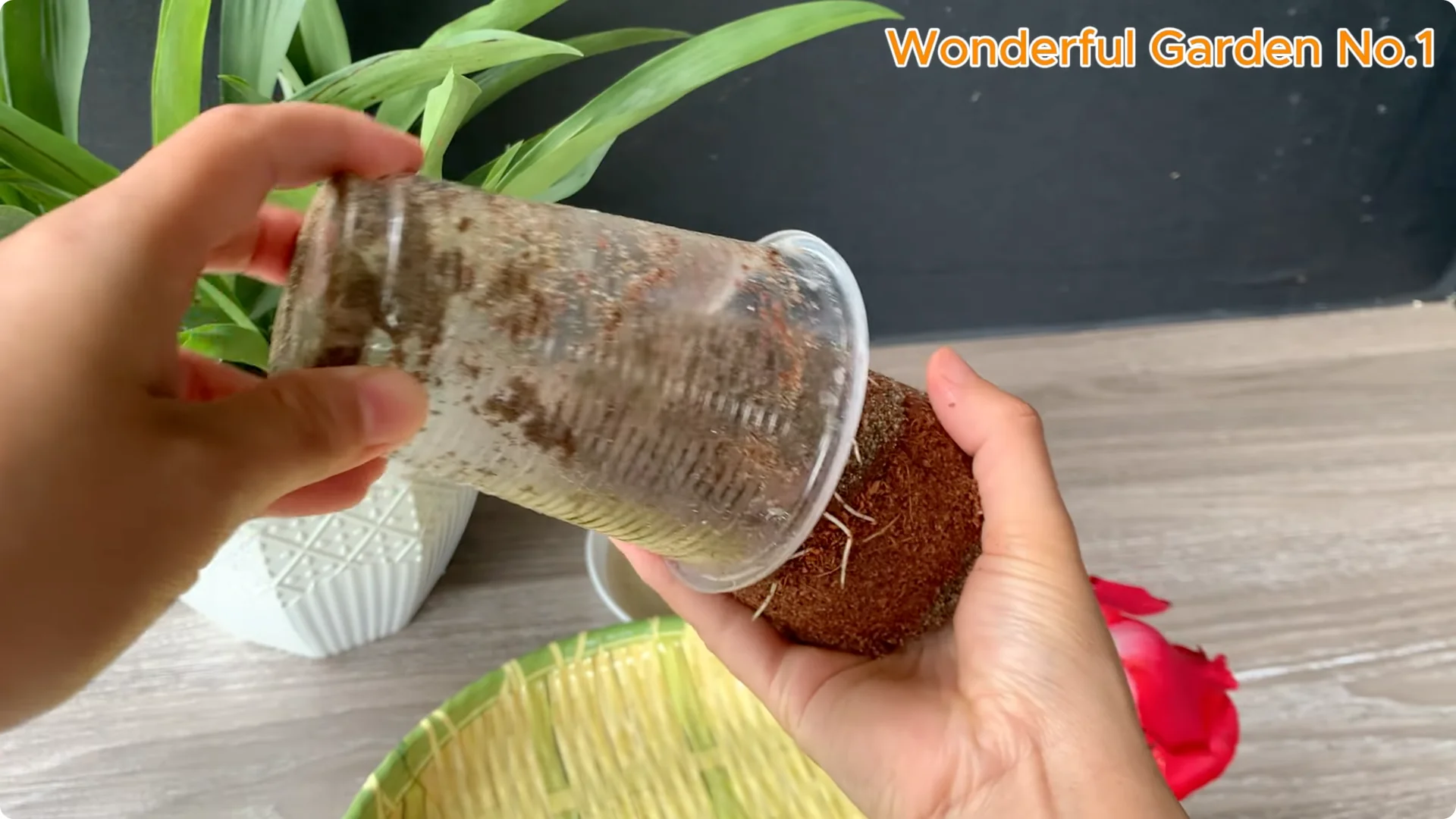
After planting, place the cutting in a cool bright location out of direct sunlight. Maintain humidity in the medium and check the moisture level regularly, watering lightly if the soil begins to dry out. Avoid disturbing the cutting during this period.
Within 10 to 15 days, you should begin to see small roots forming and bright green shoots emerging from the leaf nodes. Apply turmeric powder to the surface of the cut to help disinfect the wound, prevent fungal infections, and promote faster wound healing.
You can also explore the tea trick.
Final Thoughts – Natural Rooting Solution for Roses
A simple natural way to grow roses from cuttings, requiring only care, patience, and the gifts of nature. May your garden always bloom.