
Yellow, discolored leaves on Aglaonema (Chinese Evergreen) are a common issue that can point to several causes. If you do not identify the reason and fix it quickly, the plant can decline within a few weeks. I’m highlighting the possible reasons for Aglaonema yellow leaves and the solutions, so you end up with a healthy, bushy plant.
If you are troubleshooting similar symptoms on other houseplants, see pothos leaves turning yellow reasons for comparison and extra context.
1. Aglaonema Yellow Leaves: Improper Soil Moisture
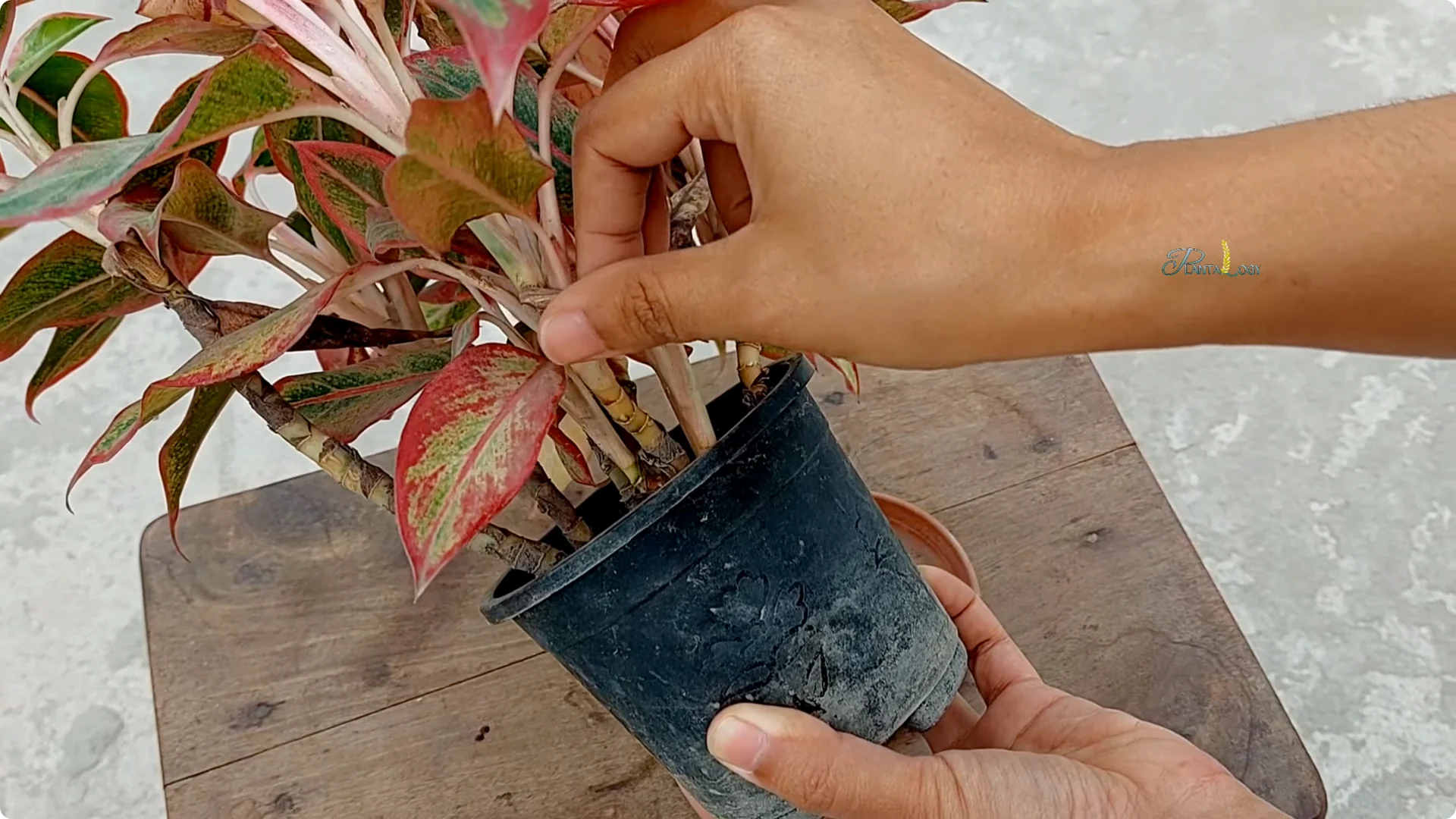
The most common cause across Aglaonema varieties is improper soil moisture. An underwatered plant wilts from dehydration, and the lower leaves start turning yellow. Large, mature plants in an undersized pot often show chronic lack of moisture, leaving the plant filled with wilted yellow leaves.
Underwatered plants are also easily damaged by root rot if they are suddenly overwatered. Watering without checking the soil can trap the plant in a soggy environment for too long and end up with a rotten root system. An overwatered Aglaonema shows yellow leaves with brown edges and drops leaves quickly due to root rot.
Watering routine
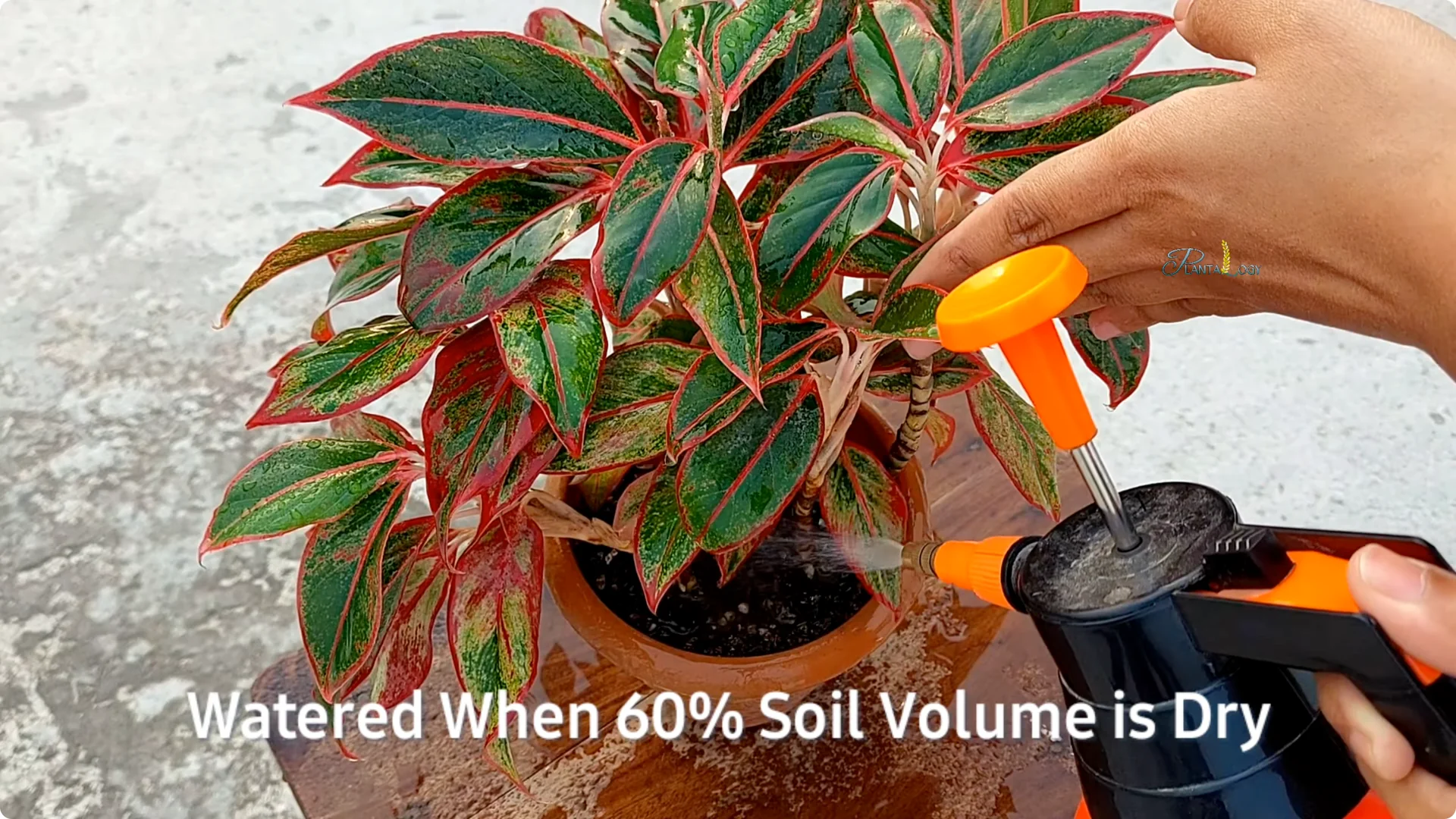
Step 1: Water only when about 60% of the soil volume is dry. Check 1 to 2 inches of the surface soil; if it feels almost dry or dried out, water thoroughly.
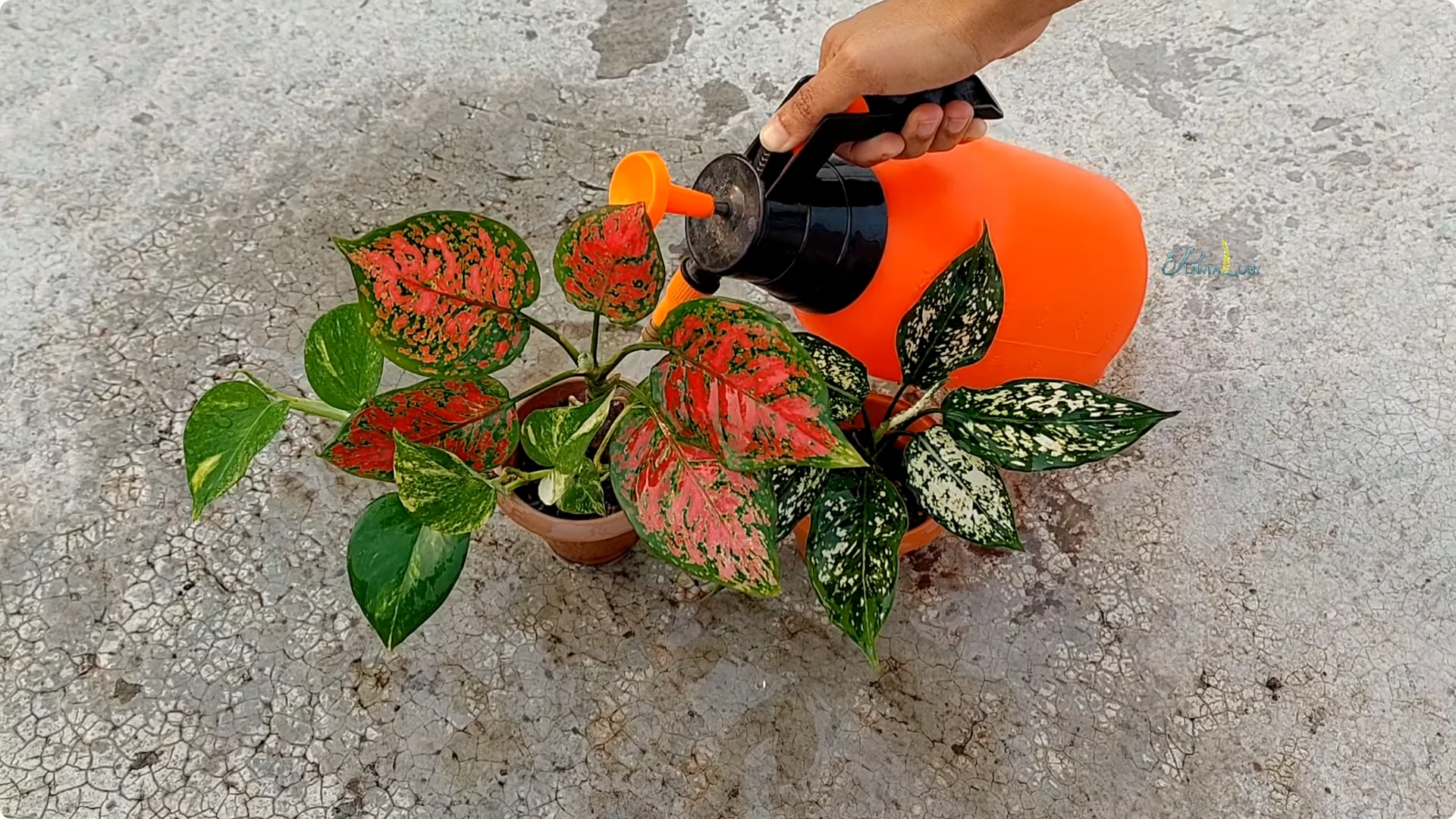
Step 2: Let excess water drain through the drainage holes. Discard any water that collects in the saucer to prevent future root damage.
Seasonal adjustment
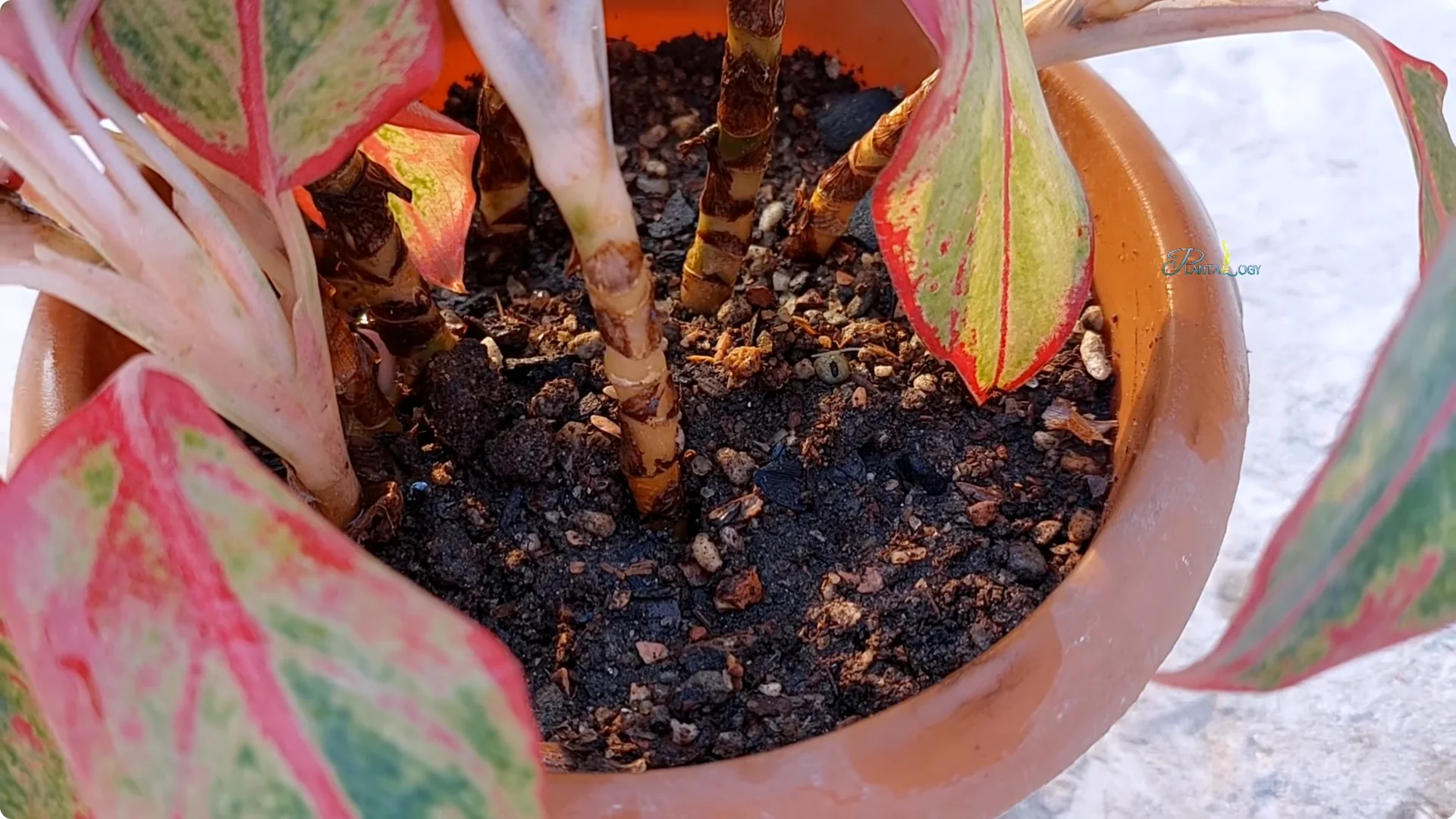
In winter, let the soil dry out 70 to 80% between waterings because Aglaonema is winter dormant. During this period, overwatering can damage the entire plant.
2. Aglaonema Yellow Leaves: Humidity
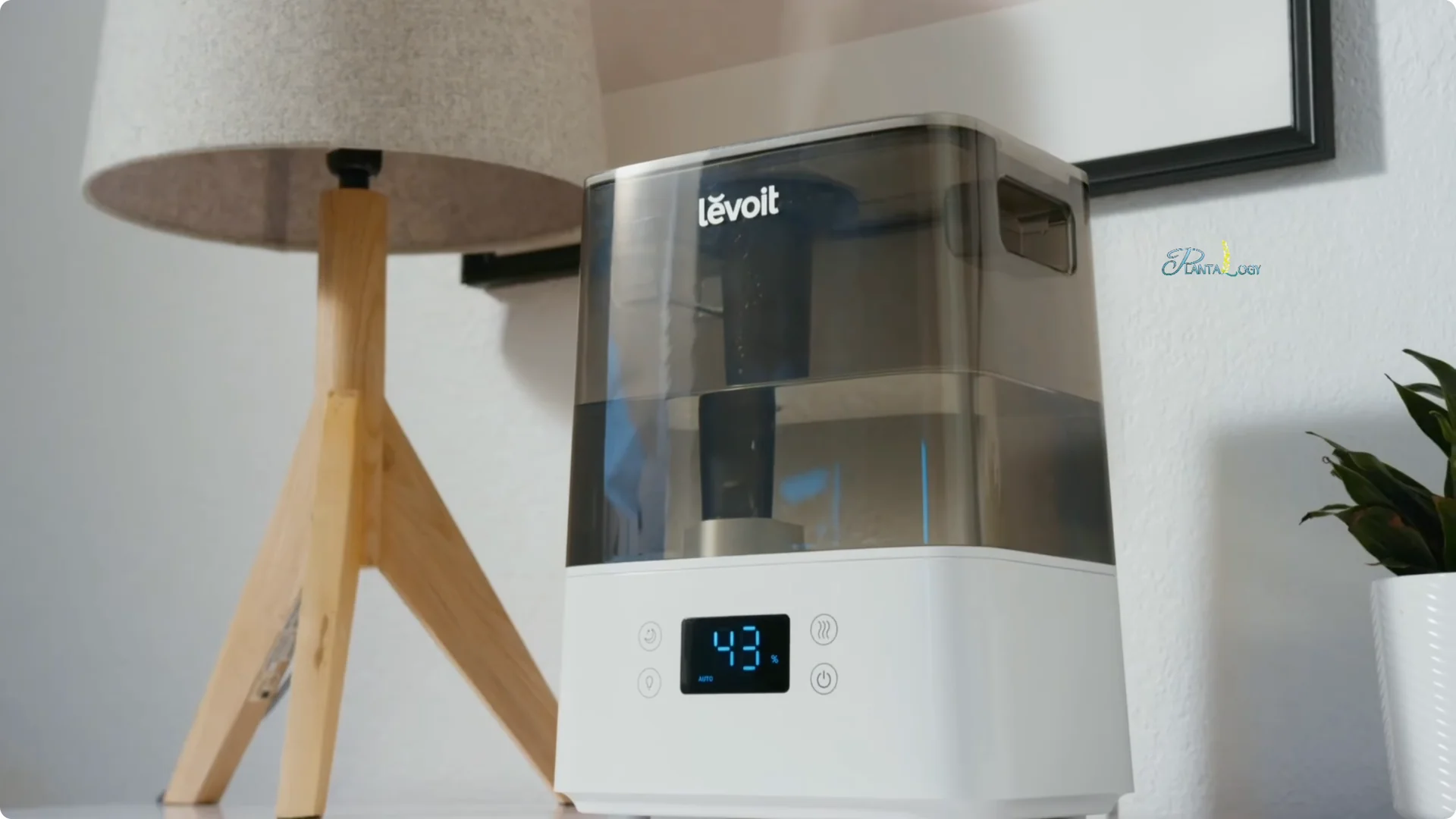
Low humidity below 40% causes leaf-edge browning, and later the entire plant can turn yellow. Aglaonema is tropical and prefers 50 to 60% humidity to thrive and keep foliage vibrant. If your space drops below 40%, raise humidity with a humidifier or group plants together to create a microclimate.
For more on browning symptoms that often accompany yellowing, see aglaonema leaves turning brown causes.
3. Aglaonema Yellow Leaves: Light
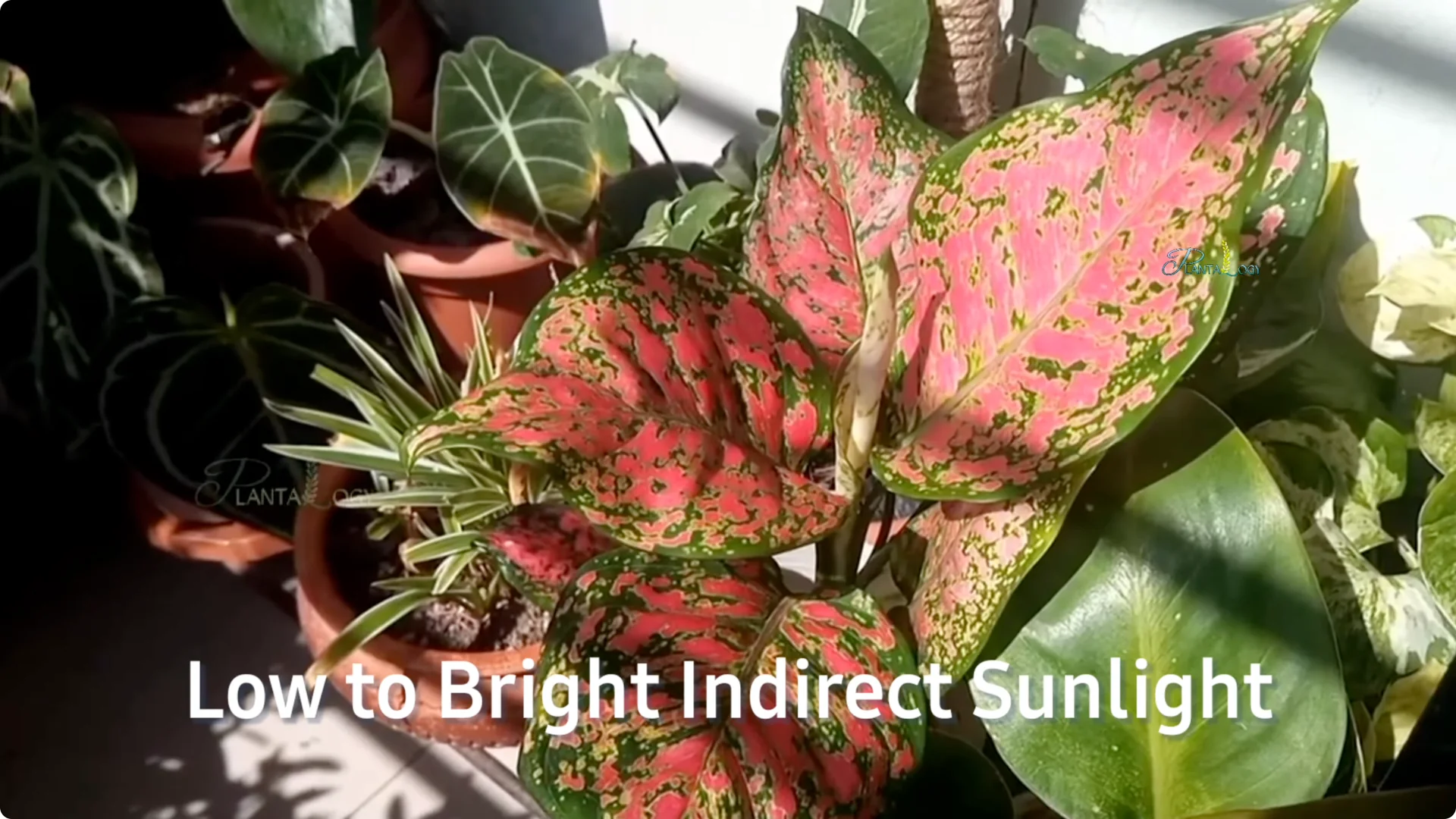
Aglaonema thrives in low to bright indirect light. With 3 to 4 hours of direct sun, foliage can scorch, then look yellow and pale. In very low light, leaves do not usually yellow but variegation can revert to green.
Ideal exposure
Aim for 5 to 6 hours of bright, indirect light daily to maintain color and variegation. If natural light is limited, you can keep the plant under a grow light positioned for gentle, indirect exposure.
Avoid extremes
Keep the plant out of prolonged direct sun to prevent burn and yellowing. Avoid deep shade that encourages variegation loss and weak growth.
4. Aglaonema Yellow Leaves: Pests
Weakened or stressed Aglaonema becomes more susceptible to sap-sucking pests like spider mites, mealybugs, and scale. Indoors, these pests spread quickly and can blanket a plant. Infested plants develop yellowing leaflets or fronds as pests drain sap.
Prevent and treat
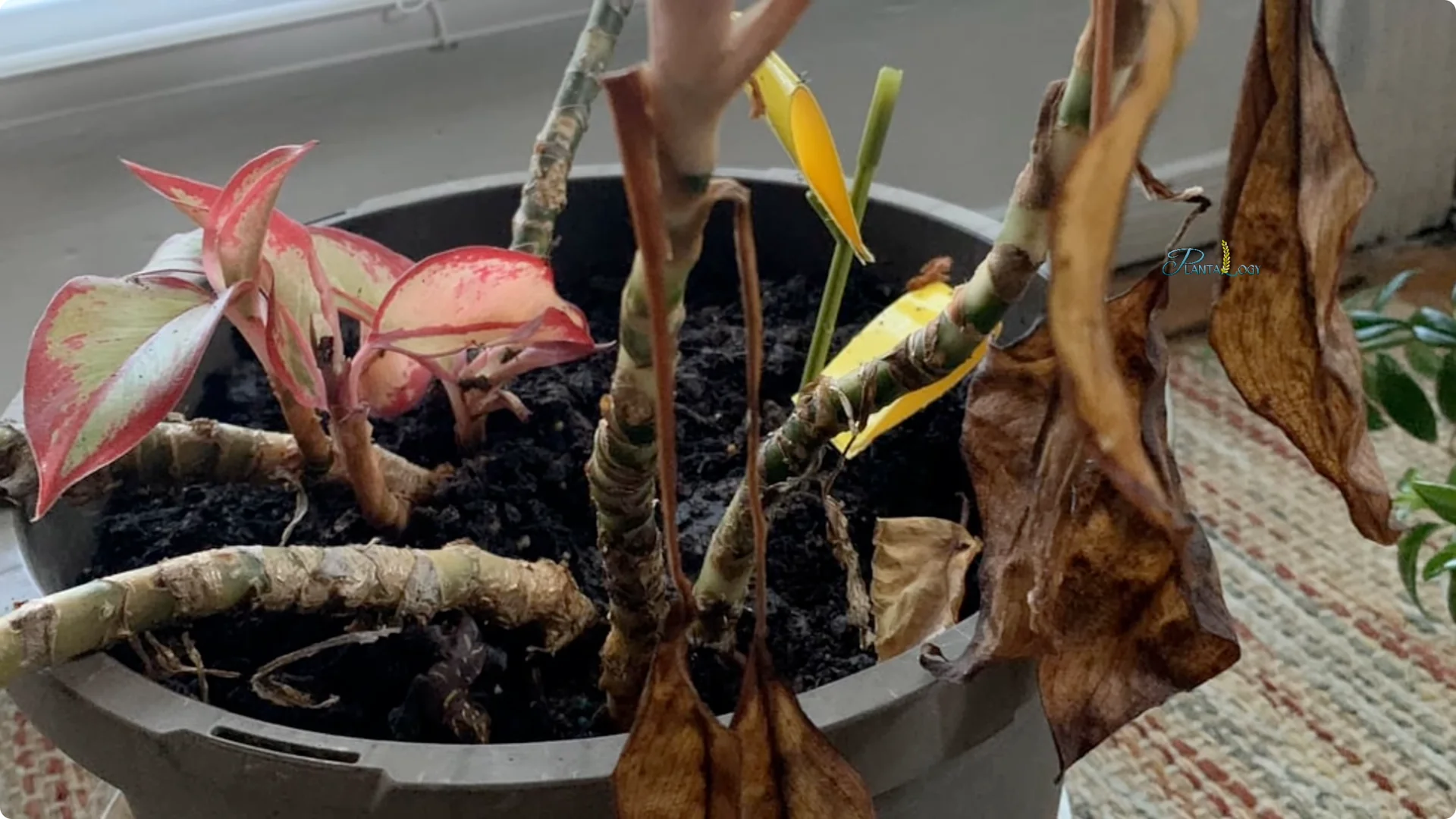
Step 1: Inspect foliage, stems, and undersides of leaves routinely to catch problems early. Good care and proper conditions reduce pest pressure and unusual yellowing.
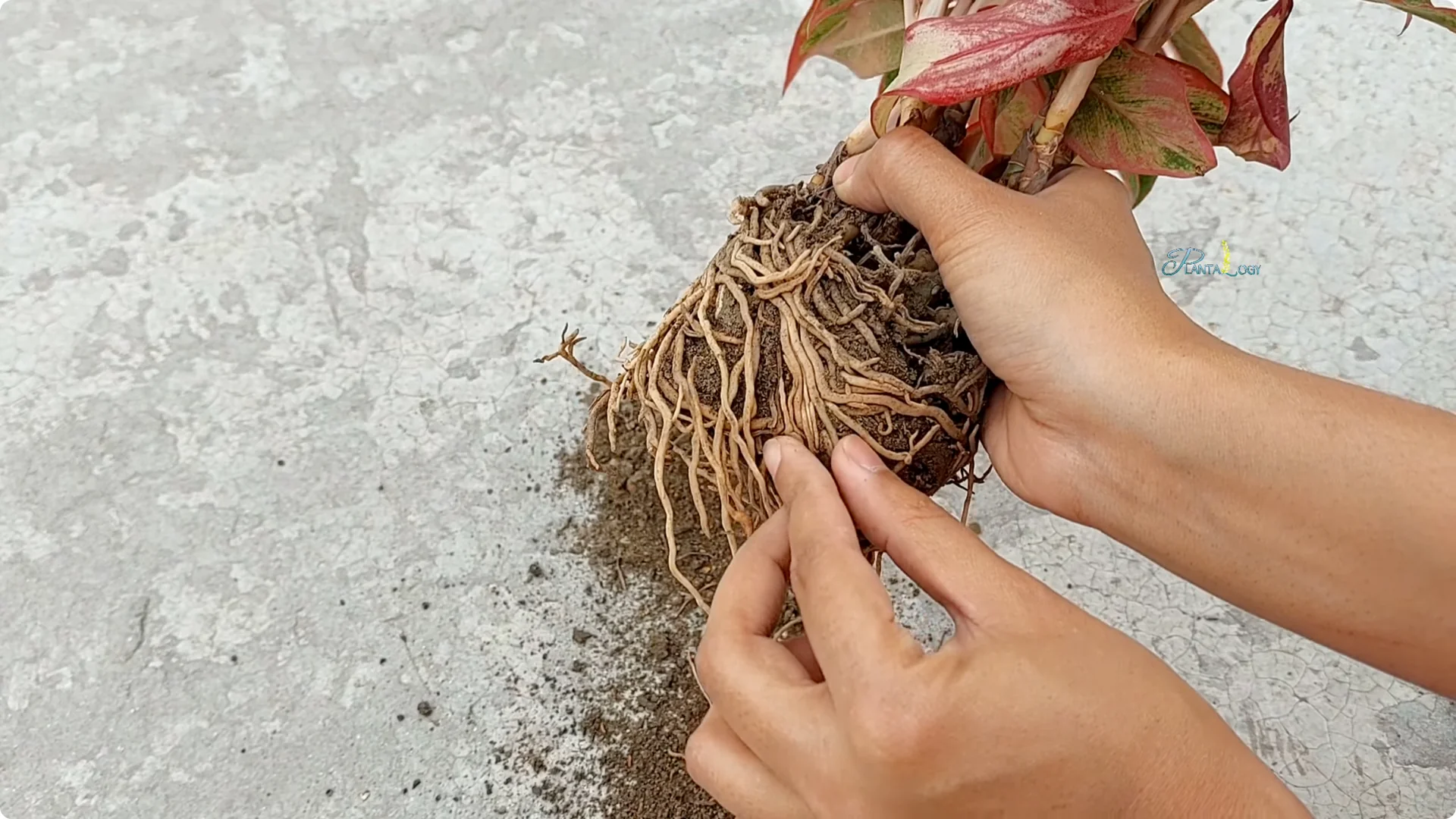
Step 2: For prevention, spray a neem solution twice a month. For infested plants, spray neem solution twice a week until new growth appears clean.

5. Aglaonema Yellow Leaves: Soil Mix Matters
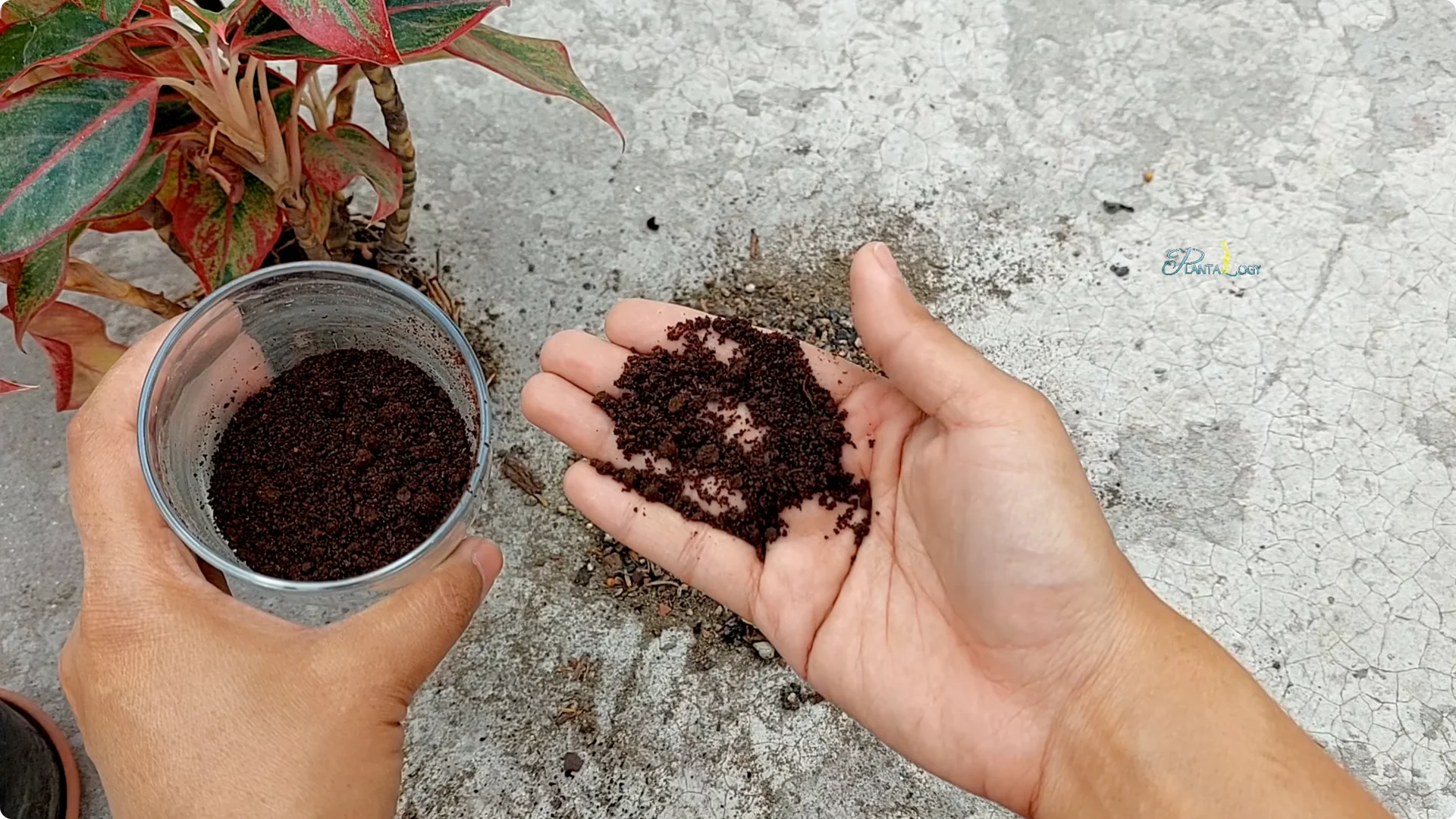
A proper soil mix has a big effect on growth and long-term health. A good mix supports a healthy root system, lets air and water move through quickly, and improves the soil’s biological activity. This foundation helps prevent both underwatering stress and waterlogged roots that lead to yellowing.
Final thoughts on Aglaonema Yellow Leaves
Check soil moisture before every watering, adjust the schedule in winter, and keep humidity around 50 to 60%. Provide bright, indirect light, monitor for pests, and support the roots with a well-draining mix. For another quick reference on yellowing foliage, see peace lily yellow leaves fixes to compare symptoms and solutions.