

Every rose tells a story. You can create your own new chapter using just a rose branch and natural ingredients. If you love roses and believe in the pure beauty of nature, this journey is for you.
Let me show you how.
Rose Cutting Propagation
1. Prepare Onion Peel Solution
Choose a fresh onion, preferably organic and chemical free. Peel off the outer skin of the onion. This skin is rich in vitamin PP (niacin), which stimulates root growth.
It also contains vitamin B, which aids in rapid bud formation and promotes shoot growth. Place a handful of onion skins in a glass jar. Pour in about 250 milliliters of clean water, cover the jar, and let it steep at room temperature for 5 to 6 hours.
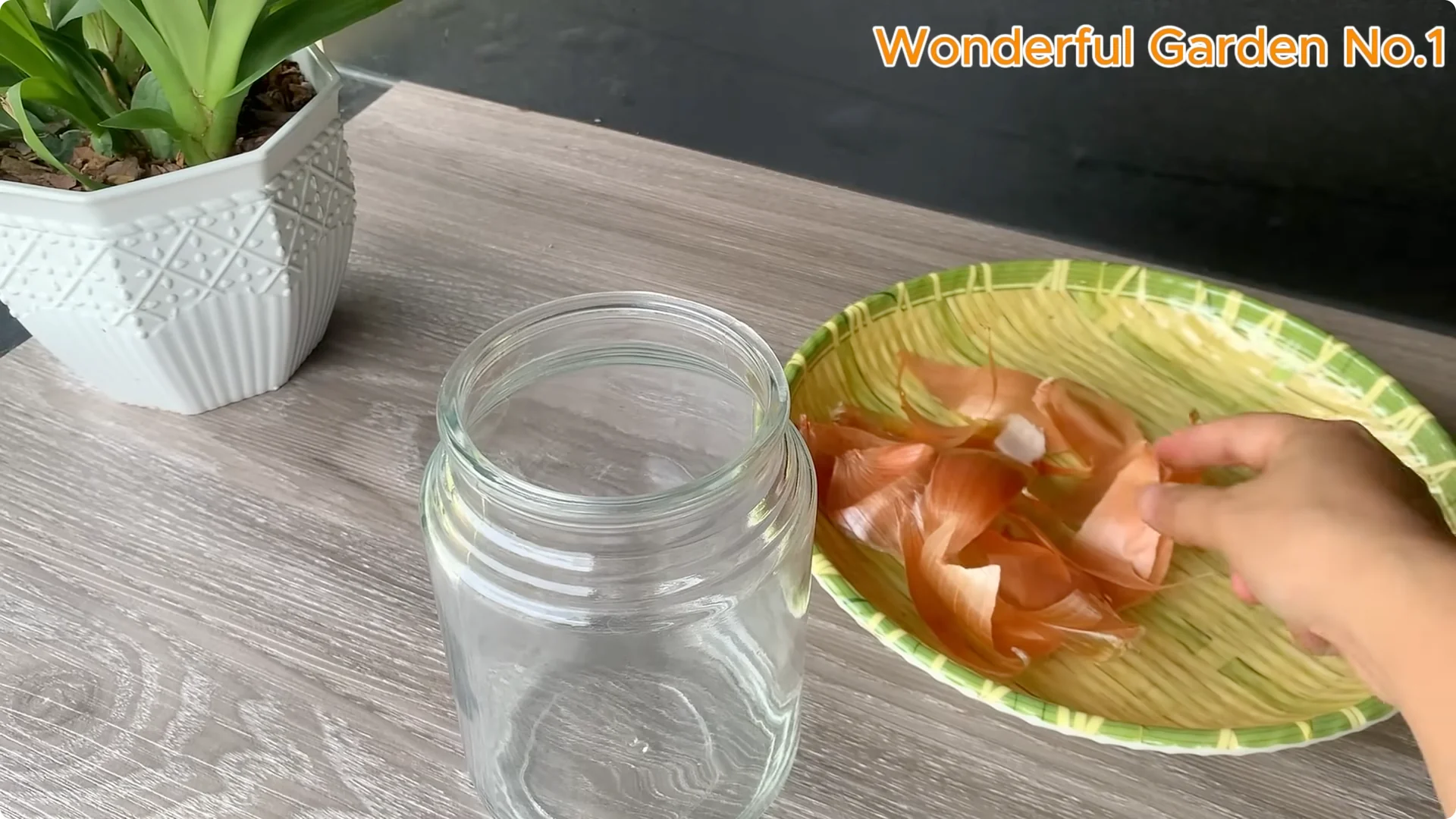
This will create a light, nutrient rich soak. Take three spoons of rice diluted with 250 milliliters of clean water and stir well. Then cover and let stand for a few hours.
This gives the nutrients from the rice time to fully dissolve into the water. Create a nutrient rich environment to help stimulate cuttings to quickly root. For faster bud development later, see this short fruit tip.
2. Select and Prepare the Rose Cutting
Choose a healthy orange rose stem. You can use other flower colors. Carefully remove the protective leaves around the knot area.
This is where new shoots will sprout. Be gentle to avoid damaging dormant shoots. After cutting the branch, use 1 clove of fresh garlic, minced or cut in half, and gently rub it into the cut at the base of the branch.
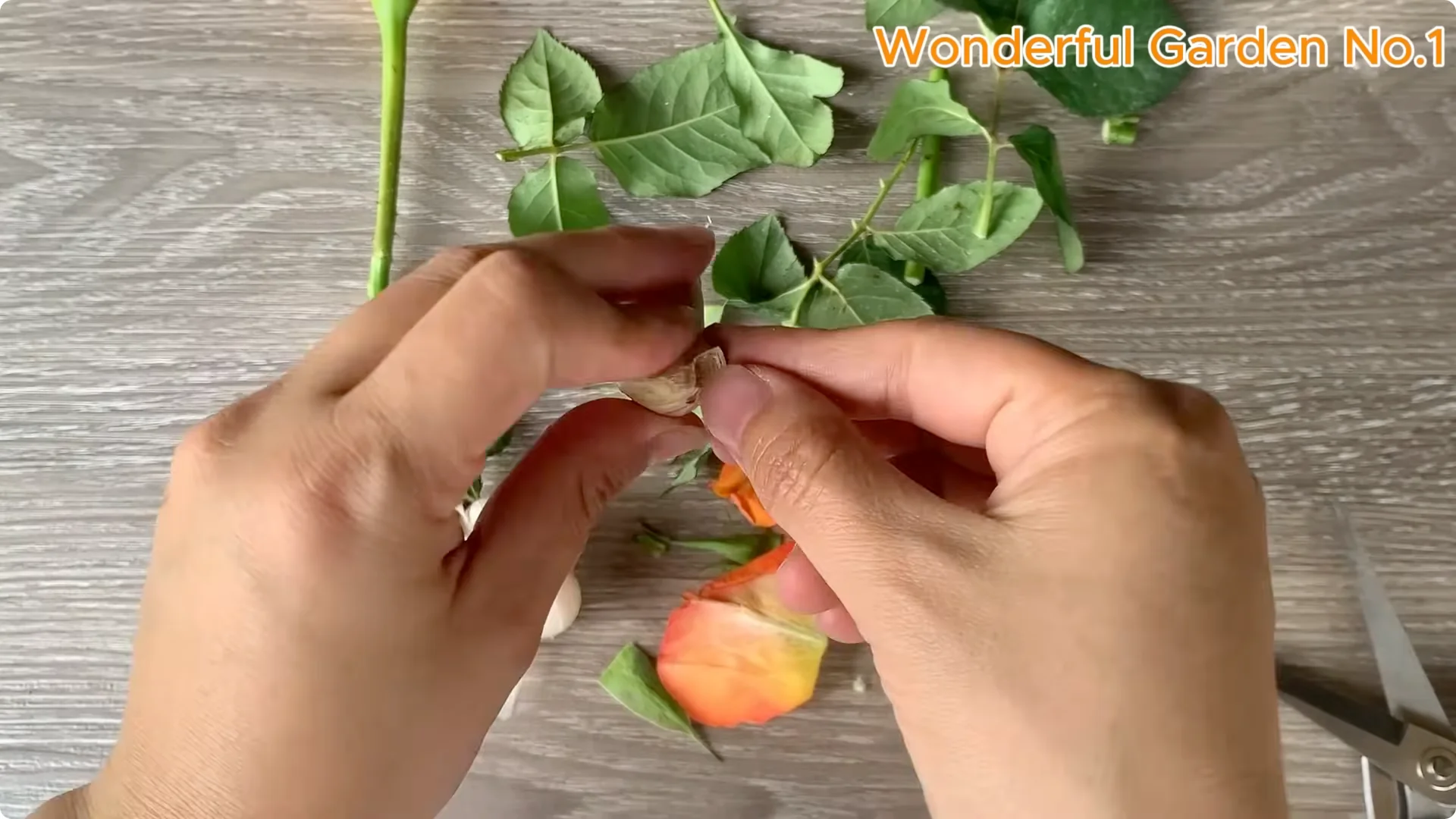
Garlic has antibacterial and antifungal properties, which help prevent infections and root rot while also stimulating root growth. Then mix the rice water with the onion peel water to create a natural nutrient solution. When mixing, first strain the rice water thoroughly to remove dirt and impurities.
This makes the solution cleaner, clearer, and more easily absorbed by plants. For another simple boost, try this quick spoon trick.
You can also explore more home methods.
3. Prepare the Growing Environment
Soak a handful of coconut fibre or washed coconut fibre in the solution of rice water mixed with onion skin for about 5 minutes.
This helps the coconut fibre absorb natural nutrients evenly. It adds nutrients to the growing environment, supporting young roots to grow healthier and more stable.
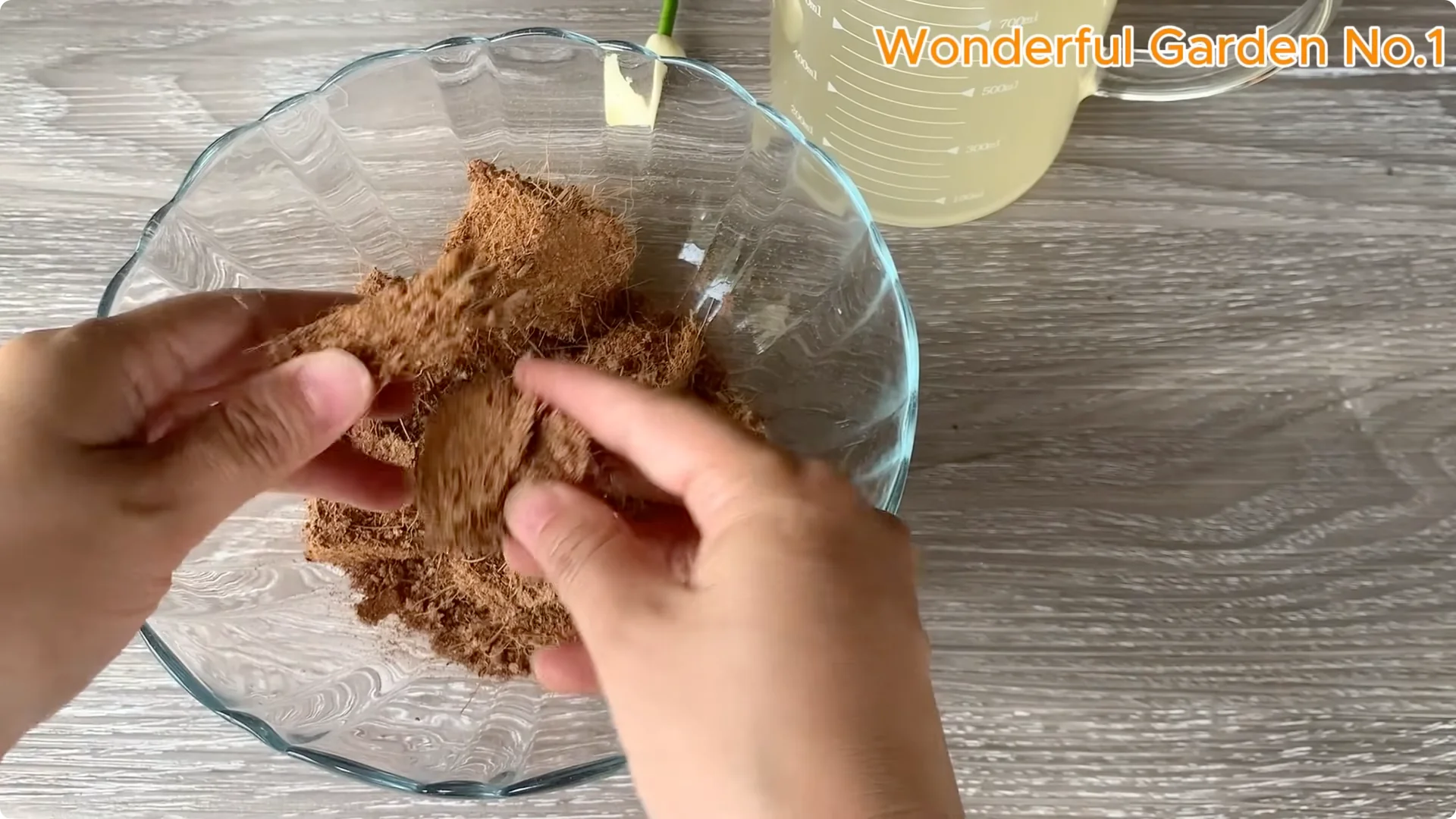
After 5 minutes, put the coconut fiber into a transparent container or cup. Make sure it is evenly moist. Keep a little of the nutrient solution aside for later top-ups.
4. Planting and Incubation
Insert the rose cutting into the coconut coir medium so that the base of the branch is in direct contact with the nutrient rich fibre layer.
A lid or large cup can be placed over the mouth of the container to create a warm, humid environment. This will help promote faster rooting.
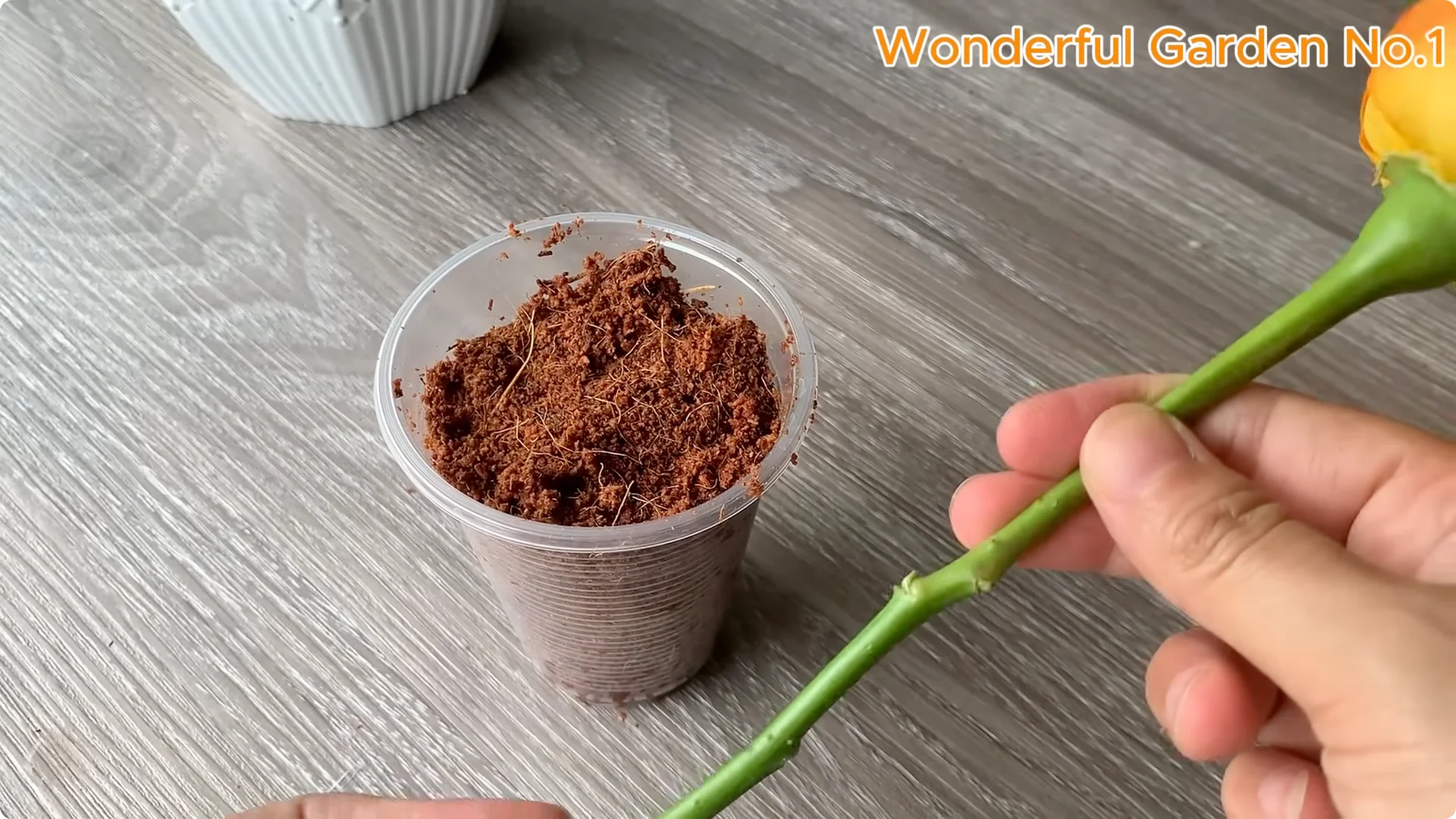
Place the container in a cool, well lit place away from direct sunlight. Check the moisture daily. If the coconut fibre is dry, add a little pre mixed nutrient solution.
5. Observe Root Growth
After about 10 to 14 days, start checking for early signs of rooting. If you place the cutting in the coco coir in a clear cup or container, you may see small white roots begin to grow near the base. Healthy white roots should be free of rot or fungus.
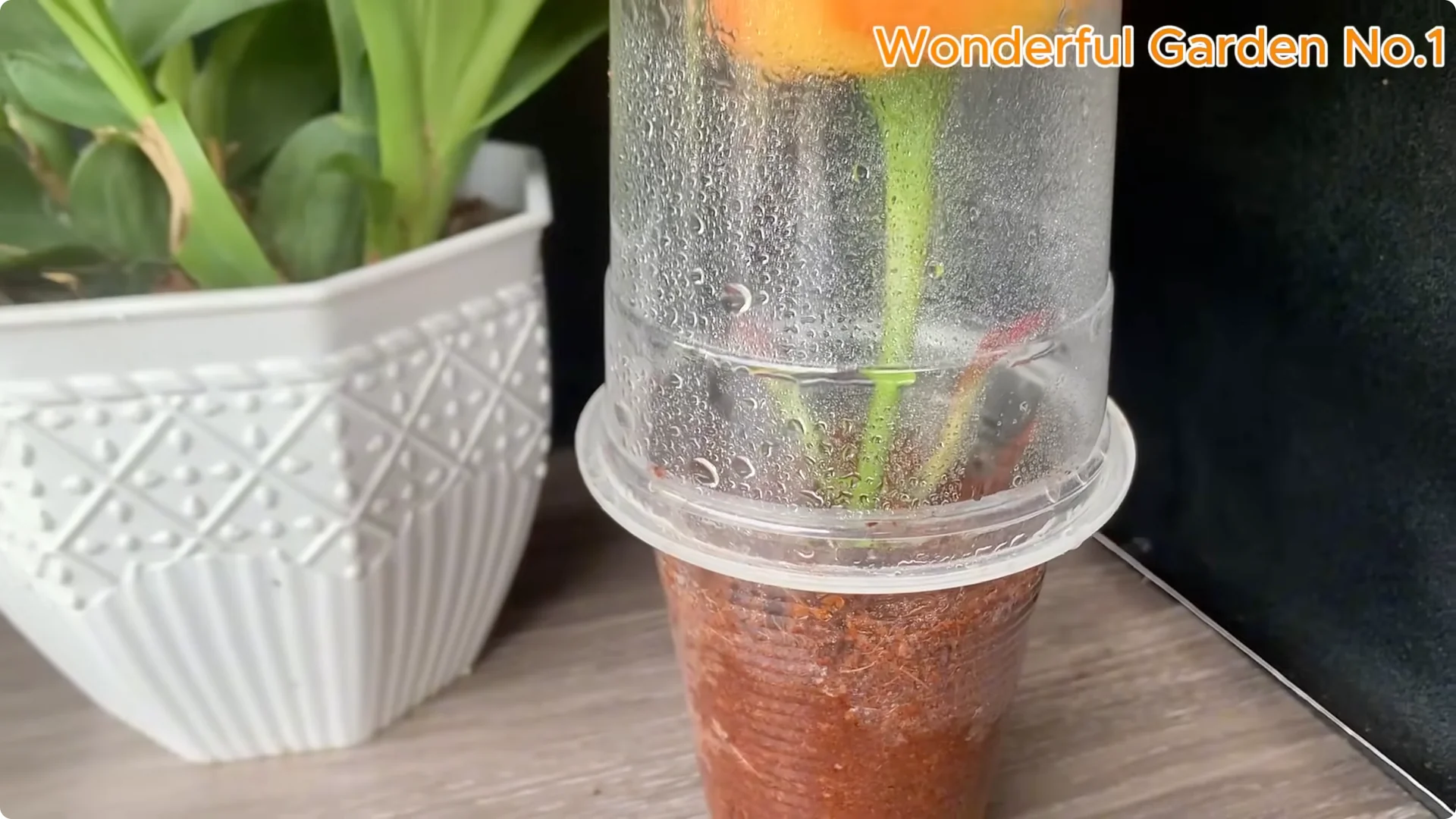
The branches should still be green and not withered. The flower buds may develop thanks to the nutrients from the onion skin. At this stage, prepare a pot with more nutrients for transplanting.
Potting and Care
Now plant the cutting in a new pot with more nutrients. I use coconut fiber as soil to grow young plants. Water your plants twice a day, once in the early morning and again in the late afternoon.
Keep the pot in a shady spot to avoid evaporation and stress. Maintain steady moisture without waterlogging. Continue gentle care as roots establish.
Final Thoughts
This simple method for rose cutting propagation uses onion skins, rice water, garlic, and coconut fibre to support clean rooting and early growth. Keep conditions humid, bright, and cool, and watch for healthy white roots before potting up. With patient daily care, your garden can bloom beautifully.