
Does your pothos or Indian money plant have black spots or dark patches on the leaves? Do not be afraid, there are simple steps you can follow to fix this problem. First understand the reasons behind the black spot problem so you can prevent it in the future.
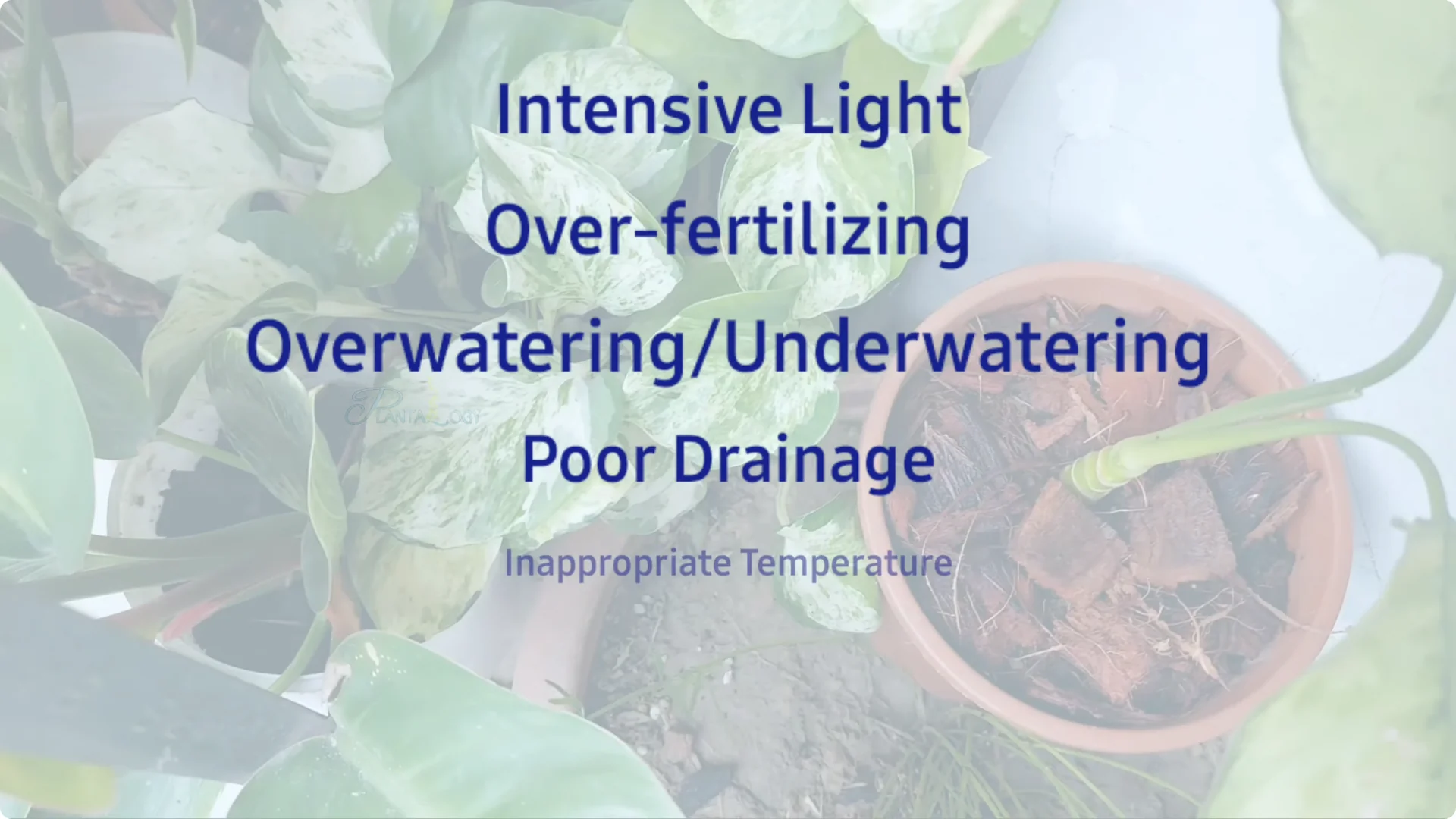
Pothos leaves can turn black due to excessive light, over fertilization, underwatering, poor drainage, very high or low temperatures, insects, or diseases. I observed two factors generally cause black spot problems more than other reasons. Overwatering and underwatering damage the leaf tissues and show dark patches on the leaves.
1. Pothos Black Spot Treatment – Main causes
With overwatering, the leaf tips will turn black. With underwatering, you will see dark patches on the leaf or on the leaf edges. These are the most common patterns I see.
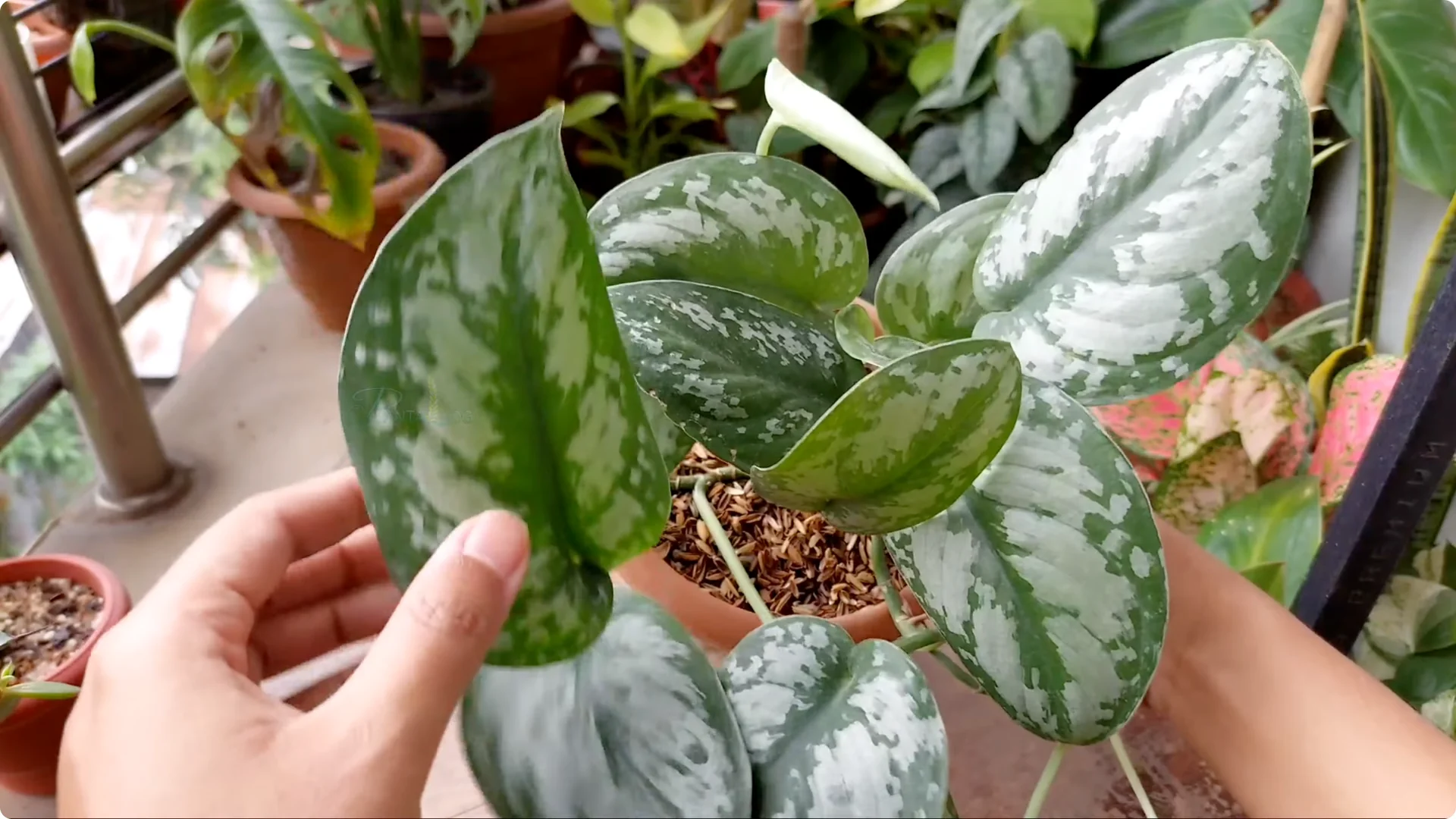
As you can see on neon pothos that were out of sufficient moisture, once I provided rainwater the plant started to recover. These dark marks are irreversible though. Remove the entire leaf or remove only the affected portion, because the rest of the leaf still will produce food for the plant.
For another plant that drops foliage from moisture stress, see helpful tips for a mini jade plant losing leaves indoors.
2. Pothos Black Spot Treatment – Identify the issue
Overwatering signs
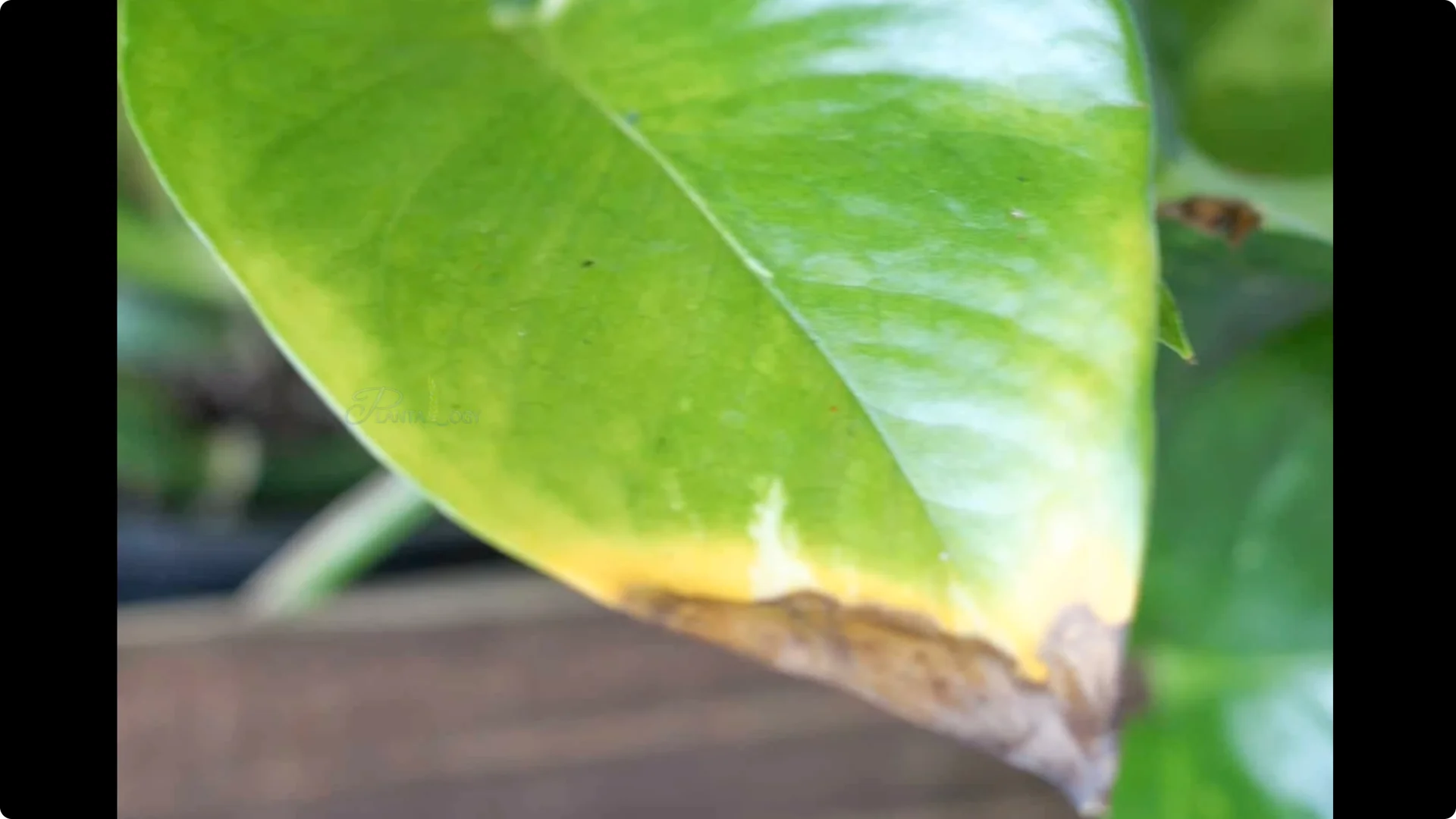
Look for blackened tips and consistently wet soil. Poor drainage and soggy mix worsen the problem. Correct the watering and improve airflow around the plant.
Underwatering signs
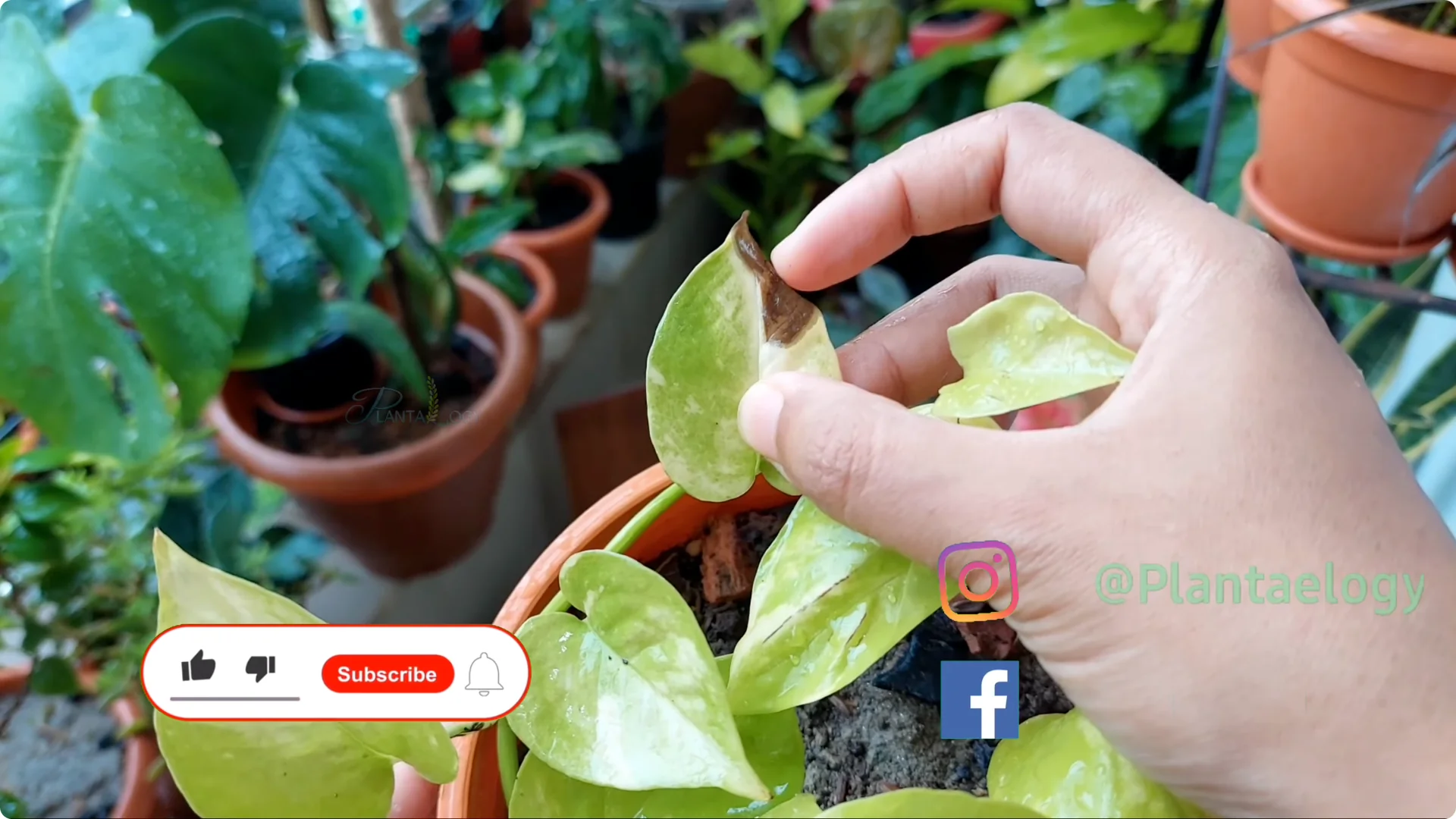
Watch for dry soil, curling leaves, and dark patches on the leaf surface or edges. Water thoroughly and let excess drain. The plant will perk up when moisture returns to normal.
3. Pothos Black Spot Treatment – Step-by-step fix
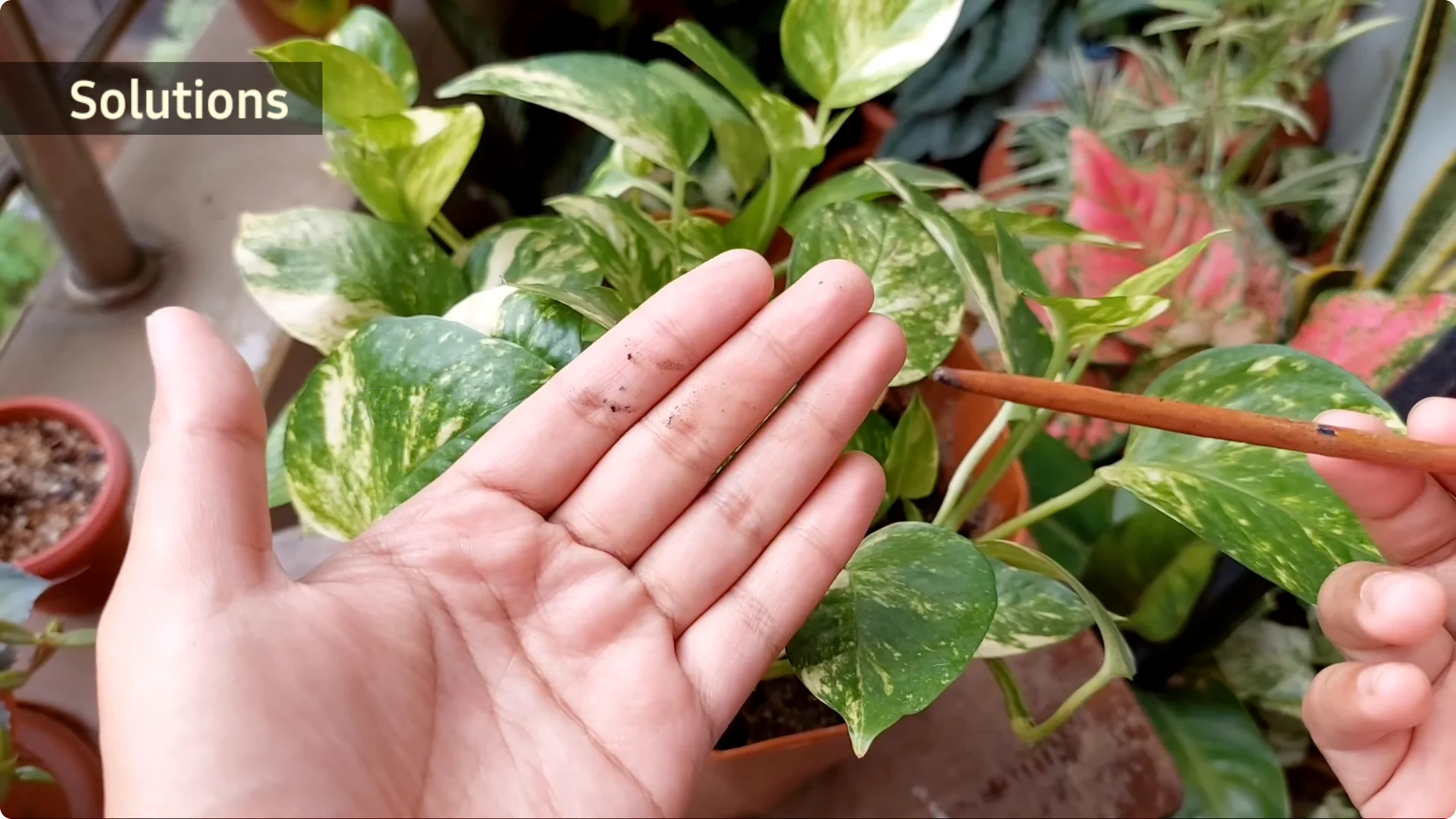
Step 1 – Check moisture correctly
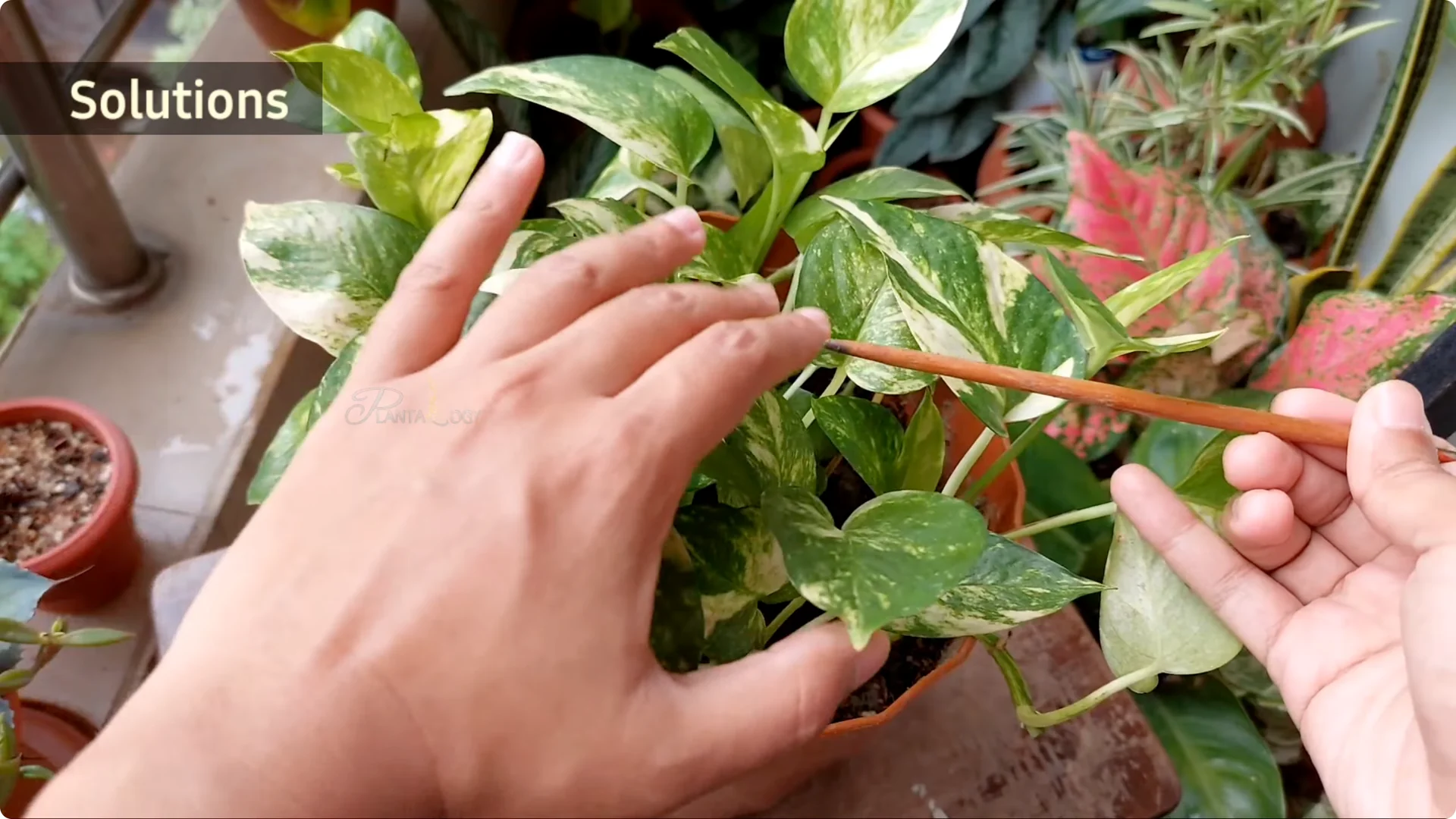
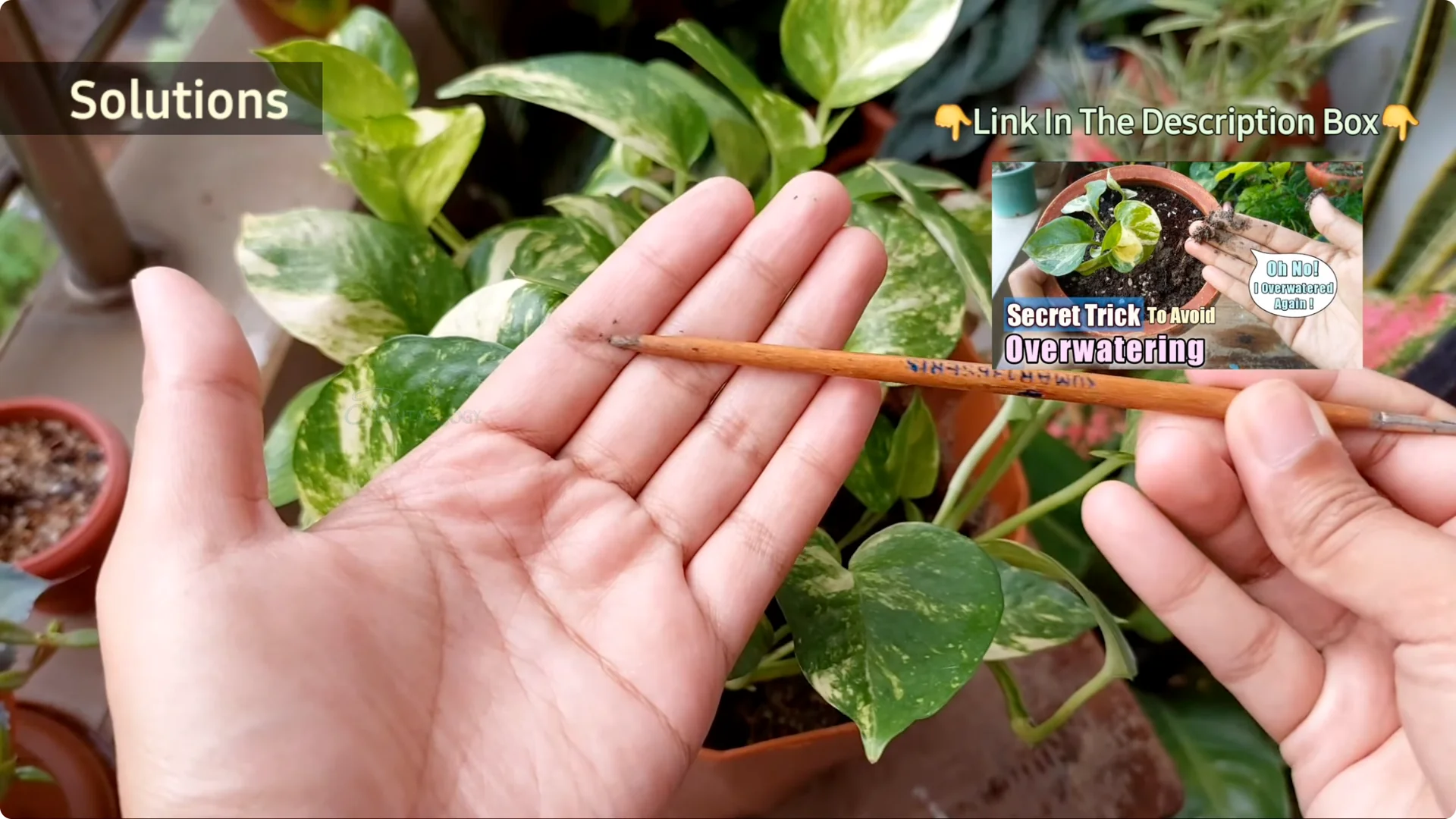
To avoid both overwatering and underwatering, I insert a stick into the media to assess the moisture level twice a week. If the stick comes out dry, water thoroughly. If it comes out wet, wait before watering again.
Step 2 – Water the right way
When the plant is dry, water until excess drains out of the pot. Empty the saucer and keep the mix evenly moist, not soggy. Use a well-draining potting mix to prevent waterlogging.
Step 3 – Prune damaged areas
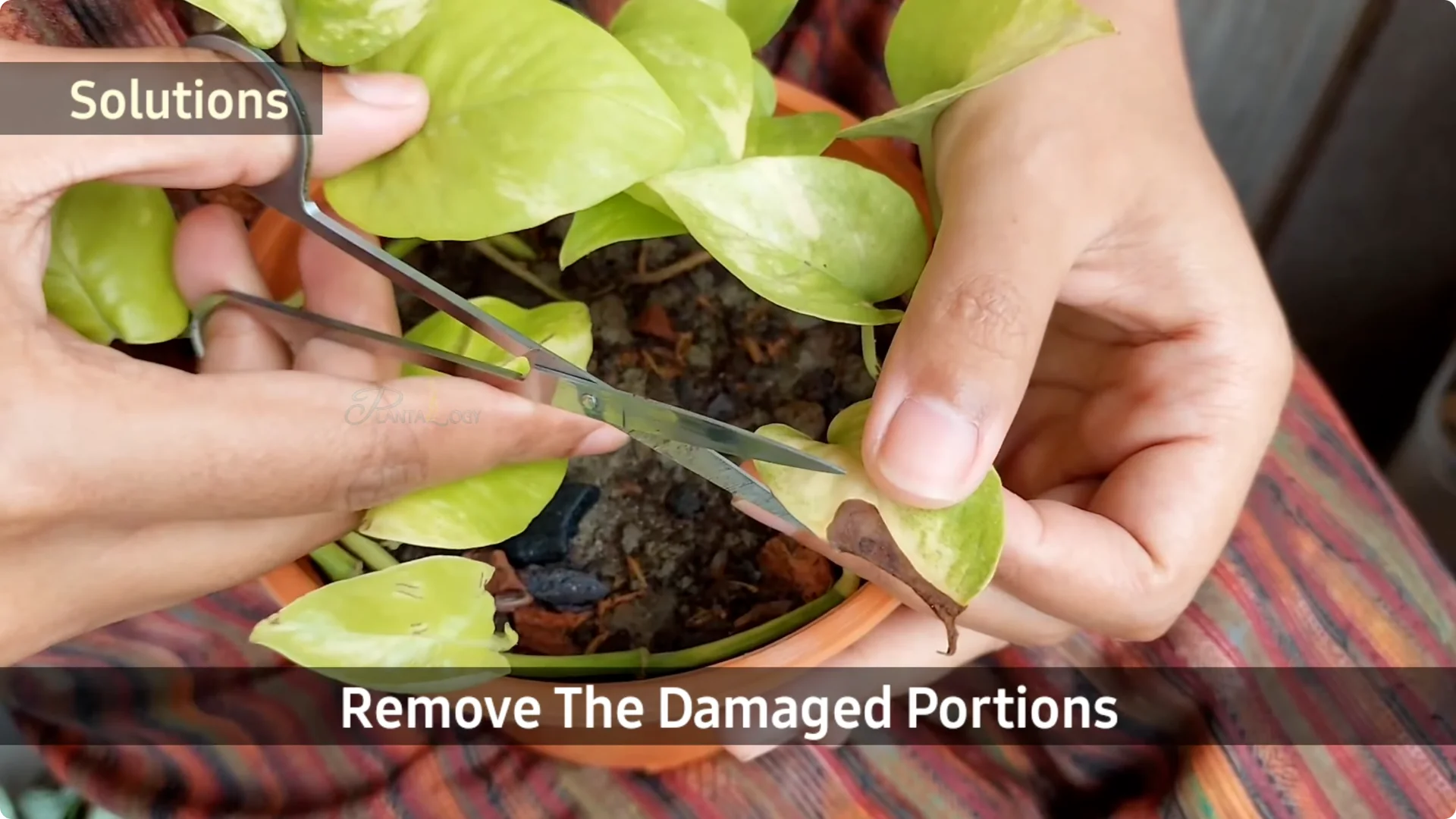
Since dark marks are irreversible, prune affected leaves or cut out only the damaged portion. Sterilize your scissors before and after pruning. Leave healthy green tissue so it can still photosynthesize.
If you are dealing with foliage collapse on another common houseplant, see guidance for rubber plant leaves falling indoors.
4. Pothos Black Spot Treatment – Temperature swings and fungus
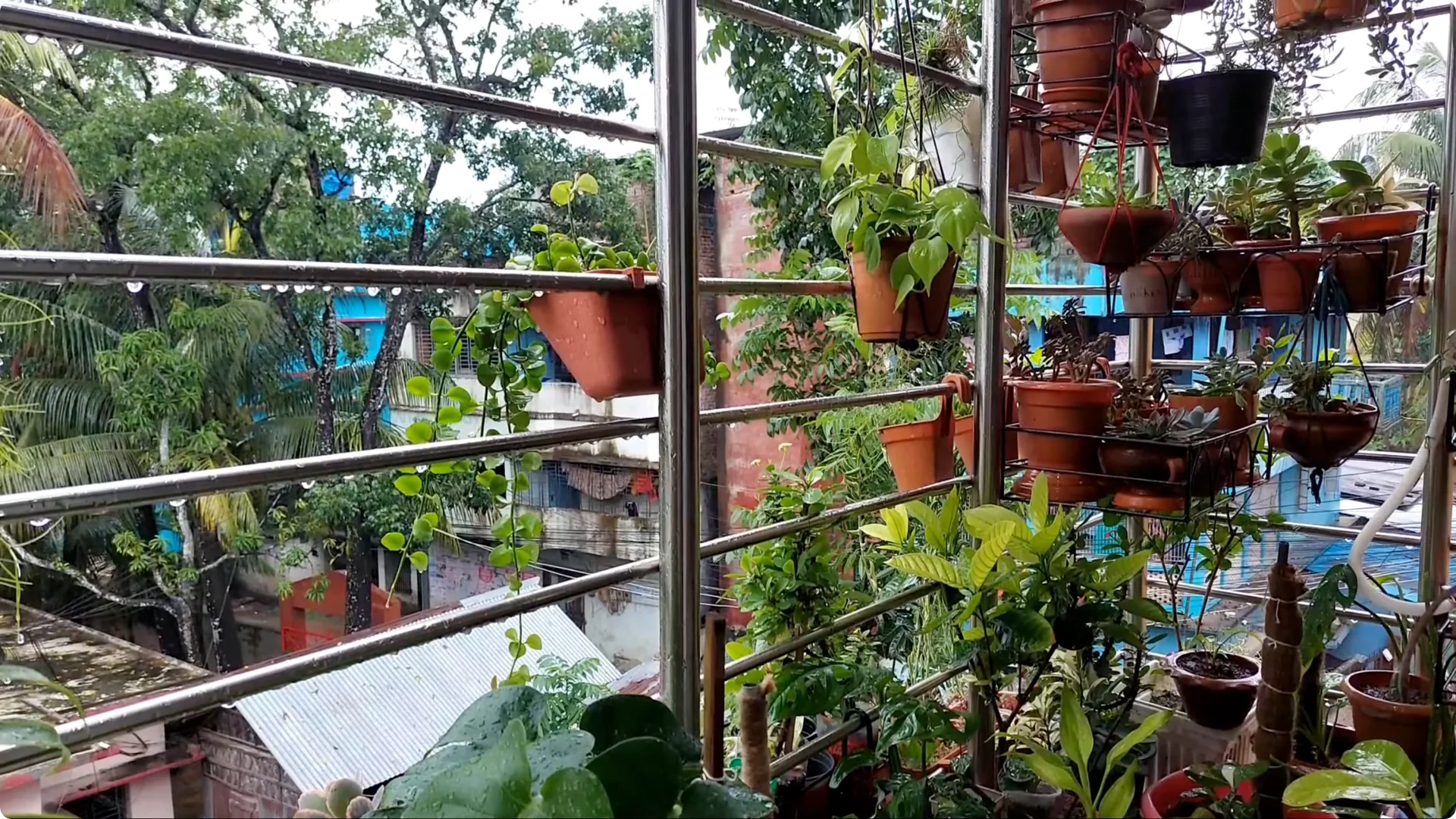
Too much temperature fluctuation invites fungal problems. Recently it was very hot, damp, and humid, around 98 F, then heavy rain dropped it to 78 F. Such environmental shifts attract fungus and cause dark marks.
I found that Manjula pothos and Marble Queen pothos are sensitive to sudden environmental changes. As a result, both show dark areas on the leaf surface. Remove infected leaves or infected areas and use fungicides if the weather is unfavorable.
For leaf discoloration driven by stress in another tough plant, see help for snake plant leaves turning brown and drooping.
5. Pothos Black Spot Treatment – Humidity and light
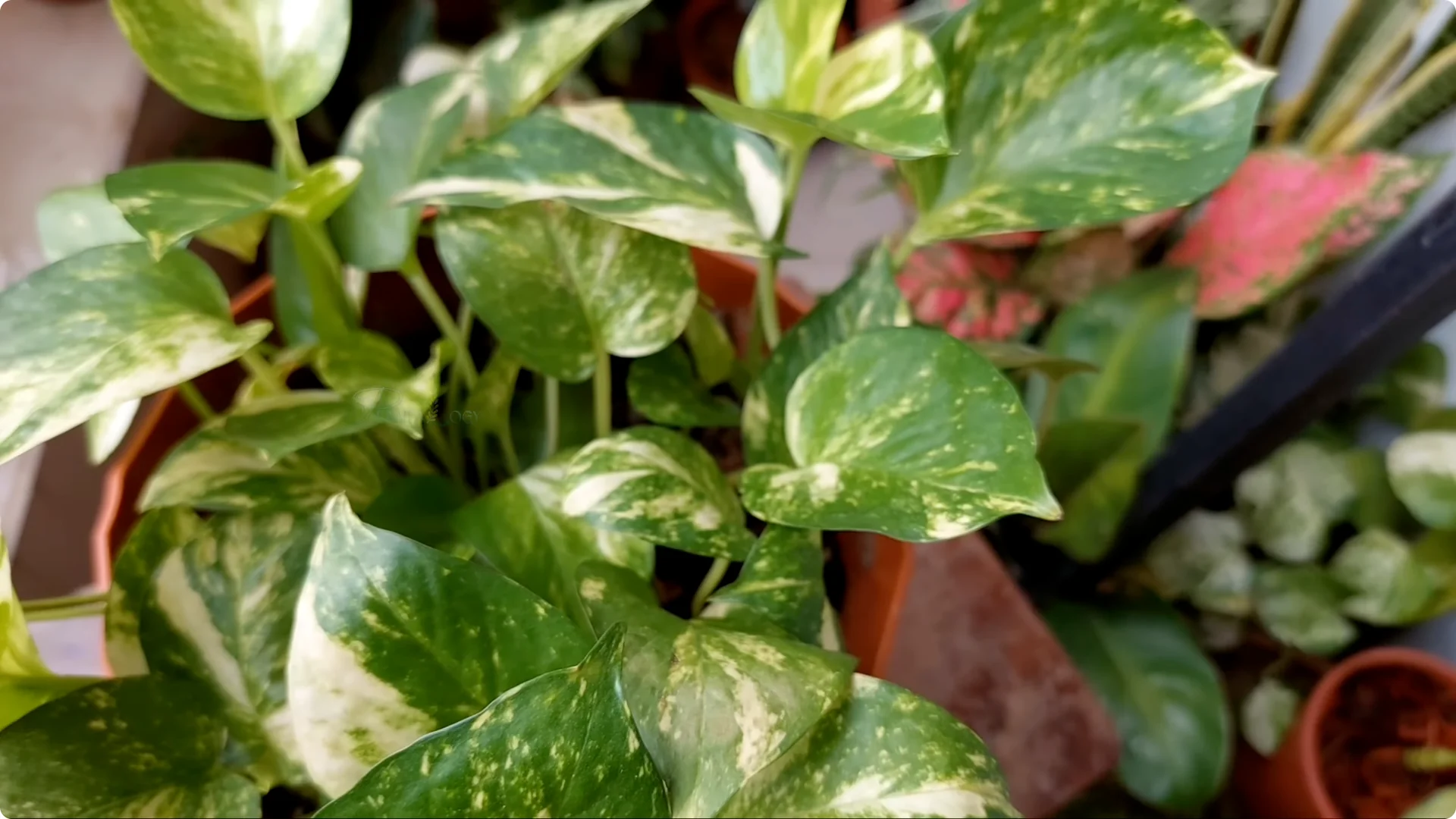
Pothos require humid, bright, cool conditions. It is not always possible to maintain the humidity level unless you have a humidifier. If your pothos develops black patches due to dry air or overheating, move the plant to a bright, cool area.
Pothos do well under bright light conditions. Avoid harsh direct sun that can scorch leaves. Aim for consistent temperatures and gentle airflow.
Final thoughts
Black spots on pothos usually trace back to watering issues or sudden temperature swings. Correct moisture, prune irreversible damage, improve light and airflow, and manage humidity during hot, humid spells. With these steps, your plant will recover and keep growing.