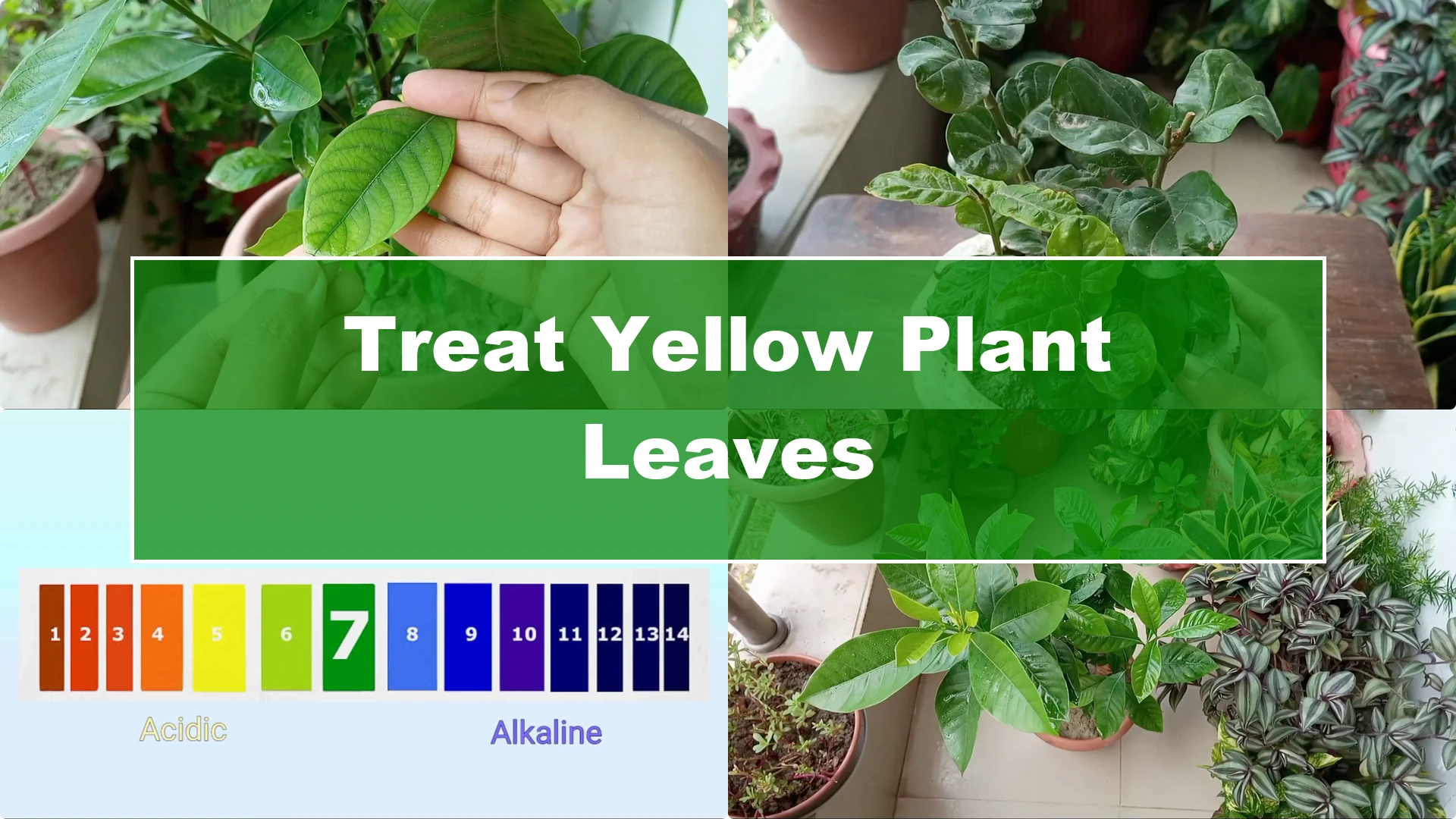
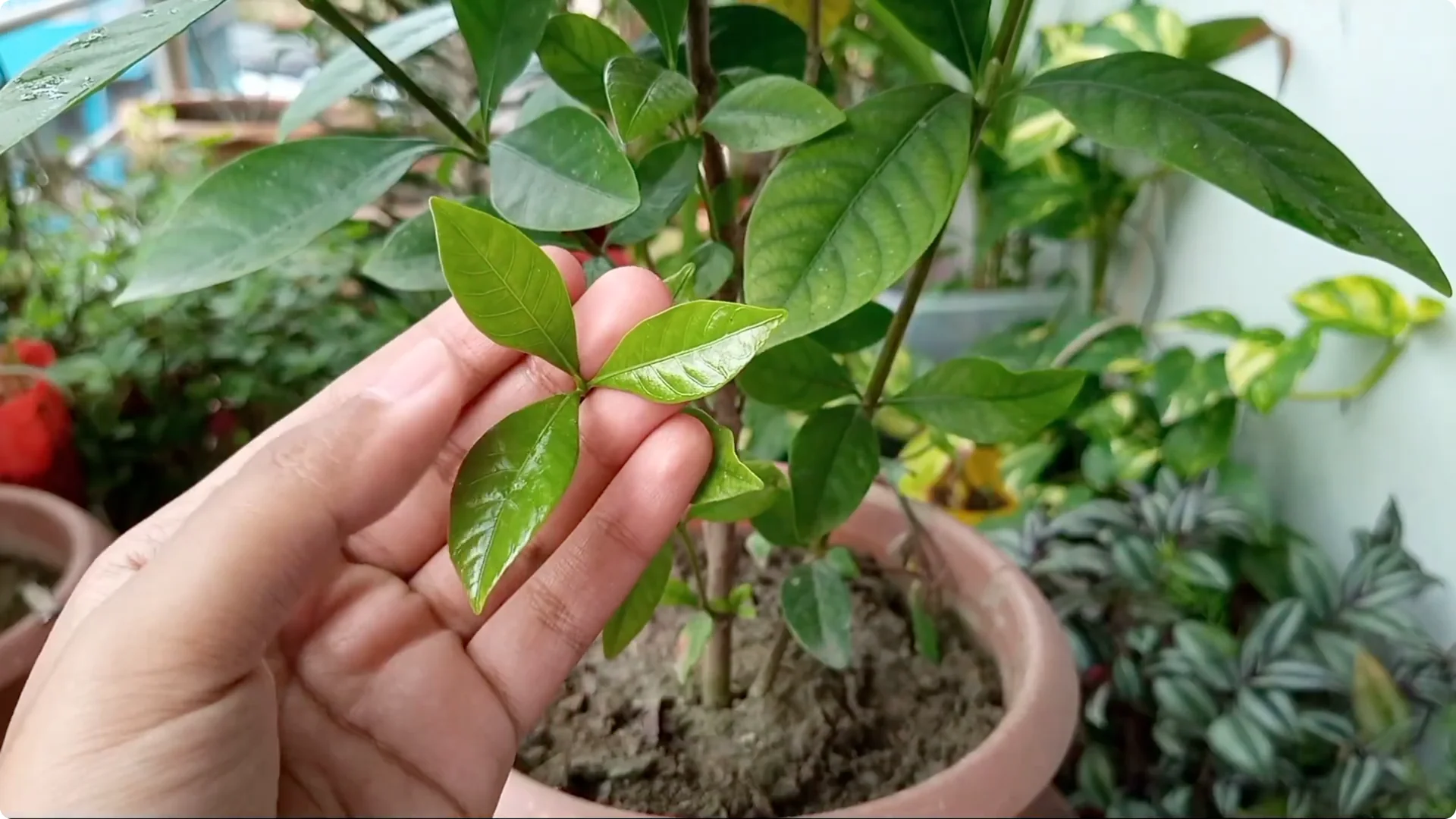
This guide is for plant parents facing chlorosis on gardenia, crepe jasmine, orange chutney plant, ixora, lemon, and other plants. I am focusing on the type that shows up first on the youngest leaves. The youngest leaves lose green pigment and only the veins remain green.
About two months back one of my gardenias showed this disorder. Through appropriate management it fully recovered within one and a half months. I am sharing the reasons for this iron deficiency and the exact solution that worked for me.
1. Iron Deficiency Chlorosis Treatment – Symptoms
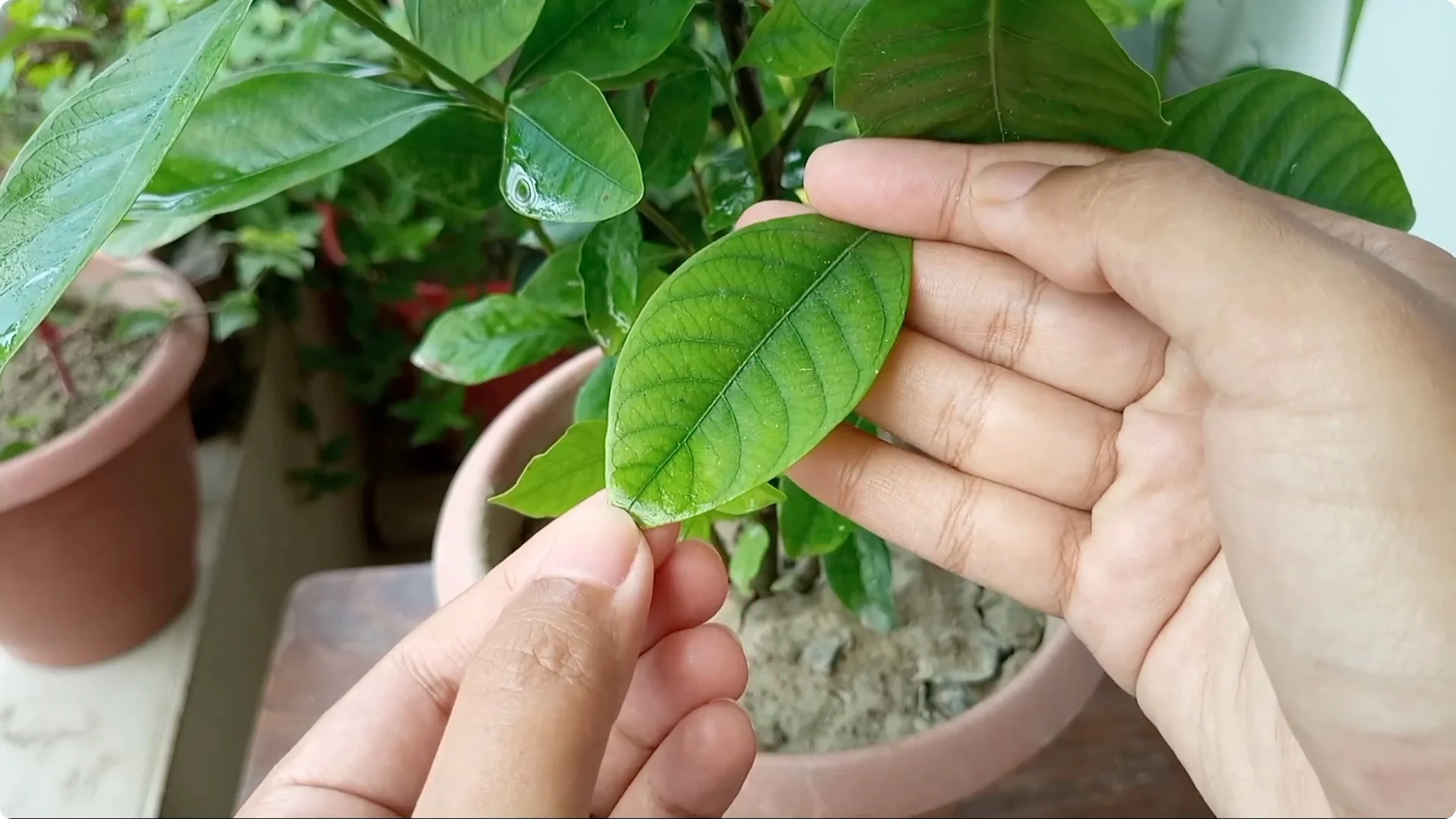
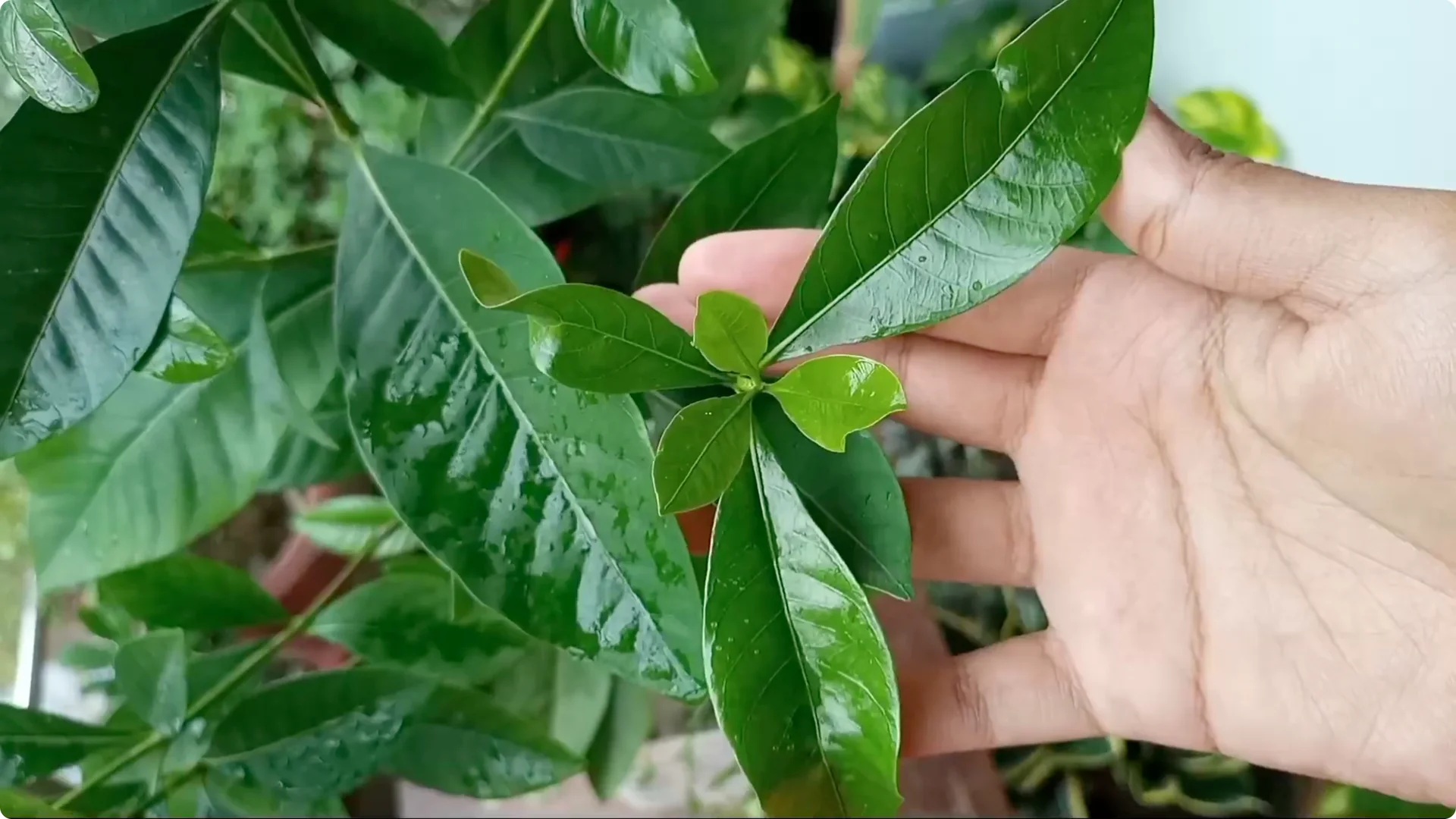
A particular type of chlorosis appears first on the youngest leaves. The leaves show discoloration or a lack of chlorophyll, and only the leaf veins remain green. This is classic interveinal chlorosis from iron deficiency.
On my gardenia, some new leaves appeared lime green with only the veins remaining green. Older affected leaves looked pale green with the veins still green. If not treated early, the entire leaf keeps losing chlorophyll.
You cannot confirm a nutrient deficiency with the naked eye with absolute certainty. But you can predict it by examining these general symptoms. This pattern strongly points to iron deficiency.
For troubleshooting other common yellowing problems on vines, see how to fix yellowing leaves on pothos.
2. Iron Deficiency Chlorosis Treatment – Why It Happens
Nutrient basics
There are 17 essential plant nutrient elements needed for the growth of higher plants. Among these, 9 are macronutrients taken up in large amounts, and 8 are micronutrients taken in smaller amounts. Without them, plants cannot complete internal metabolisms.
Iron is a micro essential nutrient. Among the micronutrients, plants still take relatively large amounts of iron from the soil. Even slight unavailability shows up quickly as deficiency.
What iron does
Iron relates to two important plant functions. It is part of many plant enzymes. It also works in the synthesis of chlorophyll, so its deficiency first appears on the youngest leaves.
Soil pH and availability
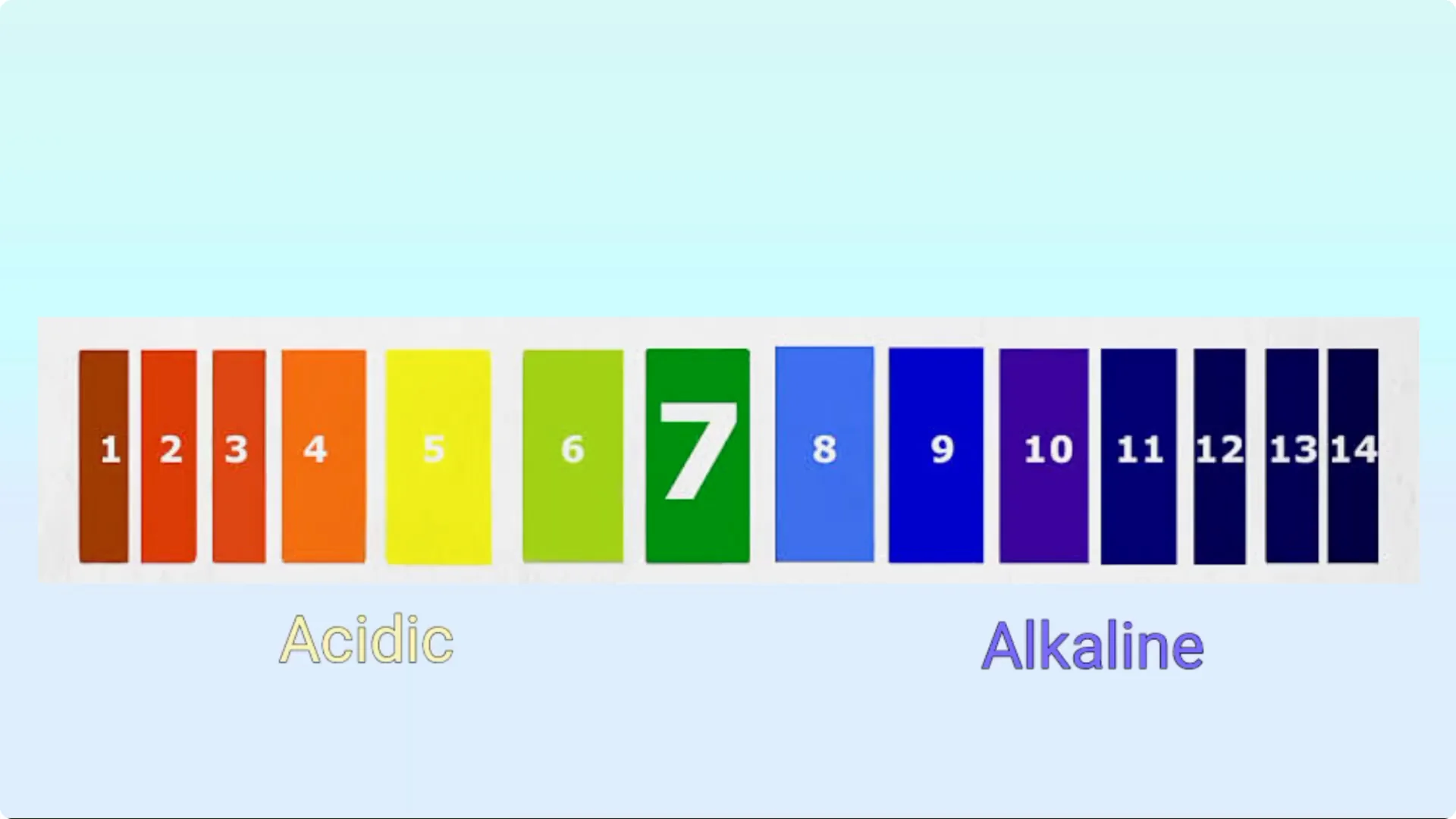
Iron is very sensitive to soil pH. pH measures acidity or alkalinity on a scale where 7 is neutral, above 7 is alkaline, and below 7 is acidic. All soils contain iron and it does not drain out, but its availability is the concern.
Iron is available to plants between pH 5.5 to 7. In this range, iron stays soluble and plants can absorb it. Above pH 7, iron becomes insoluble and plants cannot absorb it.
For availability, keep soil slightly acidic between pH 5.5 to 7. Iron deficiency mostly appears in alkaline and calcium-containing soils. Acid-loving plants are affected faster under alkaline conditions.
Plants prone and local soil note
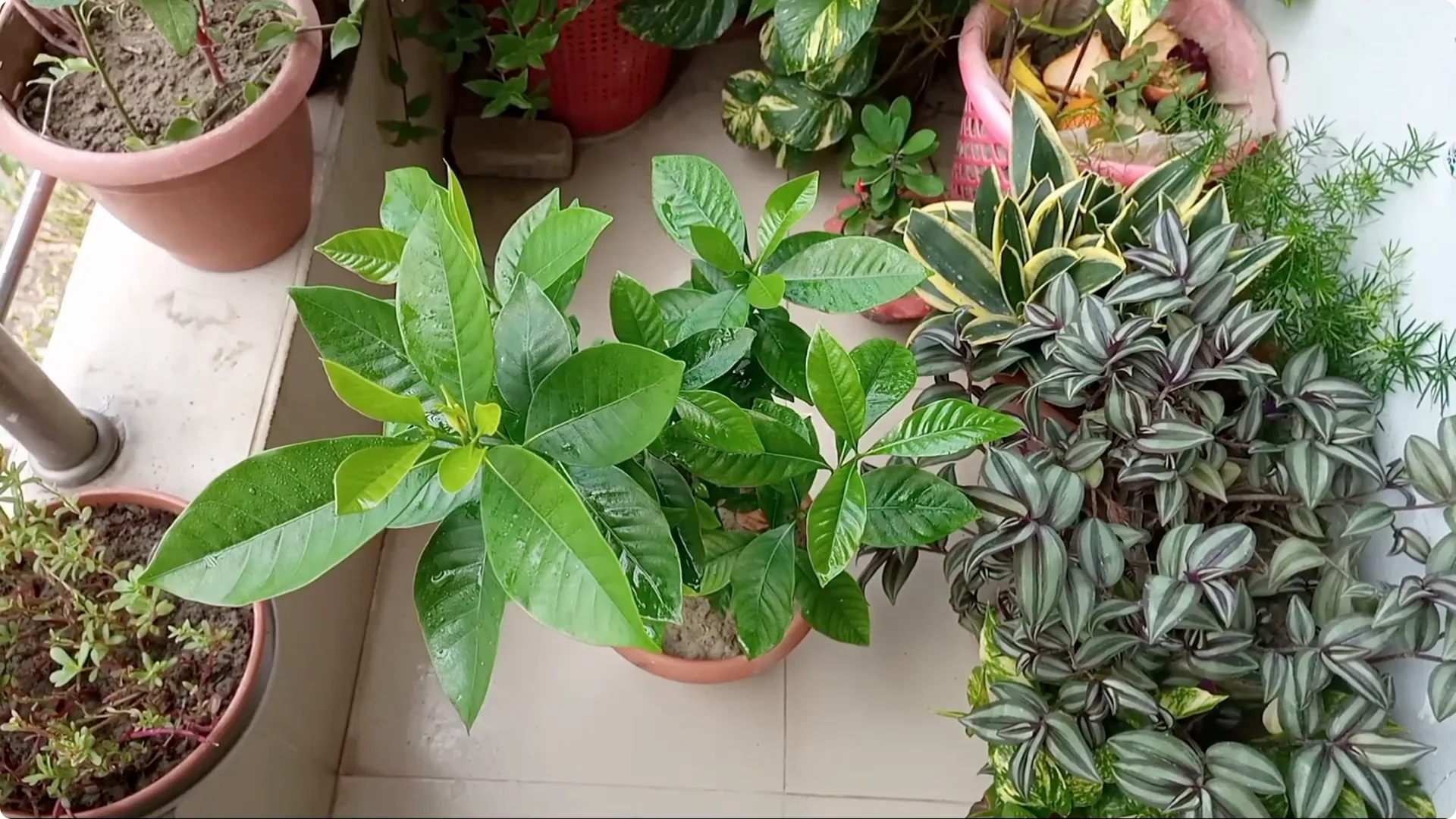
My regional soil is slightly alkaline and whitish gray, which means low organic matter. Probably because of that, this gardenia showed iron deficiency. Acid-loving plants like gardenia, chandi plant or crepe jasmine, and lemon tend to take up iron at a higher rate, so alkaline conditions make iron unavailable and deficiency develops.
If you are also dealing with chlorosis on shade-loving houseplants, see fixes for yellow leaves on peace lily.
3. Iron Deficiency Chlorosis Treatment – Fixes That Work
Skip the rusted nails myth
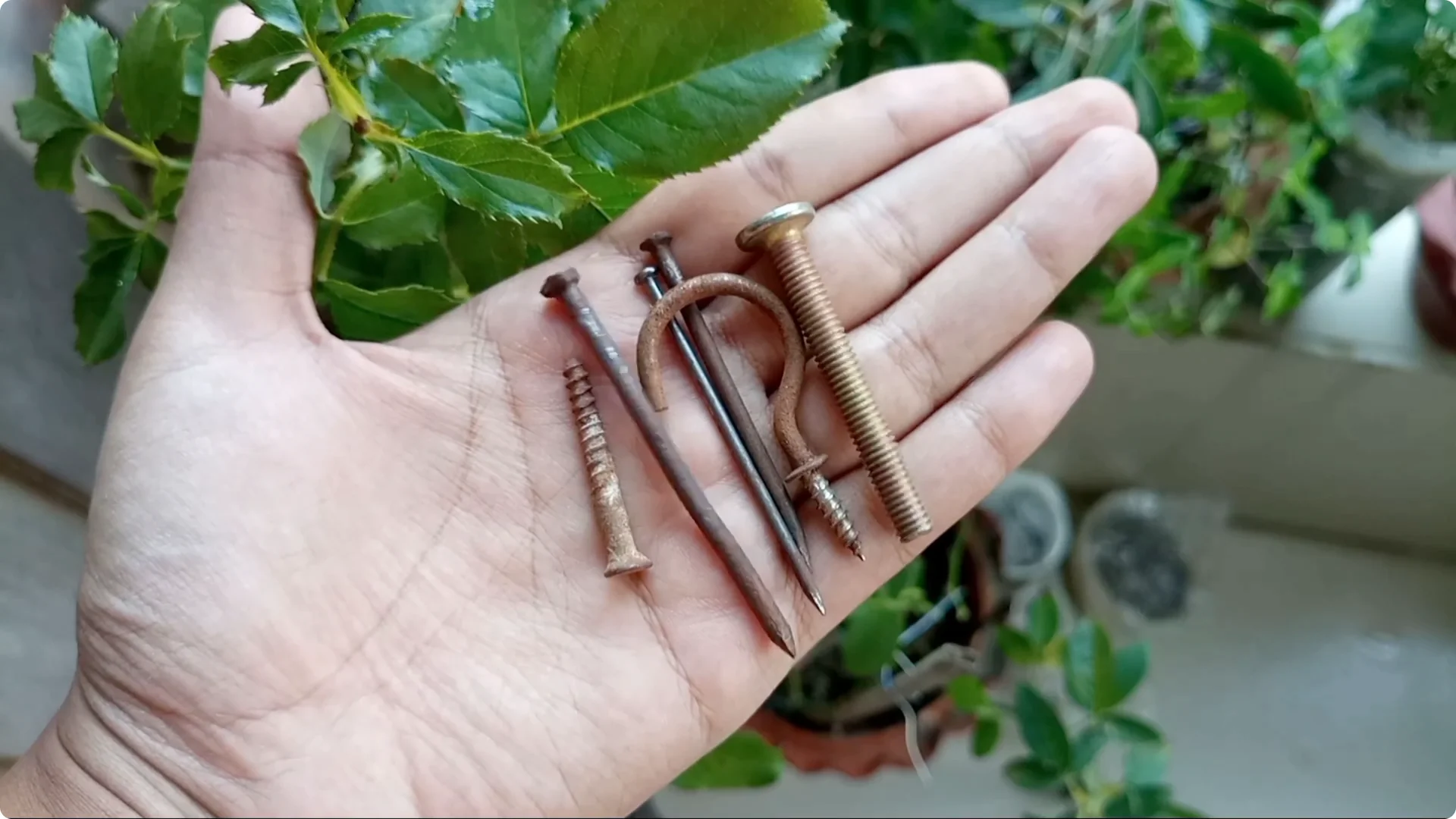
Many people recommend using rusted iron nails. This is not true. Plants absorb iron in dissolved forms, and rusted nails provide insoluble iron that plants cannot absorb.
Two effective options
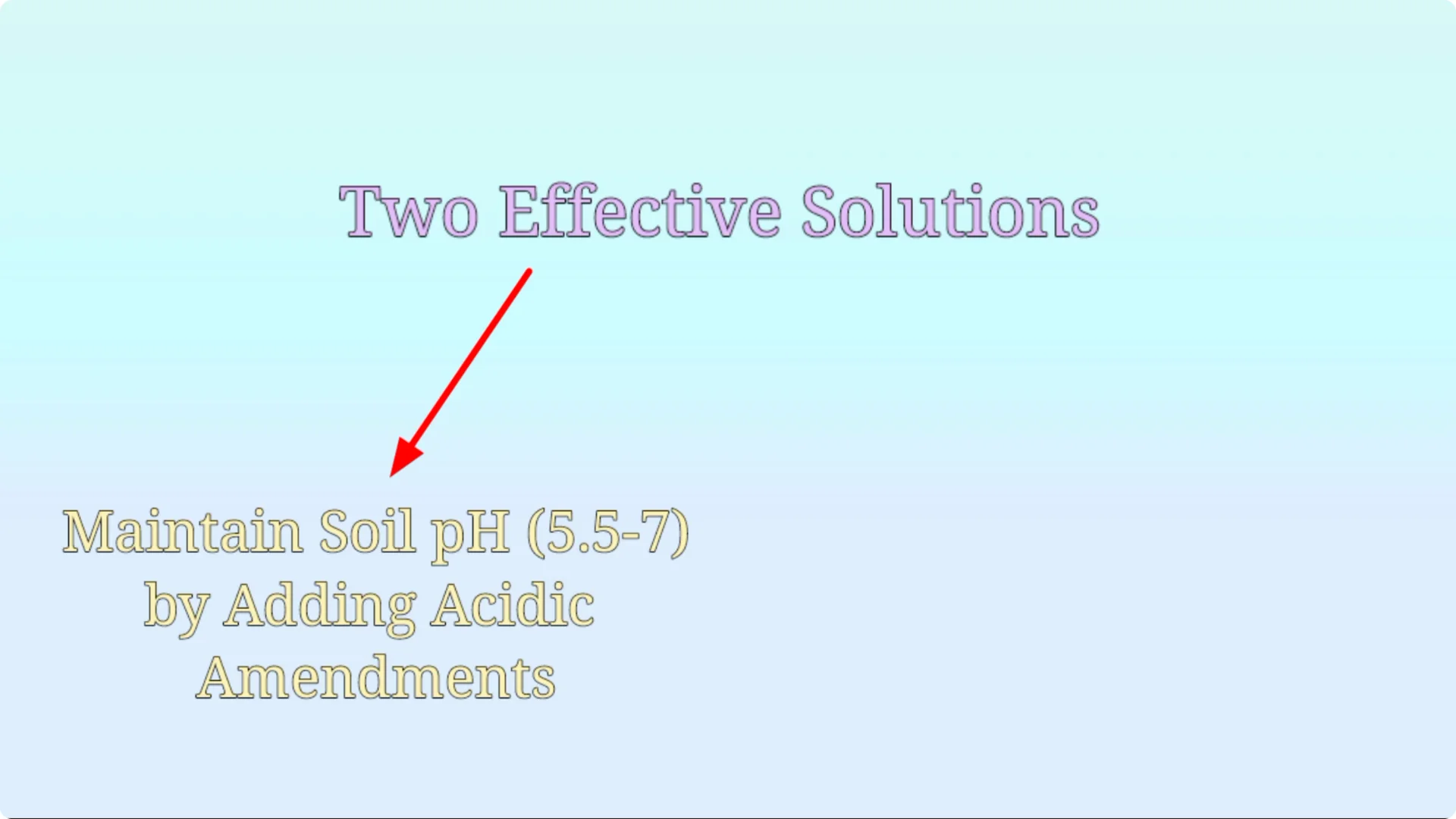
There are two effective solutions. Maintain soil pH between 5.5 to 7 by adding acidic amendments, or add chelated iron or iron-containing supplements. I chose to turn the soil acidic.
Option A – Acidify the soil I used
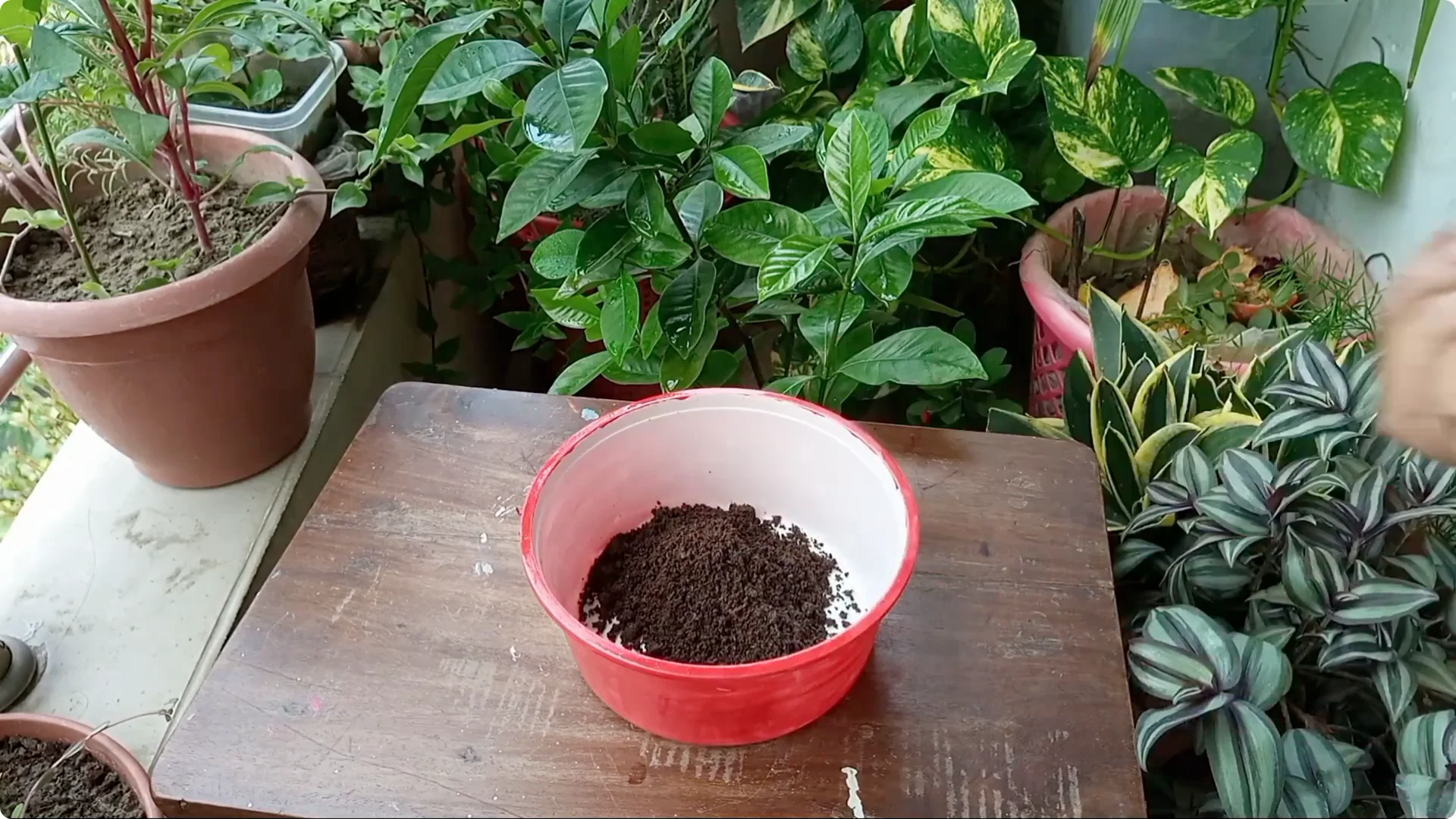
I used a fertilizer mixture with both organic and inorganic ingredients, with a higher ratio of the organic acidic part. For an 8 inch pot, I added around one and a half cups of vermicompost, which is slightly acidic with pH probably between 6 to 7. Then I added half teaspoon urea for better leaf formation.
I added half teaspoon potassium for better stem growth. I also added 6 to 7 granules of triple super phosphate for better root and flower bud formation. You can also go with NPK fertilizers enriched with chelated iron.
Step-by-step – Application
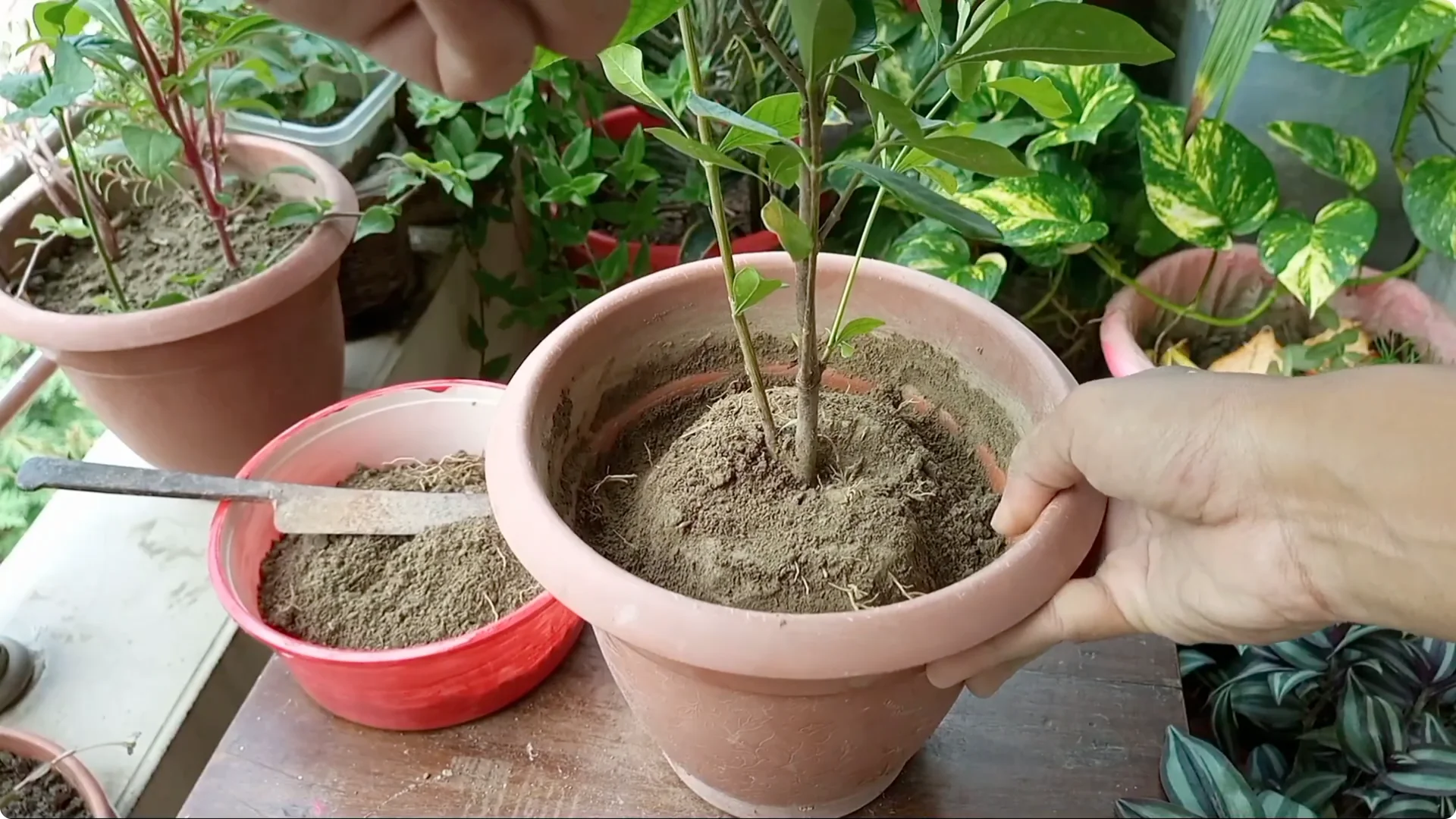
Step 1: Near the pot rim, lift around 3 inches of surface soil. Add the whole fertilizer mixture and blend it into that top layer. Settle the soil back evenly.
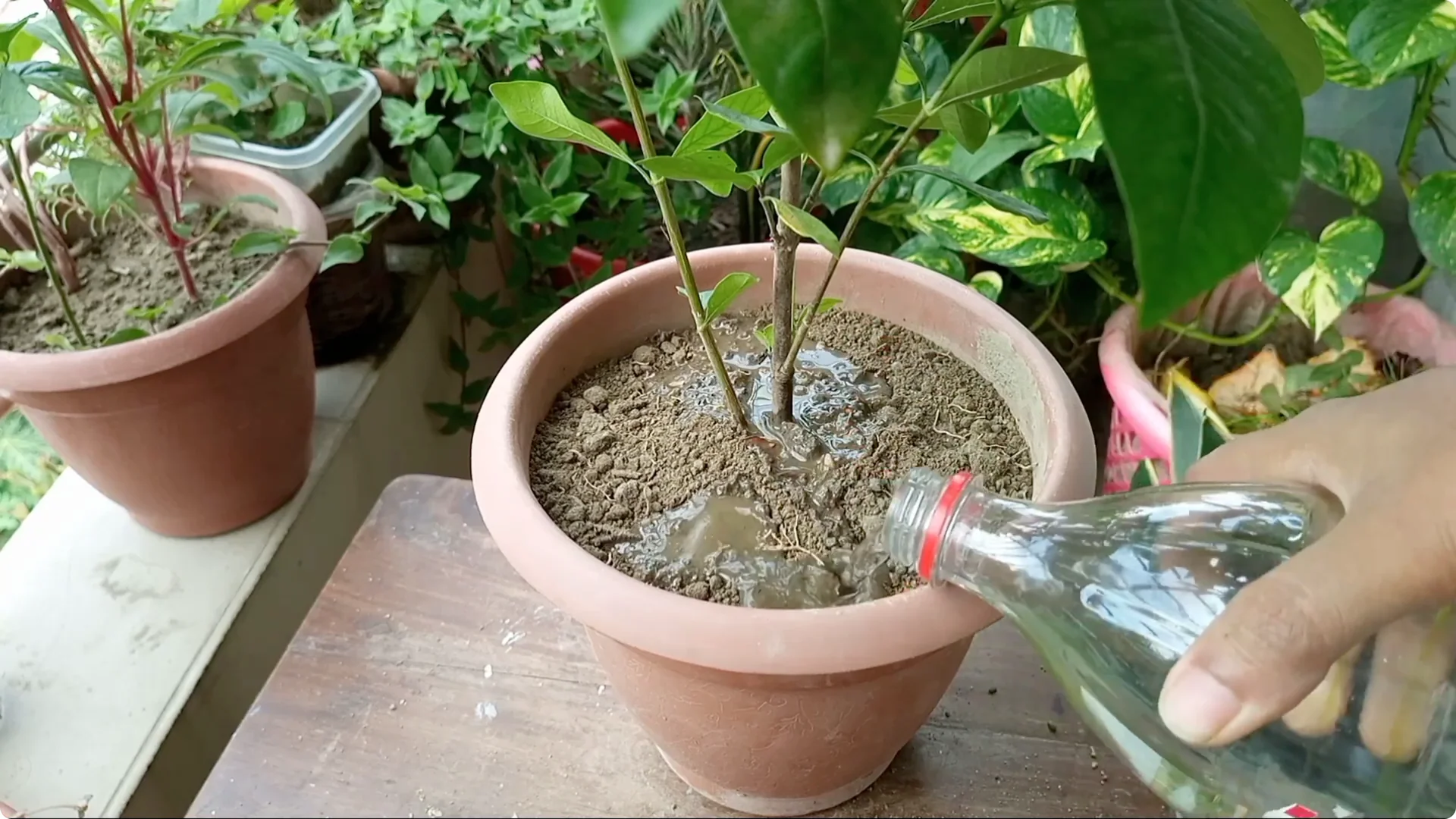
Step 2: Water the plant thoroughly. Gardenia likes to stay moist constantly. Water when the top 2 inches of soil are about to dry.
Step 3: Apply this acid-based fertilizer once a month until the plant recovers. This helps maintain slight acidity against the soil’s buffering capacity. Alkaline soil will try to stay alkaline, so maintenance is needed.
Option B – Chelated iron
You can add chelated iron or iron-containing micronutrient supplements. With chelated iron, this deficiency usually recovers within two to three weeks. Follow the label rate and repeat as needed to keep the new growth green.
For broader prevention tips on foliage plants that tend to yellow, see how to prevent yellow leaves on aglaonema.
4. Iron Deficiency Chlorosis Treatment – Results and Aftercare
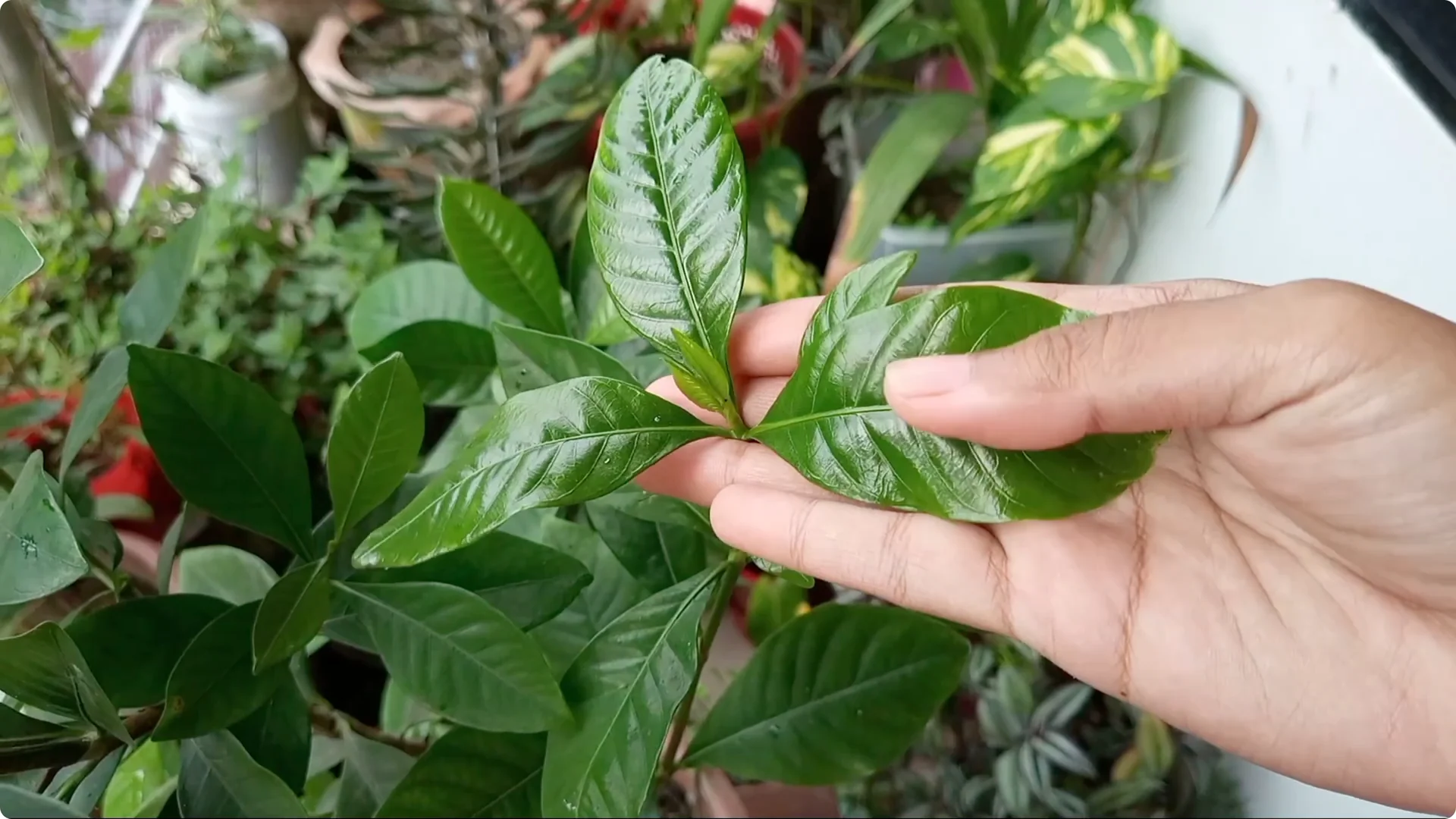
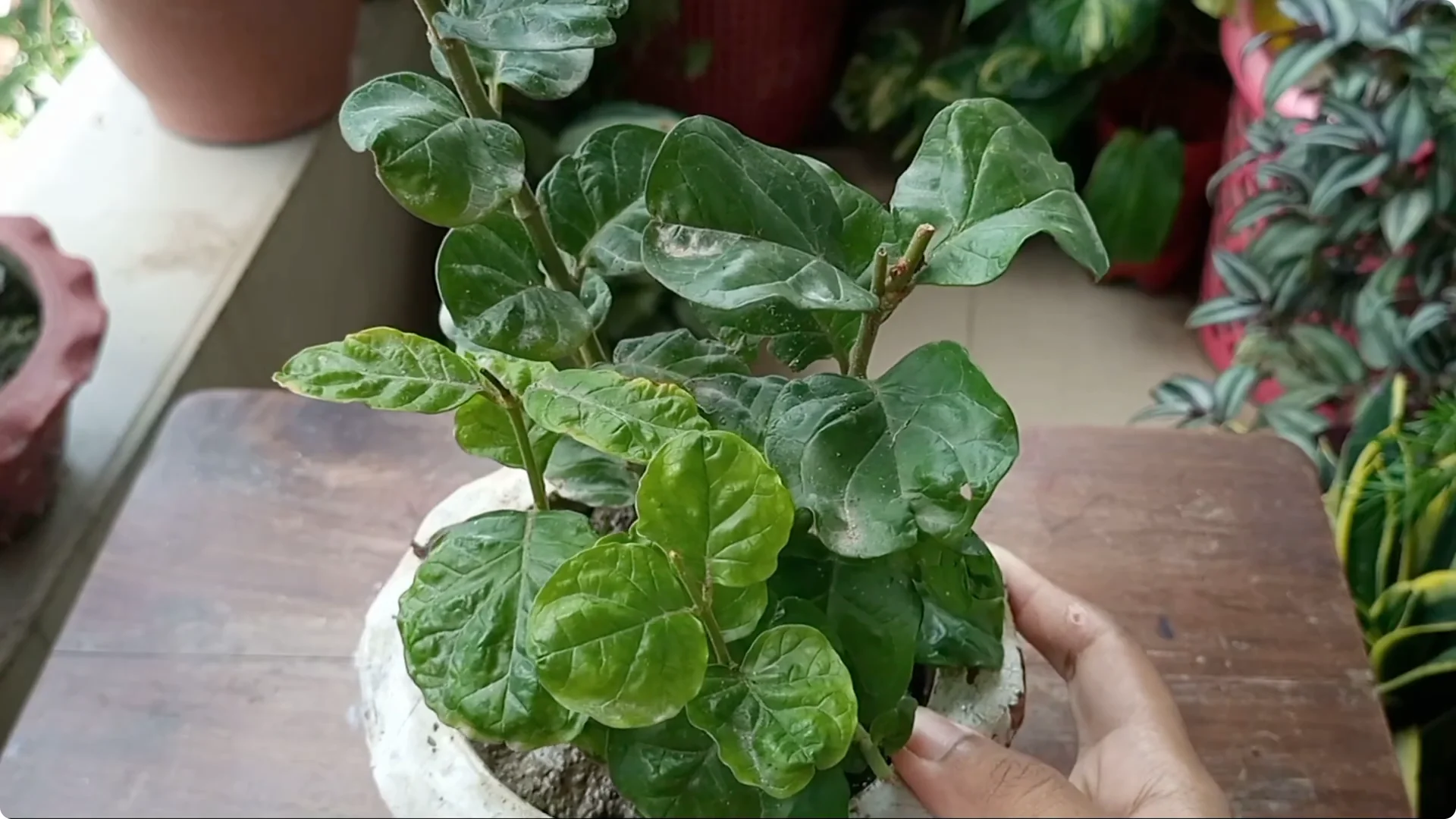
Here is my update after one and a half months. I applied the fertilizer once a month, and the deficiency completely recovered. Lots of new leaves appeared, and they were filled with chlorophyll.
I need to keep adding that acid-based fertilizer to maintain soil acidity. Soil has a buffering capacity, so alkaline soil collected from an alkaline site will try to remain alkaline. The pH can be adjusted for a few months but not permanently without maintenance.
Be careful not to make the soil too acidic, below pH 5.5. Skip these works during winter months, because winter is the dormancy period for perennial plants. Resume when active growth returns.
Final Thoughts
Iron deficiency shows up first on the youngest leaves as interveinal chlorosis. Keep soil slightly acidic between pH 5.5 to 7 and choose either chelated iron or an acidifying fertilizer program. With consistent care and moisture management, recovery is quick and new growth returns deep green.