
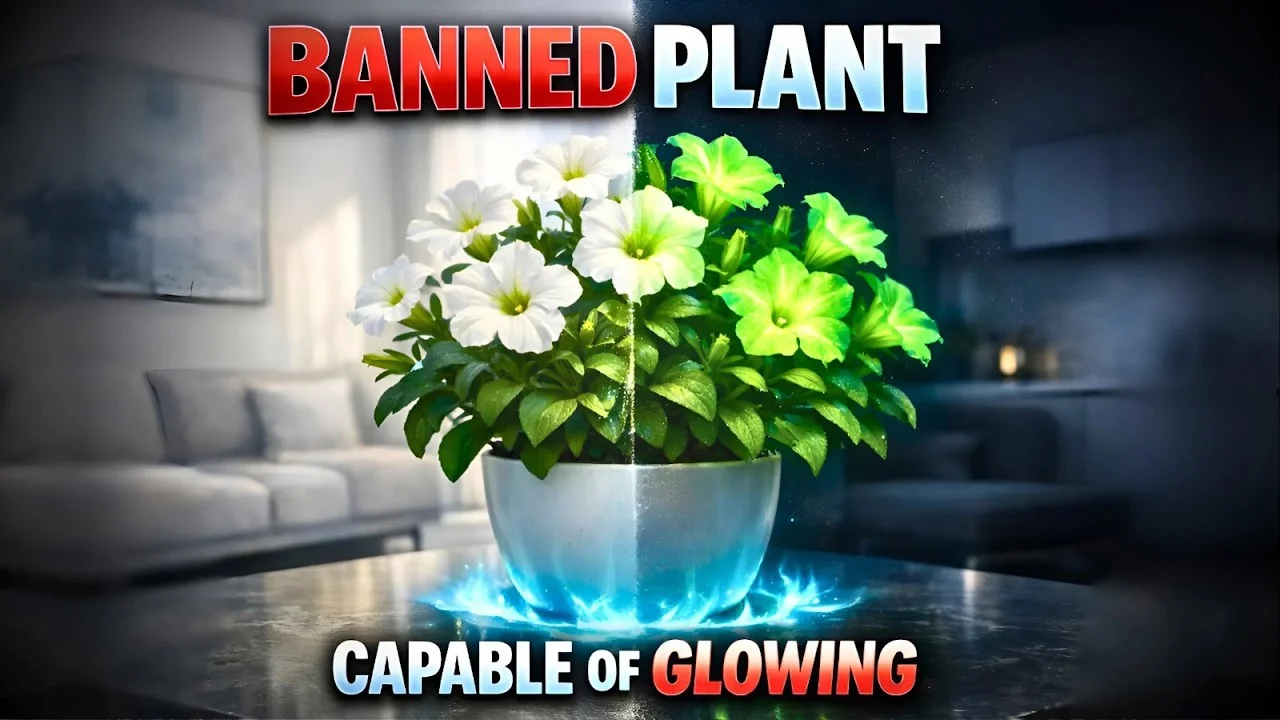
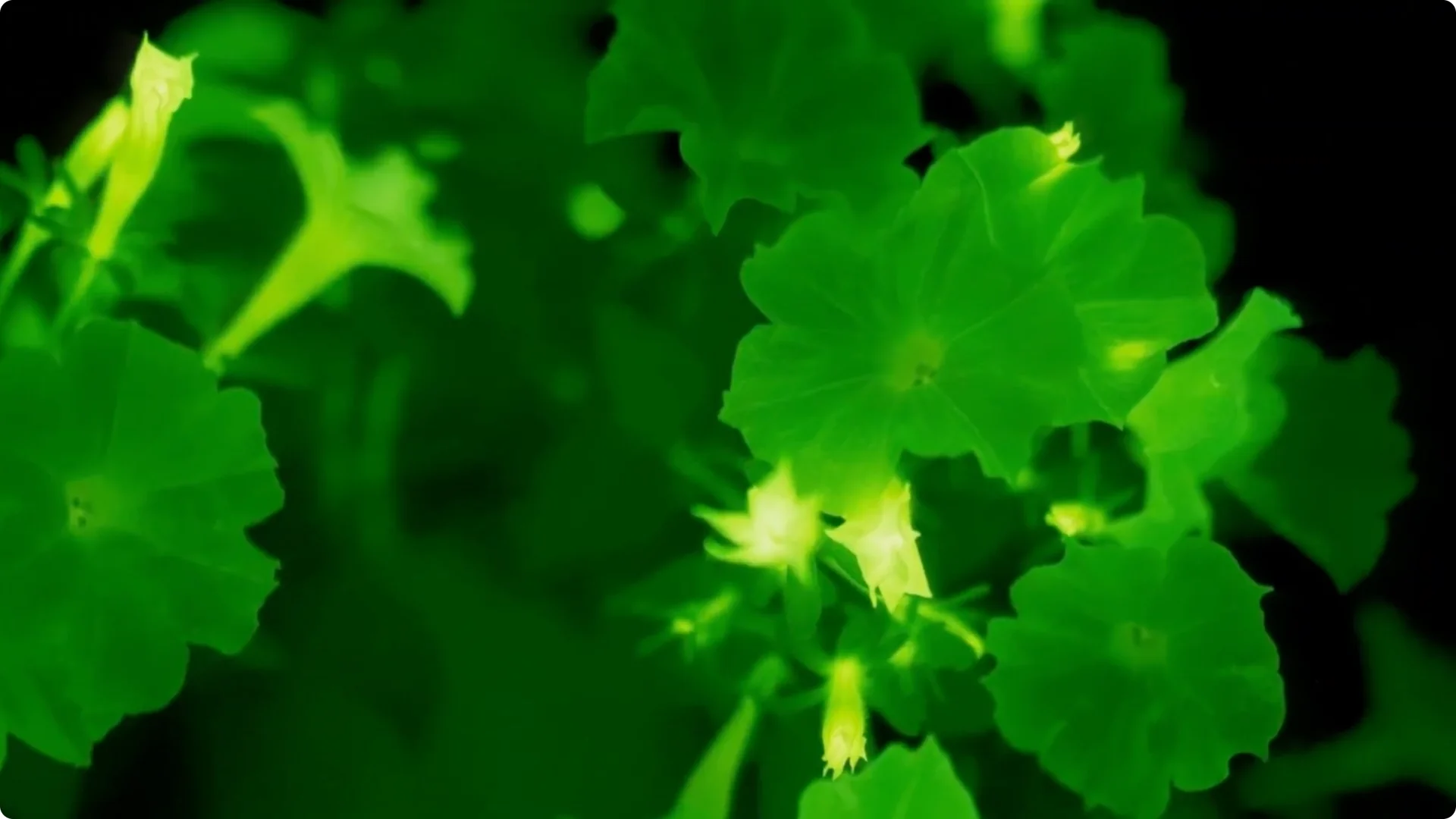
This is not computer graphics and not a frame from a sci fi film. It is a one of a kind houseplant that glows on its own thanks to its unique DNA. But there is a catch.
You can keep it in your living room in the US, yet in Europe it is banned and selling it is punishable by law. Why is that the case? Meet the Firefly Petunia.
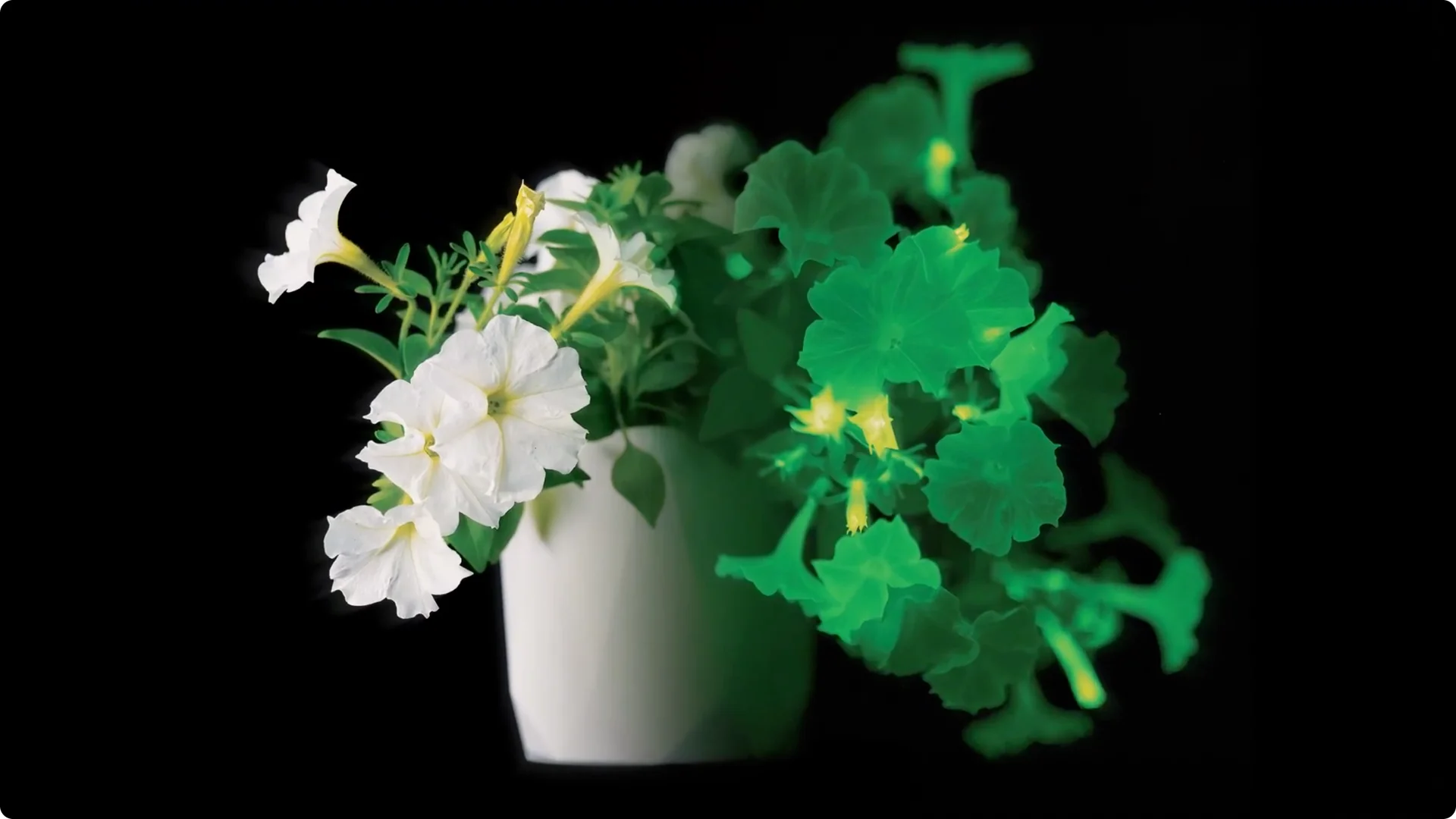
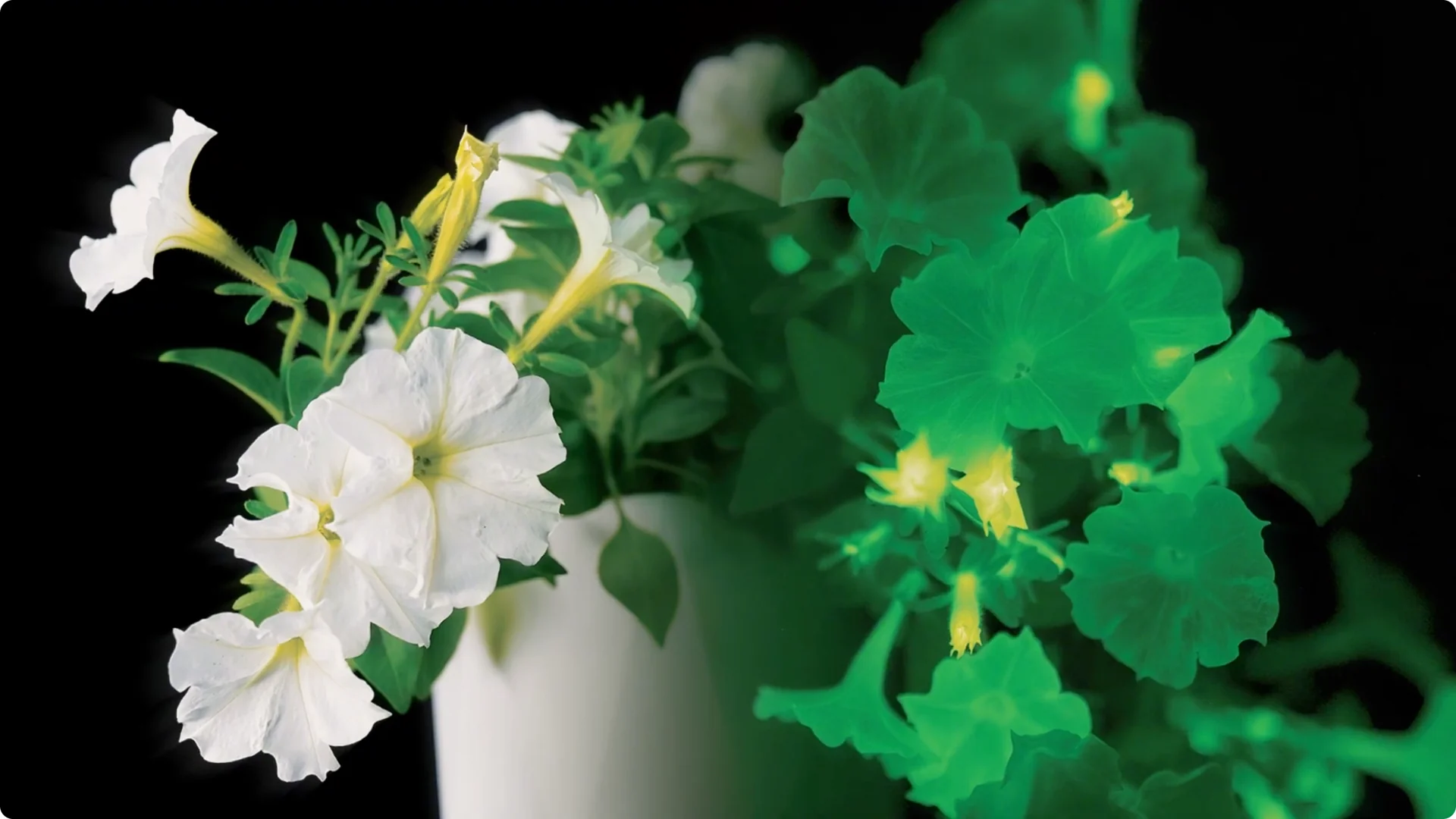
By day, it looks completely ordinary, an unremarkable houseplant with delicate white blossoms. When the sun dips below the horizon and you switch off the lights, real biological magic begins. From deep inside the cells and tissues, a soft greenish glow spills out.
It does not need batteries, wires, special chemical additives, or UV lamps. It is powered by the flower’s own life processes, its metabolism and cellular respiration. Here I break down how genetic engineering turned science fiction into a stylish interior accent, why Time magazine named it one of the best inventions of 2024, and what strict restrictions owners face in real life.
Meet the Genetically Engineered Bioluminescent Petunia
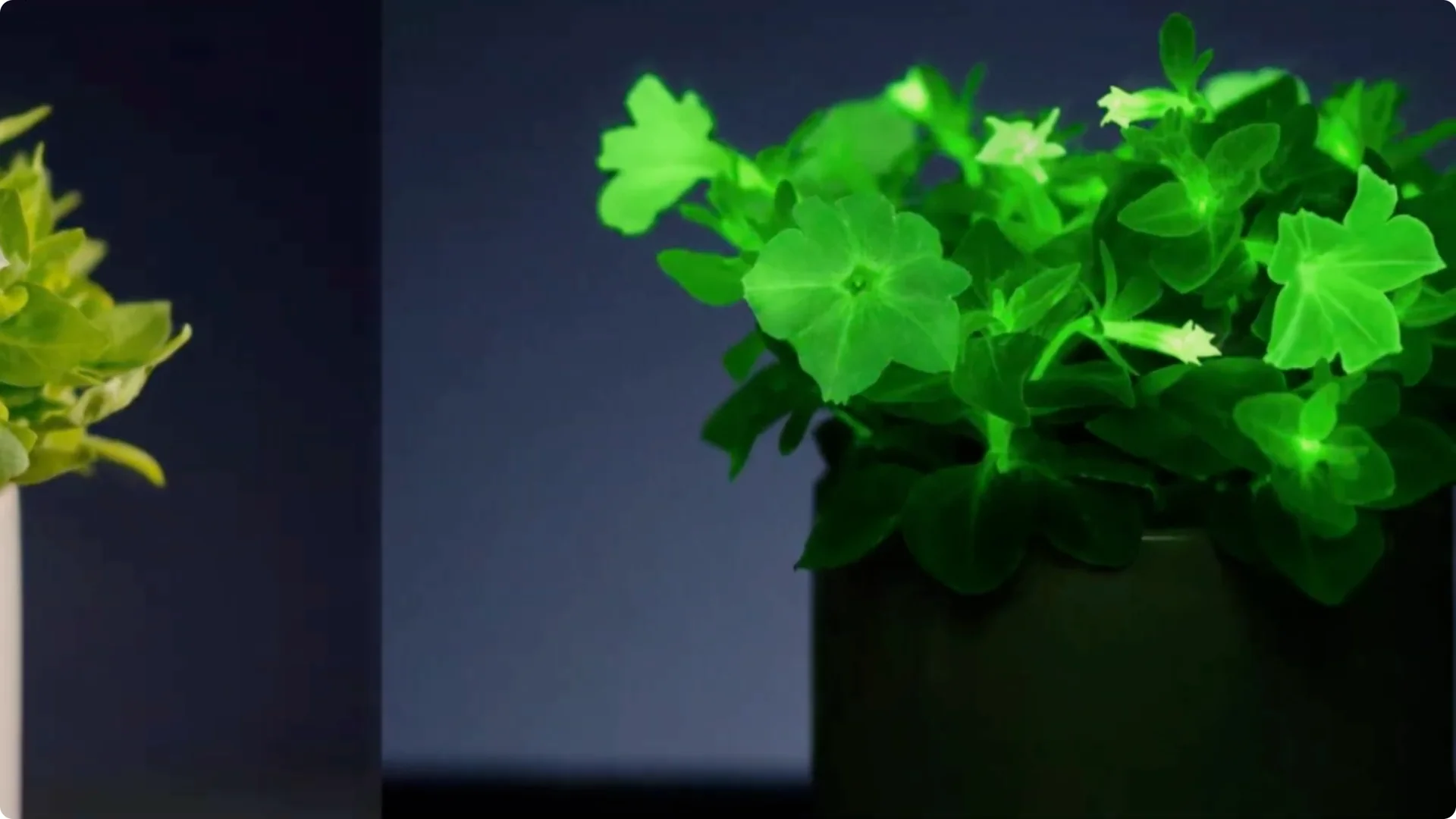
The world of ornamental plants has long been full of disappointment and marketing tricks around unusual colors and special effects. You may have seen so called glowing cacti or neon colored succulents. In reality, that often means fluorescent paint that clogs pores or varieties that only reflect ultraviolet light.
Firefly Petunia is radically different. This is not an external decoration, it is a precise genetic modification. The uniqueness of this Petunia is that it is a fully autonomous bioluminescent system.
It is one of the first times a genetically modified organism of this level of complexity has been cleared for commercial sale as a consumer houseplant. Earlier attempts to create glowing plants required special chemicals or produced a glow so faint you could only see it with a camera and long exposure. Firefly Petunia glows steadily and is clearly visible to the naked eye.
That makes it more than just another smart gadget, it is a new milestone in the domestication of nature. We are used to technology being metal, silicon, and plastic, but here the technology is DNA itself. Behind that magical aura is a complex biochemical architecture assembled brick by brick over decades.
How the Genetically Engineered Bioluminescent Petunia Glows
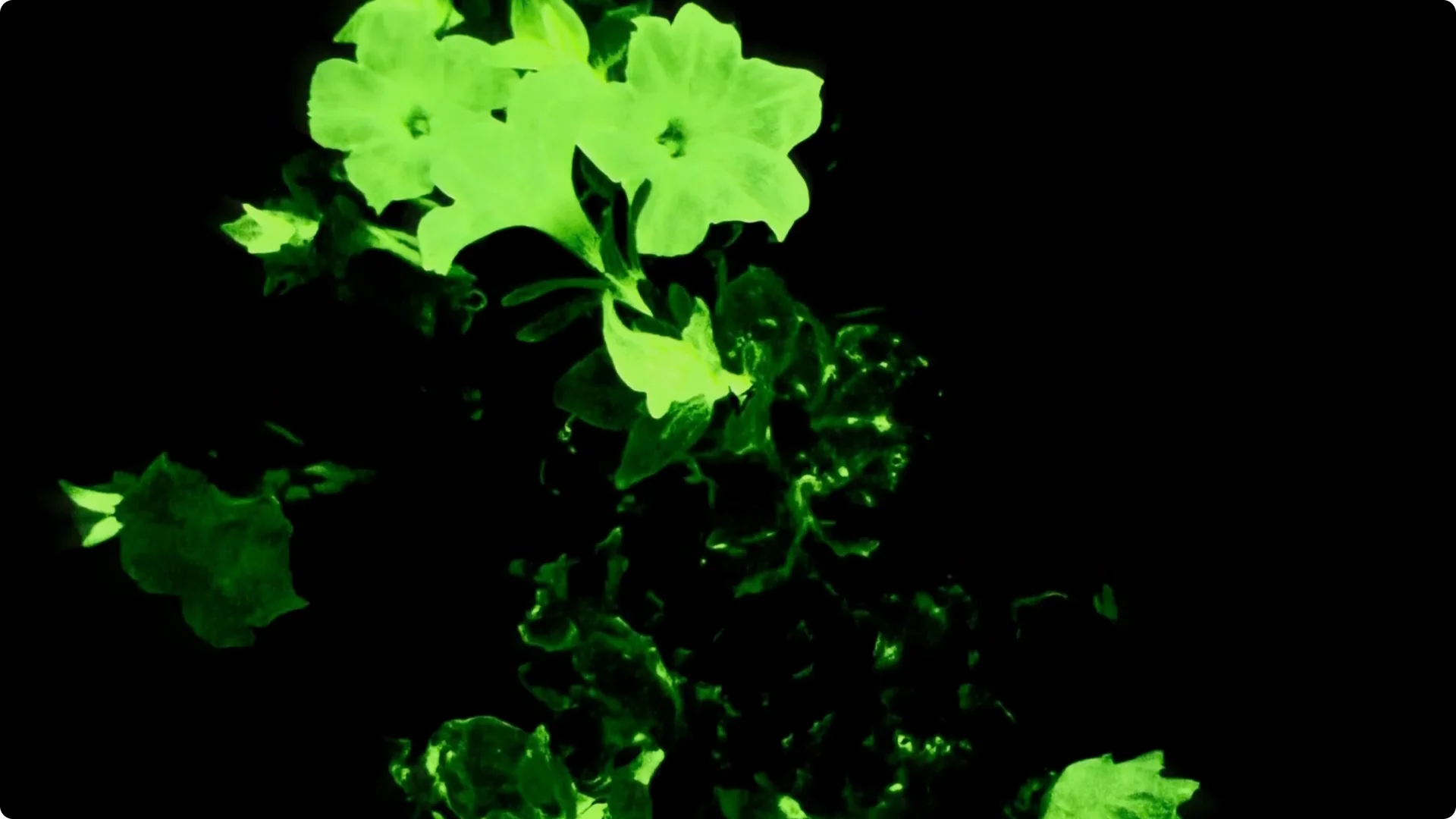
The mushroom blueprint
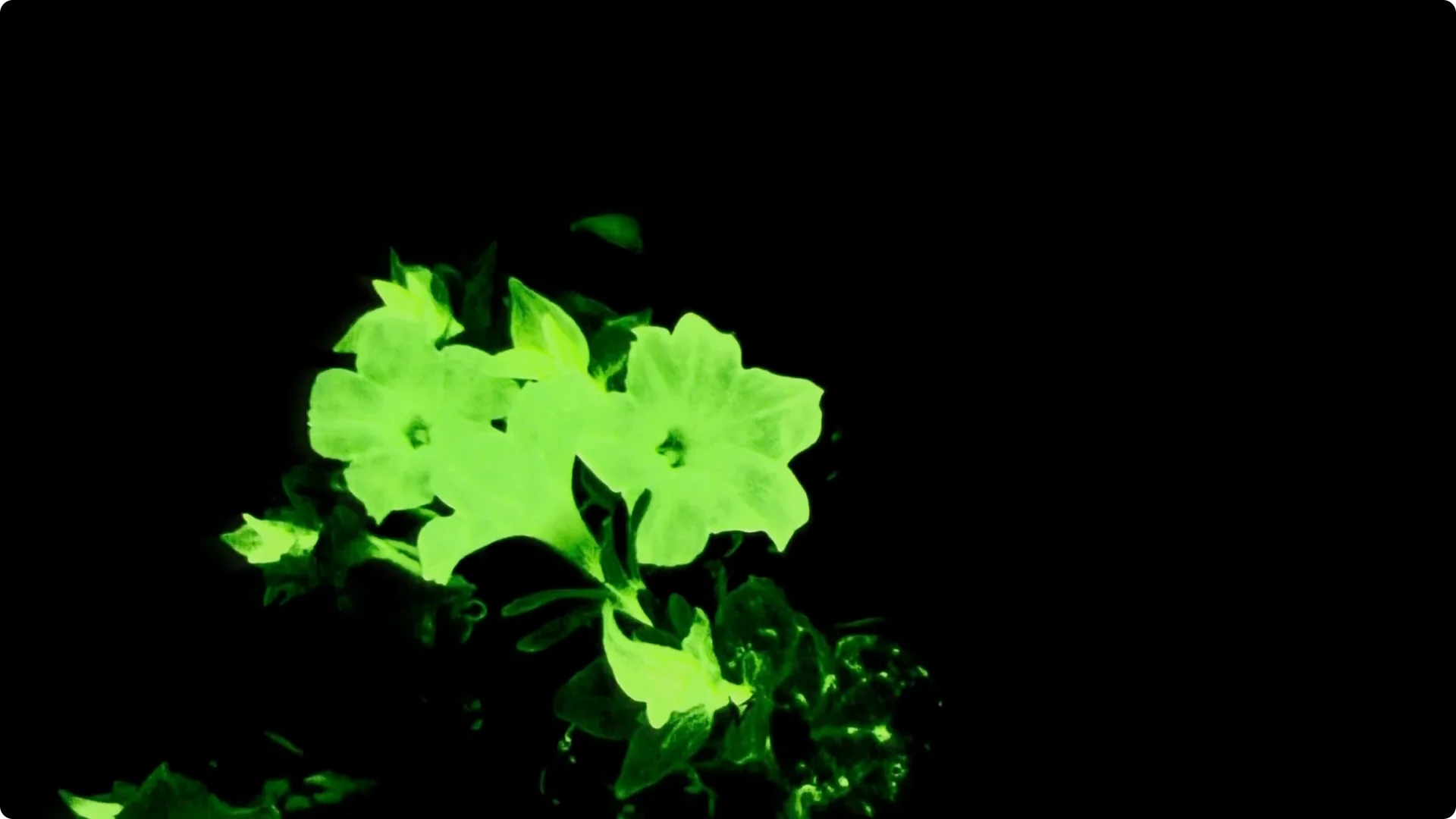
The secret of the Firefly Petunia’s glow lies in the DNA of a tropical mushroom, Neonothopanus nambi, which naturally glows in the jungle. Researchers discovered that bioluminescence in these mushrooms runs on a cycle that fits smoothly into ordinary plant metabolism. The key link is caffeic acid.
The name is misleading, because it has nothing to do with coffee as a drink. Caffeic acid is found in nearly every plant and helps build cell walls. That made it the perfect anchor for the new light making pathway.
The luciferin luciferase cycle
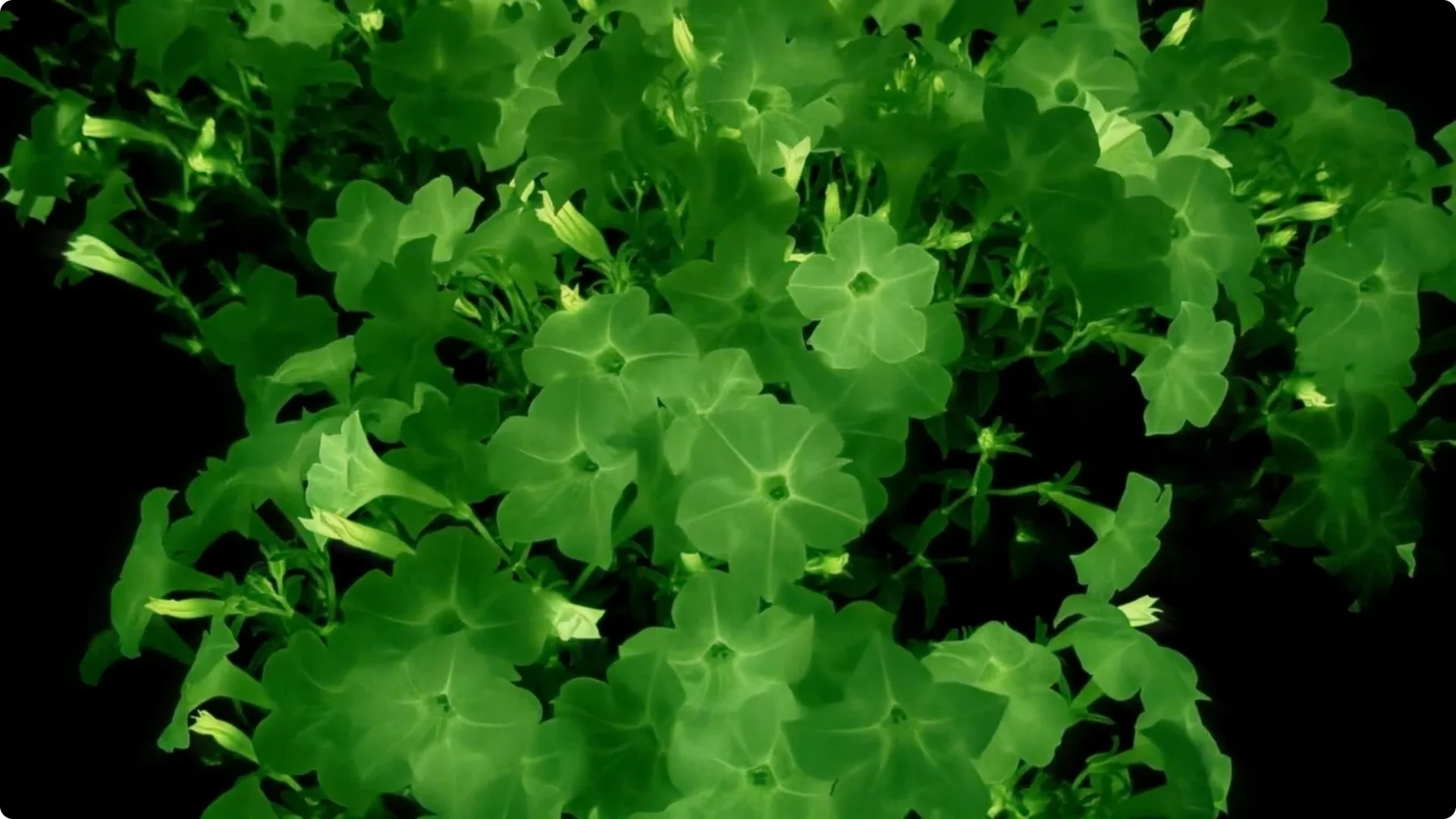
Scientists inserted into the Petunia a set of fungal genes that function like a tiny biofactory. First, they convert ordinary caffeic acid into a molecule called luciferin, which can emit light. Then a special enzyme, luciferase, oxidizes that molecule and releases energy as photons of green light.
The elegant part is what happens next. After the glow, the spent molecule is not expelled. With the help of another enzyme, it is converted back into caffeic acid.
A near closed loop
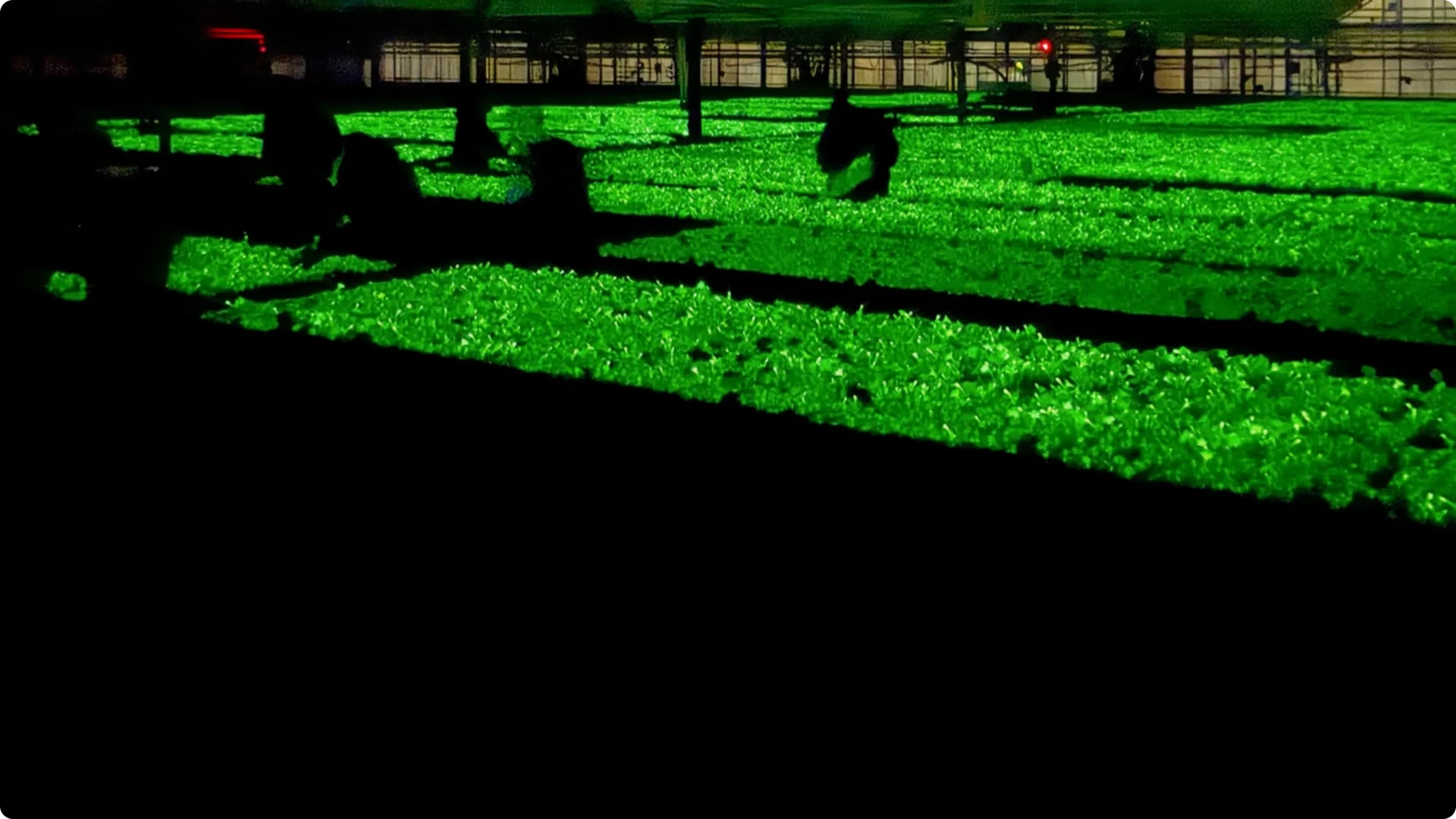
The result is a near closed loop engine. The plant recycles its own metabolites into light, then restores the resource for the next cycle. That is why the Petunia can glow around the clock, though we truly see it only in darkness.
Care and Light for the Genetically Engineered Bioluminescent Petunia
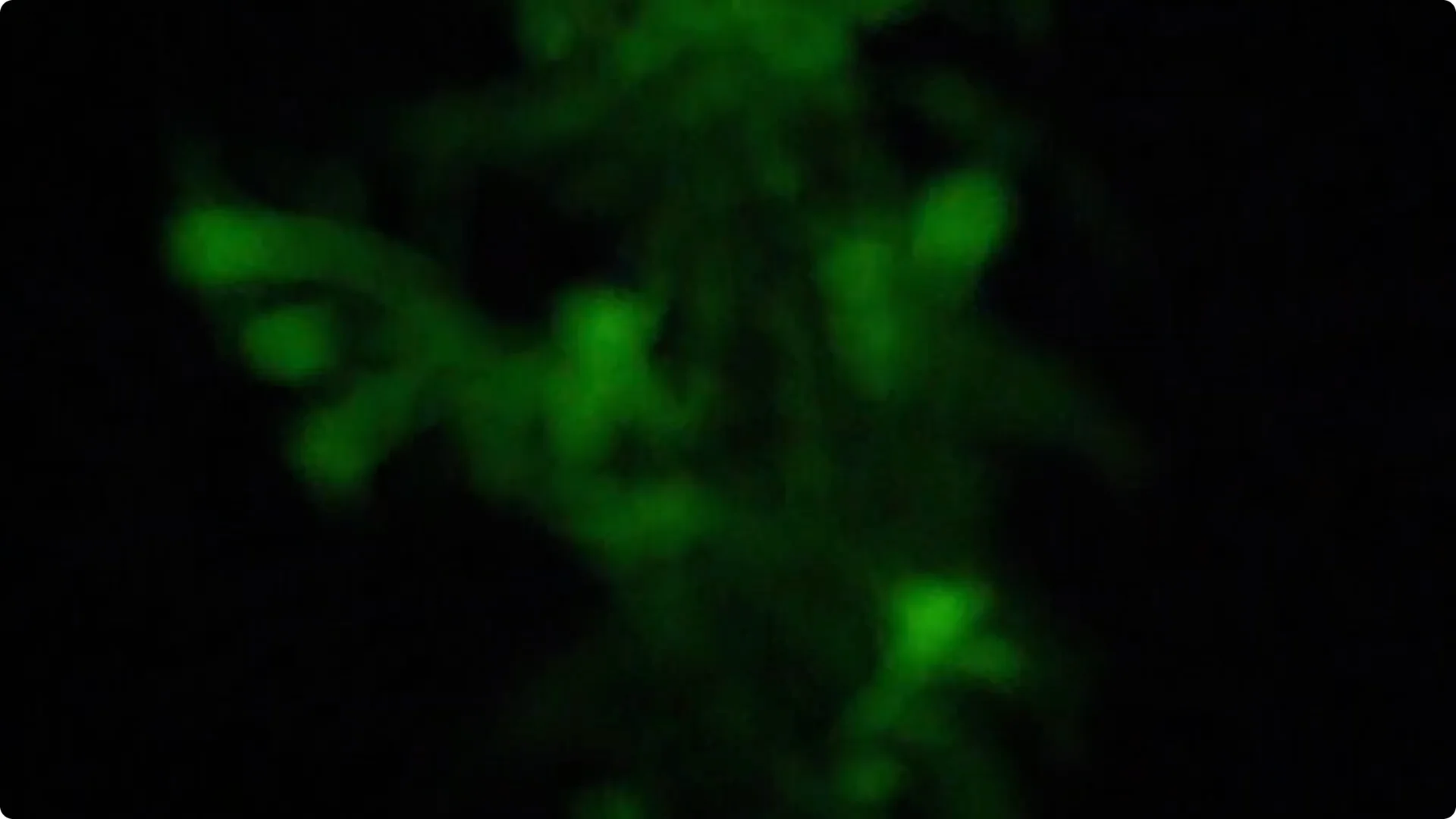
When you bring a Firefly Petunia into your home, remember this is not just decor. It is a high tech biological mechanism that demands a specific approach. As a houseplant, its biggest requirement is light.
Daylight drives night glow
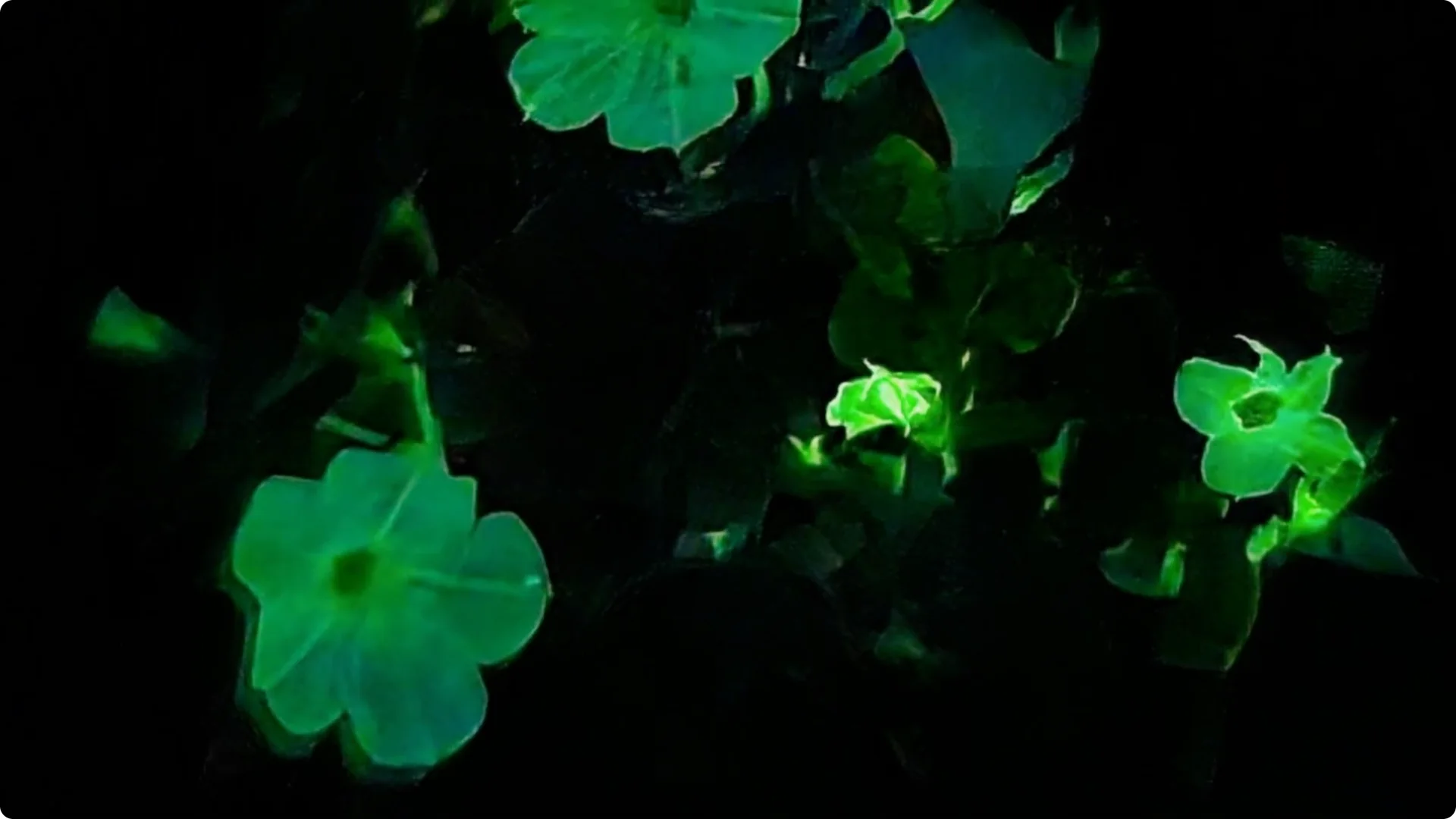
The brightness of its nighttime performance depends on how much energy it absorbed during the day. For an optimal glow, the Petunia needs 6 to 12 hours of bright light. Apartments with north facing windows or regions with short daylight hours will almost certainly need a strong grow light.
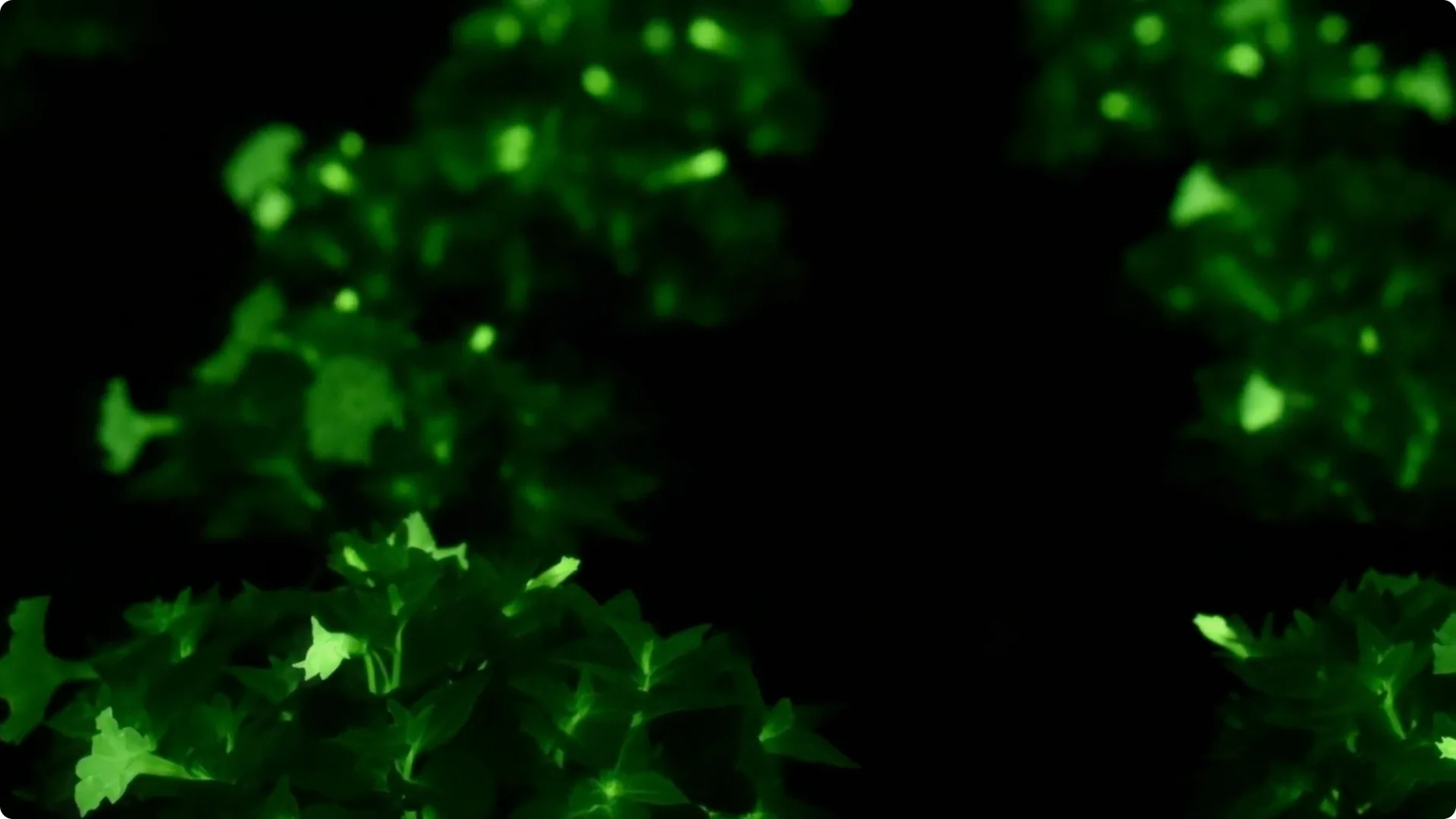
Owners often assume that because the plant glows on its own, it can live in a dark corner of a bedroom. In reality, the more active the photosynthesis, the more caffeic acid is produced, and the brighter your flower burns at night. The brightest parts of the plant are fresh buds and young shoots where metabolism is most intense.
Darkness and your eyes
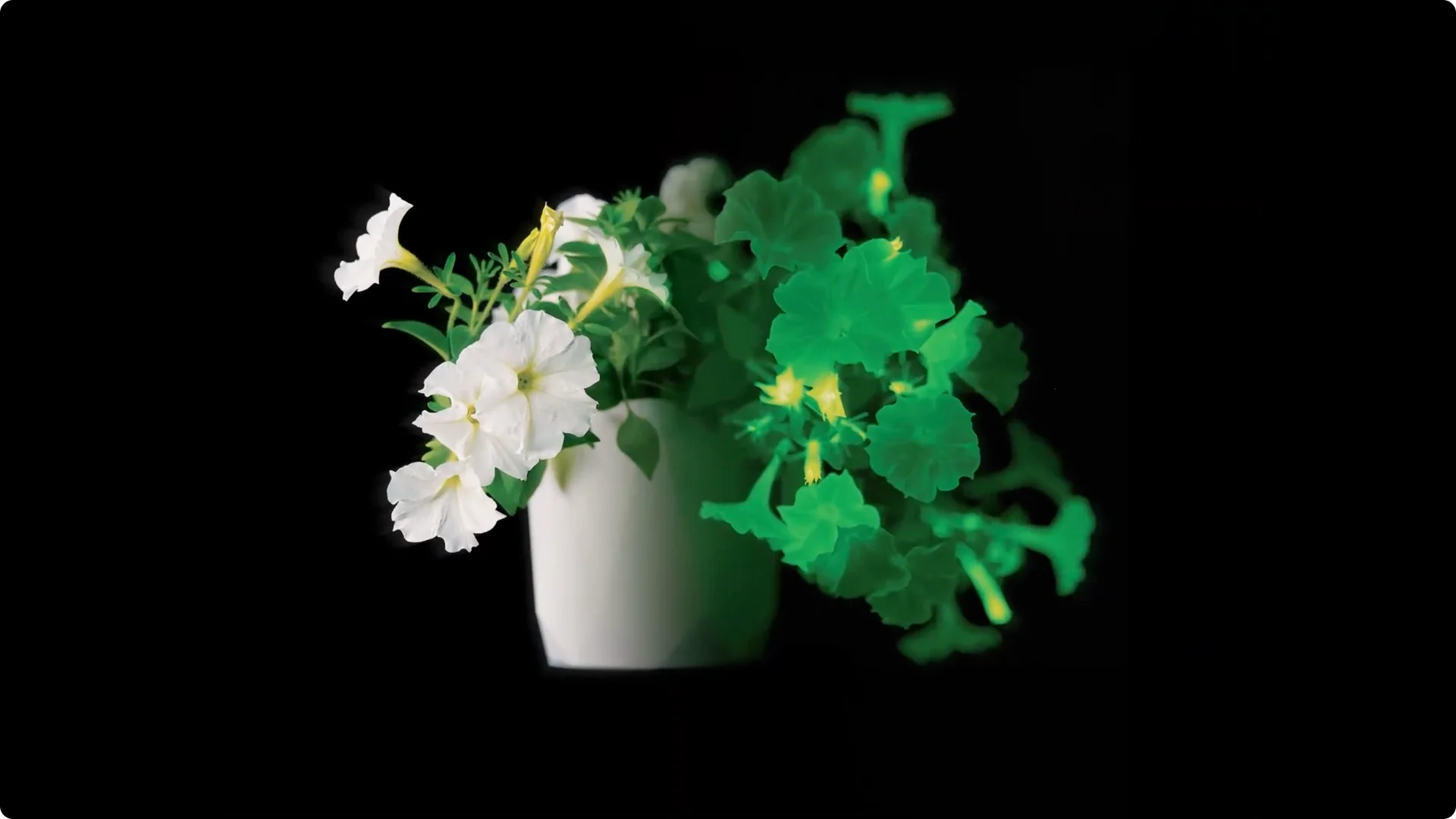
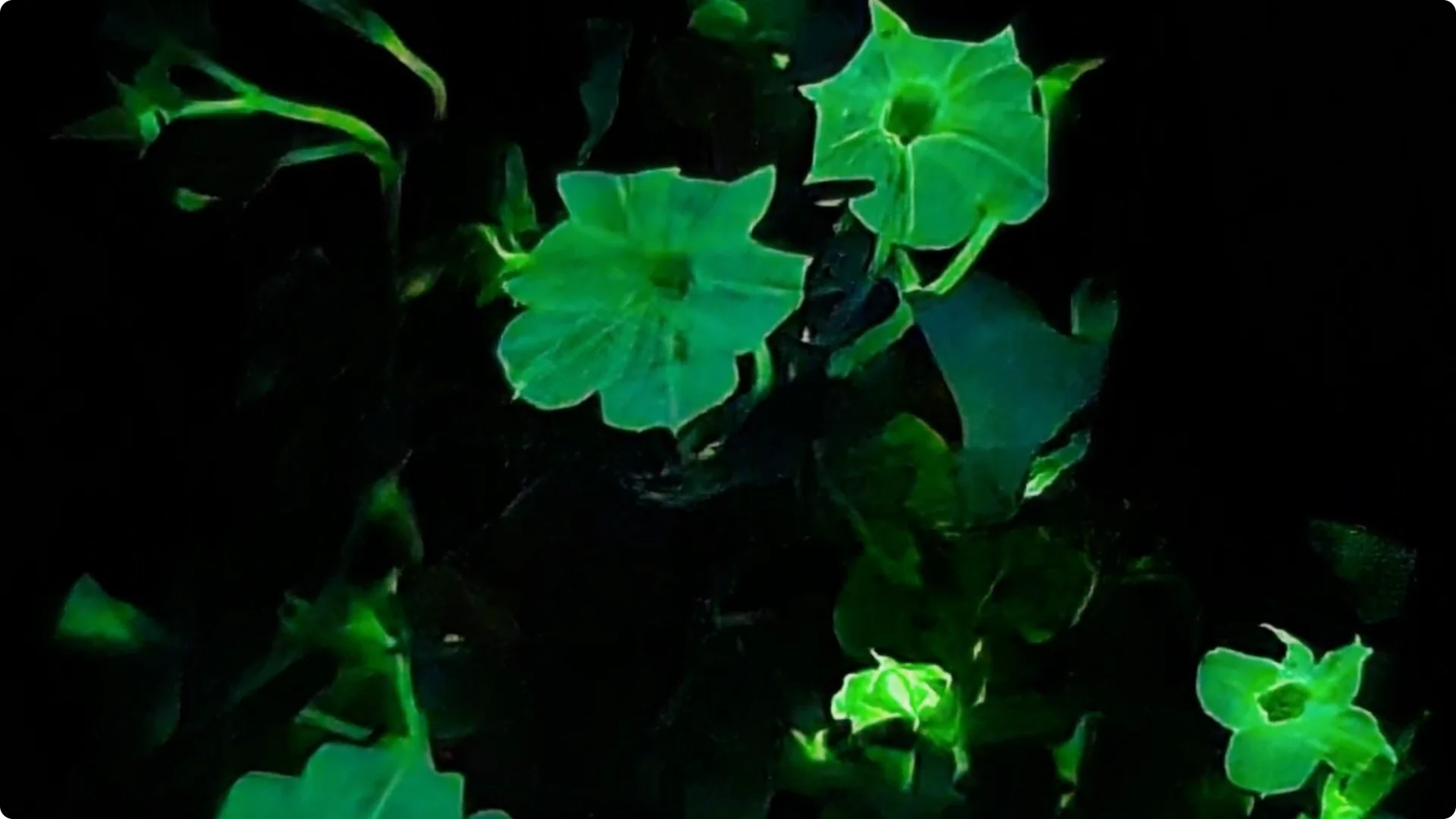
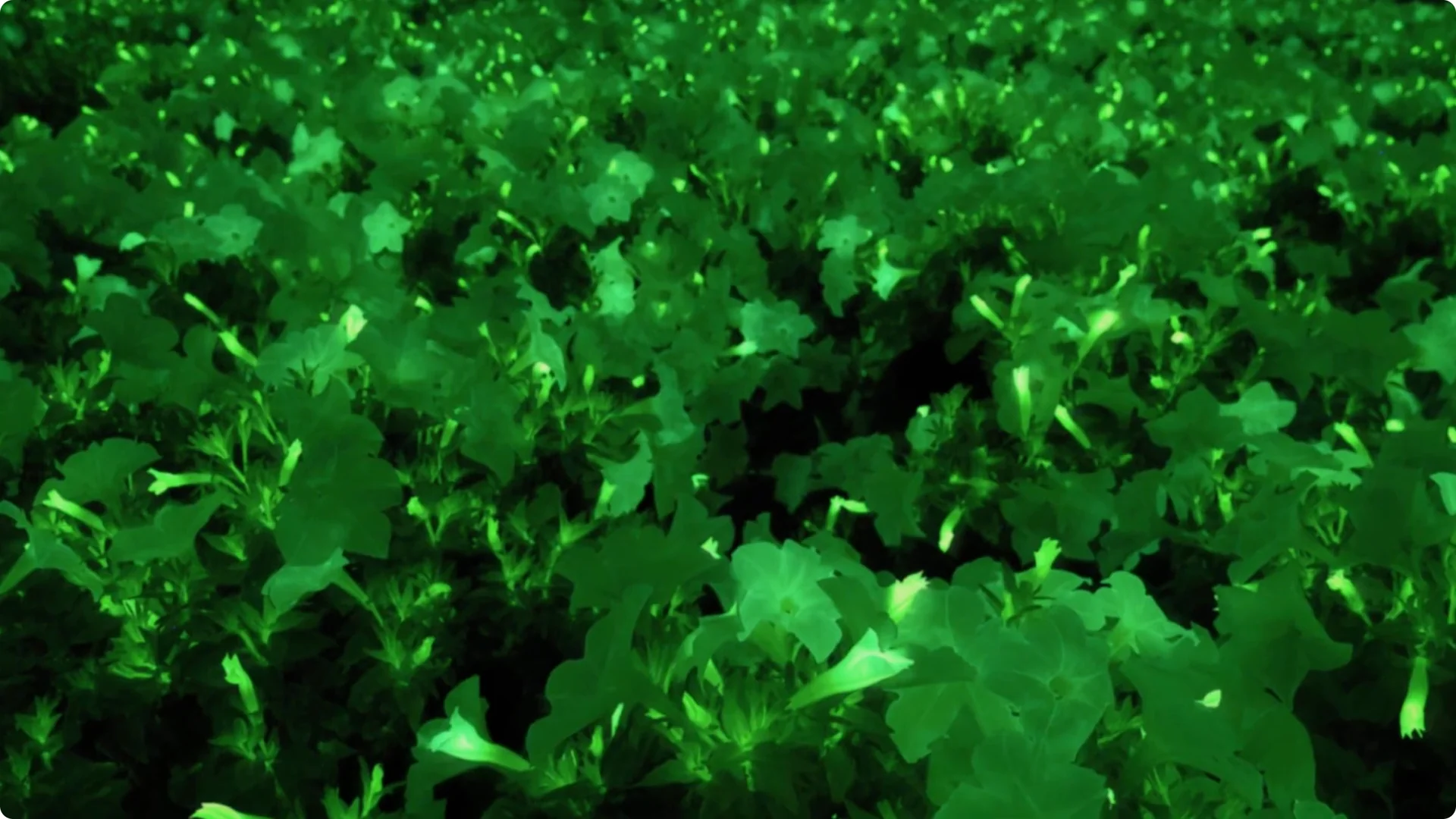
In many promotional photos, the Petunia looks like a lamp lighting up a whole room. In reality, the light it emits is gentler, and developers compare it to soft moonlight. For the human eye, that becomes a challenge in the age of light pollution.
To truly enjoy the spectacle, you need absolute darkness. Even a tiny indicator on a TV, a phone charger, or a street lamp outside can overpower the bioluminescence. Your eyes also need 5 to 10 minutes to adapt to the dark before you start to see the subtle details.
Feeding and pruning
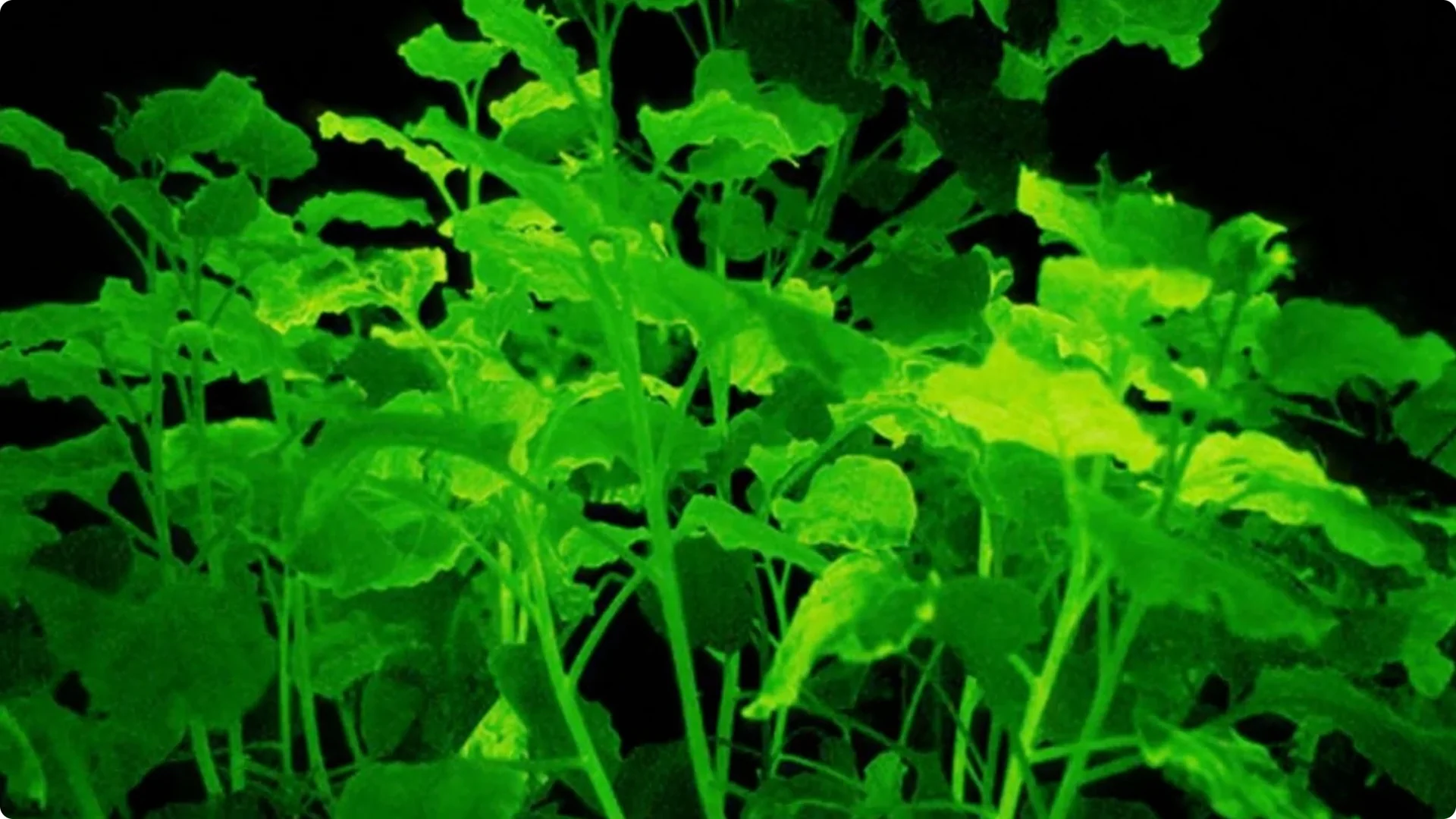
From a gardening standpoint, the Firefly Petunia is a heavy feeder. It needs regular watering and steady feeding, and if the soil dries out or lacks micronutrients, especially iron, the glow is often the first thing to weaken. The light becomes a kind of health indicator for the plant.
If you want help reading stress signals in tough houseplants, see how to revive a snake plant indoors. The same observational habits carry over when tuning this glow.
Experienced owners recommend regular pruning or deadheading, removing spent blossoms. That pushes the plant to redirect energy into new buds that almost always glow brighter than older ones. Care turns into a dialogue where attention is answered by a ghostly shimmer.
If propagation techniques fascinate you, learn a simple method to propagate bougainvillea to practice timing and plant responses.
Make the glow visible step by step
1. Charge the plant with light
Give it a bright window or a strong grow light for at least six hours daily. More daytime photosynthesis means more caffeic acid and a brighter glow at night.
2. Eliminate competing light
Before viewing, turn off every indicator and close curtains to block street light. Let your eyes adjust in complete darkness for several minutes.
3. Maintain steady nutrition
Keep soil evenly moist and feed on schedule with micronutrients, paying attention to iron. Prune and deadhead to trigger new growth tips that shine the brightest.
Buying and Legal Boundaries of the Genetically Engineered Bioluminescent Petunia
Availability and price
Right now, the plant is officially available only in the United States. It is shipped by mail to your door in special protective boxes. The price has been promoted at around 29 dollars, comparable to a rare variety of a regular houseplant.
GMO rules and regional bans
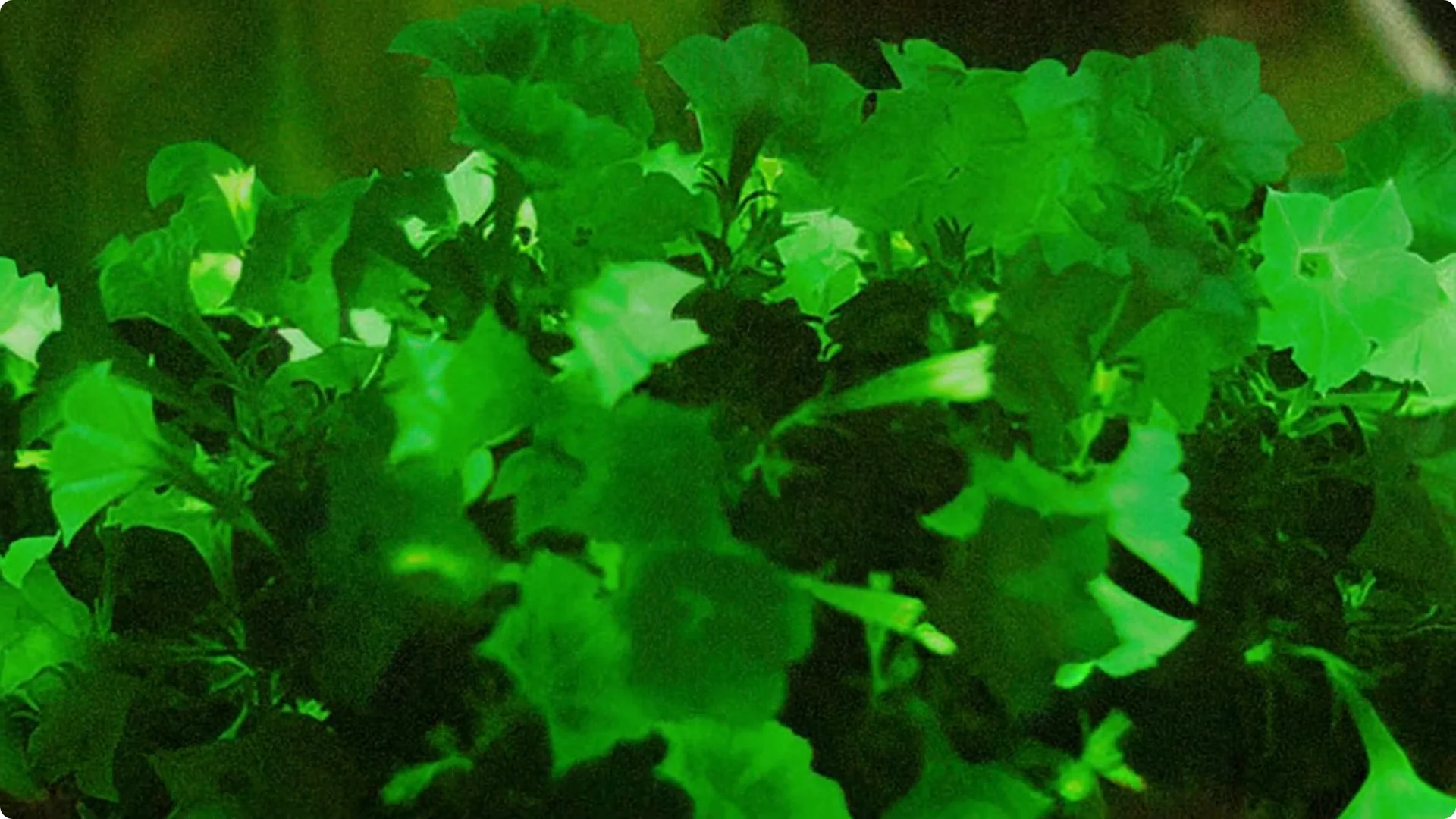
For residents of Europe, the UK, and many other countries, the situation is very different. Due to strict regulations around genetically modified organisms, this Petunia is not authorized for sale in many places, and importing it can violate local rules. Regulators in the EU worry about ecosystem impact, while scientists at Light Bio argue it is an ornamental that cannot survive in the wild without human care and poses no meaningful threat to biodiversity.
For many Western gardeners outside the US, the Firefly Petunia remains a forbidden fruit. It becomes something you can only watch through a screen and dream about bringing home. That tension fuels heated debate far beyond botany.
Patents and propagation bans
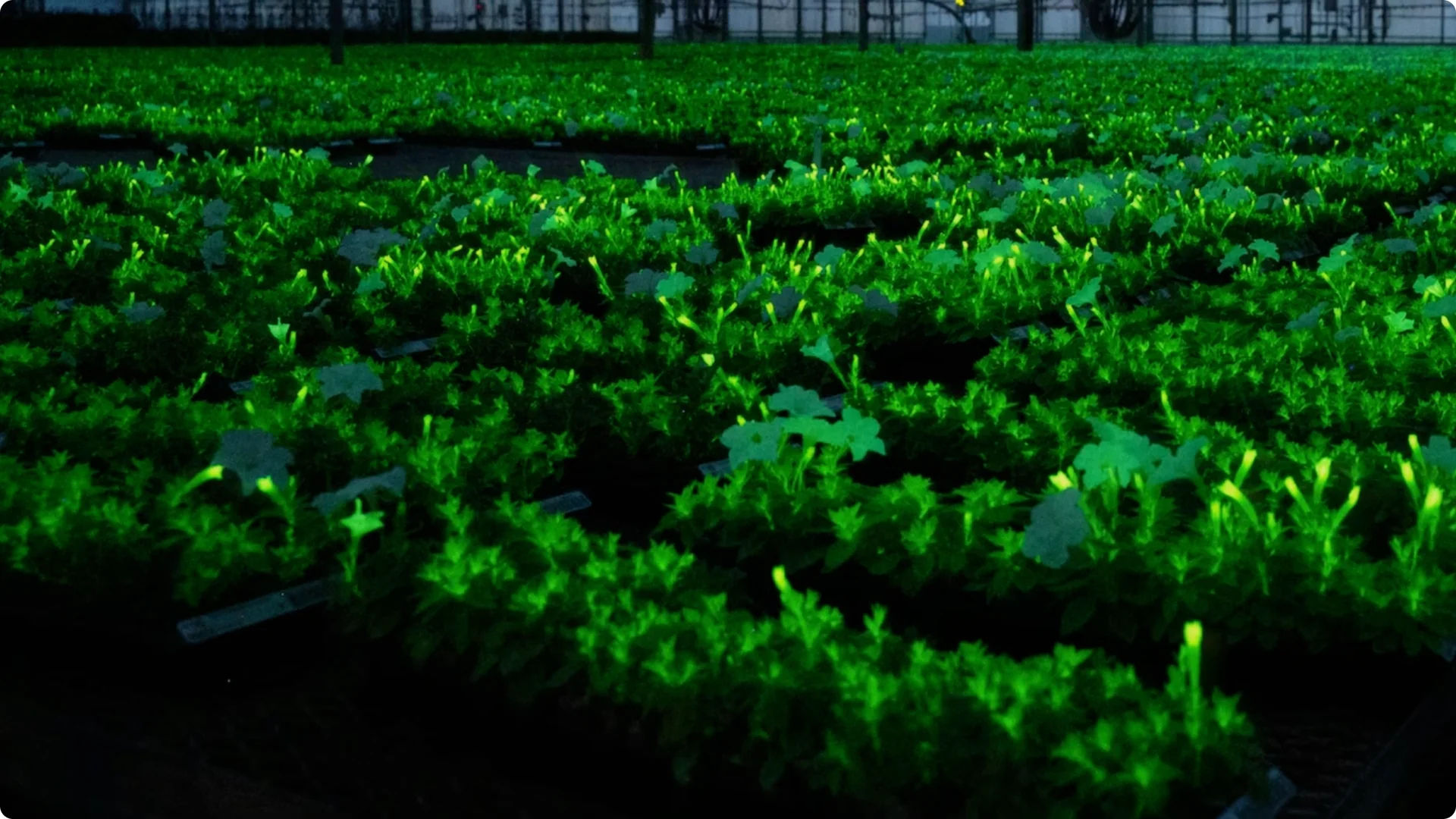
The hottest debate is about patents and intellectual property. When you buy a Firefly Petunia, you are the end user, but the underlying technology remains protected, and unauthorized propagation is forbidden. No cuttings, no seeds for sale, and no sharing cuttings with friends.
From a legal standpoint, this flower is protected by patents as an invention, which raises ethical questions. How right is it to patent a living organism, and what happens if plants like this become normal. Gardeners are used to informal sharing such as home rose propagation, which makes these restrictions feel especially stark.
In professional circles, people already joke about Terminator genes that shut off the glow if the owner does not pay a monthly fee. For now, that is irony, but the precedent set here forces us to think about a future where the line between nature and product blurs.
The Future Sparked by the Genetically Engineered Bioluminescent Petunia
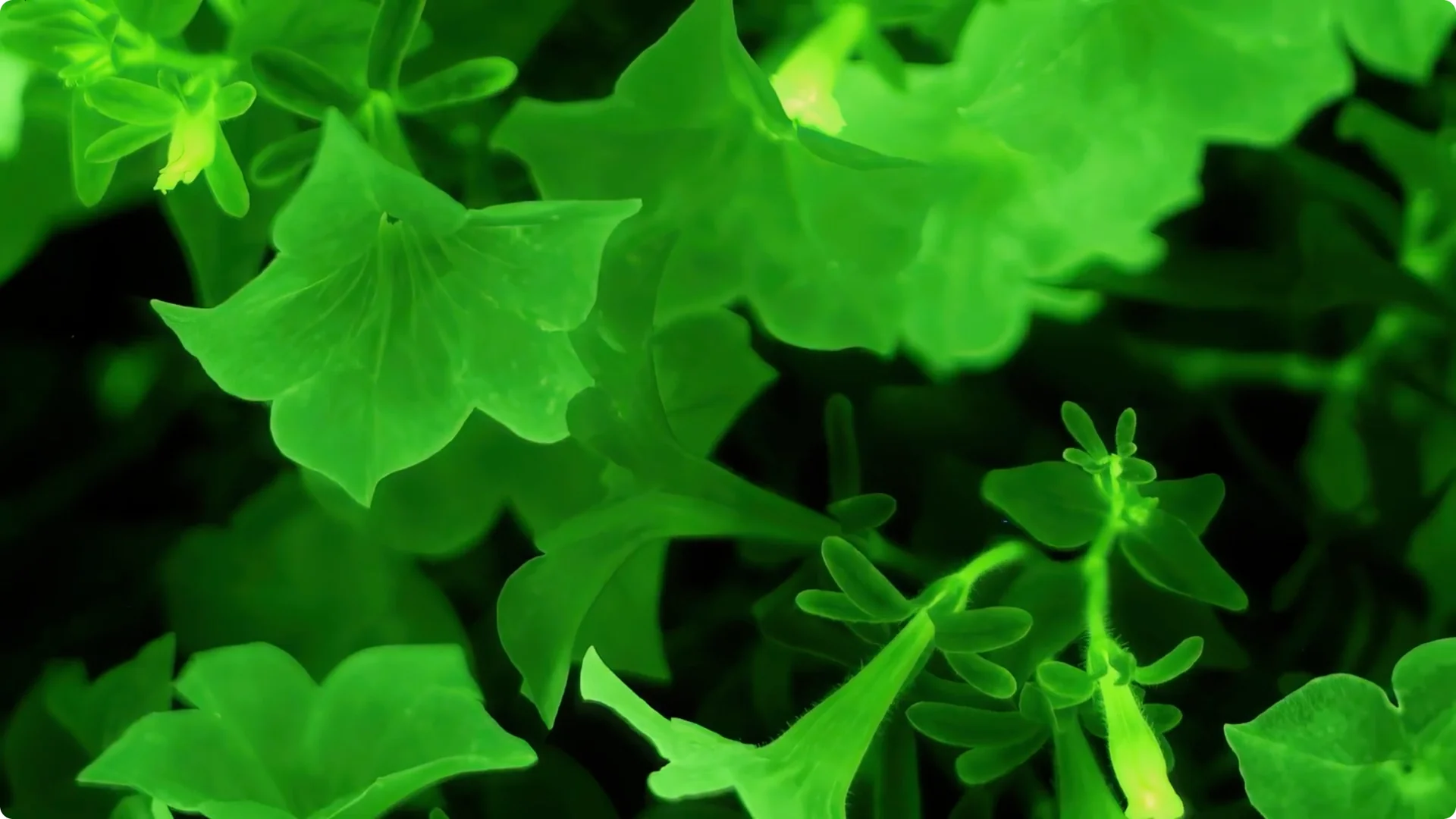
We are at the threshold of an era where biology becomes a new kind of design. Developers are hinting at new varieties with different glow colors. Some even talk about glowing trees that could replace street lights and turn cities into fairy tale forests.
This plant challenges how we imagine a home and how we interact with space. It invites us to slow down, switch off gadgets, sink into silence and darkness, and watch how life breathes and glows. This is not just buying a potted flower, it is bringing a piece of the future into your home.
Final Thoughts
Firefly Petunia reminds us that science can be precise and also beautiful, poetic, and mysterious. If you accept the rules of this game, bright light by day and absolute darkness at night, this living Firefly may become an unforgettable companion. The future is already here, it grows in a small plastic pot and glows softly green while you sleep.
Are you ready to let it into your life and become part of this biological experiment. Each owner finds their own answer alone with that astonishing living light in the deep silence of the night.