
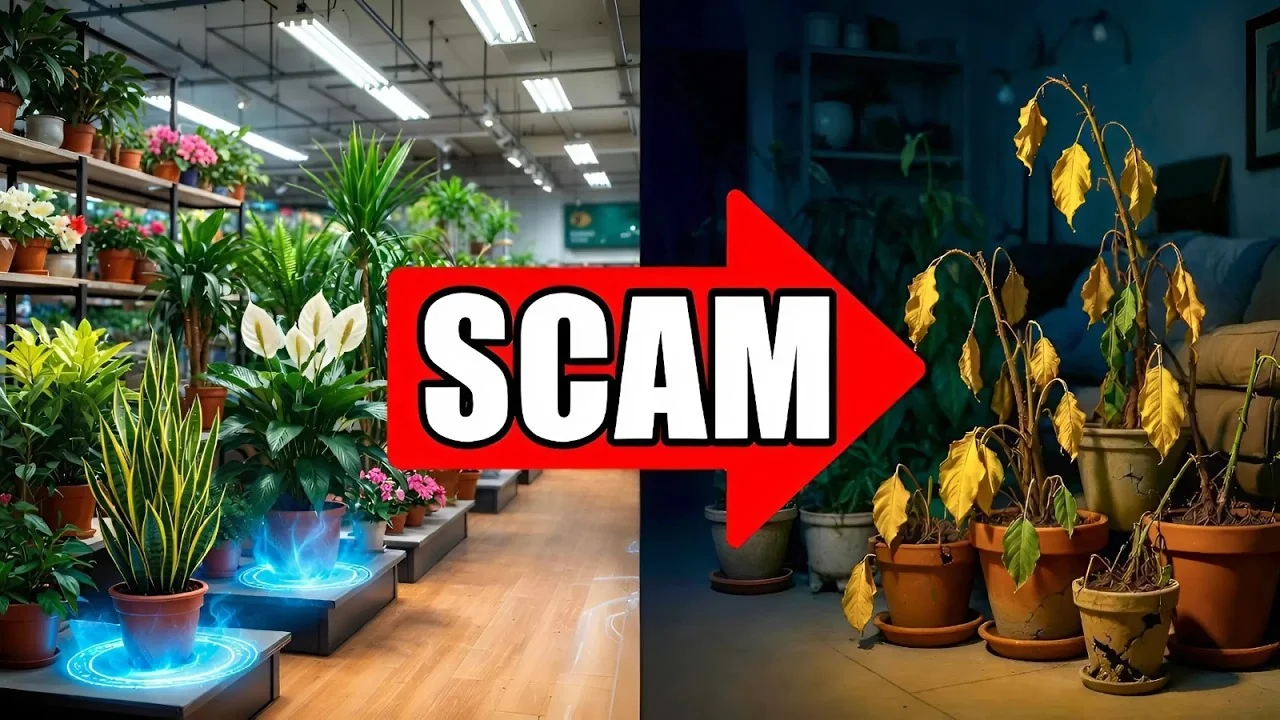
Few people realize that an ordinary plant from a supermarket can turn out to be a cleverly disguised time bomb. We tend to blame ourselves when a new plant starts wilting right before our eyes. But the truth is that the houseplant industry with its billions in revenue often deliberately counts on your failure.
Retailers benefit when a plant looks flawless on the sales floor only to decline slowly and irreversibly on your window sill a couple of months later. I am exposing 15 hidden but incredibly common tricks stores use to profit from our trust. I will also show you how not to fall for their deception.
You will learn why your orchid was doomed from the very first day in your home and how a seemingly healthy discounted plant can destroy your entire collection. We will go behind the scenes of those beautiful displays to understand where botany ends and cold calculation begins. Let us begin.
1. Houseplant Retail Scams: The Death Basket

When you buy a lush monstera or an exotic philodendron from giants like Home Depot or IKEA, you probably do not stop to think about its journey from an industrial nursery. In mass production, time is the most valuable resource, so cuttings are rooted in tiny plastic baskets or tight mesh sleeves made of nonwoven material. Automated lines later move the entire plug into fresh soil together with that mesh.
This saves seconds on every specimen and translates into huge profits across millions of plants. For the end buyer, it can become a death sentence, which is why serious collectors call it the death basket. In a greenhouse under powerful lights and drip irrigation the plant copes, but in an ordinary apartment problems begin.
As roots try to spread, they run into a non degradable barrier and slowly suffocate. After six months a once healthy plant stops growing, lower leaves turn yellow, and the stem begins to thin. The owner blames themselves, never suspecting that a plastic trap is literally cutting off the plant’s vital vessels.
2. Houseplant Retail Scams: Ice Orchids
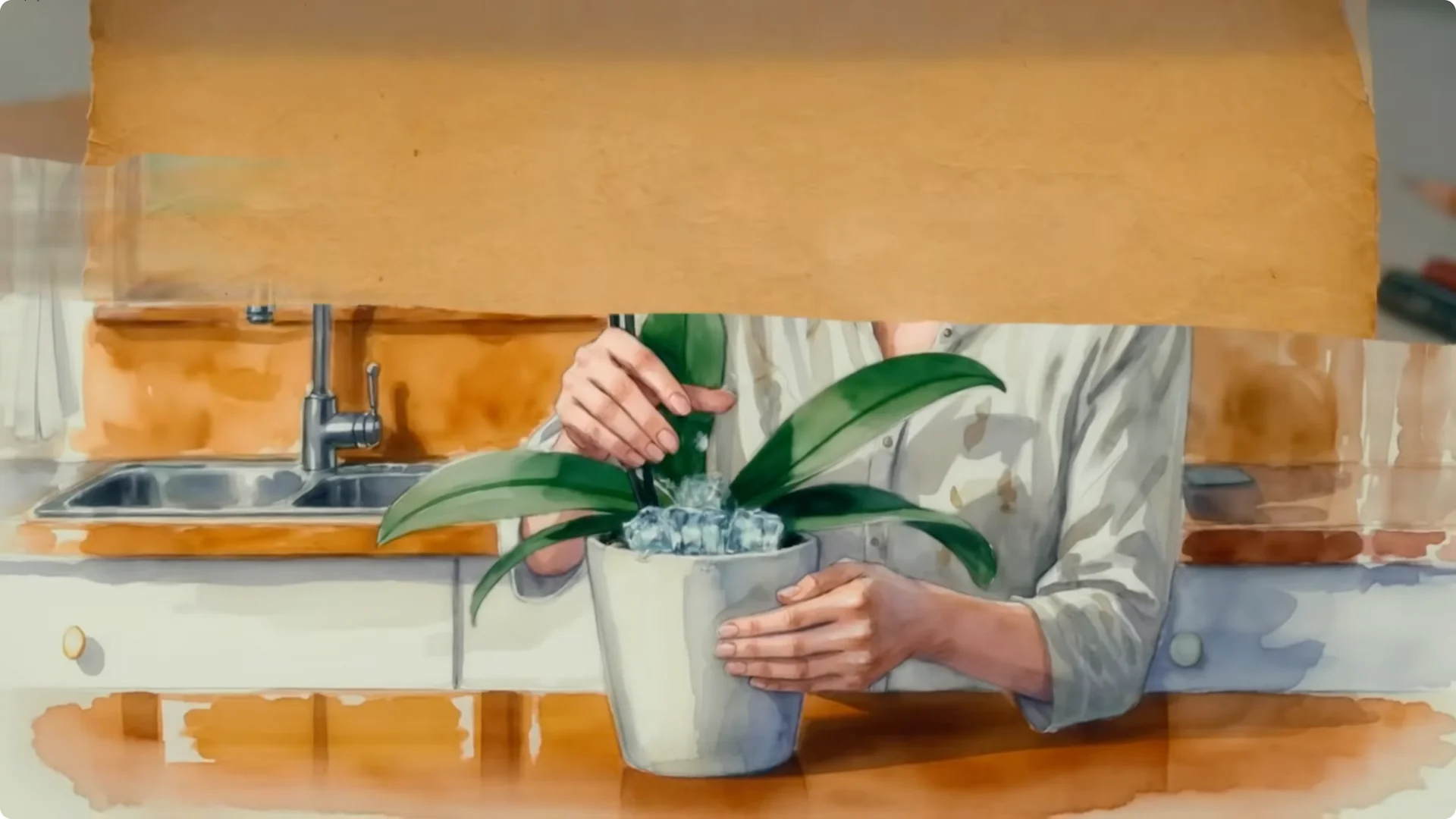
On American and European markets it is impossible to miss Phalaenopsis orchids sporting bright tags that say just add ice. The pitch is simple and seductive for novices terrified of overwatering. From the biological point of view of a tropical plant, this is slow torture.
Orchids hail from warm, humid jungles where temperatures never approach freezing. When ice melts on delicate roots or touches the rosette base, the plant experiences extreme stress and root cells die, which leads to rot. The most insidious part is that orchids can fake life for months on reserves stored in their leaves.
The buyer keeps adding ice as the orchid finishes its flowering cycle and then it dies right when the customer is ready to return to the store. It is a perfect consumption loop built on convenience at the expense of a living organism. Cold water on tropical roots is a death wish, not a care hack.
3. Houseplant Retail Scams: Pink Leaves by Chemistry

Social platforms fueled demand for rare mutations with unusual leaf colors, and few stories illustrate this better than the Philodendron Pink Congo. It captured imaginations with neon pink leaves and commanded sky high prices. Sellers presented it as a rare genetic variegation like the famous Monstera Albo.
Behind the pink dream was a cynical chemical trick. Large nurseries temporarily expose plants to ethylene or specific hormones that block chlorophyll production in new leaves. The result looks fantastic but is completely temporary.
Three to four months after purchase the plant resumes producing ordinary green leaves. The pink disappears forever and no fertilizer or bright light can bring it back. You are left with a common philodendron after overpaying tenfold.
4. Houseplant Retail Scams: Pots Stuffed with Fresh Cuttings
When you see a lush pothos or string of pearls with vines trailing to the floor, you expect a mature plant with a robust root system. Often it is an illusion crafted for a quick sale. Instead of waiting years, growers tuck twenty or thirty freshly cut stems into one pot of fresh medium.
At purchase many of these cuttings have no roots or are barely starting. Greenhouse humidity and growth regulators maintain the bushy look until it reaches your drier home. Unable to draw water, half the stems shrivel or rot after the first watering.
Within a week the lush plant turns into a bald disappointment. Technically the shop has not lied, but as a single organism that arrangement is not viable. You pay for a finished product and get a DIY rooting kit that needs expert care to survive.
Read More: Onion Water Sparks Roots Rose Stem 2
5. Houseplant Retail Scams: Leaf Shine Suffocation

In stores, leaves often gleam with an unnatural mirror like sheen that catches the eye. This effect comes from commercial polishes made with mineral oils or waxes to mask water spots, dust, and blemishes. For the plant, this gloss is a nightmare.
Leaves are the lungs, covered in stomata that handle gas exchange and transpiration. The dense oily film clogs these openings and suffocates the tissue. Sticky residue then traps dust which blocks light and slows photosynthesis.
The plant begins to starve at a cellular level and gradually wastes away. To save such a specimen, you will spend hours hand washing every leaf with a mild soap solution. Shine sells plants, but it also strangles them.
6. Houseplant Retail Scams: Hot Glued Cactus Flowers
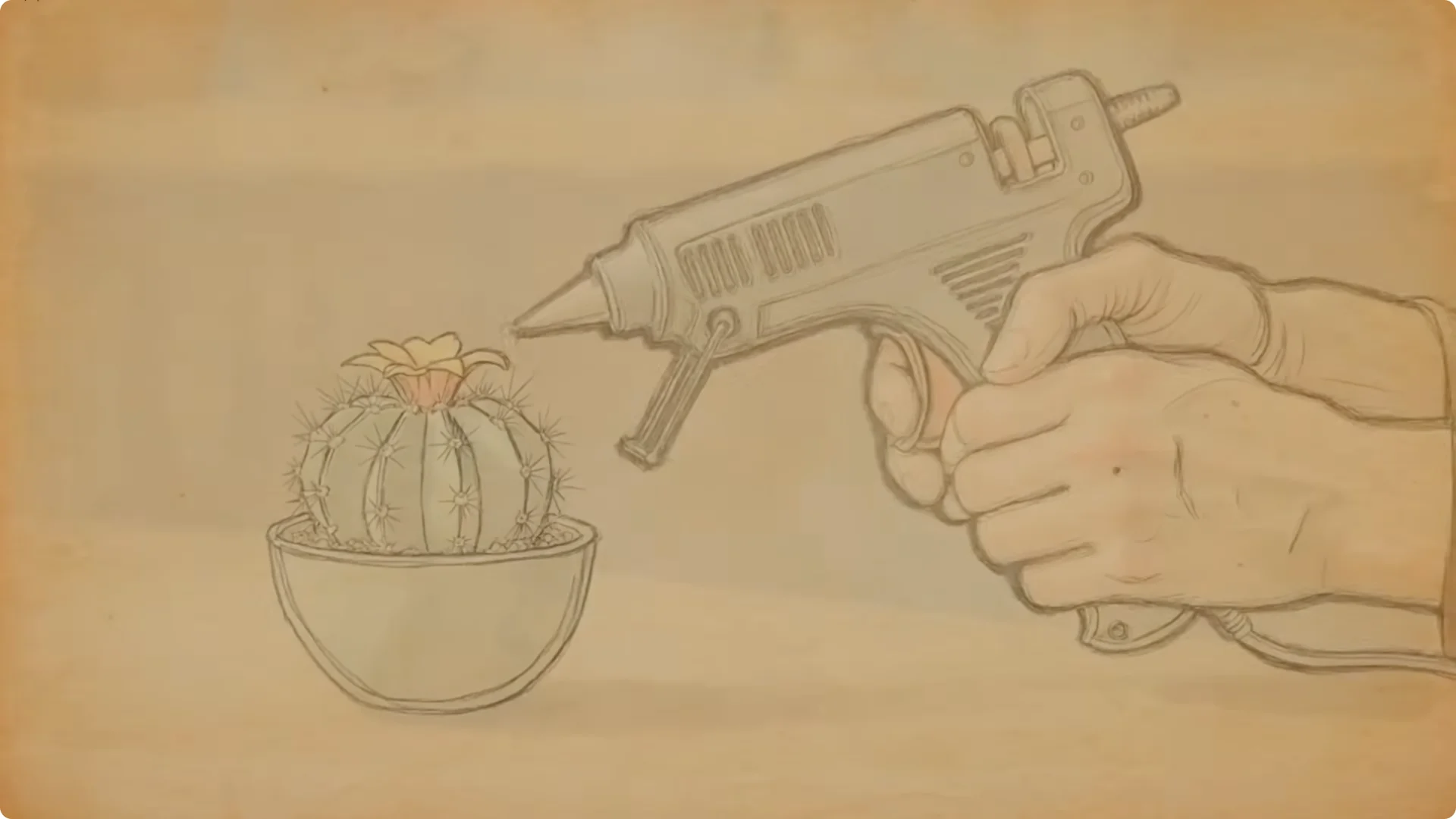
Many beginners are thrilled to find a cactus topped with a perfect yellow or red bloom that never fades. On inspection the flower is a dried bloom or a plastic imitation attached with hot glue. Blooming cacti sell better, so retailers reach for the glue gun.
For a cactus this is a serious injury. Glue damages spines and epidermis, blocking growth in that area. The real danger comes when a buyer tries to remove the fake flower.
Hot glue fuses to tissues, and tearing it off leaves deep wounds. Those wounds invite fungal and bacterial infections that can kill the plant quickly at home. This tactic is built for impulsive gift purchases where no one in the chain cares what happens next.
7. Houseplant Retail Scams: Shipping Medium Traps
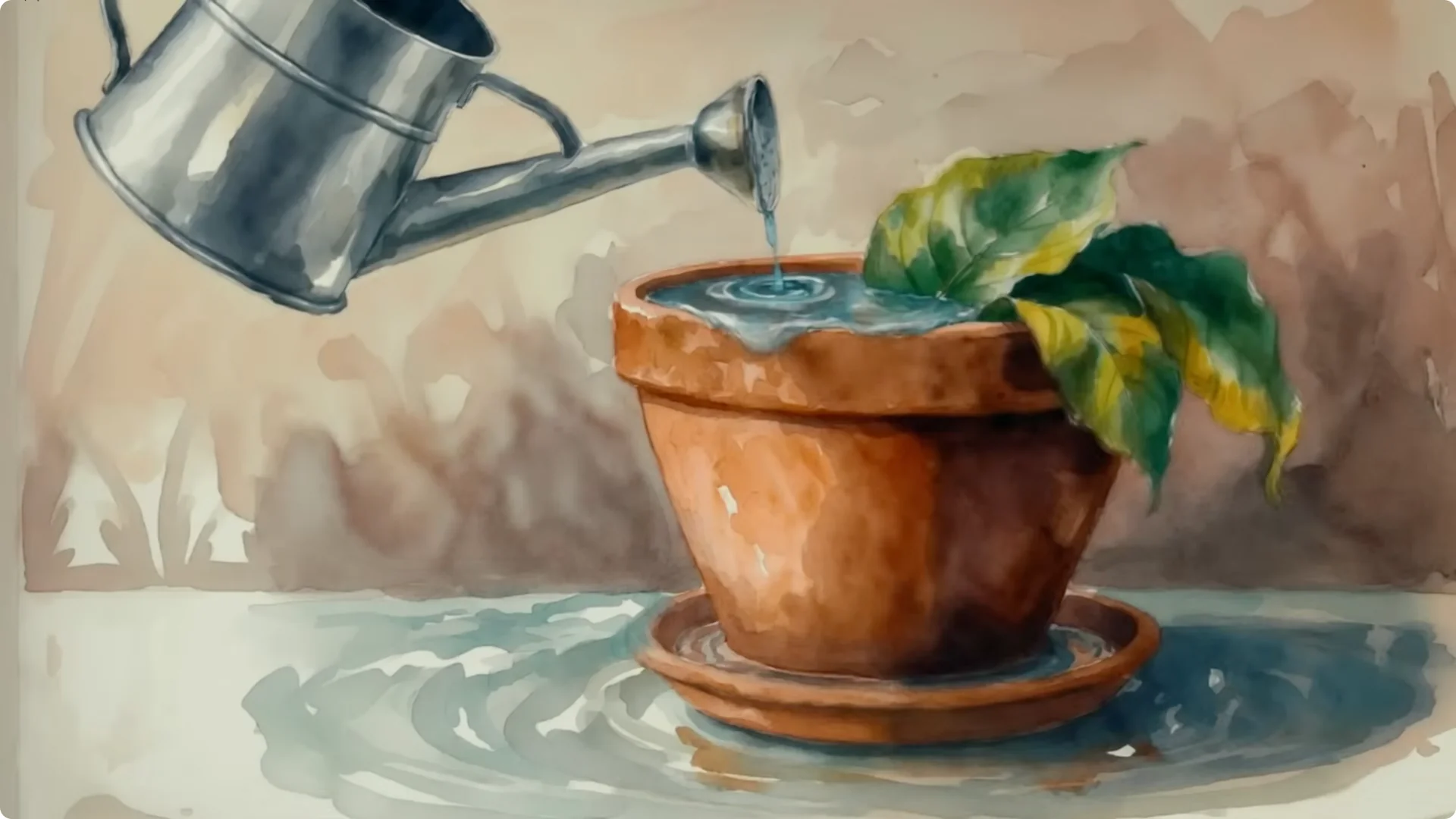
Almost all mass market plants are potted in shipping medium. It is usually pure peat moss or coconut coir with no aeration agents, chosen because it weighs almost nothing when dry. In greenhouses with automated misting and constant fertilizer, this substrate works for transport.
In an apartment it turns into a trap because peat becomes hydrophobic when fully dry. Miss one watering and it hardens into a clump that repels water so it runs down the sides and bypasses the roots. Keep peat constantly wet and you cut off oxygen, which causes immediate rot.
Most beginners fear repotting right after purchase and leave the plant in a medium that was never designed for long term life. Your first rescue action should be a proper repot into an airy, appropriate mix. That single choice saves more roots than any fertilizer ever will.
8. Houseplant Retail Scams: Fancy Names for Common Plants
Marketing often creates artificial scarcity and prestige by renaming common plants. Raphidophora tetrasperma becomes mini monstera, which sounds more exclusive and expensive. Buyers think they are getting a miniature monster when it belongs to a different genus.
Another example is selling common golden pothos as Hawaiian pothos. Sellers insist it is special with larger leaves, but it is the same plant grown on a support in high humidity. Bring it home, remove the support, and new leaves return to ordinary size.
These gimmicks rely on buyers not checking the Latin name. Do not pay luxury prices for what is essentially a printed tag upgrade. Labels are marketing, not botany.
9. Houseplant Retail Scams: No Drainage Decor Pots
Beautiful ceramic pots promise a ready to display interior upgrade. Many lack drainage holes, or the nursery pot is wedged so tightly inside that no air can circulate. On the sales floor, hoses flood everything and excess water pools invisibly at the bottom.
Roots in stagnant, oxygen deprived water begin to rot almost instantly. Anaerobic processes trigger pathogenic bacteria, and by the time you get home the plant may already be biologically dead. You see green leaves while the foundation has turned into a foul smelling gray mass.
This is the fastest way to kill even the hardiest plant. Stores accept the risk to increase transaction value by selling a ready made interior solution. In reality it is disposable decor that sets you up for failure.
Read More: Hard To Kill Houseplants Easy Care
10. Houseplant Retail Scams: Communal Bottom Watering
Large garden centers often water on massive communal trays. Staff flood a whole area and hundreds of plants drink through bottom holes at once. It looks efficient, but it is the perfect transport network for pathogens.
If one plant is infected with fungal spores, root rot, or microscopic nematodes, the disease rides the water to every neighbor. You pick the most vibrant specimen that has already drunk the poison from the communal tray. White salt crust or slime on trays are signs of stagnant, toxic water.
Buying from such racks can be a biological lottery. Outward health is no guarantee against a hidden infection that surfaces a week later. Assume shared water means shared problems.
11. Houseplant Retail Scams: Clearance Shelf Catastrophes
A seventy percent discount on a tired plant feels like a steal. In practice the clearance shelf often functions as an epicenter of infestation. It becomes a collection point for plants crawling with thrips, mealybugs, or spider mites.
The store offloads biological waste and shifts disposal to you. By buying a sick plant for a few dollars you risk introducing pests that can wipe out a collection worth hundreds or thousands. The full scale of the disaster only becomes clear after it spreads to every room.
Fighting professional grade store pests costs more than ten new healthy plants. The effort and stress dwarf the initial savings. A cheap infestation is the most expensive bargain you will ever bring home.
12. Houseplant Retail Scams: Fake Bonsai Tricks
The word bonsai conjures images of ancient craft and patient shaping. Retailers exploit this by pushing mass produced products that bear no relation to the true art. The ficus ginseng with a thick bulbous base is a factory item grown at an accelerated pace.
It is a common ficus with an artificially swollen rootstock and crudely grafted branches. Such plants are unstable and often drop all leaves at the slightest stress. An even bolder deception is selling conifers like junipers in tiny shallow pots as indoor bonsai.
A juniper is an outdoor tree that requires fresh air and seasonal change. In a heated apartment it is doomed to die within months, often staying green long enough to trick you. By the time its death is obvious, the receipt is gone and the profit is locked.
13. Houseplant Retail Scams: Outdoor Species Sold as Indoor
Retailers ignore biology to fuel seasonal sales. Spring and holiday displays are packed with potted miniature roses, lemon cypress, and flowering bulbs. These plants are ill equipped for permanent life in dry, enclosed rooms.
Many roses demand high humidity and intense light beyond a standard window sill. Cypresses dry out quickly without cool, fresh air, and bulbs need a real dormancy cycle. Deprived of outdoor rhythms, they become easy targets for pests and decline.
The buyer blames themselves while they actually purchased a temporary living bouquet dressed up as a long term pet. It is a drama built on a lack of awareness. You cannot force outdoor physiology to thrive on a radiator side table.
14. Houseplant Retail Scams: Variegation Reversion Lies
Variegated plants like Monstera Albo command high prices for unique patterns. The mutation is often unstable, and plants begin producing entirely green leaves whose market value plummets. Unscrupulous sellers still list reverted specimens at collector prices.
They claim more light will bring the white back. Botanically this is impossible because variegation depends on specific cells in the meristem. If the growth point now produces only green cells, sunlight cannot revive the mutation.
The buyer overpays for a genetic defect while hoping for a miracle that will never come. You are buying the dream of a rare plant but receiving a common green. Know the science before you buy the story.
15. Houseplant Retail Scams: Painted and Glittered Succulents
Supermarkets line shelves with succulents dunked in neon paint or doused in glitter. Blue, pink, or gold rosettes grab attention from children and casual shoppers. For a living organism, this is a slow and painful execution.
Acrylic paint or lacquer seals the leaf surface and blocks light and respiration. Trapped inside, the plant cannot photosynthesize and begins to starve at a cellular level. It stretches unnaturally in a last attempt to reach light, then dies from exhaustion.
This practice turns a living being into disposable plastic decor. Buying it funds a trade that ignores basic biology for quick impulse sales. If it looks spray painted, it is not meant to live.
How to Avoid Houseplant Retail Scams
Your number one rule in any shop should be do not buy pretty leaves, buy healthy roots. Change how you choose a new green pet and your success rate will soar. Here is the process I trust.
Step 1: Inspect the Roots First
Pick up the plant you like and gently slide the nursery pot out of its cover. Look for firm, tan to white roots and avoid black, slimy strands or any foul odor of rot. Put the plant back immediately if you see those signs.
Step 2: Check the Medium and Pot
Probe the soil to feel for a hard, dry peat brick or a swampy saturated core. Make sure the container has a real drainage path and is not wedged in a decorative cachepot that traps water. Favor an airy mix that allows both moisture and oxygen.
Step 3: Scan for Pests and Residue
Carefully inspect leaf axils and especially the undersides of leaves. Any suspicious spots, sticky residue, fine webbing, or cottony clusters are red flags. For help recognizing early warning cues, see signs your plant is sending.
Step 4: Read the Latin Name and Ignore Hype
Never blindly trust bright tags and flashy names. If instructions look bizarre, such as watering a tropical plant with ice cubes, trust logic and botanical references. Look up the Latin name on your phone to confirm real light and humidity needs.
Step 5: Quarantine After Purchase
When you bring a new plant home, implement a strict two week quarantine. Place the newcomer in a separate room away from your main collection. This window lets hidden diseases, insect larvae, or retail stress manifest in a safe zone.
Step 6: Drop the Guilt
If a new plant dies despite your best efforts, accept this truth. It was likely doomed before you reached the checkout. Your job is to catch the warning signs and avoid repeating the trap.
Read More: Hard To Kill Houseplants Easy Care
Final Thoughts on Houseplant Retail Scams
Now that you know the rules of the game, your chances of building a healthy, long lasting urban jungle are much higher. Be mindful, check the details, and remember that a plant’s true beauty lies in its health, not in a glossy spray or fancy packaging. Buy roots, not hype, and you will keep more plants alive and more money in your pocket.