
Imagine an ordinary morning. You walk past that same corner in the living room where your ZZ plant has stood for years. You have treated it more like a permanent fixture than a living thing because it seemed to never change at all.
It has survived your long vacations without watering, put up with a lack of sunlight, and collected dust on its glossy leaves. But today something has changed. At the base of the sturdy stems, something strange is pushing through the dark soil.
It does not look like a new young leaf, which typically unfurls from a tight green spiral. It is a dense, heavy growth resembling a small corn cob lurking in the shadows. Many feel a sense of wonder at this sight.
I must tell you, be cautious if your ZZ plant has decided to bloom. Behind this rare occurrence lies more than simple botanical curiosity. Blooming puts a huge strain on the plant’s energy reserves.
In the plant world, nothing comes for free. To grow this strange spadix, the plant mobilizes hidden reserves stored in its powerful underground tubers, the rhizomes. Sometimes this is a triumph of life and other times it is a swan song.
If the ZZ plant senses its life cycle is nearing its end due to critical errors in care, it can pour its final strength into this flower, attempting to leave offspring behind. We also have to consider its natural chemical defenses. The sap contains microscopic calcium oxalate crystals.
The flower is the most delicate yet concentrated part of the plant. Handling it requires special vigilance to avoid an unpleasant physical reaction. Today we are going to decode the ancient message this bloom is sending.
This signal connects your modern apartment with the harsh past of the African savannas where the ancestors of Zamioculcas mastered absolute patience. What you see next can change your perception of this silent windowsill inhabitant. We will explore why its flowering is seen as a mystical sign and what real dangers and opportunities it holds.
1. ZZ Plant Bloom Meaning in Nature
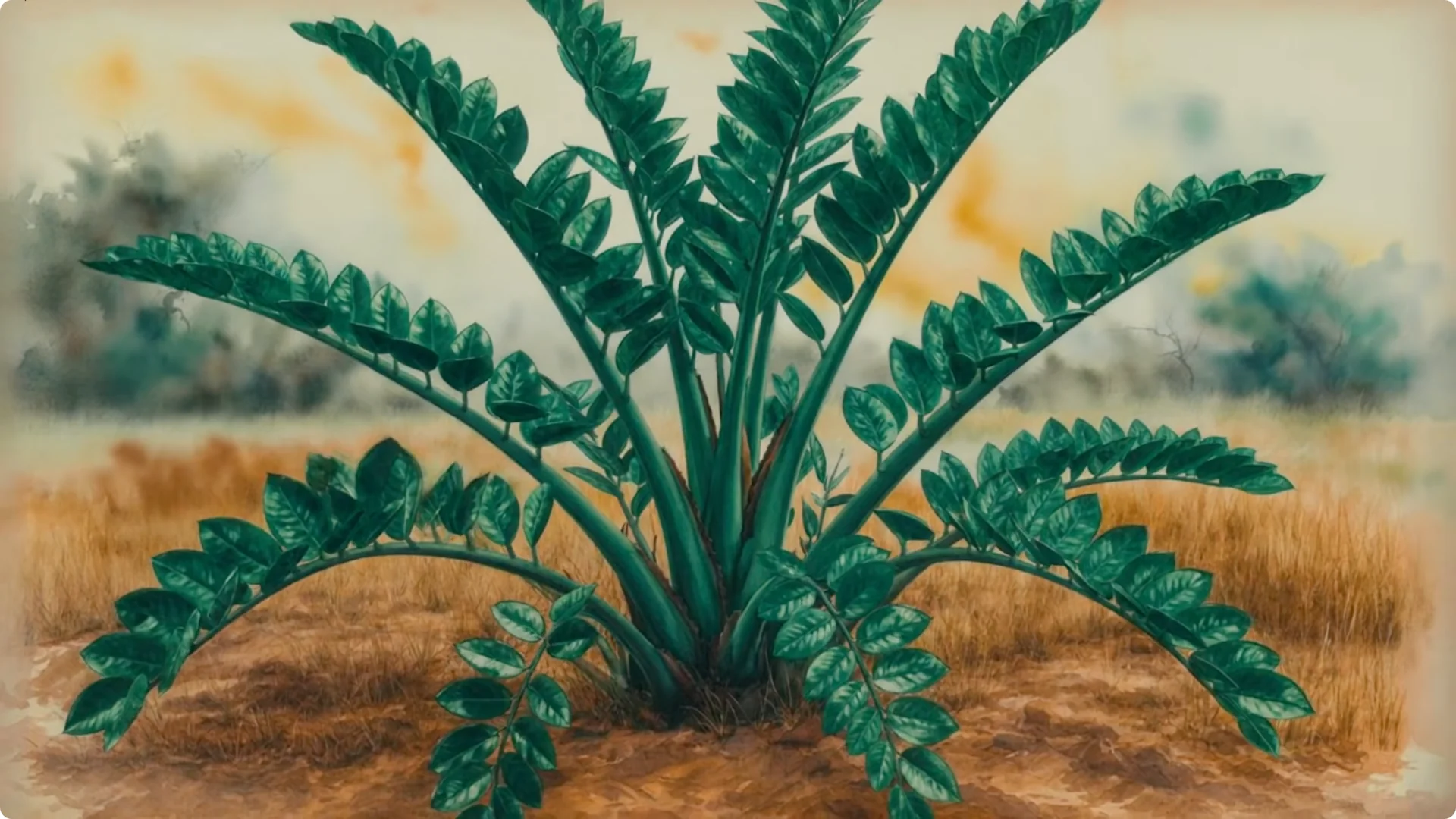
To understand why the blooming of the ZZ plant raises so many questions, we need to look to its homeland in East Africa, spanning Tanzania, Kenya, and the island of Zanzibar. In this part of the world, survival is not an accident but the result of complex evolutionary solutions. Zamioculcas zamiifolia evolved where rain may not fall for months and the scorching sun burns away everything living.
It learned to turn its body into a living battery. Those thick glossy formations we call branches are actually giant compound leaves. They grow directly from underground rhizome tubers that resemble potatoes.
These tubers are storehouses for water and nutrients, allowing the plant to enter deep dormancy during drought and wake up when moisture arrives. The anatomy of its flower is another oddity. The bloom is a spadix with tiny inconspicuous flowers and a protective bract called a spathe.
This spathe usually has a muted greenish or bronze tint, often blending into the overall background of the plant. The flower is positioned very low, almost at ground level. In nature, this is part of a brilliant strategy.
Zamioculcas is pollinated by crawling insects. The plant lays its gift at the feet of its pollinators, shielding it from the scorching heat of the upper tiers. Witnessing this at home is true luck available to only a few.
Statistics suggest that most owners will never see it bloom in their lifetime. For many, it remains a static decor element that goes years without producing a single new leaf. The fortunate few created conditions that closely mimic its African home.
This is not mere luck. The plant sensed the right combination of maturity, safety, and a specific type of stress that triggered its reproductive mode. That is the quiet key to the mystery.
2. ZZ Plant Bloom Meaning and Triggers

Why do some ZZ plants bloom regularly while others remain frozen for decades? The answer lies in hormesis. Moderate exposure to stress can activate defense mechanisms and stimulate development.
Zamioculcas flourishes when conditions nudge it to mobilize. In greenhouses with perfect humidity and constant temperatures, plants grow lush and green but are reluctant to bloom. There is no reason to spend energy on reproduction if life is stable and predictable.
Rootbound signal for ZZ Plant Bloom Meaning

One main trigger for blooming is becoming rootbound. When the roots fill the pot and begin to deform the plastic, the plant gets the message that there is no more room for expansion. An ancient instinct kicks in and it moves to the next phase.
It understands that the way to continue its lineage is to create seeds and send them out in search of a new home. This is why experienced collectors are in no hurry to repot into massive planters. For these plants, tightness is a catalyst for life, not a limitation.
Drought and rain cycle for ZZ Plant Bloom Meaning
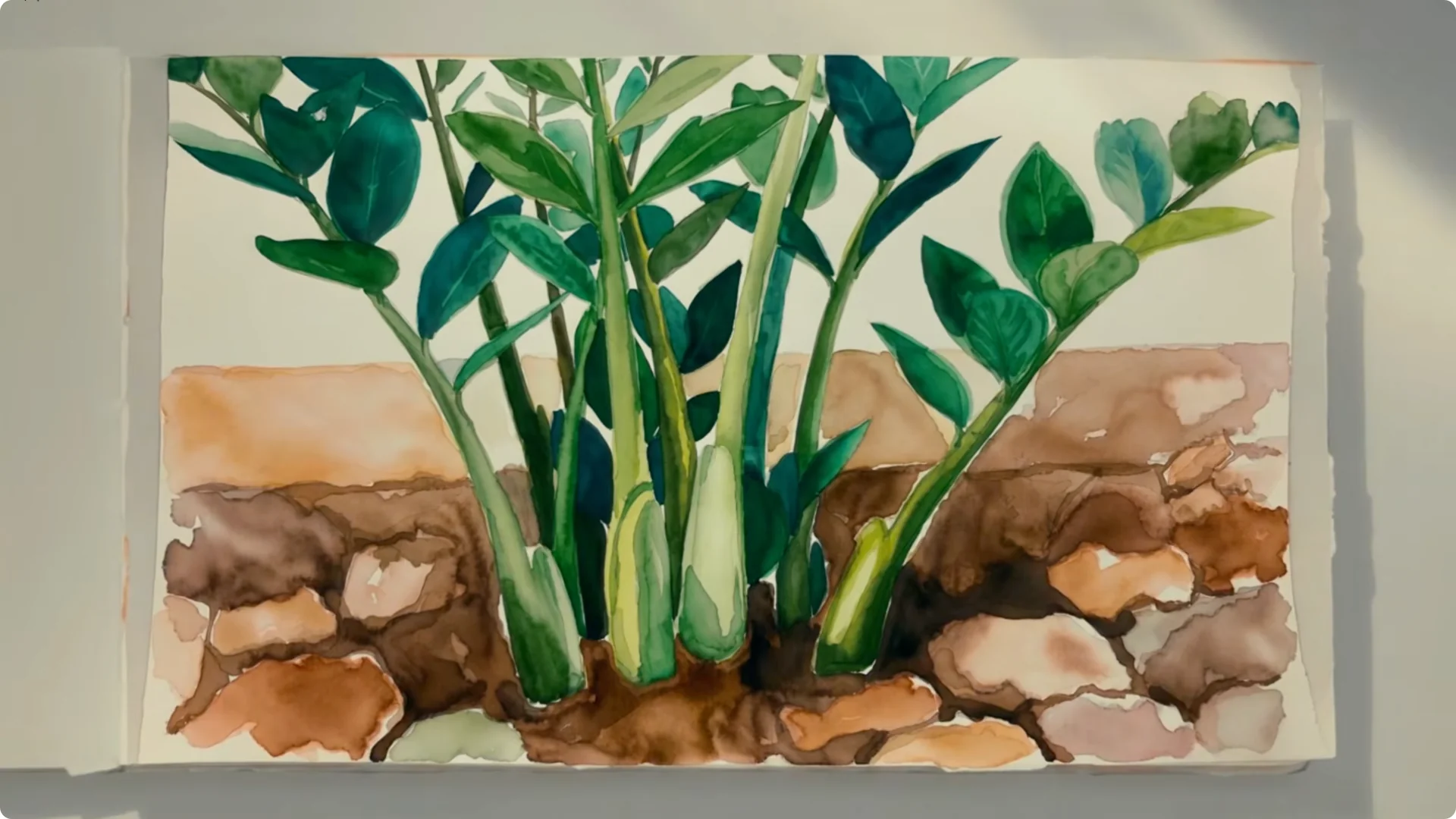
The second key factor is the cycle of drought and heavy watering. Many people try to keep the soil constantly moist, which is a mistake far from Africa’s rhythm. There are periods of dryness followed by short powerful downpours.
For a ZZ plant to bloom, it must feel this contrast. A period of controlled neglect where the soil dries to a rock hard state mimics its homeland. The subsequent heavy watering is perceived as the start of the rainy season, the right time to push out a peduncle.
If you suspect watering errors or pot issues are creeping in, review common pitfalls to avoid compounding stress. See our guide on common ZZ plant care mistakes to course correct early.
Light paradox for ZZ Plant Bloom Meaning
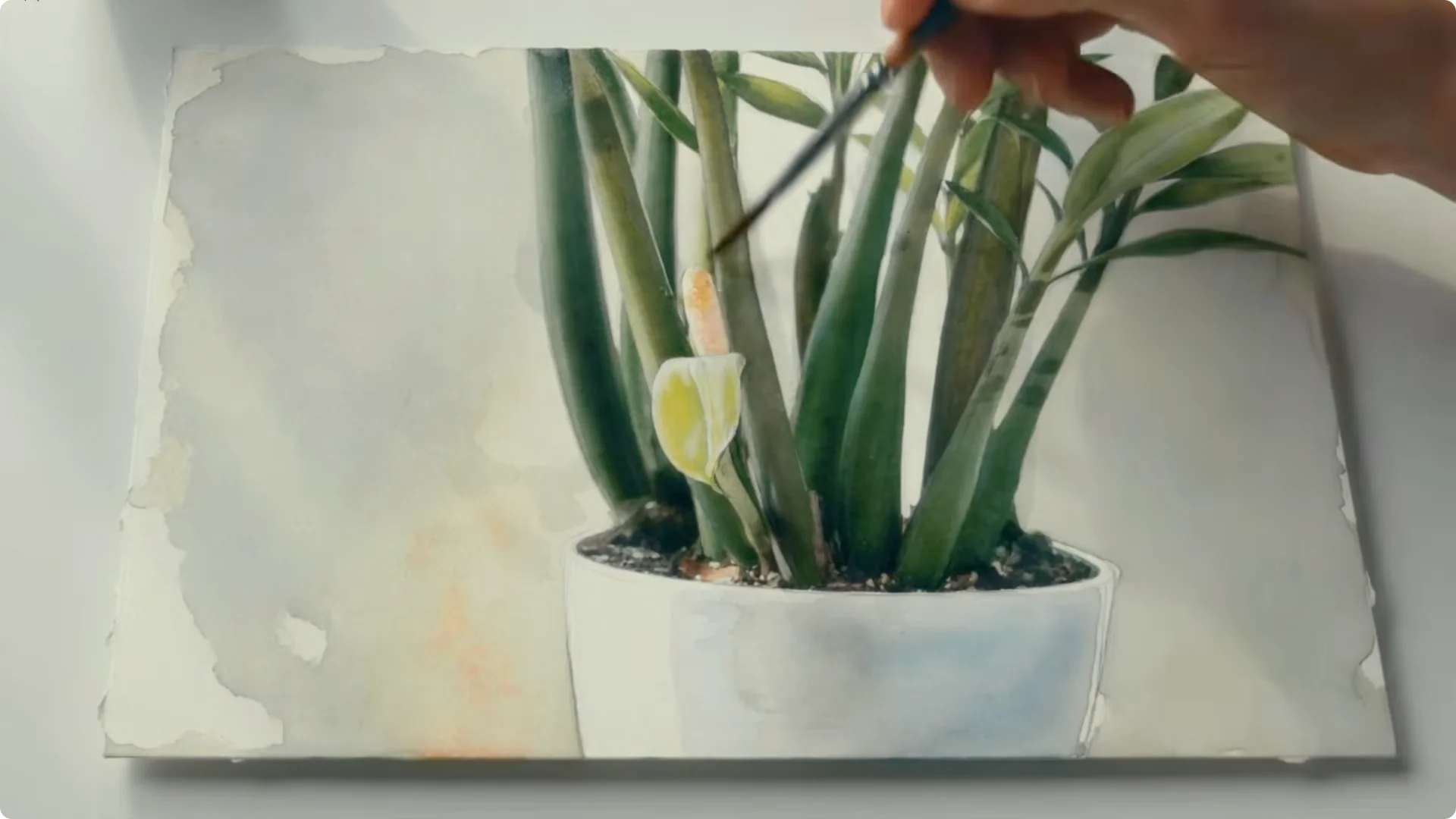
Marketing often calls the ZZ plant a plant for dark corners. This myth is dangerous. It can survive in gloom, but it will not thrive there and it will not bloom.
Creating a flower requires a massive amount of energy gained through photosynthesis. To see that alien spadix, the plant needs bright filtered light. Only with a surplus of energy can it afford the luxury of flowering.
Without sufficient light, the plant will merely maintain existence, hoarding every drop of its resources. Blooming demands more than survival mode. Give it light and a reason to reach higher.
3. ZZ Plant Bloom Meaning and Safety
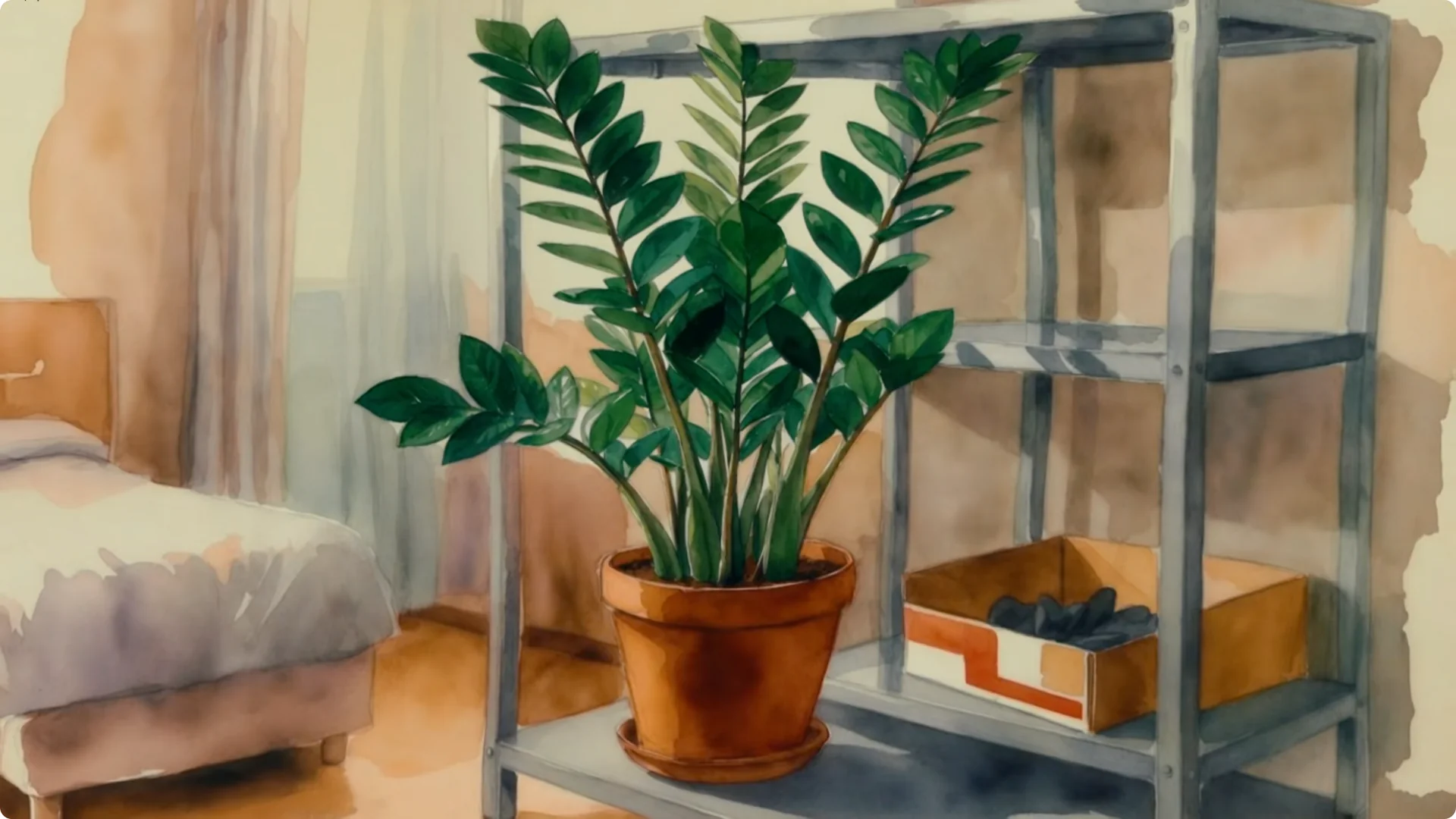
All parts of the plant contain cell sap with calcium oxalate. This is not a chemical poison in the conventional sense. It is a mechanical defense that acts like thousands of needle sharp points under a microscope.
When sap touches delicate skin or mucous membranes, these crystals can cause burning and swelling. The flower, being a succulent and actively growing organ, contains a high concentration. If you examine it closely or remove a withered peduncle, do so only while wearing gloves.
It is not worth risking contact dermatitis for the sake of curiosity. Pet owners should be cautious. Cats and dogs can be drawn to a low flower with an unusual scent.
If parts of the flower or sap are ingested by a pet, irritation of the mouth and larynx can occur. Do not panic or discard the plant. Place the pot in an inaccessible location during the blooming period.
Your safety and the safety of your four legged friends come first. This wonder is best admired mindfully. Respect the chemistry and enjoy the show.
4. ZZ Plant Bloom Meaning and Warning Signs

It is important to recognize bad blooming. Biology acknowledges cases of desperation blooming. If your plant suddenly blooms while old leaves are rapidly yellowing and stems lose turgor and become soft at the base, this is a warning.
More often than not, hidden root rot from overwatering is the cause. The plant realizes that its rhizome is decaying and can no longer nourish itself. In a final attempt, it pours remaining sugars and water into a flower before it perishes.
Learn to distinguish the triumphant blooming of a healthy plant from this deathbed energy trap. If blooming is accompanied by a decline in vitality, check the root system immediately. Do not celebrate until you confirm the plant is stable.
If you are seeing foliage issues during a bloom cycle, use symptom based help to pinpoint what is off. Start with this guide to ZZ plant leaves turning yellow to diagnose and act fast.
5. ZZ Plant Bloom Meaning in Feng Shui
In Eastern philosophy and Feng shui, the ZZ plant holds a place of honor beyond the common money tree. Its glossy stems with paired leaves are directed upward like a steadily rising chart. In Southeast Asia, it is often called the tree of eternal prosperity.
Crassula leaves are rounded and soft, while Zamioculcas leaflets resemble ancient coins strung on a thread. In Feng shui, vertical growth is associated with progress, ambition, and steady development. That symbolism deepens when the plant blooms.
The flower emerging at soil level symbolizes accumulated wealth that has ripened and borne fruit. It signals that the energy in your home has reached a density and purity where material success becomes a logical outcome. For many, it marks readiness for a new level of abundance.
To activate this potential, place Zamioculcas in the southeastern sector of the room, the traditional wealth zone ruled by the wood element. The ZZ plant, being a resilient representative of wood, harmonizes with this space. Consider the connection with water, the nourishing element for wood.
Clean glossy leaves and a proper watering regime create an unobstructed path for beneficial chi. If your plant blooms in this sector, it is seen as recognition that the balance of elements in your environment is well maintained. The symbolism can become a personal compass.
The psychological aspect is no less important. This is where directed attention comes into play. Seeing a blooming plant can tune the owner to the frequency of success.
You become more confident and attentive to opportunities. The plant serves as a visual anchor and a reminder of established goals. Even setting mysticism aside, it works as a tool for self focus.
6. ZZ Plant Bloom Meaning and Personal Growth
Zamioculcas is often called a mirror of its owner. This mirror reflects internal states and life philosophies rather than outward appearance. One of its lessons is the value of wise non interference.
It thrives under the care of those who let go of hyper control and trust natural processes. In a culture obsessed with micromanagement and constant hustle, the ZZ plant teaches a vital lesson. Sometimes the best thing you can do for growth is to step aside.
If your plant has bloomed, it means you have mastered a rare skill. You granted freedom to a living being while providing the minimum necessary support. That balance is not common.
A blooming Zamioculcas in your home serves as a kind of biosensor for stability. In a space dominated by chaos, stress, or anxiety, this sensitive plant is unlikely to commit to an energy intensive step like flowering. Blooming signals that the environment is safe, predictable, and calm.
If you spot the long awaited spadix at the base of the stems, you can congratulate yourself. Your living space has become a sanctuary where even a stone plant feels comfortable enough to bring forth new life. It confirms that you created a harmonious atmosphere for your greenery and for yourself.
The ZZ plant is a great teacher of patience. It grows extremely slowly, sometimes stalling for months without a single new leaf. In a world of instant results, it returns us to the concept of slow gardening.
Its bloom is a reward for years of endurance and loyalty to a chosen path. It is the antithesis of modern haste. The most valuable things in life require time, silence, and consistency.
If you have waited for a Zamioculcas to flower, you have learned to appreciate long cycles. True success is not a sudden flash. It is the result of a long and quiet accumulation of strength and resources.
7. How to Encourage ZZ Plant Bloom Meaning
If you have decided to nudge your Zamioculcas toward blooming, you need a clear blueprint with a professional approach. The sequence below respects the plant’s biology. Follow each step with care.
Step 1 Substrate for ZZ Plant Bloom Meaning
The substrate composition is vital. Standard peat heavy mixes pose a risk. You need a mix with 60 to 70 percent high quality aeration additives.
Use coconut coir as a base with coarse perlite, pumice or zeolite for drainage, and a small amount of fine fraction pine bark. This breathable composition mimics rocky African soils where water passes quickly without damaging rhizomes. Only in such a light medium can roots absorb nutrients needed to form a peduncle.
Step 2 Watering for ZZ Plant Bloom Meaning
Use a thorough soak and complete dry out method. Water until it exits the drainage holes, fully saturating the root ball, then wait until the substrate is dry through the full depth of the pot. Check with a long wooden skewer or a digital moisture meter.
Avoid superficial watering bit by bit. That creates an illusion of moisture while drowning the top layer and starving lower roots. A deep dry out stimulates the plant to store resources in tubers and prepare for activity.
If you want a broader routine that covers light, pruning, and seasonal rhythms, review these practical ZZ plant care tips. Combine those habits with the bloom strategy here for best results. Consistency multiplies your chances.
Step 3 Fertilizer for ZZ Plant Bloom Meaning
To stimulate blooming, avoid standard nitrogen heavy fertilizers that trigger leaf mass. Choose formulas with low nitrogen and higher phosphorus and potassium, emphasizing the second and third numbers in the NPK ratio. Many products labeled for succulents or flowering plants fit this profile.
Apply at half strength once a month during active growth. Potassium strengthens structure and provides energy to push the heavy spadix to the surface. Without the correct mineral balance, the plant may lack the strength for this demanding process.
Step 4 Temperature for ZZ Plant Bloom Meaning
Do not ignore temperature. Provide a gentle fluctuation between day and night for a couple of weeks to mimic natural shifts. The plant perceives this as the start of a reproductive period.
Place the pot near a cooler window during autumn to achieve a mild contrast. Combine this with bright indirect light. That backdrop can awaken latent buds and reveal the mysterious flower.
8. After the Bloom ZZ Plant Bloom Meaning
When the ceremonial moment ends and the exotic spadix loses freshness, you must decide what to do next. Life after the triumph requires attention. When the spathe darkens and begins to dry, carefully cut it at the very base.
Use gloves because the sap concentration remains high in the fading flower stalk. Timely removal helps the plant redirect energy back to the tubers. Do not waste resources on an organ that is already dying.
Provide a rest period afterward. Reduce watering slightly. Give your plant time to recover from this energetic marathon.
Final Thoughts on ZZ Plant Bloom Meaning
The blooming of Zamioculcas is a rare moment when nature seems to say thank you. It proves you created not just decoration but a balanced ecosystem. No detail is too small because every sip of water, every ray of light, and every minute of patience add up.
This flower confirms that your space is filled with harmony and that you possess the sensitivity to understand the language of nature. The ZZ plant, usually reserved and unapproachable, reveals its secret to those ready to observe and meet its true needs. Your connection has moved to a new level and you have seen its essence hidden from most eyes.
Now that you know the secrets and meanings behind its blooming, you will look at your ZZ plant differently. It is not just an interior element. It is your partner in creating an atmosphere of well being.